- Eras
- Indigenous era
- Concepts
- Indigenous eramigrationfishingcatholicismheritagecommunityanishinaabe-odawatreaty-rights
- Within
- Beaver Island archipelago
Summary
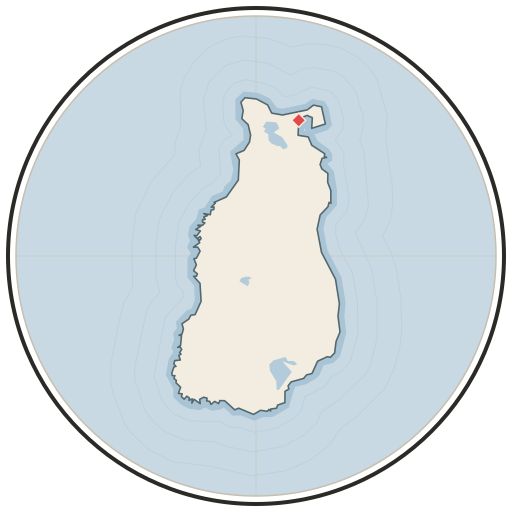
The Beaver Island archipelago lies within the homelands of the Anishinaabek (Odawa/Ottawa and Ojibwe). That presence is continuous: it precedes every other settlement on the archipelago, it ran through the Strang period and the Irish period, and it is present now. The federally recognised tribe whose service area includes the outer islands is the Little Traverse Bay Bands of Odawa Indians (LTBB); the Grand Traverse Band of Ottawa and Chippewa Indians (GTB) also holds a long history and constitutional rights on Beaver Island. Garden Island — Tagoning in the earliest name recorded here — was the centre of the archipelago’s Anishinaabe life and holds a significant burial ground.
This is a short article on purpose. The record here is thin on the subject and hostile where it is not thin. It was assembled around the Strang literature, and the Strang literature is written by and for settlers. What follows is what the sources actually support; the Open questions section is longer than the History section, and that is the honest result rather than a failure to write more.
A note on the concept, and on the sources
The SKOS concept this article surveys, c:era-indigenous, carries an explicit
scope note: “Not a closed period. Framing this as an ‘era’ that ended would be
wrong; Anishinaabe presence is continuous.” Nothing below should be read as a
chapter that closes.
The documentary problem is specific and worth stating plainly:
- The 19th-century sources held here were written by settlers with interests
adverse to Anishinaabe people, and they use derogatory vocabulary as ordinary
register. The concordance’s
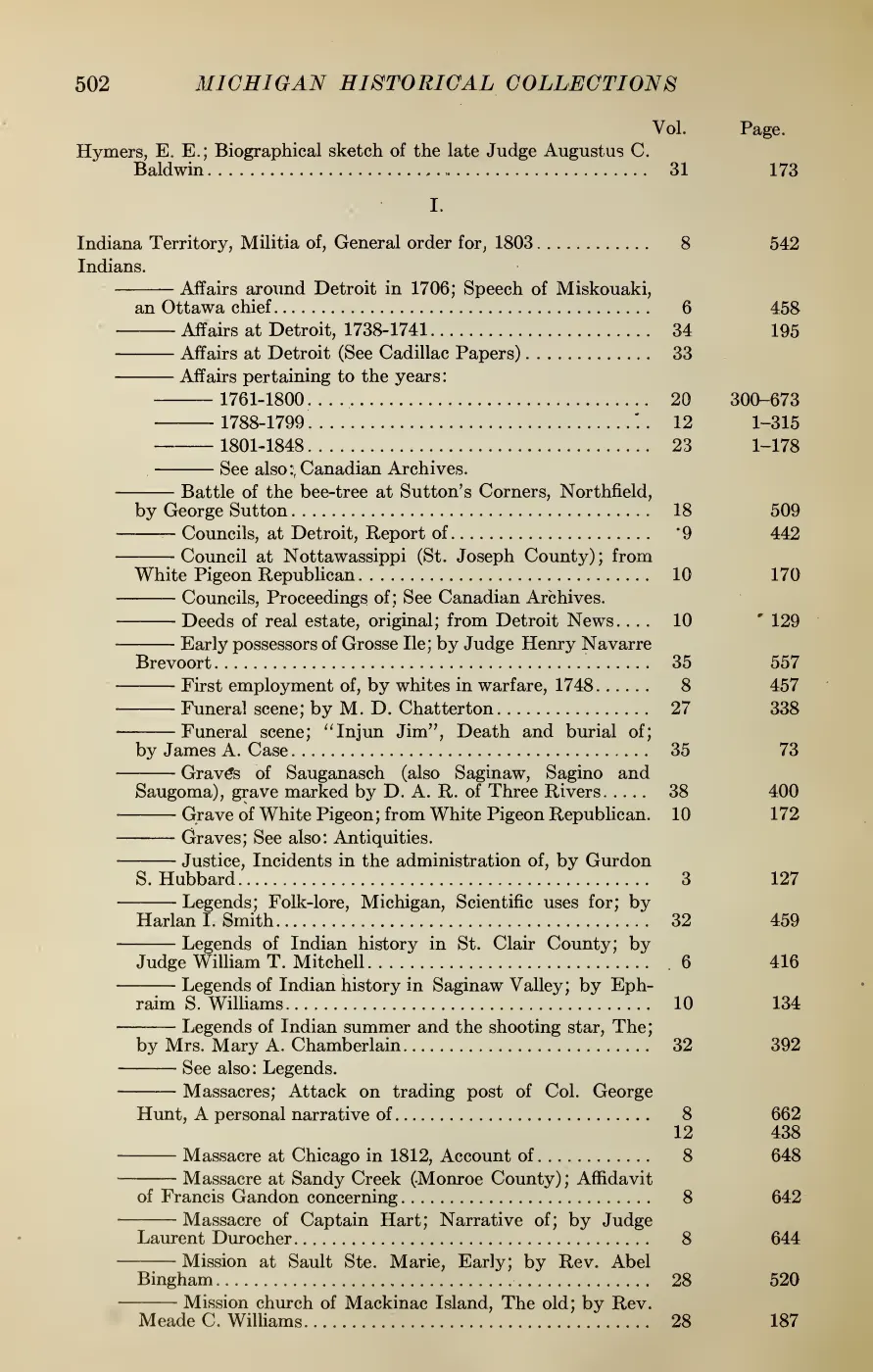
peoplesgroup records 2,818 uses of “Indian” across 304 documents against 44 of “Anishinaabe” across 8 — and nearly all of the latter are from the modern island newspaper. - The one pamphlet in the collection whose title promises Indigenous content, J. C. Wright’s The Ottawan (1895), is a tourist souvenir book. Its two Beaver Island passages are both about Strang and were supplied by Strang’s son Charles; its Indigenous material is Little Traverse-region “legends” packaged for visitors, opening with a photograph captioned in the slur of the day. It is evidence about 1895 resort culture, not about the archipelago’s Anishinaabe communities.
- Federal enumeration excluded Anishinaabe people outright. Strang’s own paper, on 9 January 1851, reported the population of Mackinac County “by the census of June 1st, (including the unorganized counties attached,) 3,598” and noted, without further comment, that this “is exclusive of Indians.”1
Where a claim below rests only on a settler source, it is attributed to that source rather than asserted.
What the sources support
Garden Island as the centre. Strang’s 1854 gazetteer gives the island’s name and a population:
The Indian name of this Island is Tagoning, signifying garden or cultivated land. It is now inhabited by about two hundred Indians, who subsist by fishing and raising corn and potatoes.
He adds that “Tagoning is considered the best Island for Cultivation in the group.”2 In the same volume he lists Garden Island among five Indian villages in Emmet County — with Cross Village, Middle Village, L’Arbre Croche and Bear Village — totalling about two thousand people.3
A displacement, recorded in passing by the party that benefited. The same
gazetteer states that “The Garden Island Indians formerly resided on the North
end of Beaver Island, and have removed to Garden within six years.”3
Six years
before 1854 is 1848 — the year Strang’s colony established itself at the north
harbour. Strang records the move as a fact and offers no cause. confidence: probable for the coincidence of dates; the causal reading is inference, not
source.
Political resistance to the kingdom. Under the heading “Indian Hostilities”, Strang’s own account places the episode in the winter of 1850–51 and describes chiefs Kimmeoue, Peaine, Watanesa and Chenotin calling on him “accompanied by thirty braves, thirteen white men and two interpreters”. He reports that Peaine, speaking for the Odawa and Ojibwe, “denounced war and annihilation against the Mormons, in case any of them sued a Gentile at law, warned him out to work a highway tax, attempted to arrest him, or cut any steamboat wood, except what was purchased by McKinley” — and he records his own dismissal of the chiefs: “Your voice is like a scolding woman. I will not hear you. March on.”4 Told by a hostile witness against himself, and framed by that witness as something traders had put the chiefs up to (the wording throughout is Strang’s, in Strang’s register), the episode is good evidence that the archipelago’s Anishinaabe leadership acted as an independent political power against the colony. The township that covers the south of Beaver Island still carries Chief Peaine’s name; it was erected in 1847.
Anishinaabe people in the island economy. Elizabeth Whitney Williams, who grew up on the island through the Strang years, records Anishinaabe fishermen gathering “at Beaver Harbor to sell their fish”.5 Strang’s fisheries chapter describes Anishinaabe fishermen being systematically defrauded by traders — “on a fishery where a dozen Indians were engaged, they were often plundered in this way to the amount of one hundred barrels in a season”6 — and claims the Peaine township liquor bond of 1851 improved their position. That claim is Strang’s own and is not independently confirmed here.
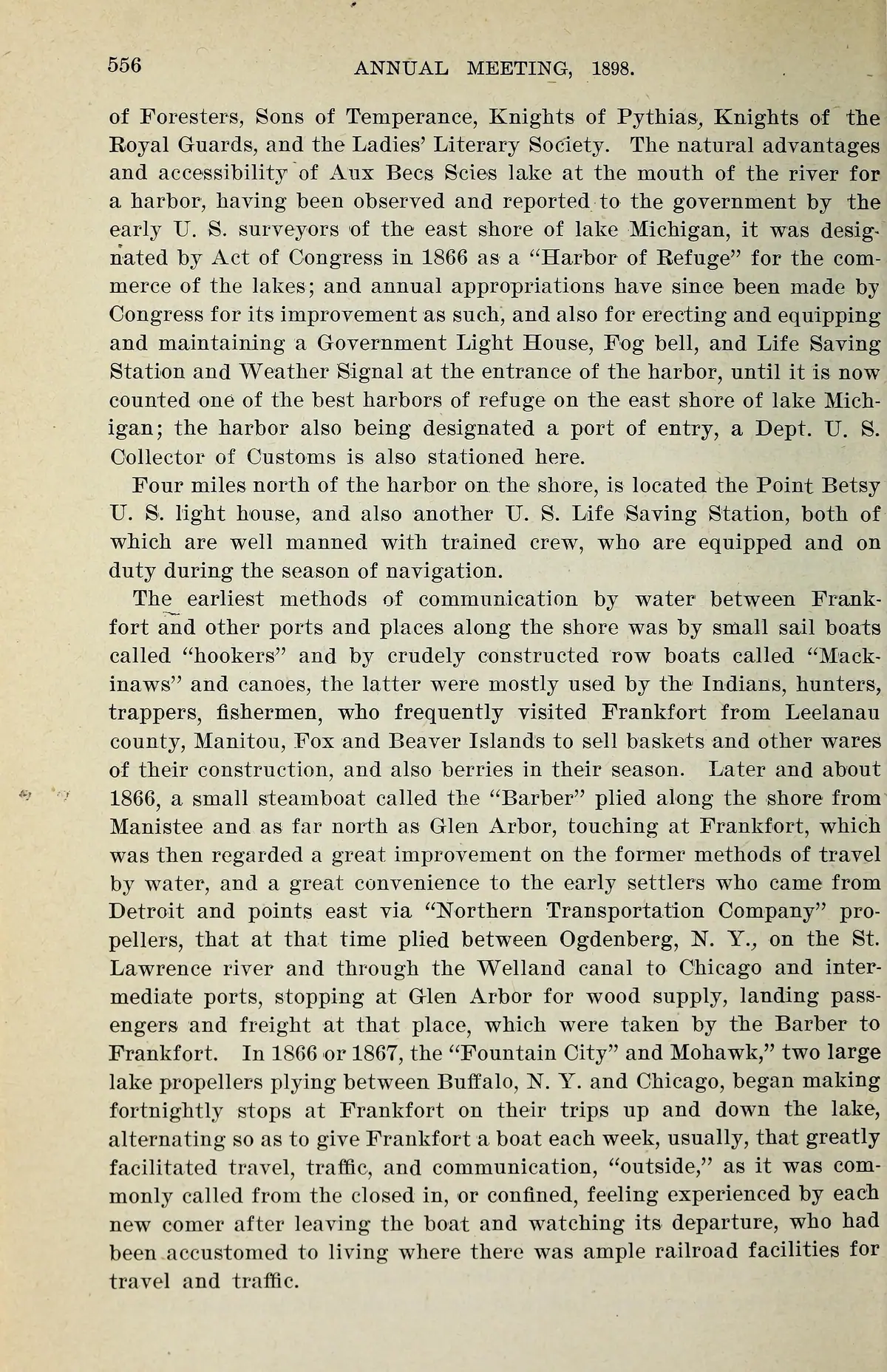
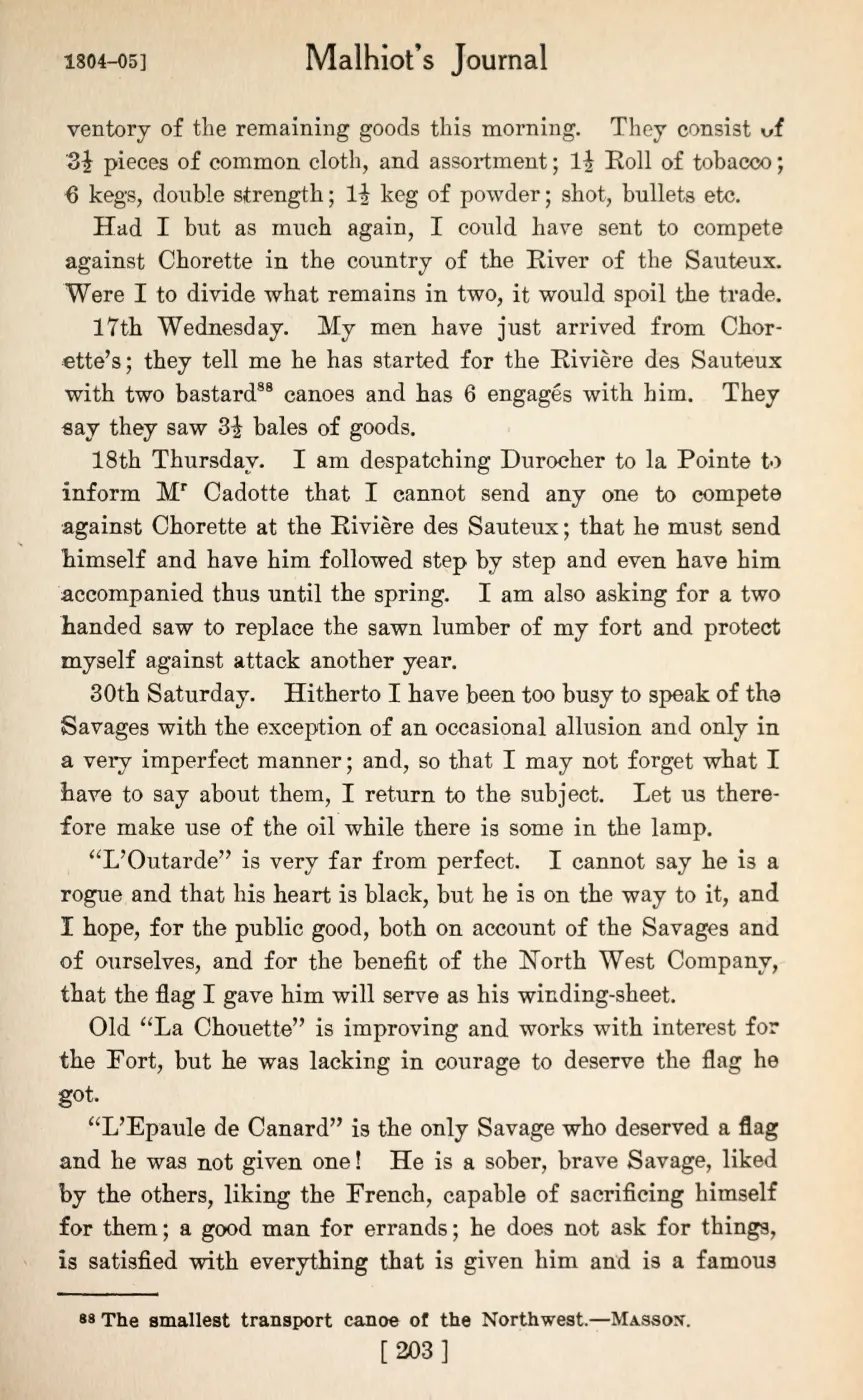
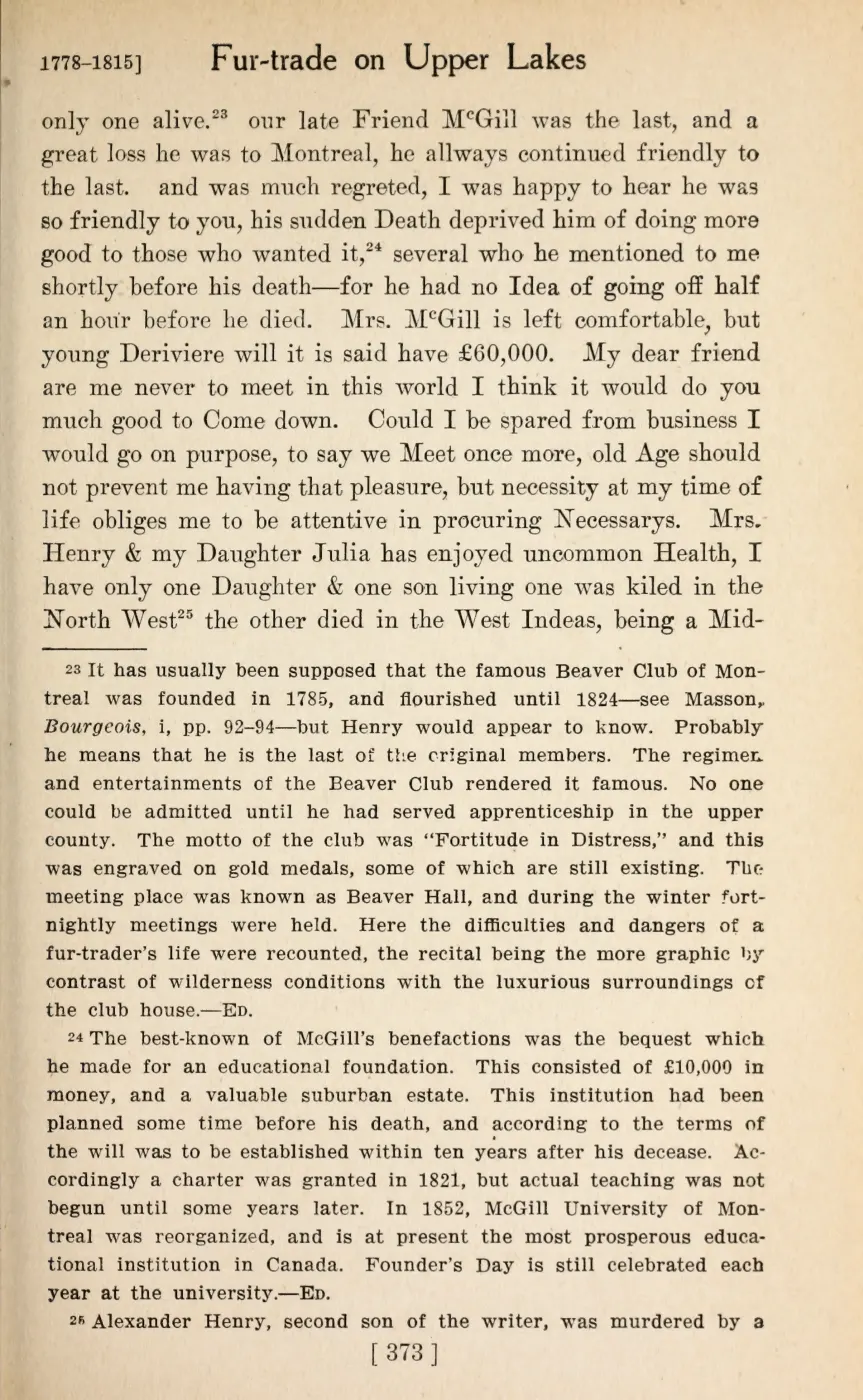
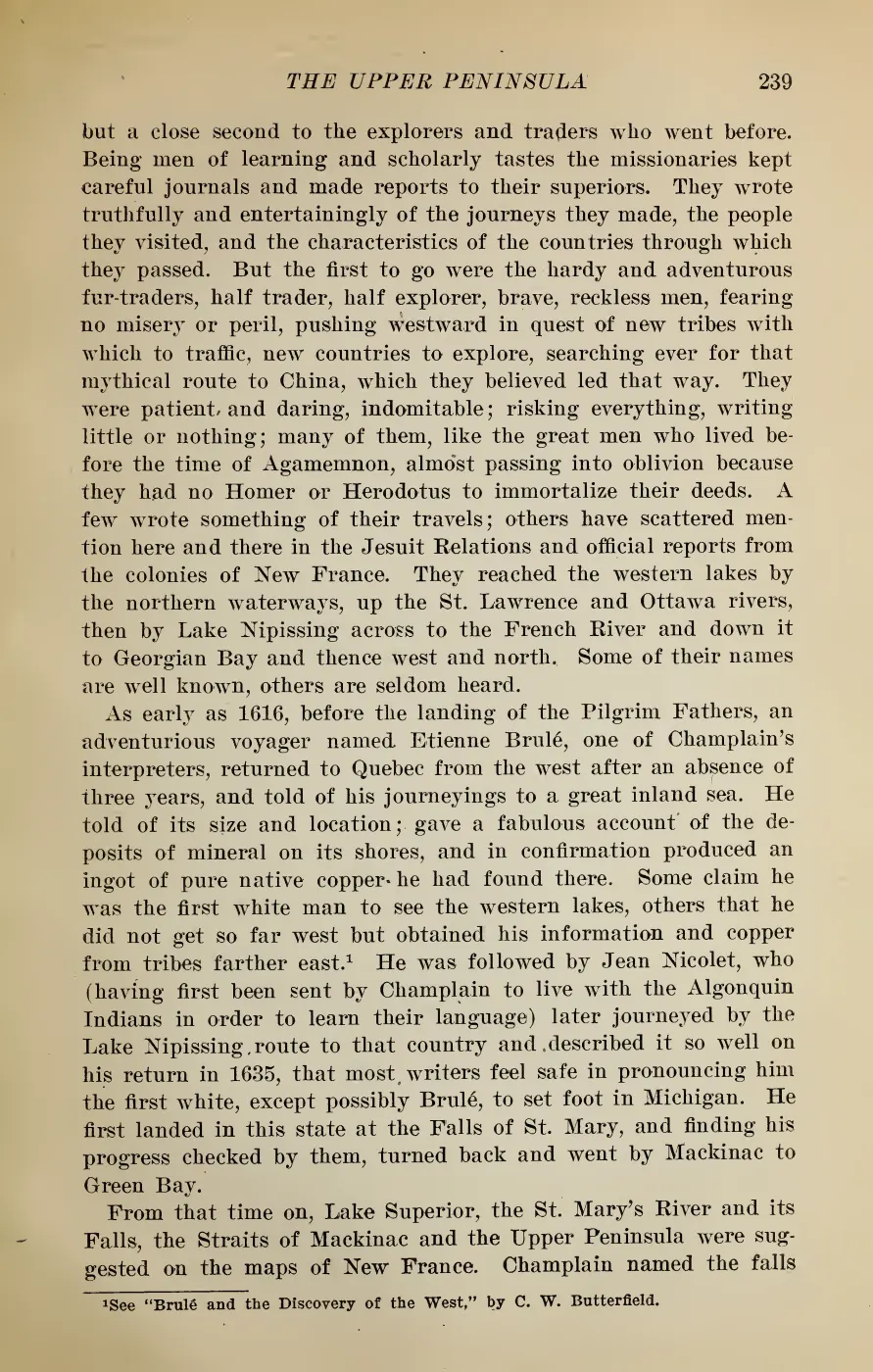
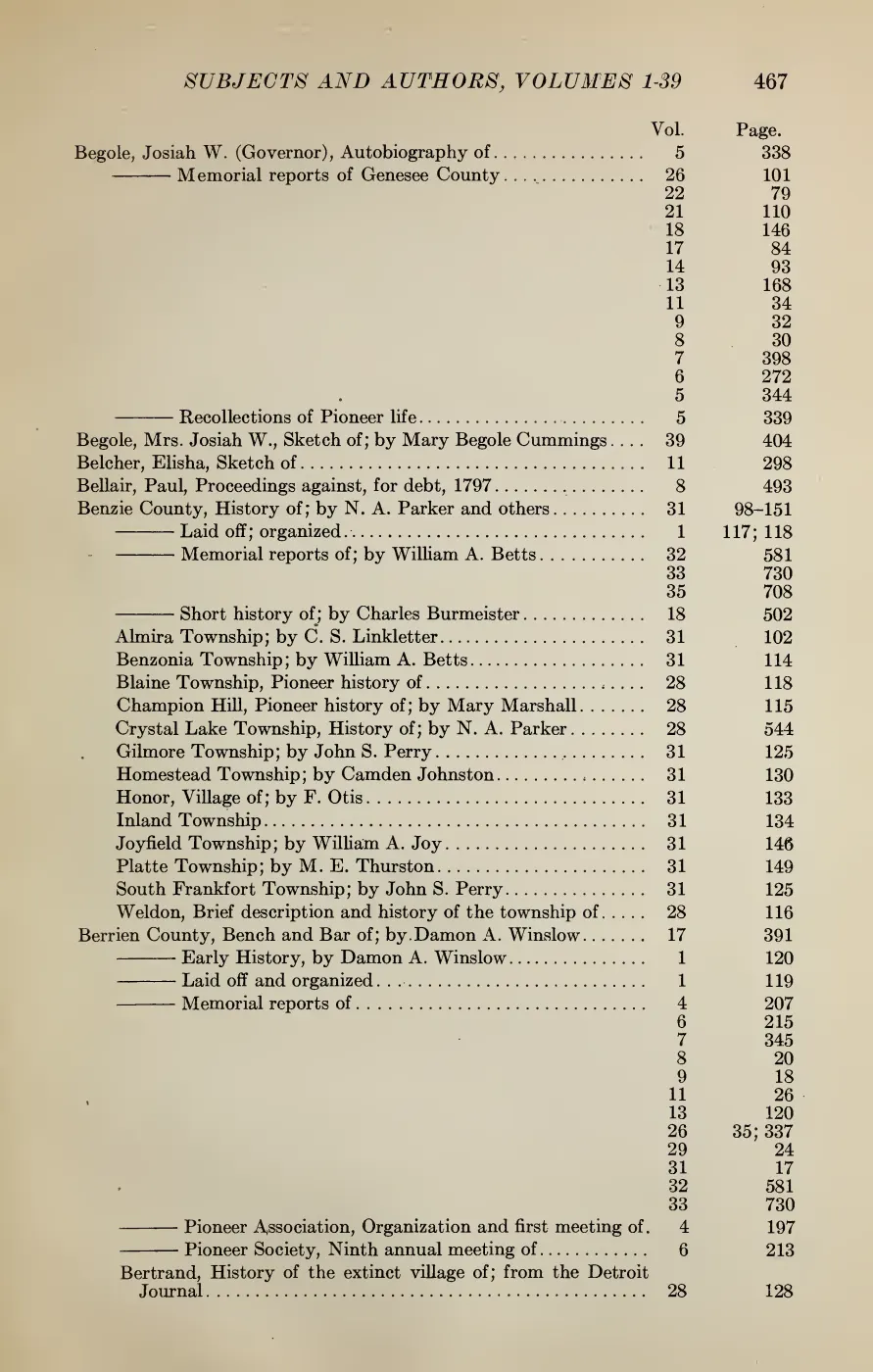
A mainland-facing market connection. In a local history first read in 1895 and revised in 1897, N. A. Parker says that people he calls “Indians, hunters, trappers, fishermen” travelled to Frankfort from Leelanau County and the Manitou, Fox, and Beaver islands to sell baskets, other self-made wares, and seasonal berries. The passage documents a regional connection including both island groups; it does not identify the travellers, specify a date or quantity, or show that any one transaction began on a particular island. Its terminology and mainland-settler point of view remain attributes of the source. Michigan Historical Collections, volume 28, 1898
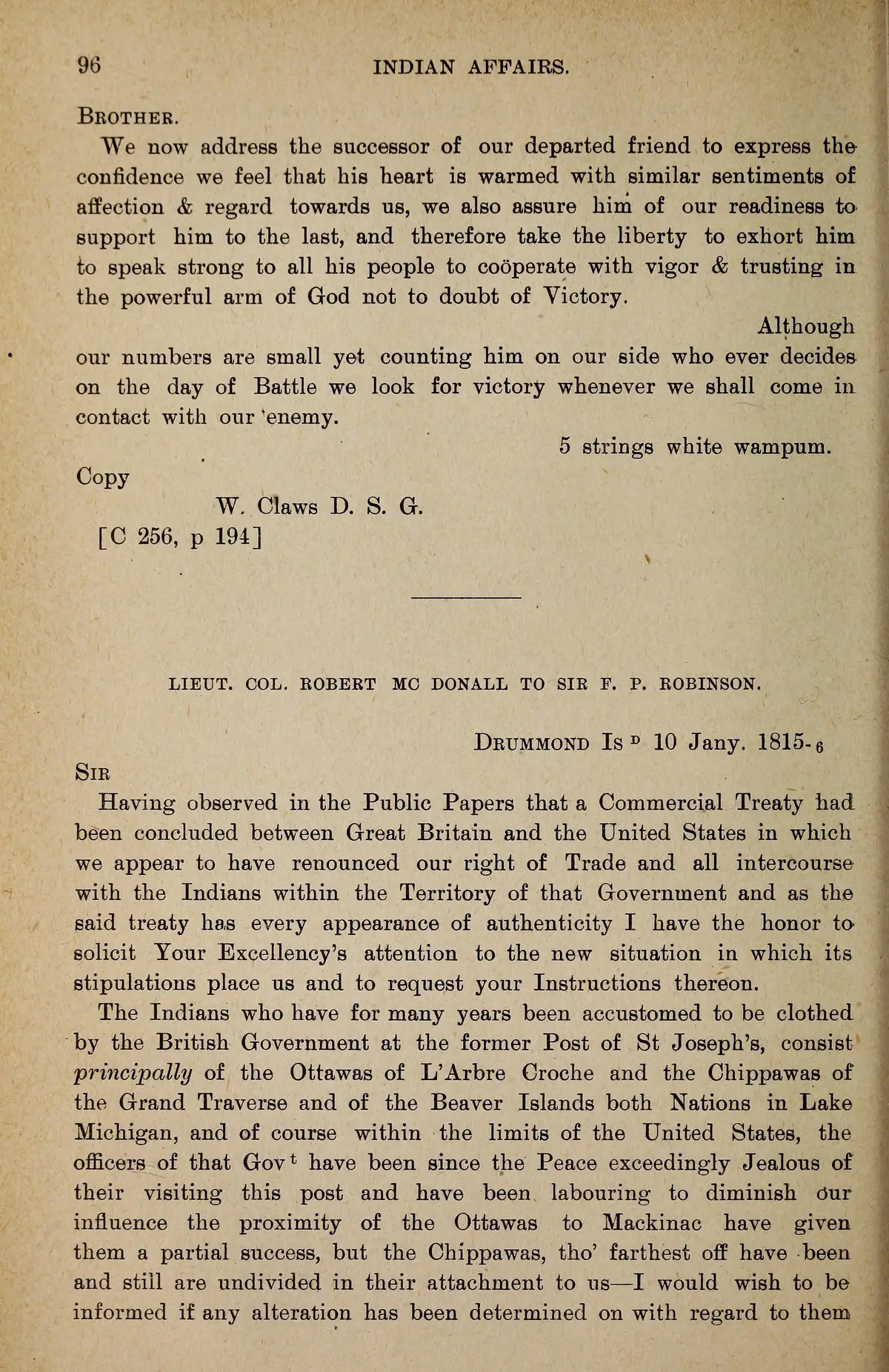
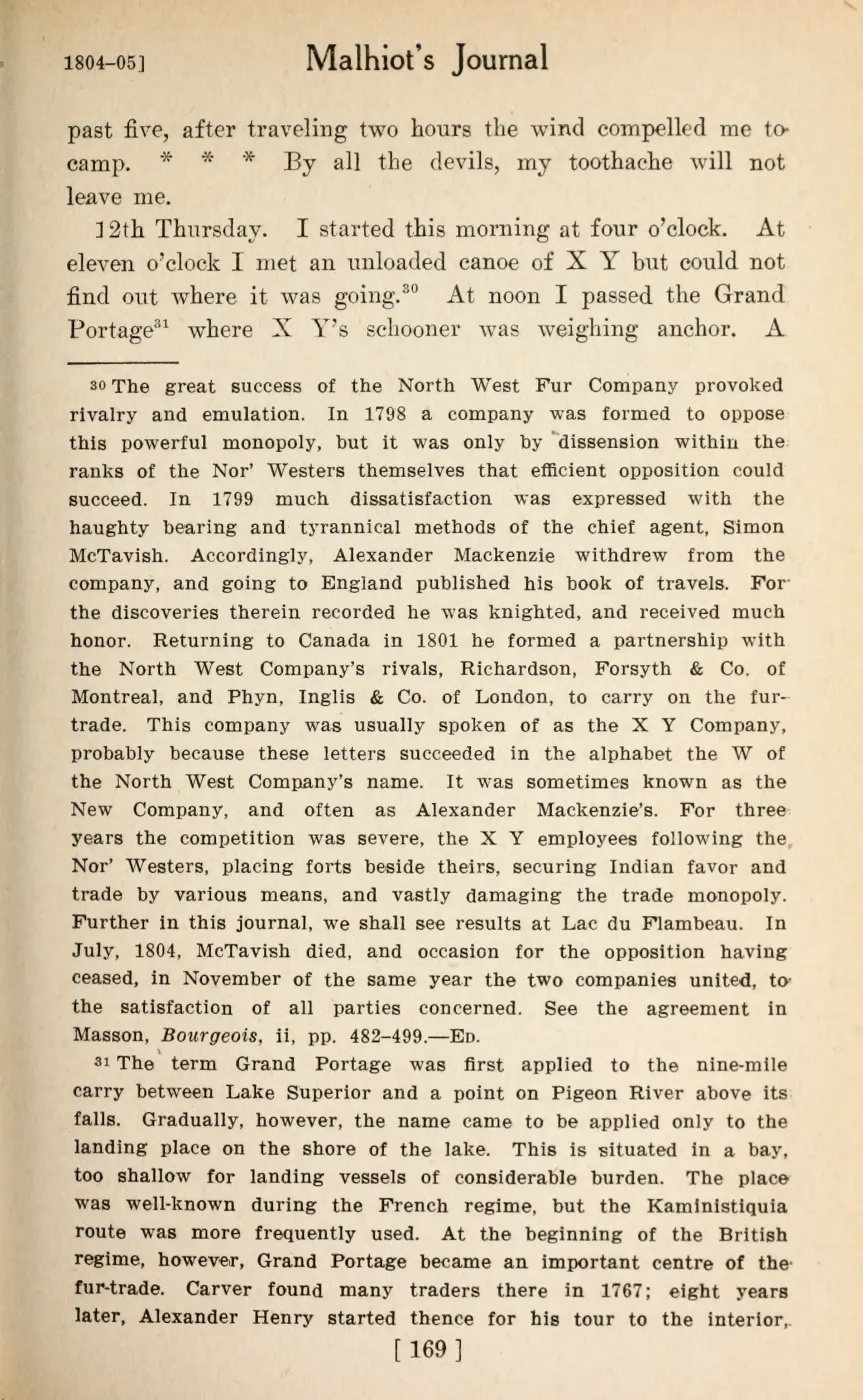
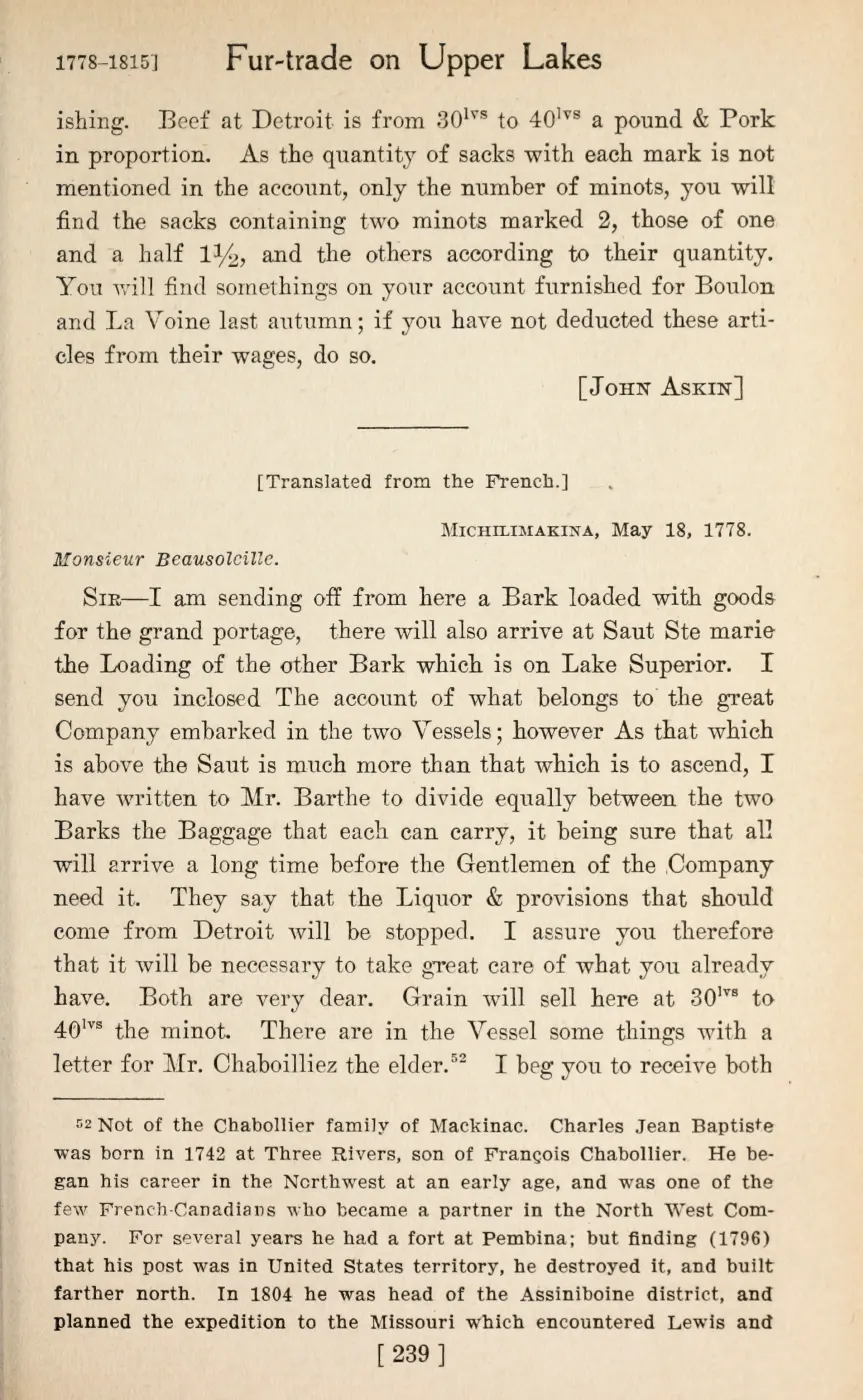
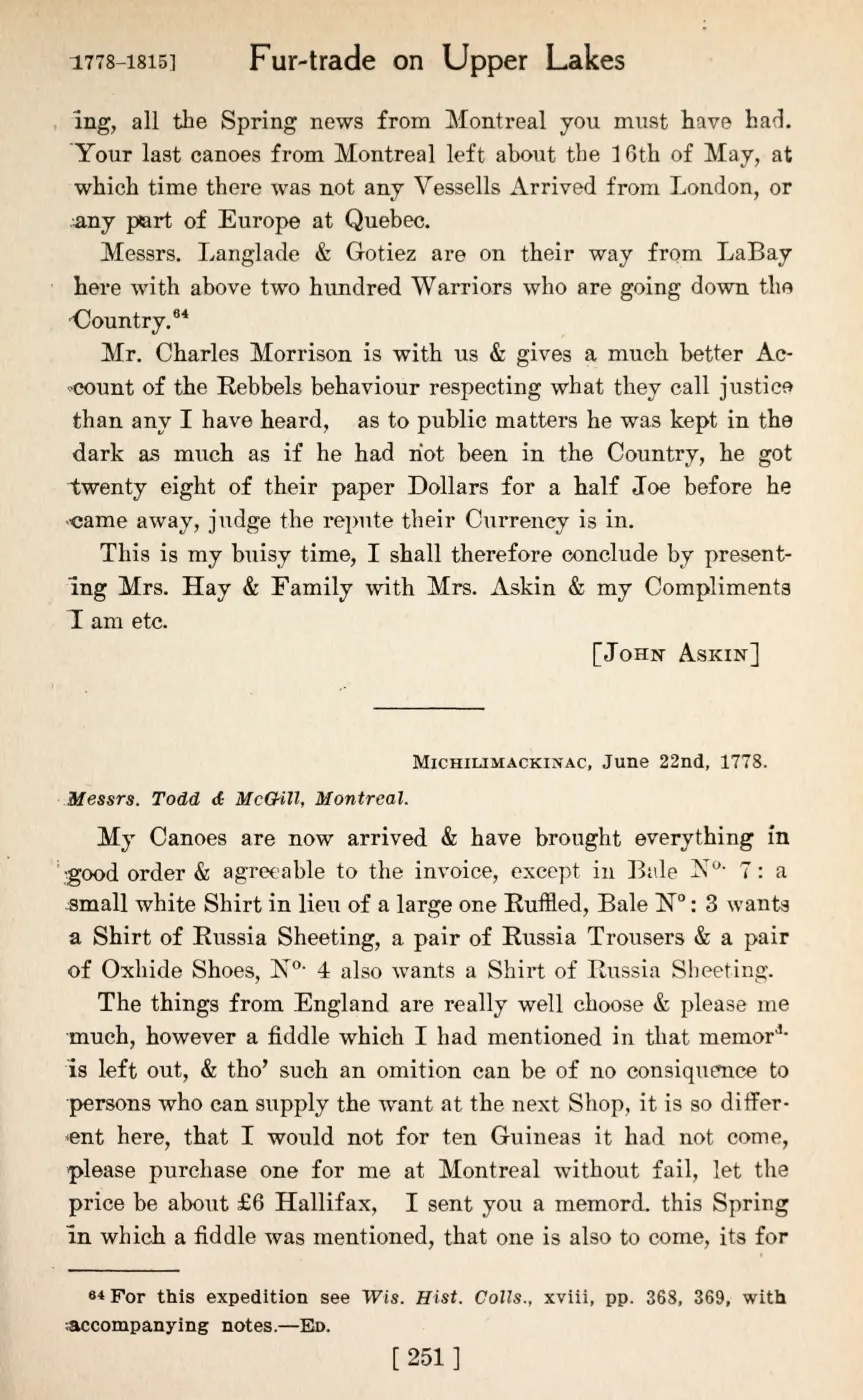
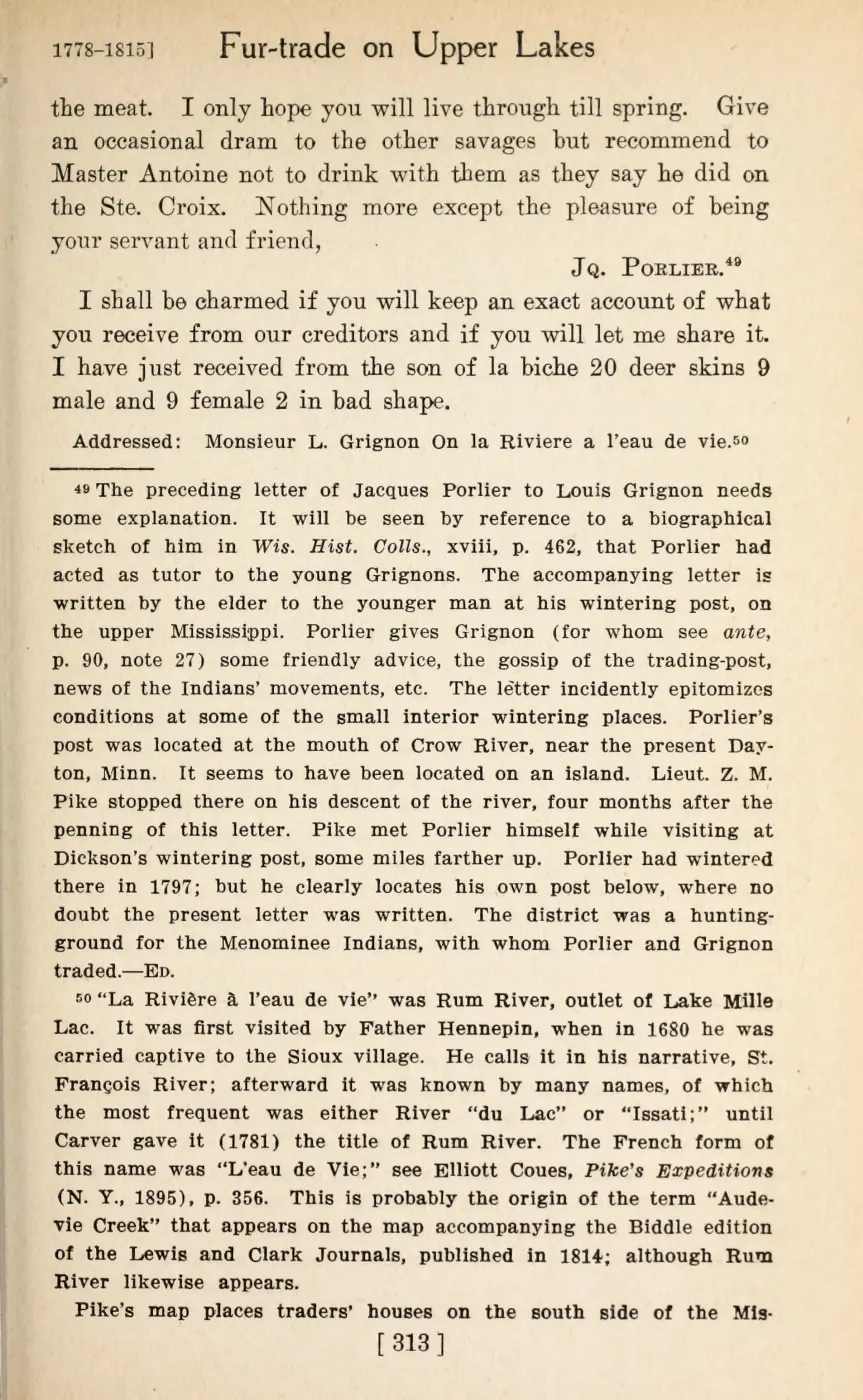
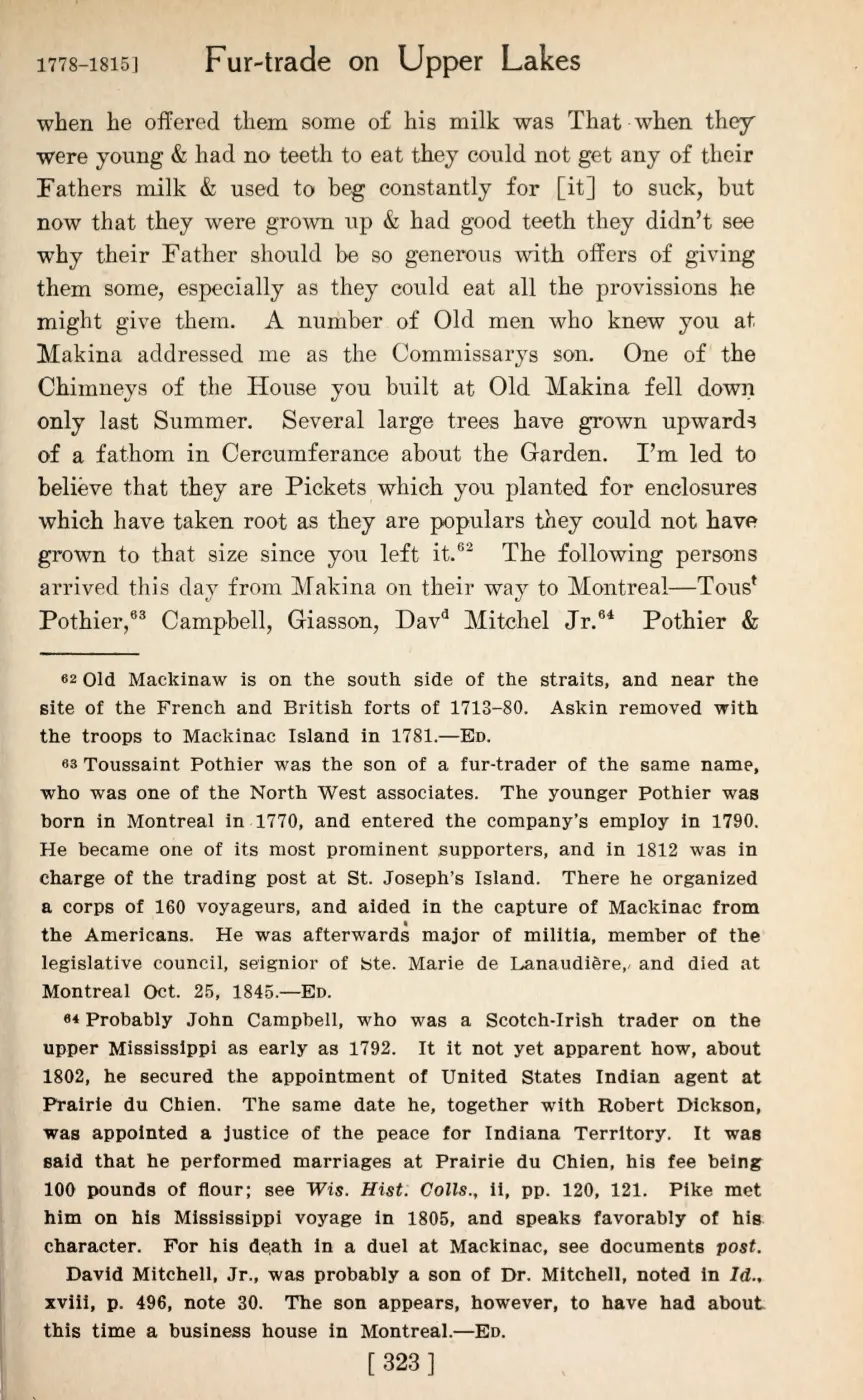
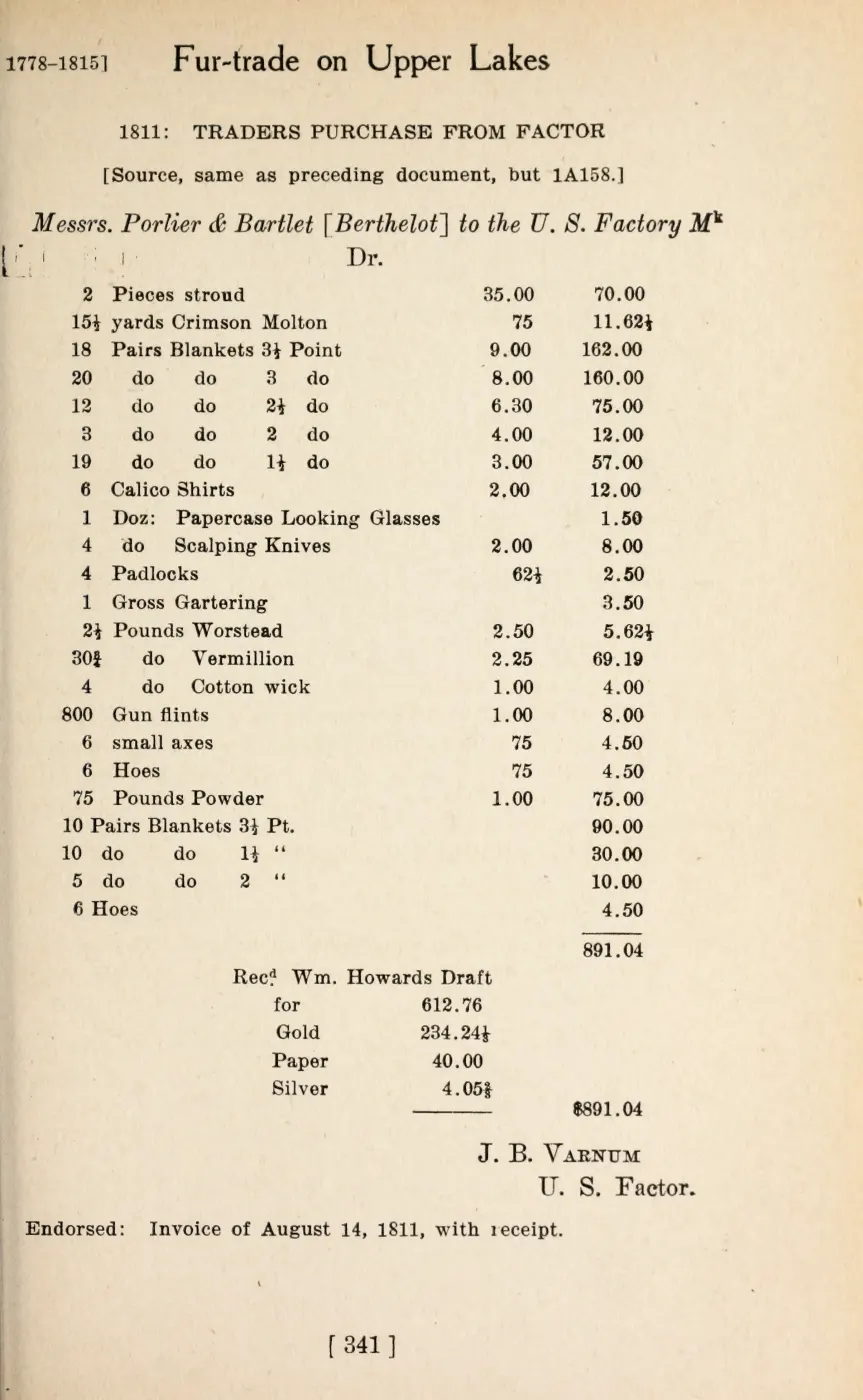
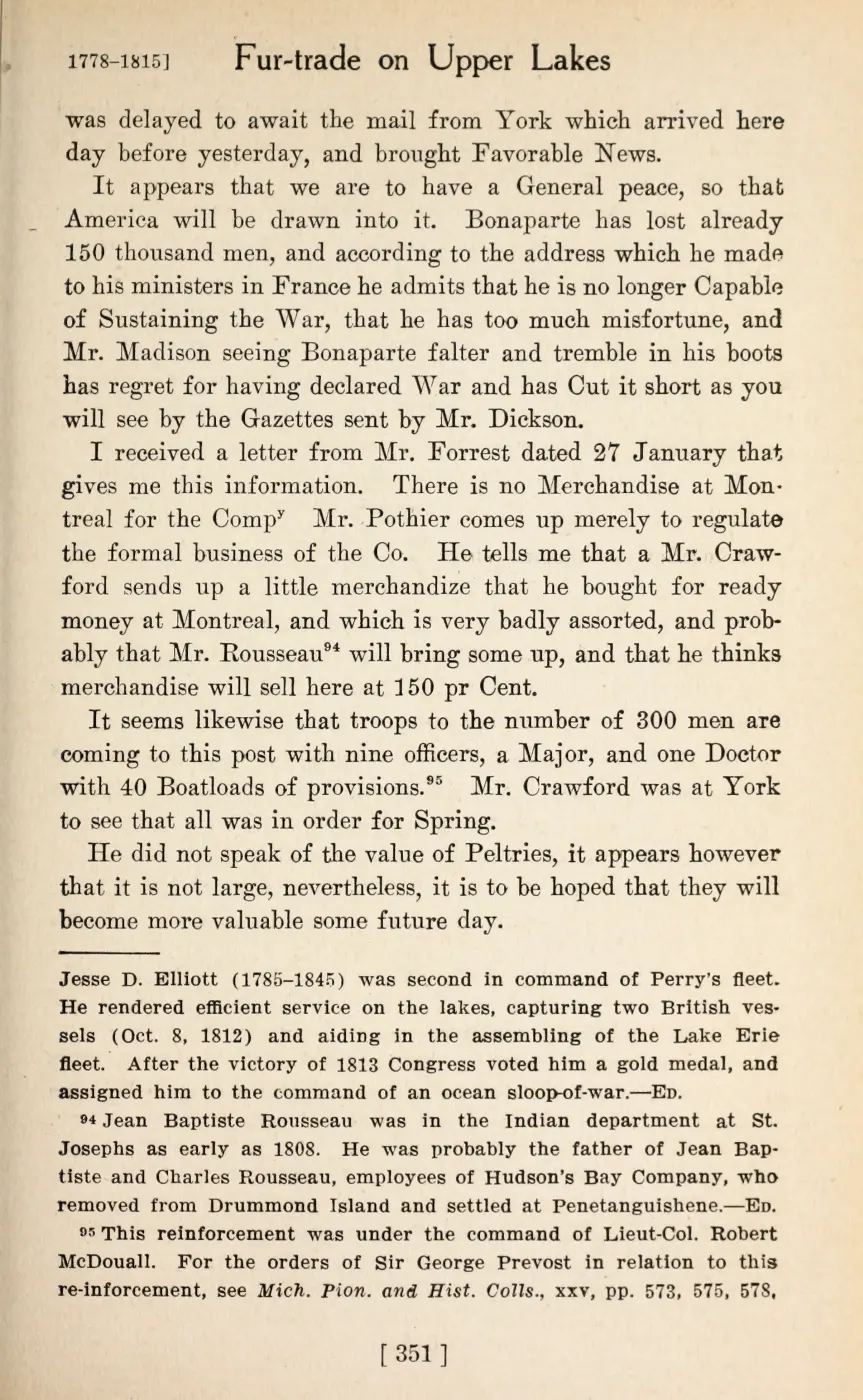
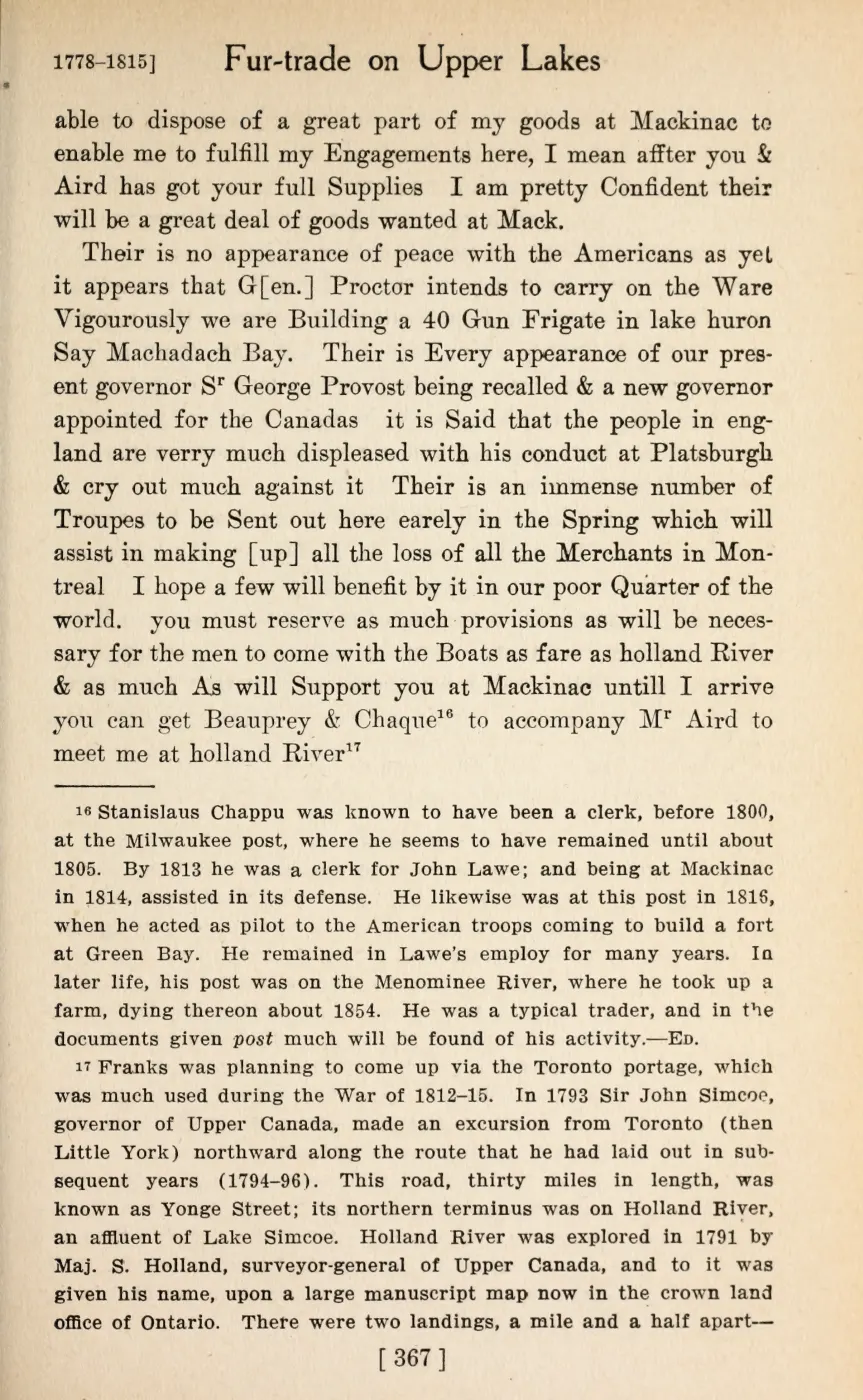
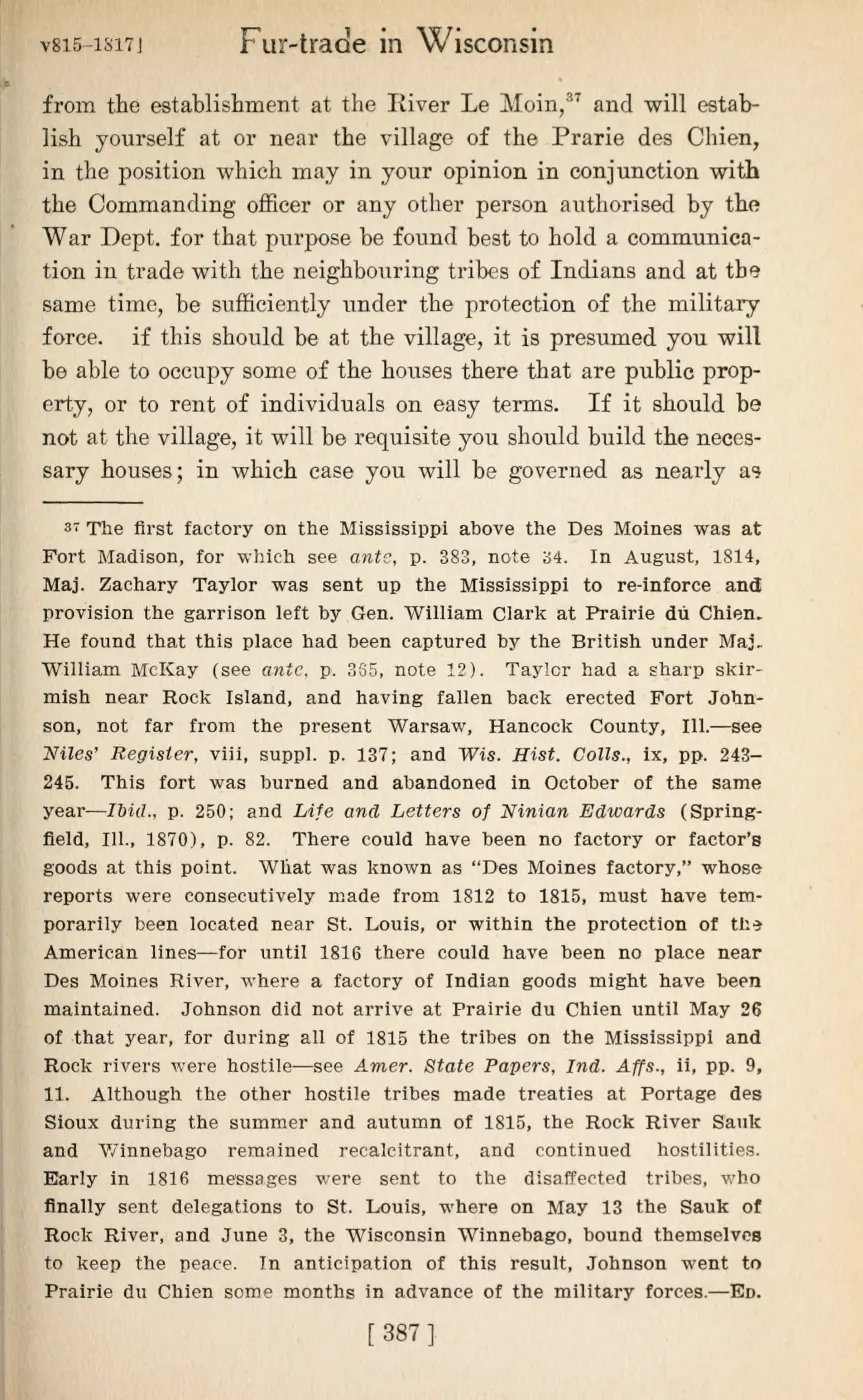
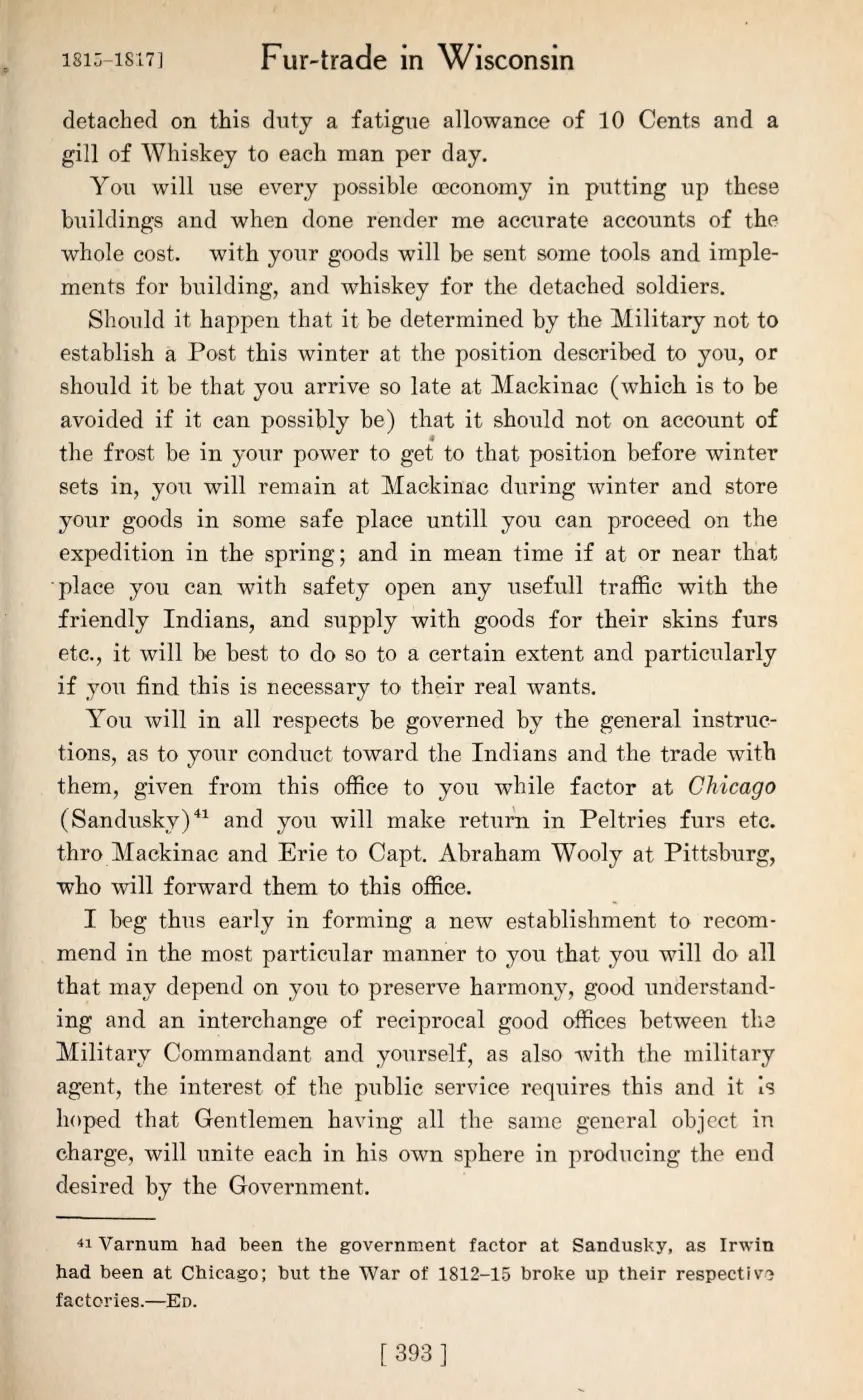
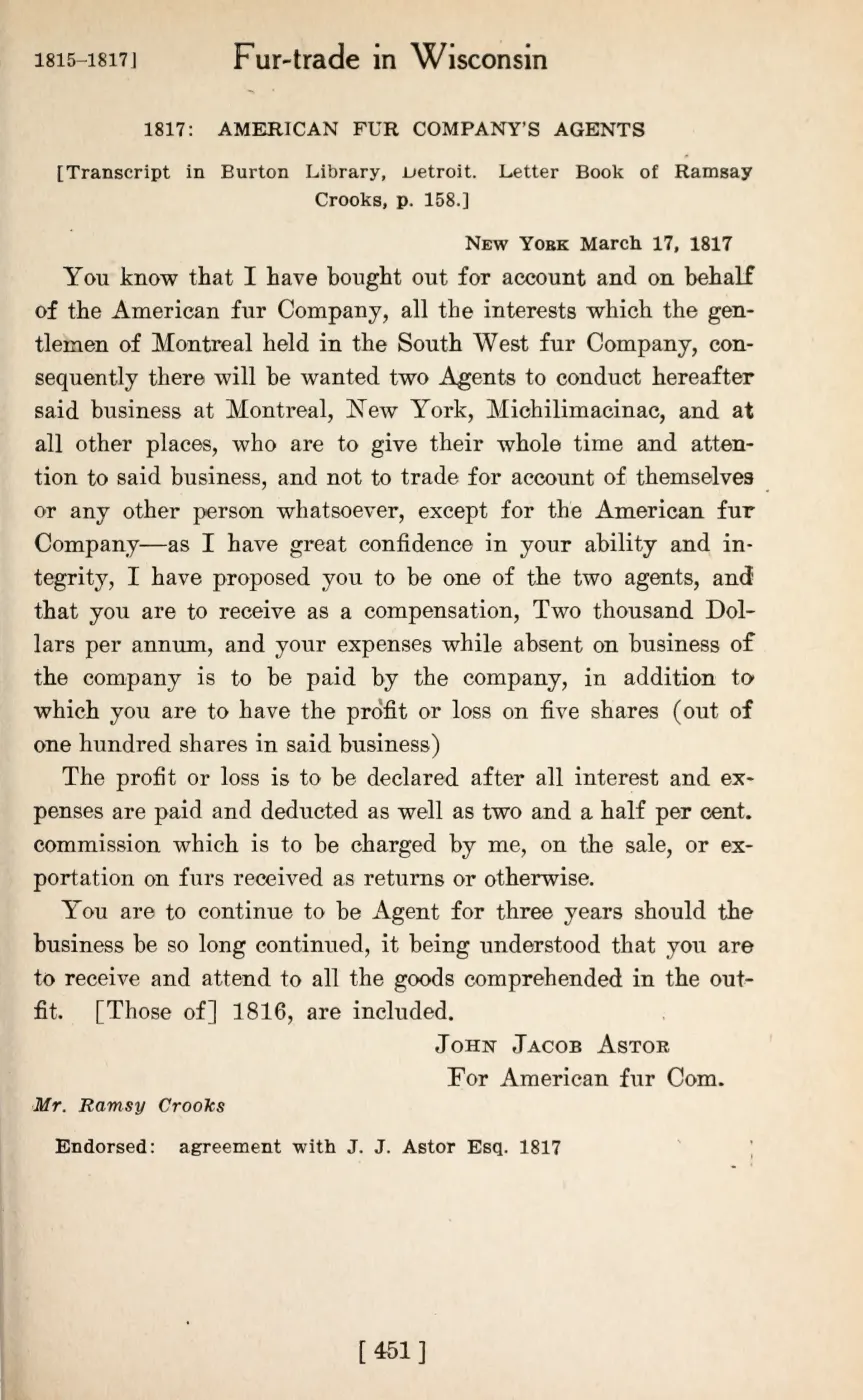
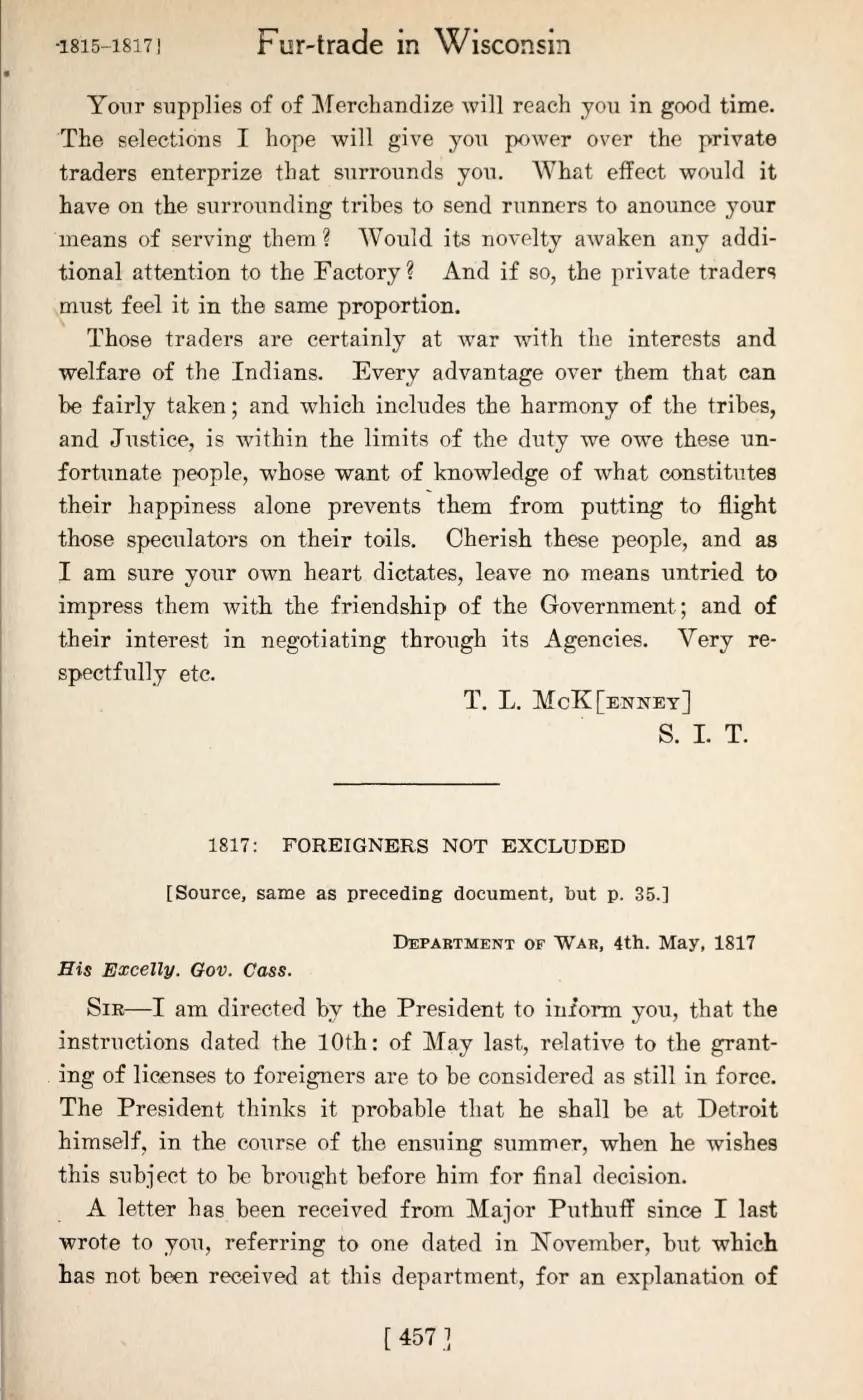
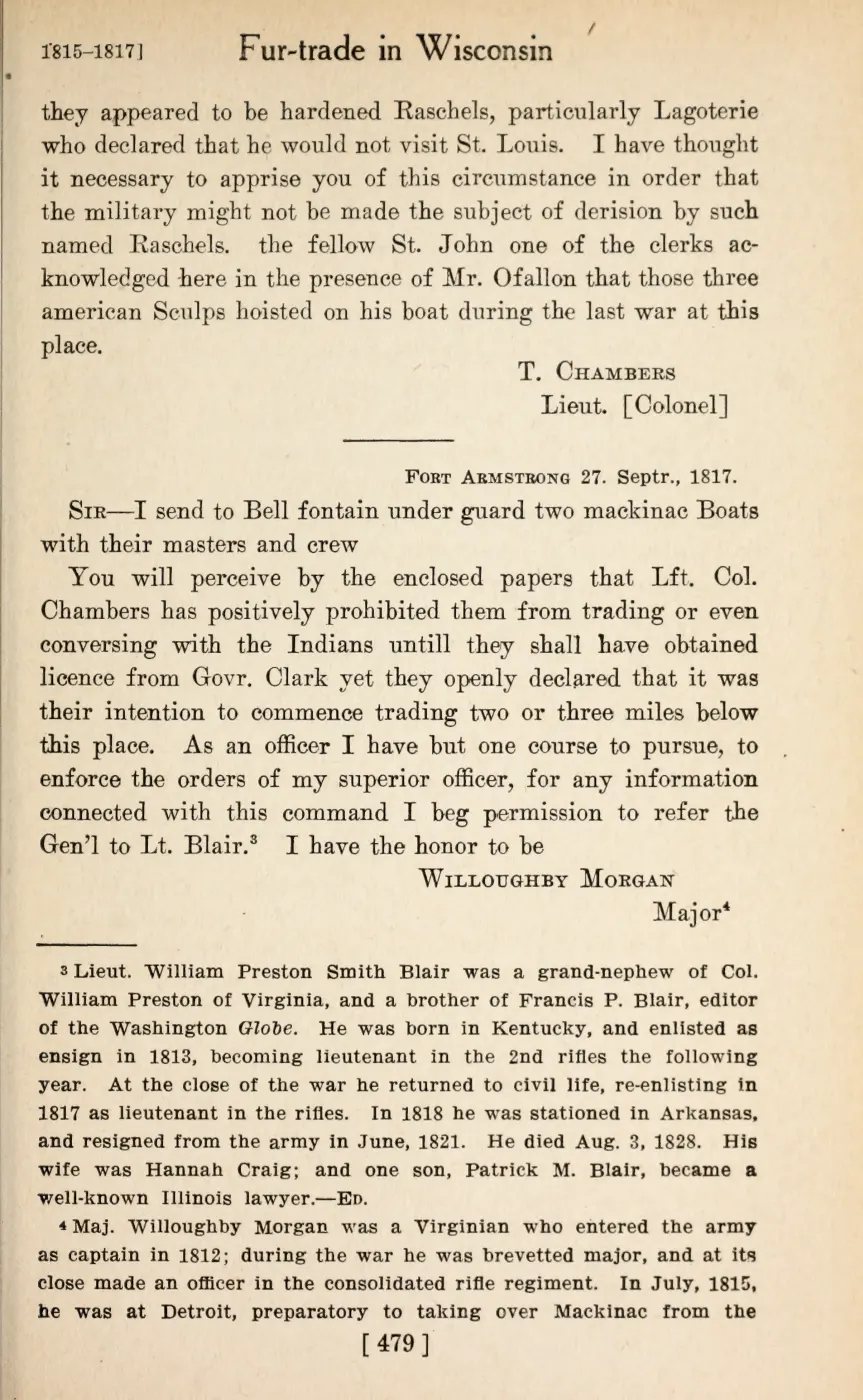
An 1815 regional administrative attestation. A letter from Robert McDonall reprinted in volume 23 names Ottawas of L’Arbre Croche and Chippewas of Grand Traverse and the Beaver Islands among the Indigenous communities associated with British clothing distribution at the former post. The letter is a mediated, colonial administrative source; it supports regional presence and connection, not a population count or Indigenous-authored account.7
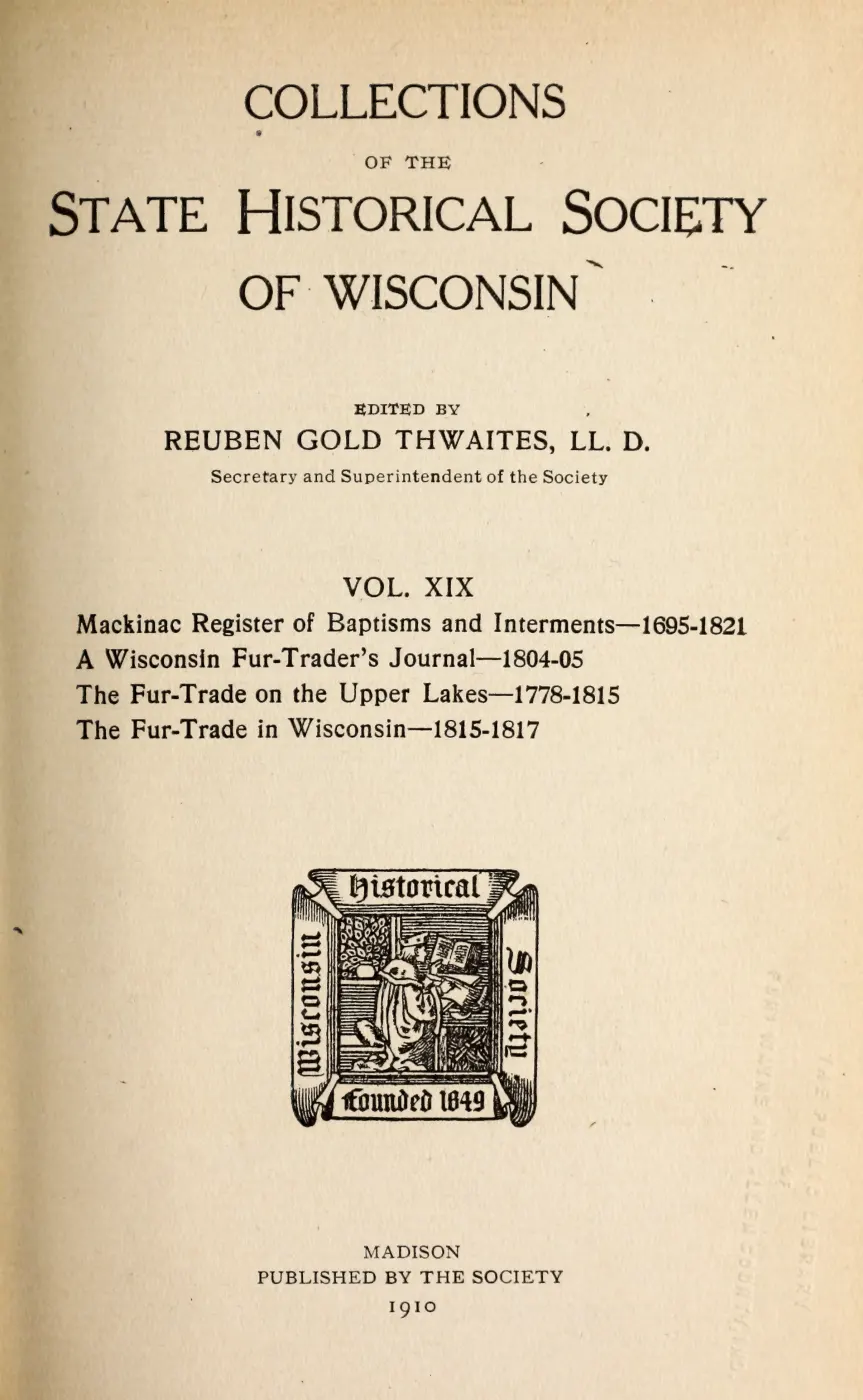
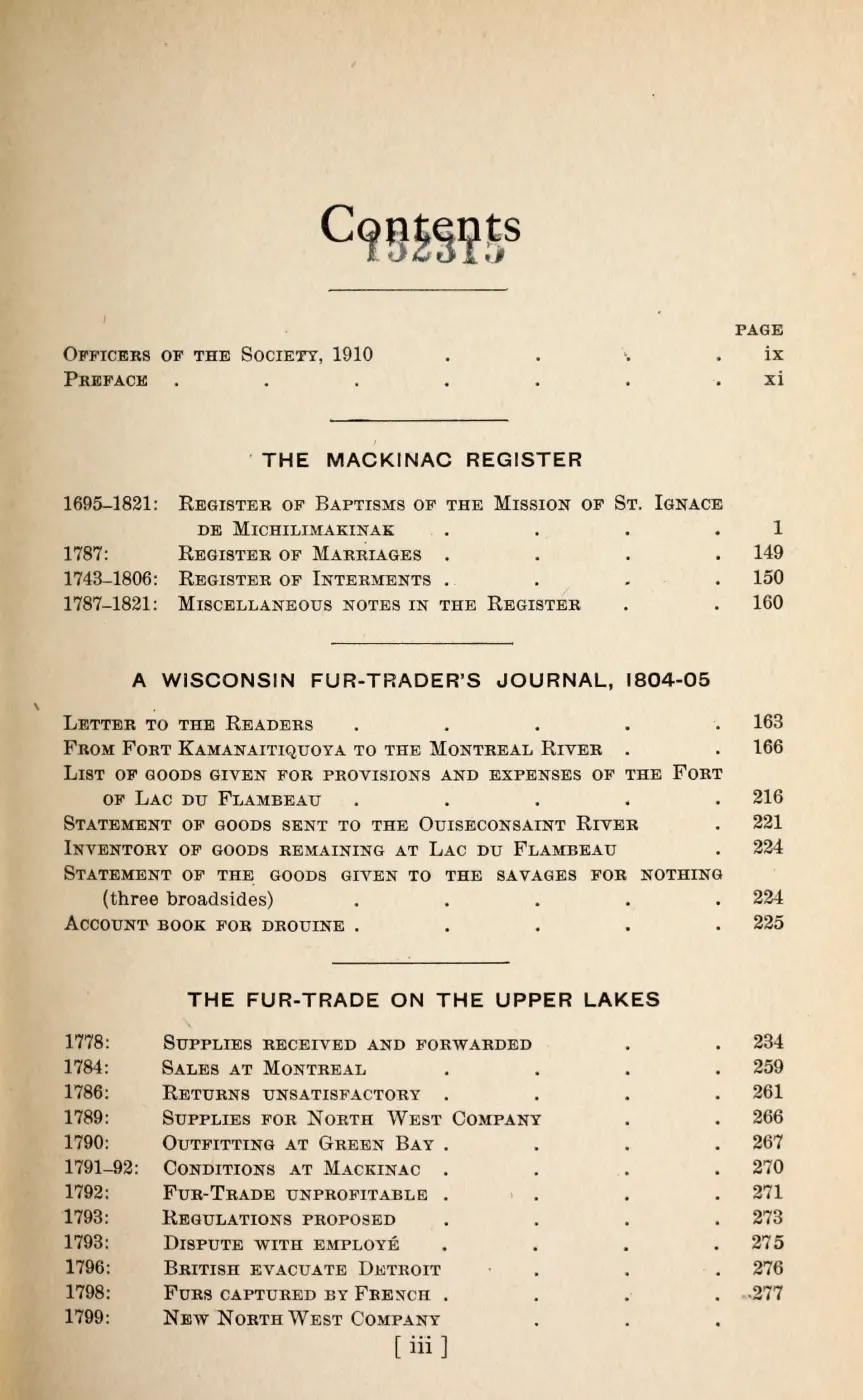
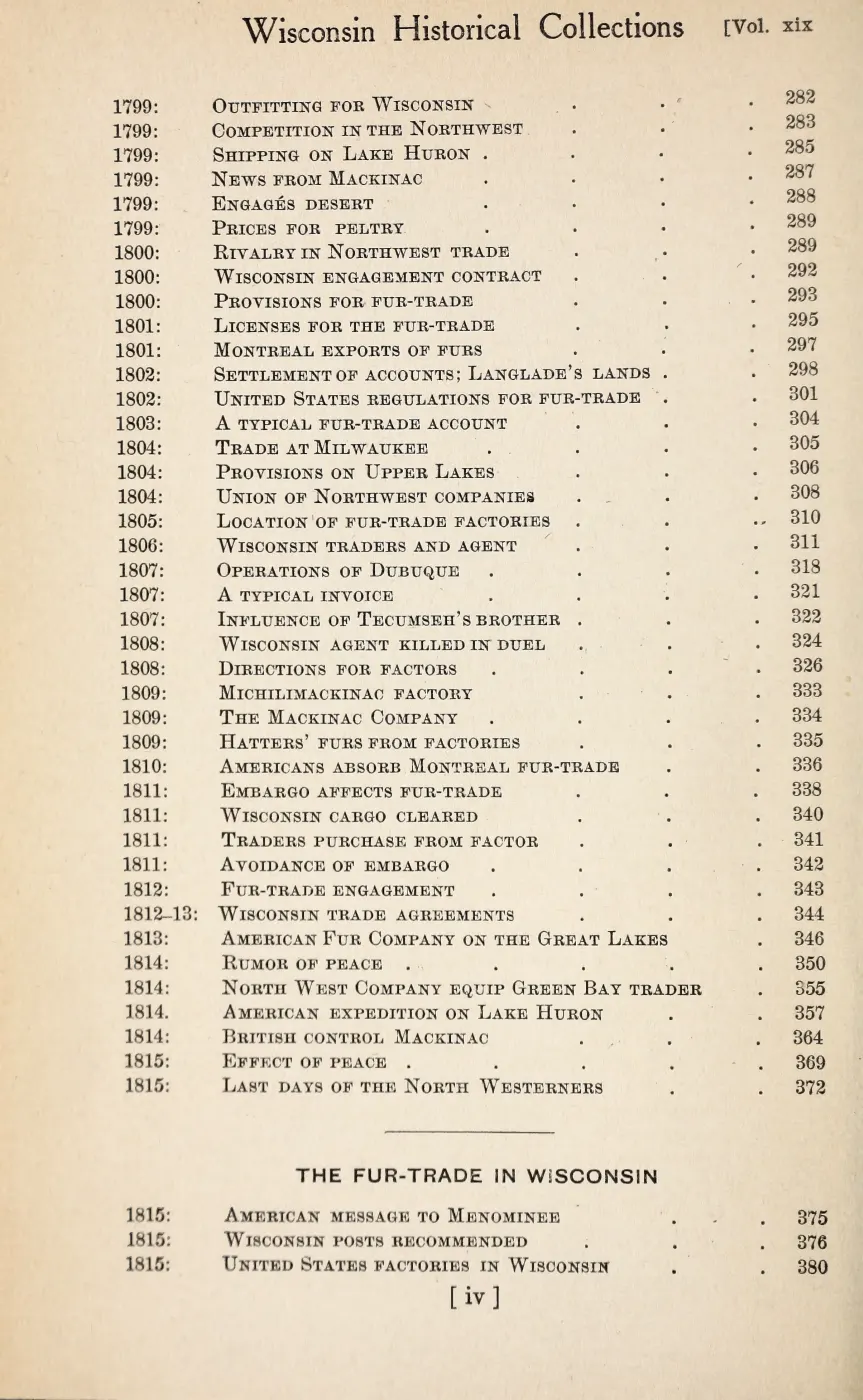
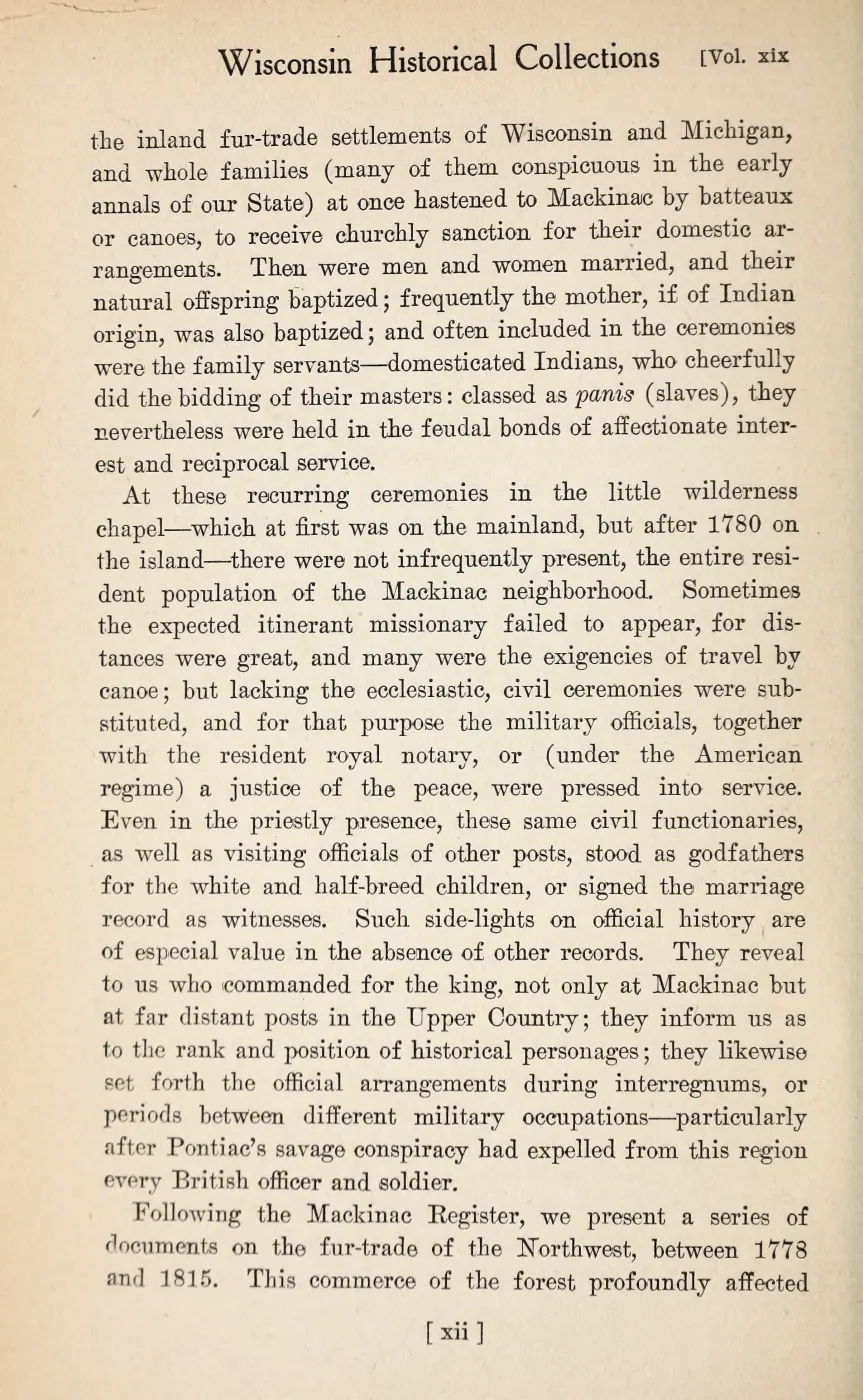
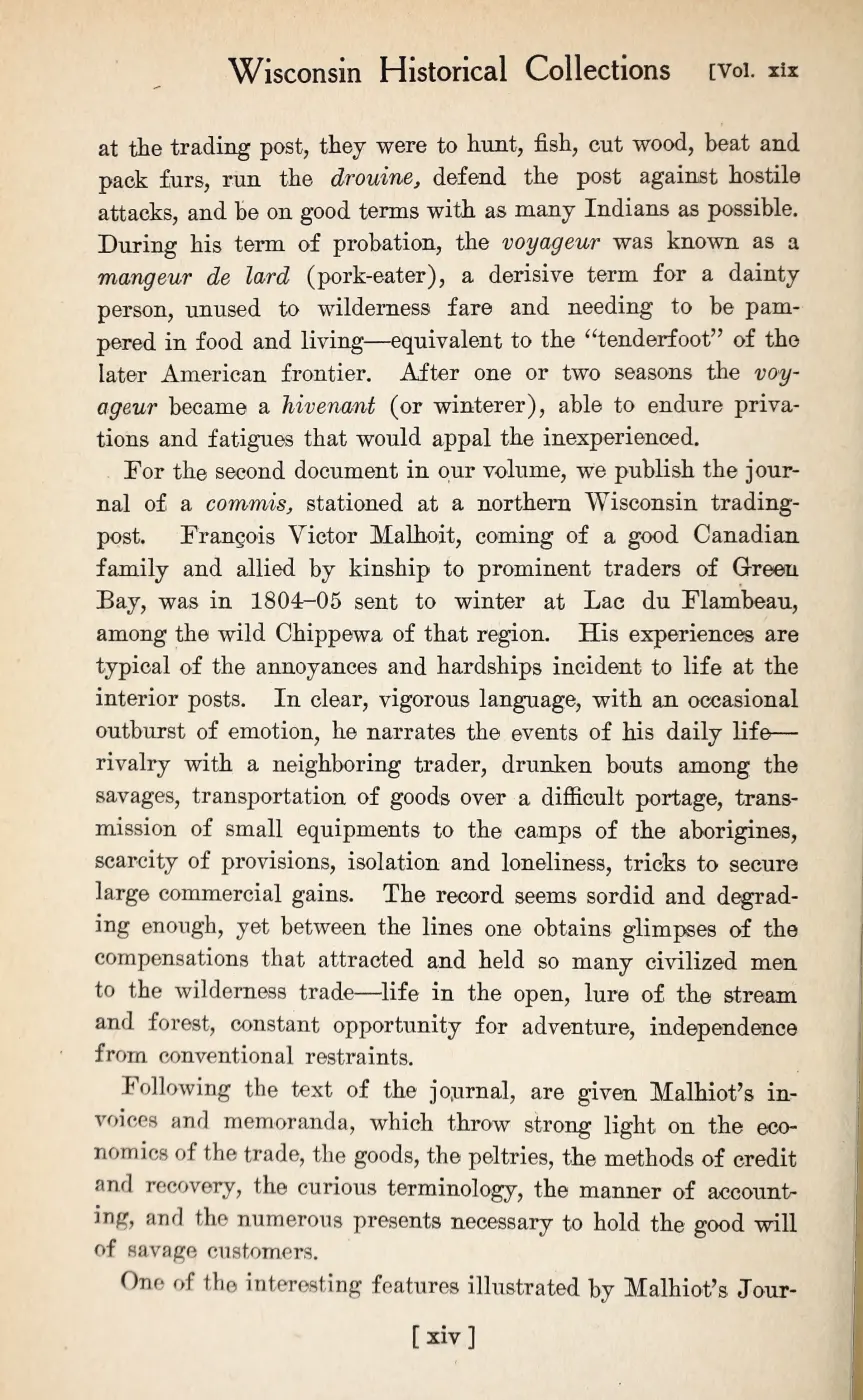
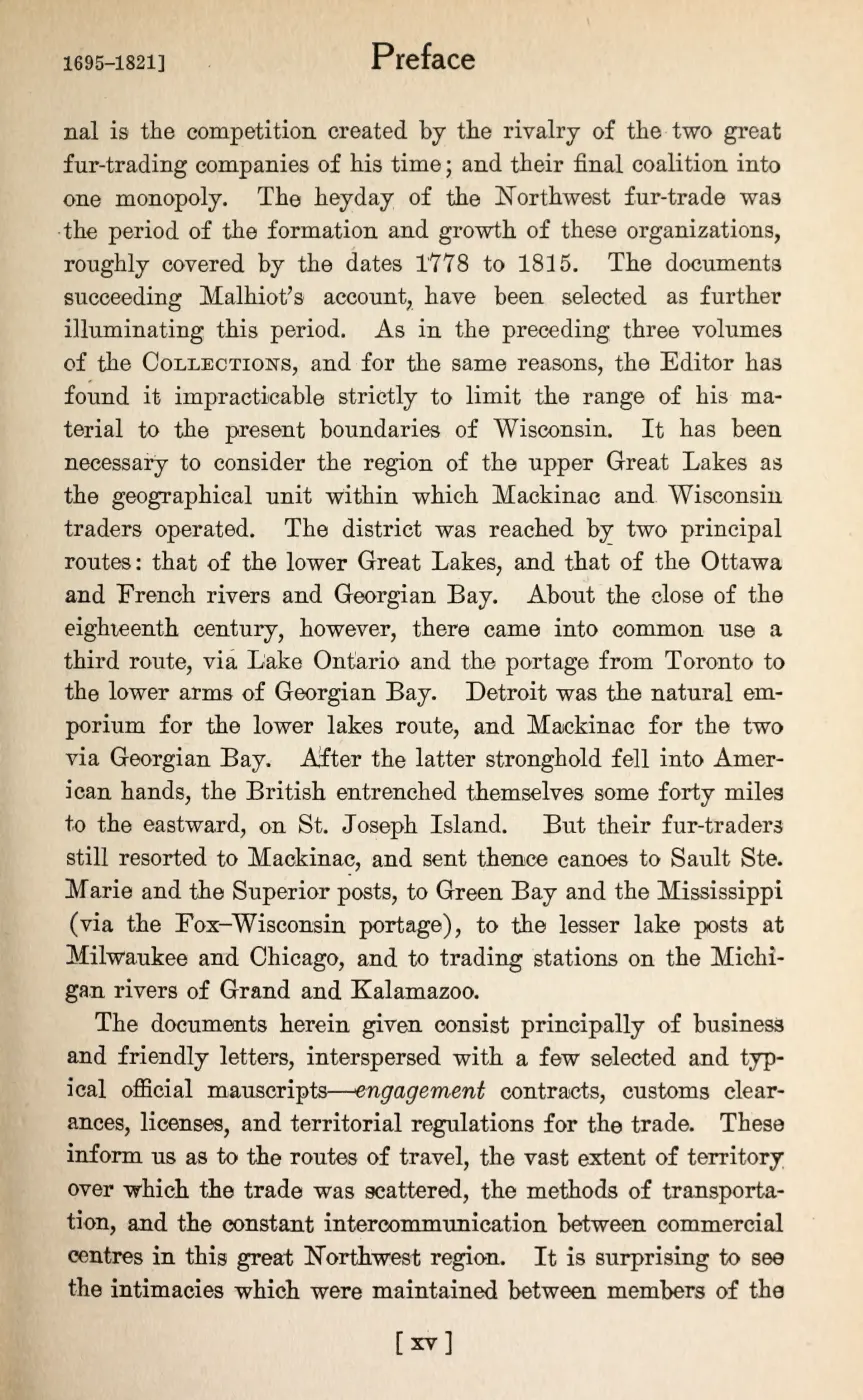
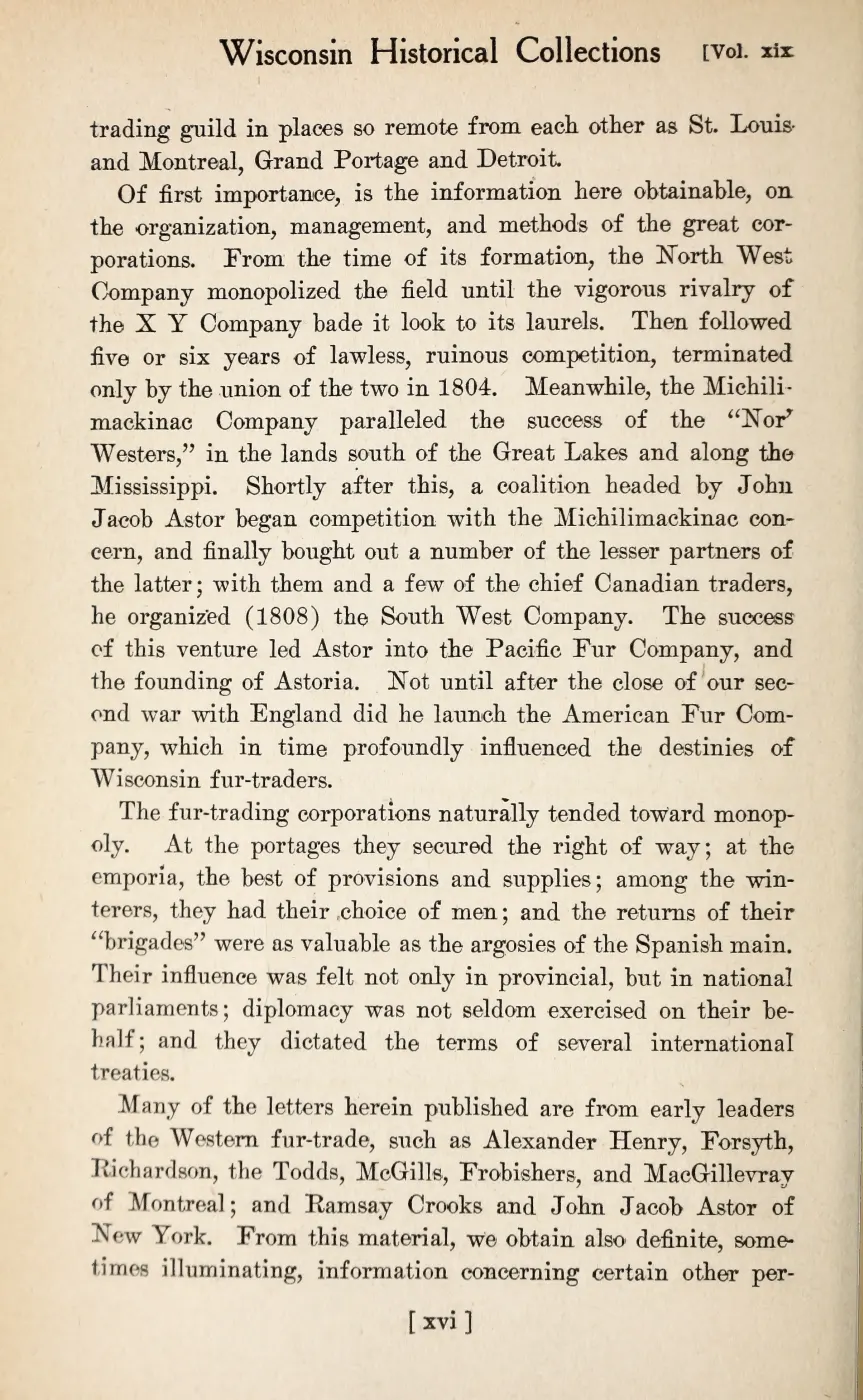
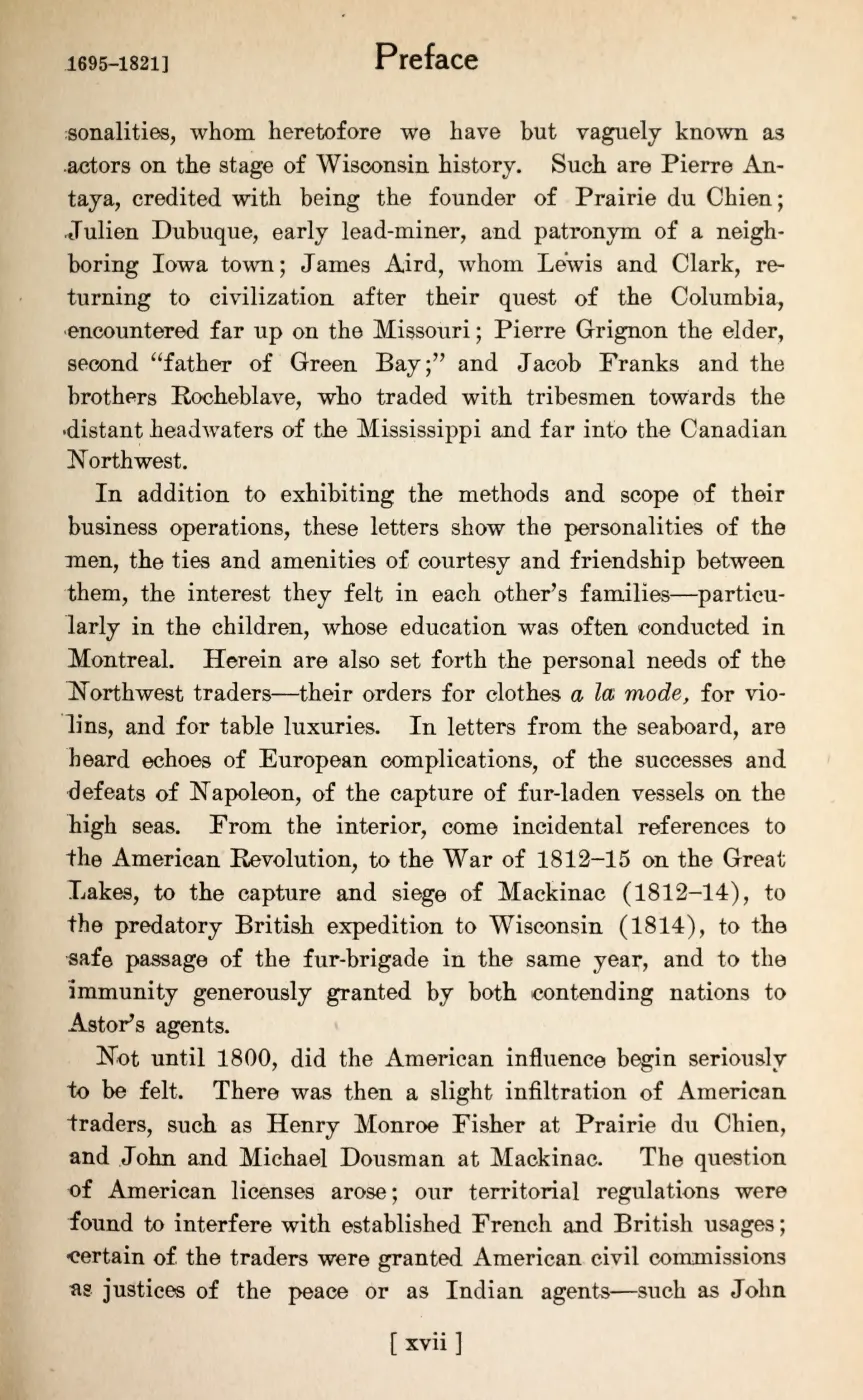
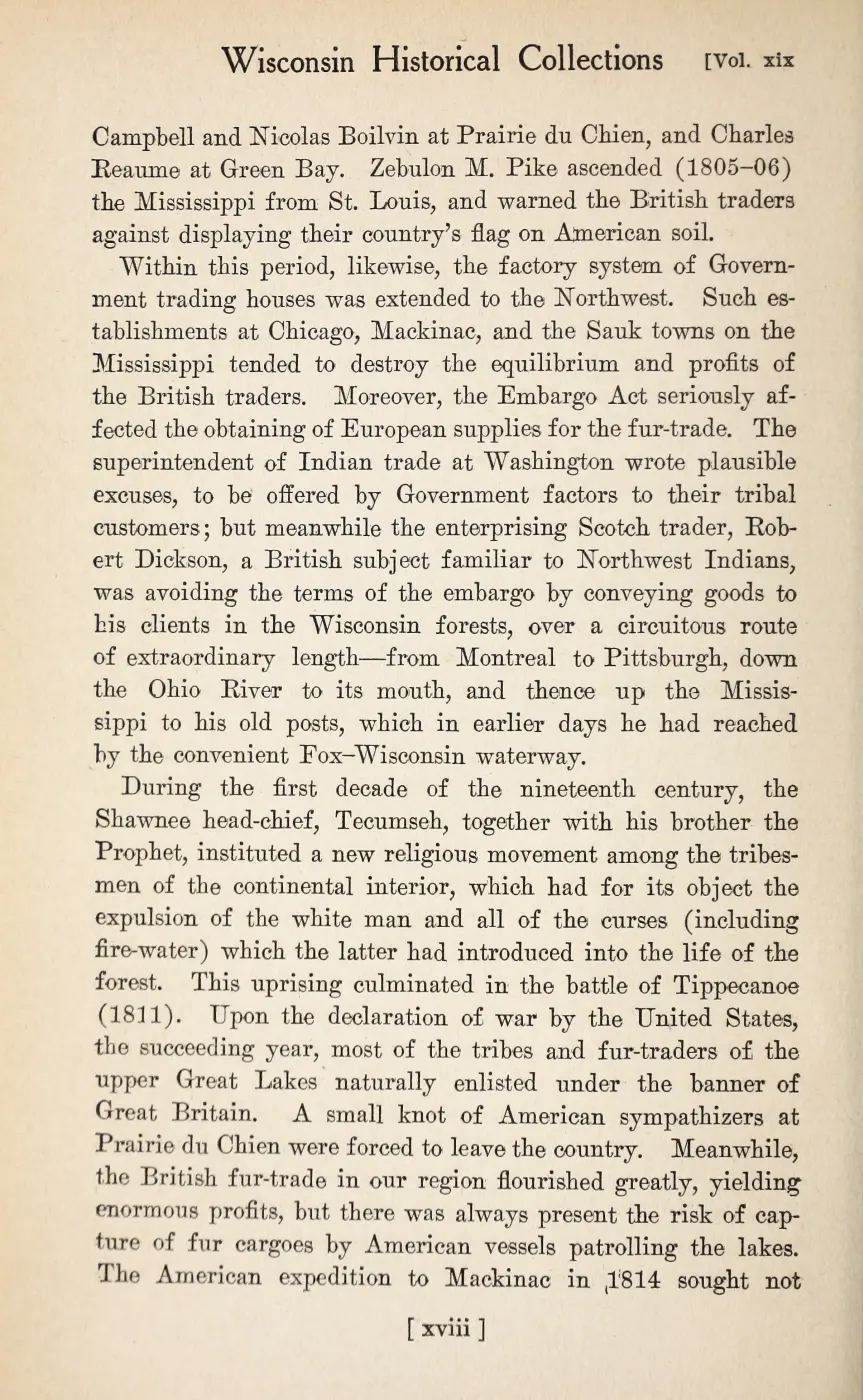
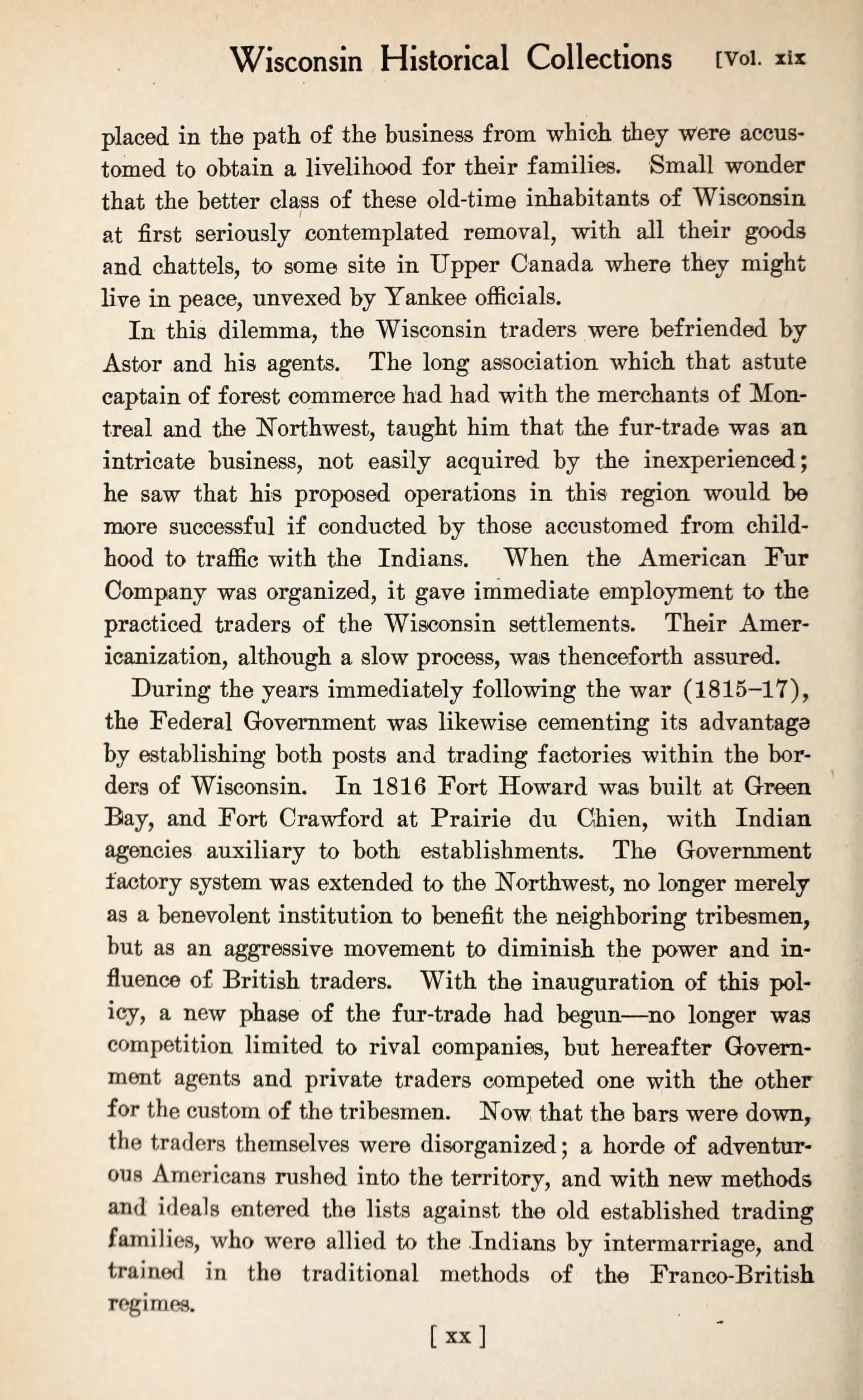
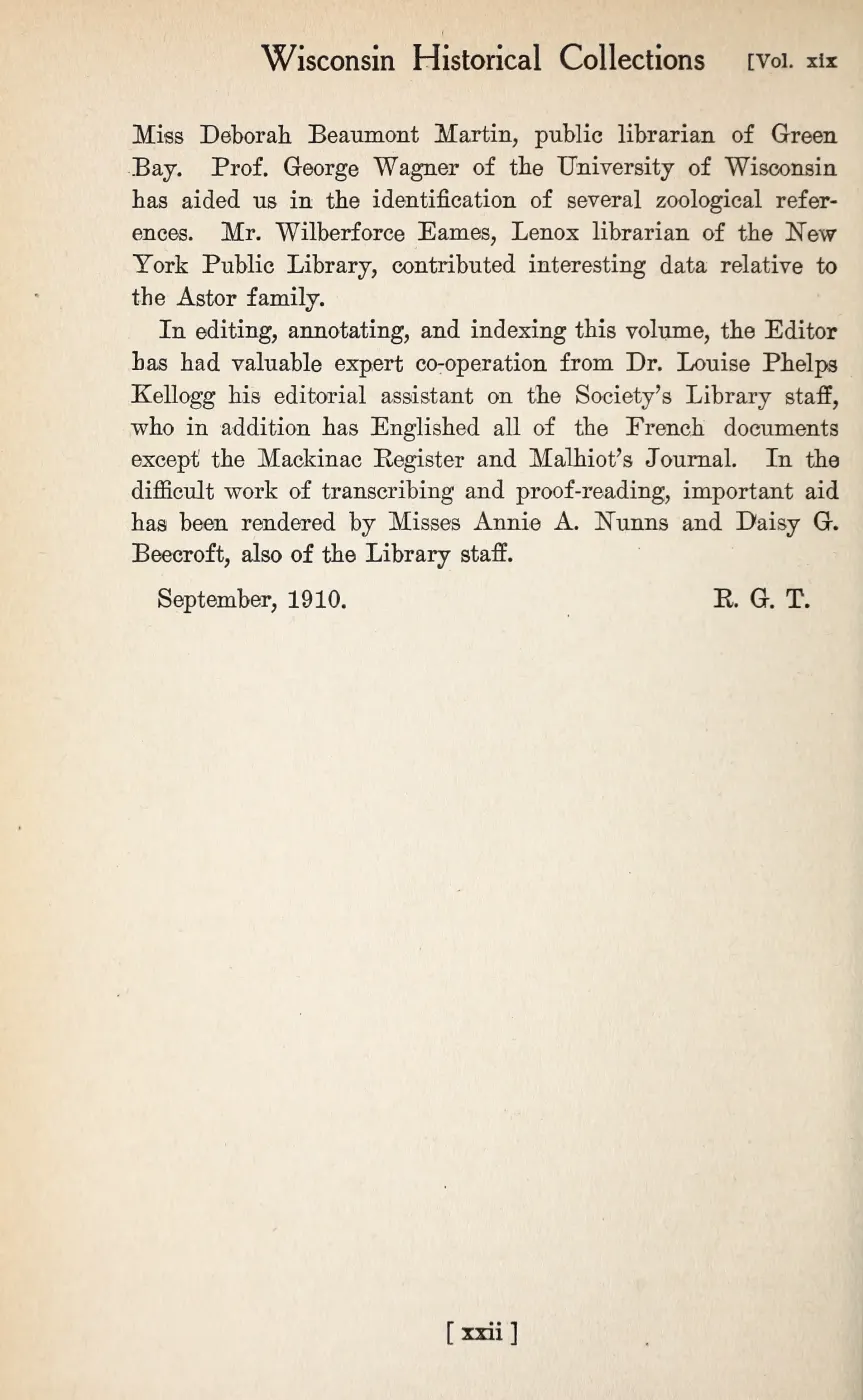
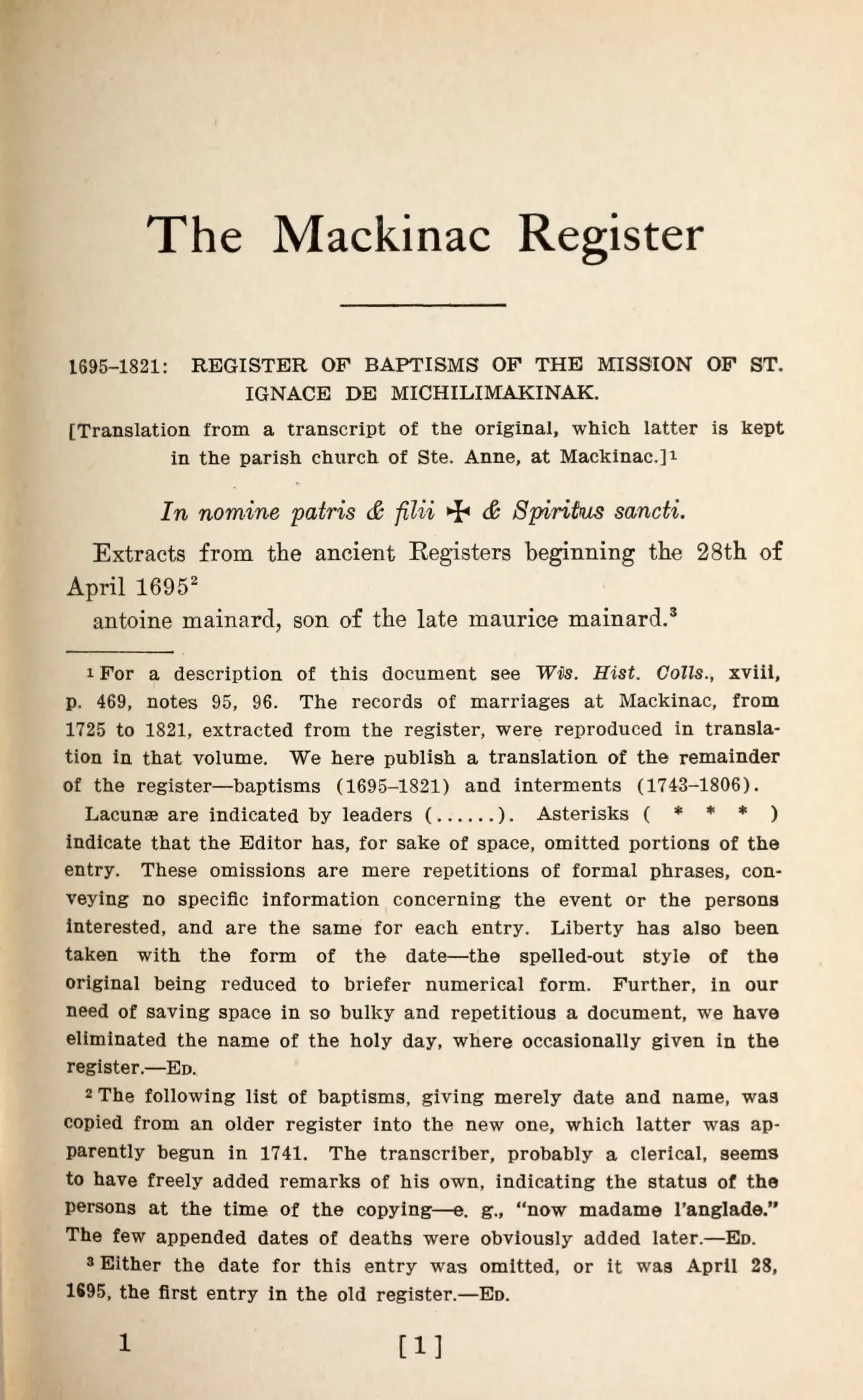
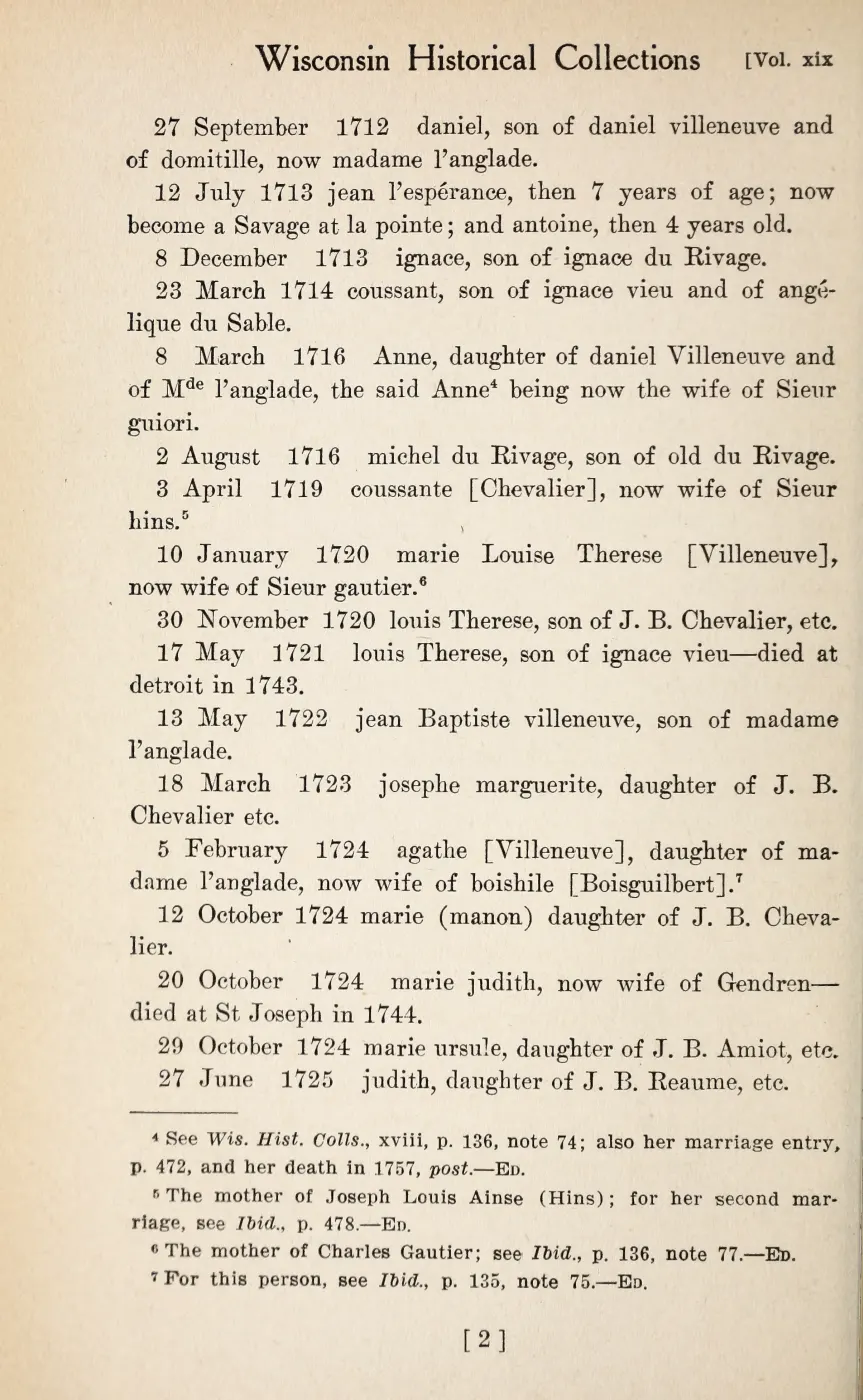
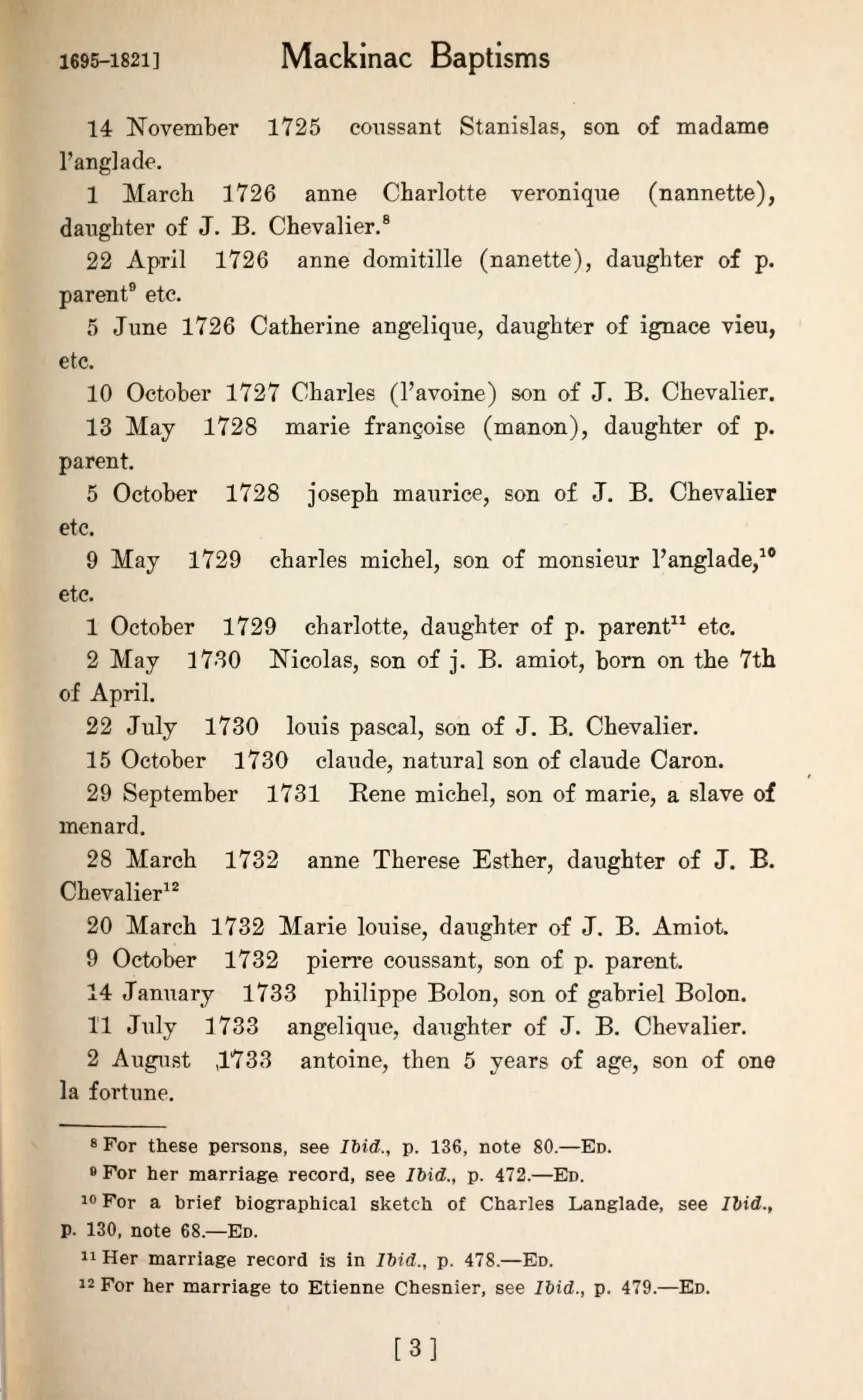
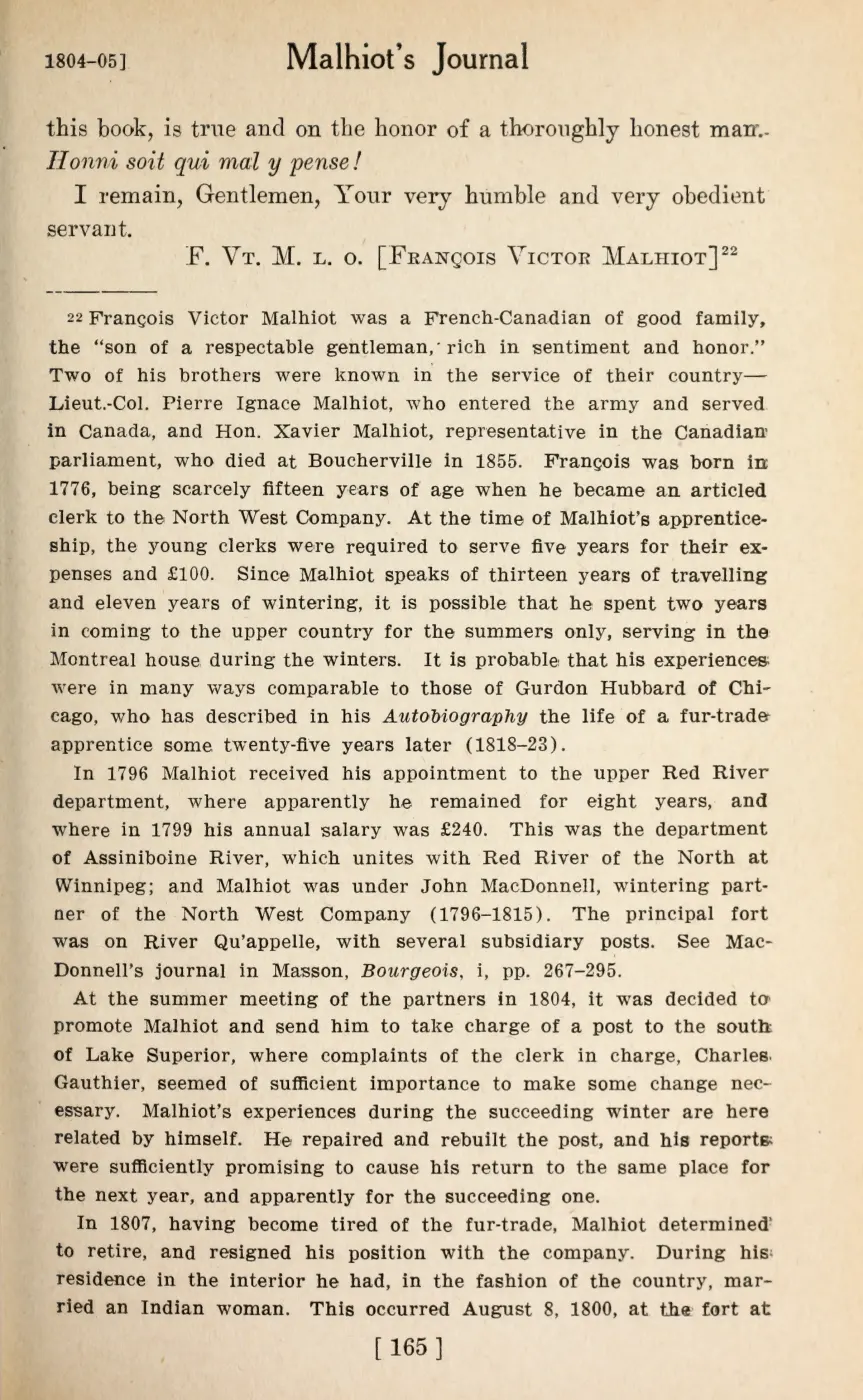
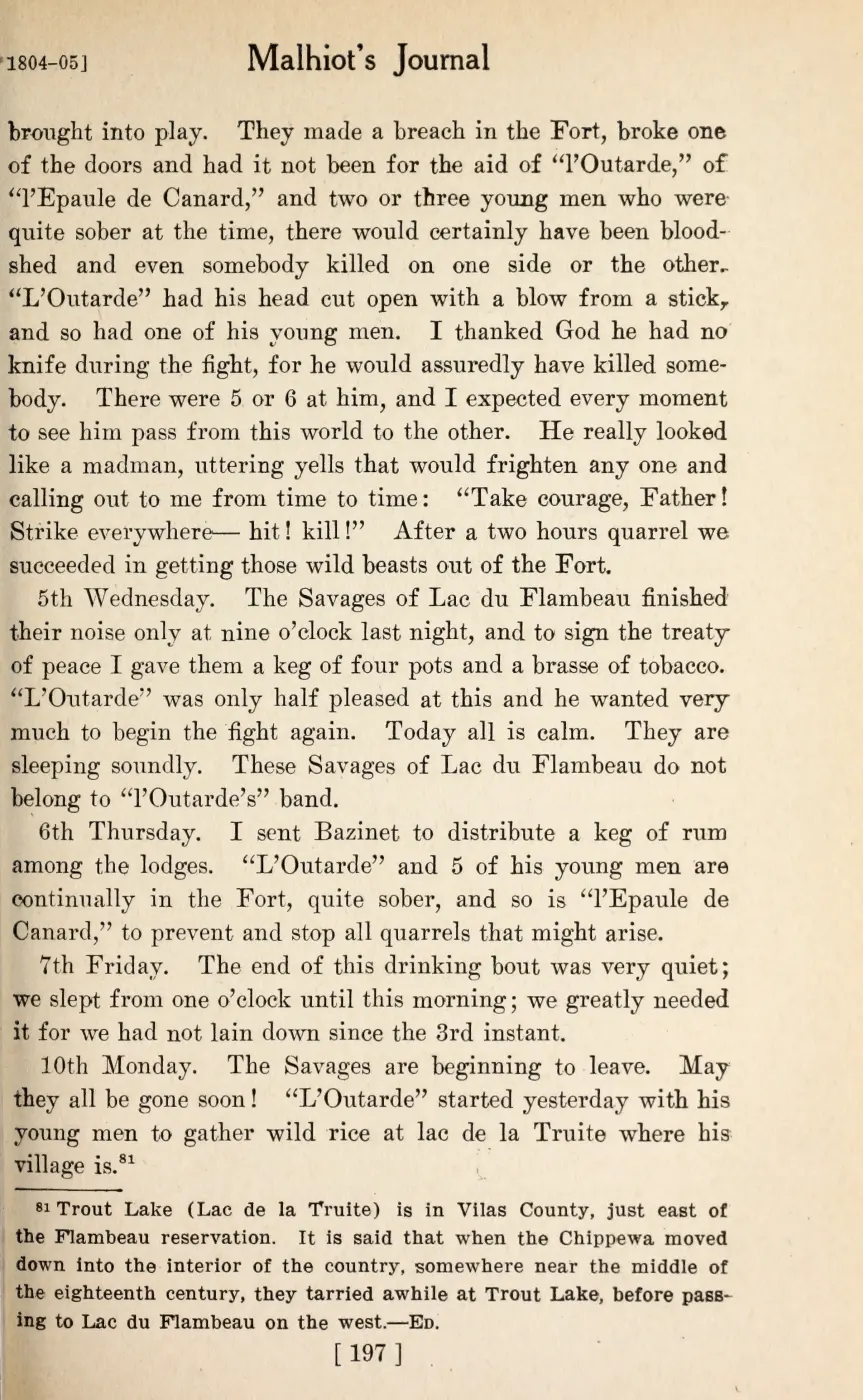
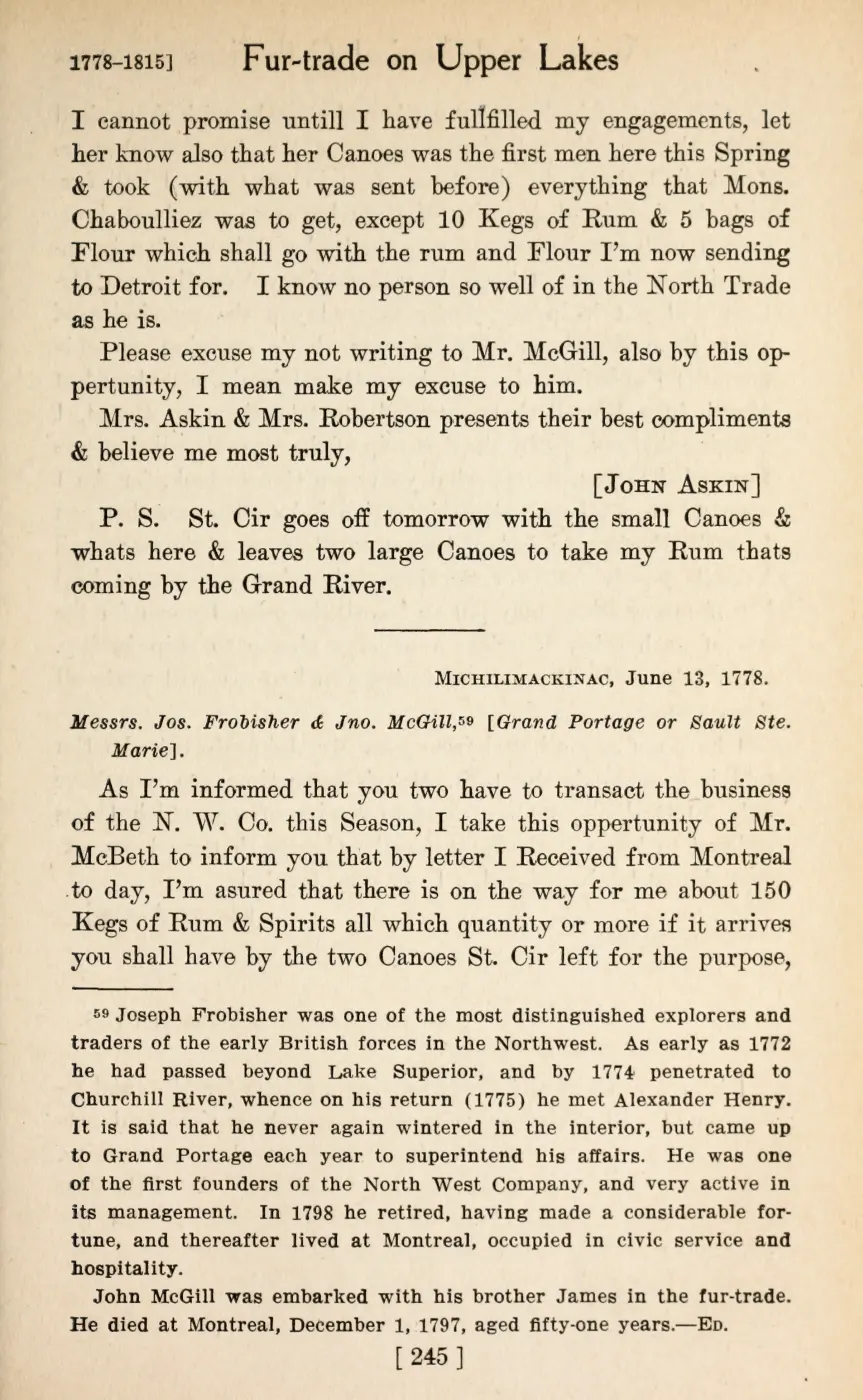
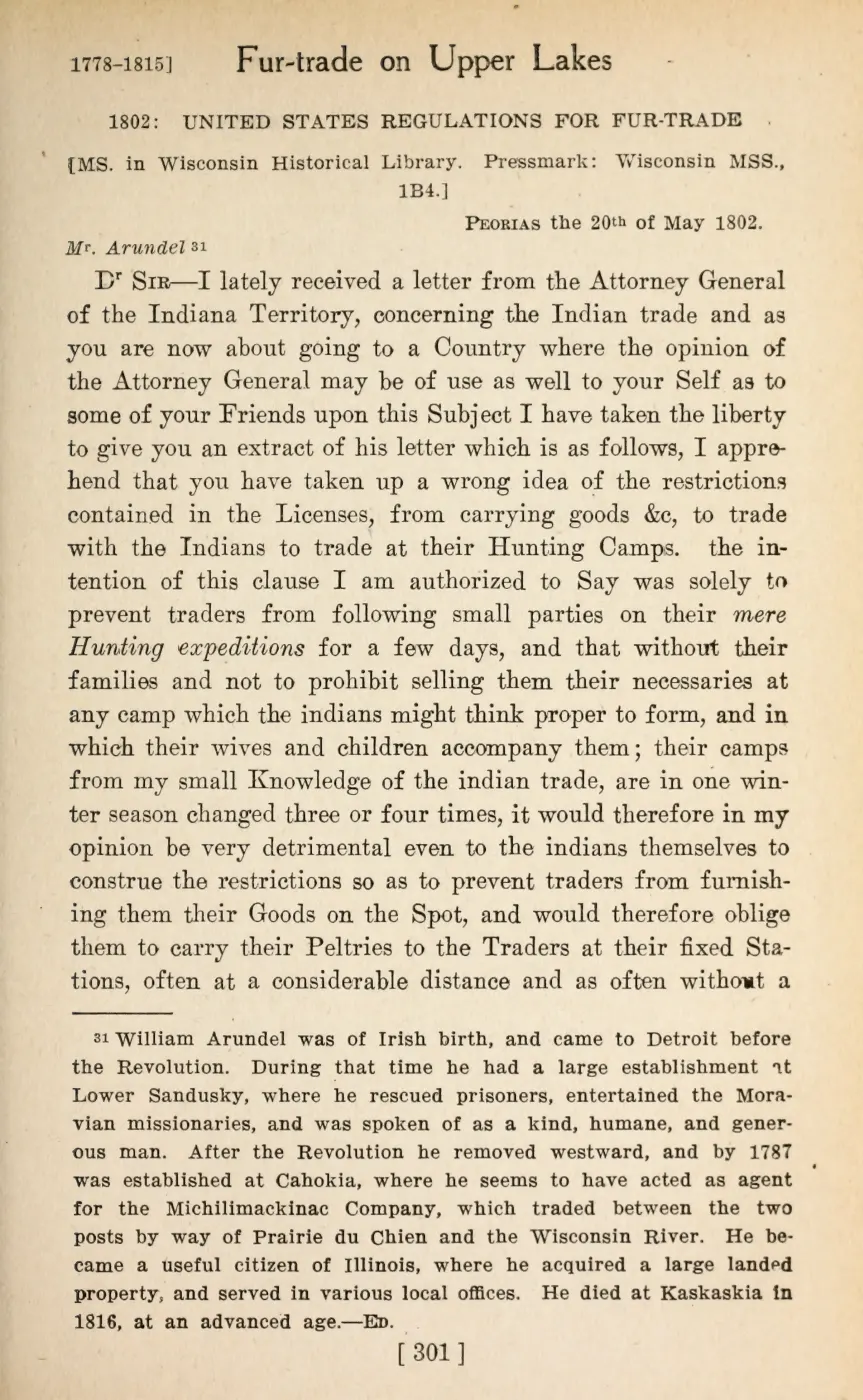
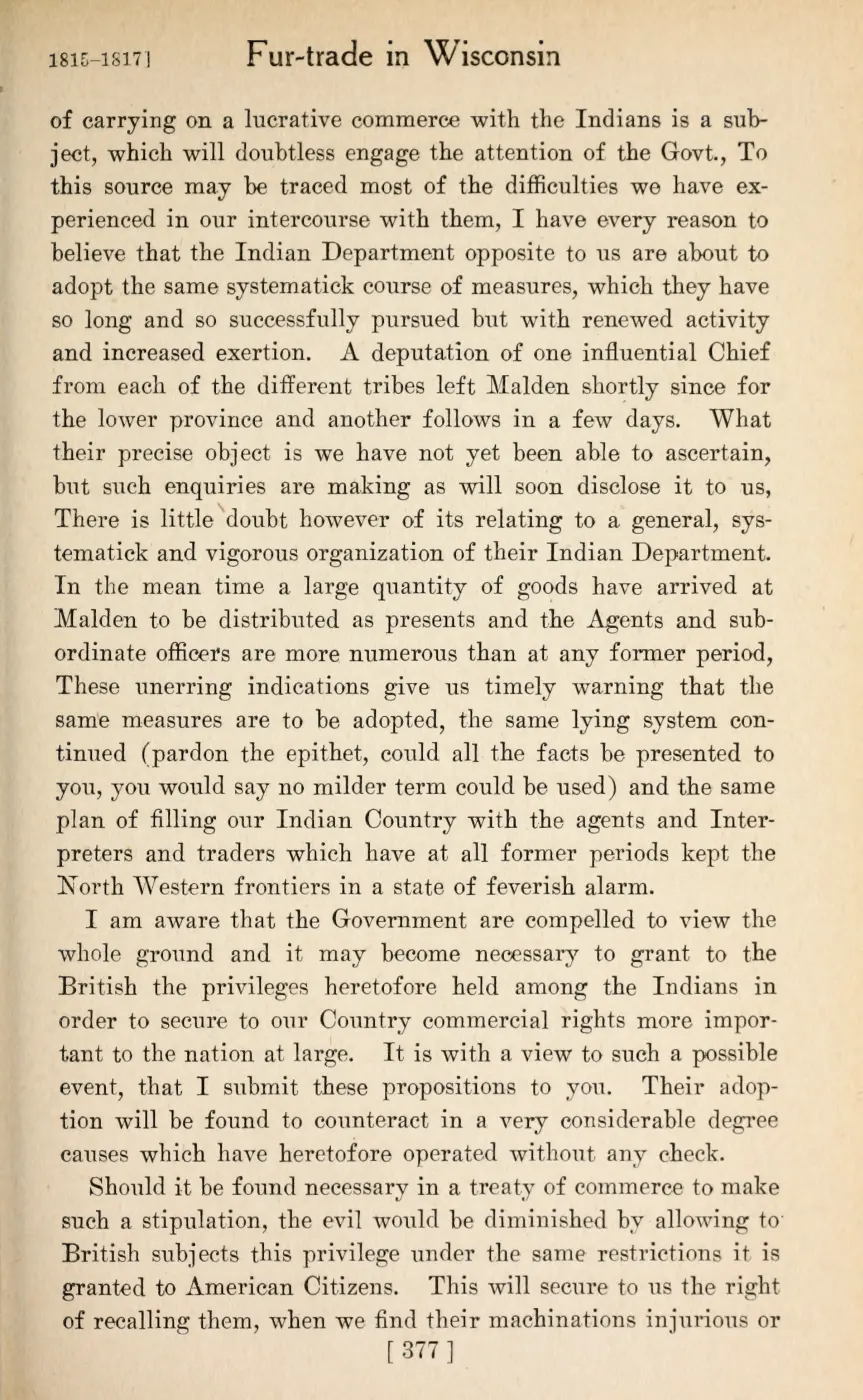
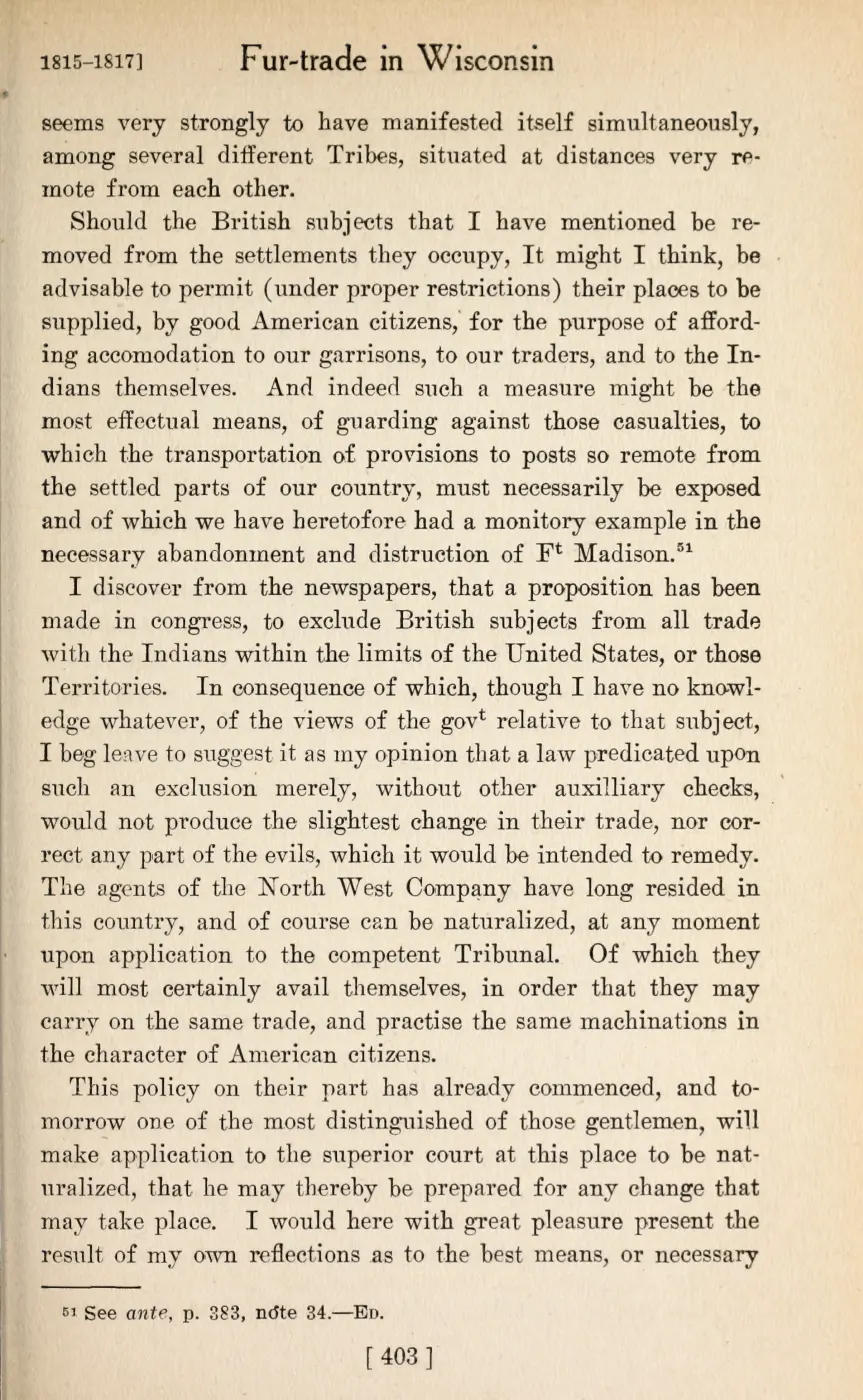
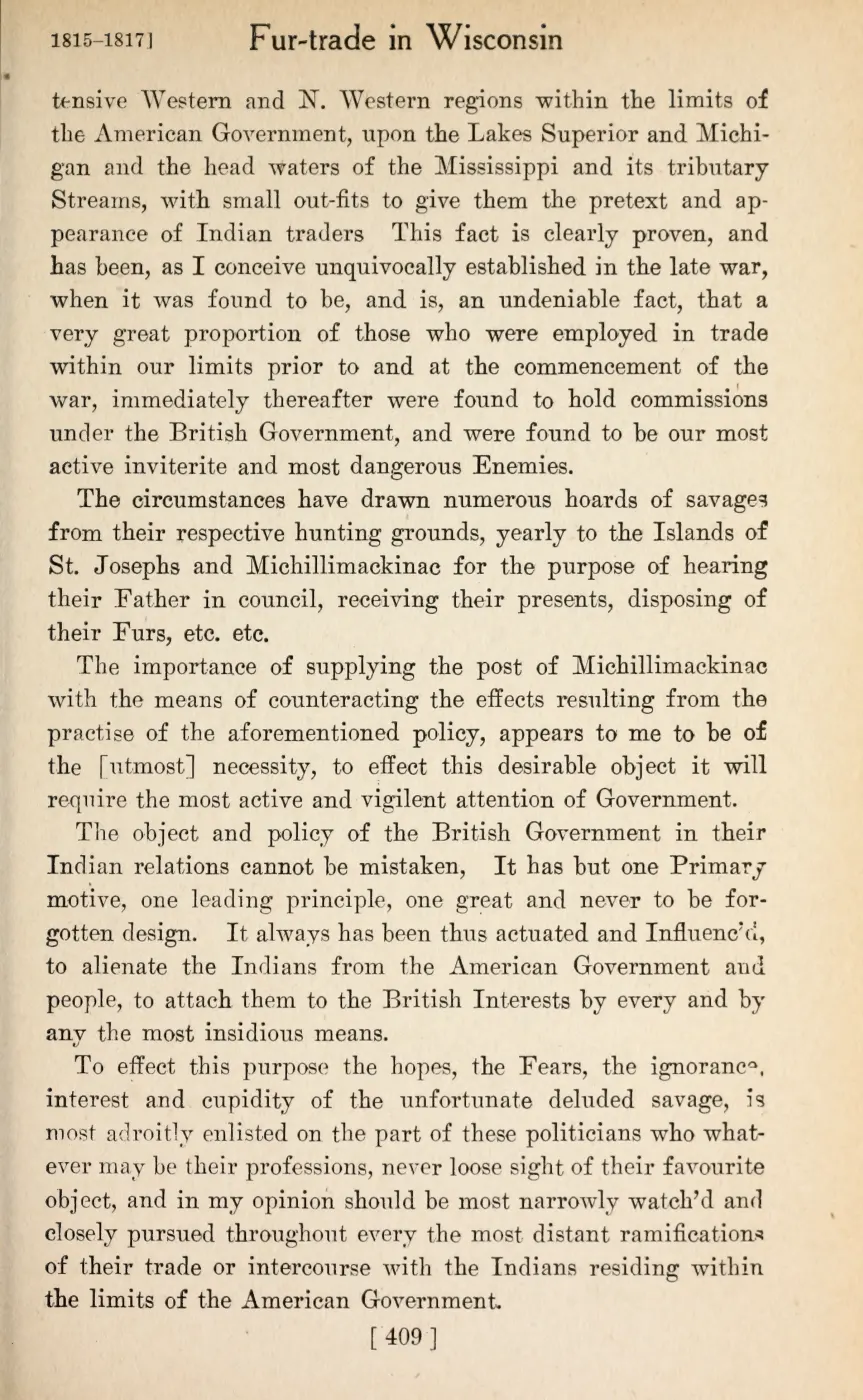
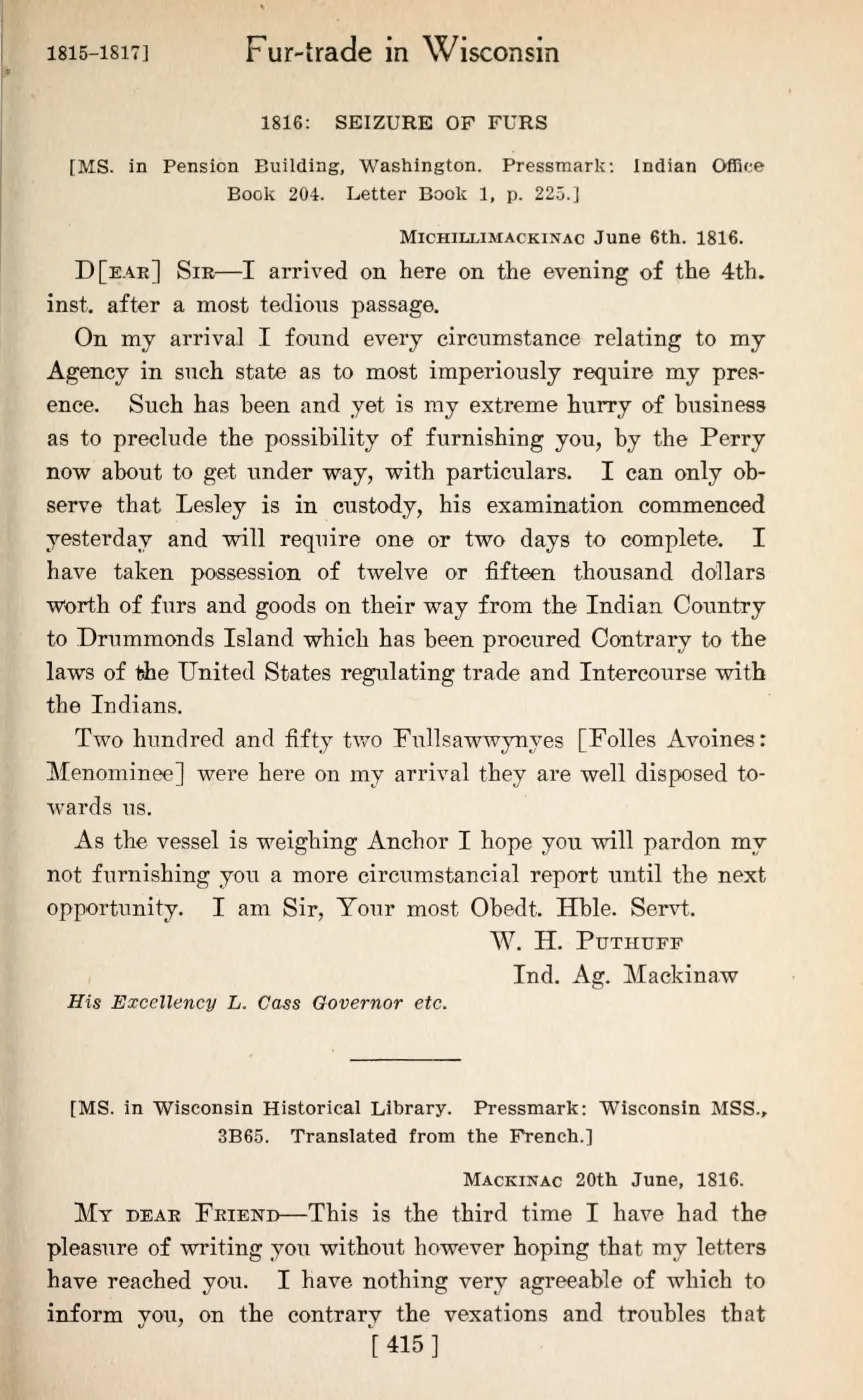
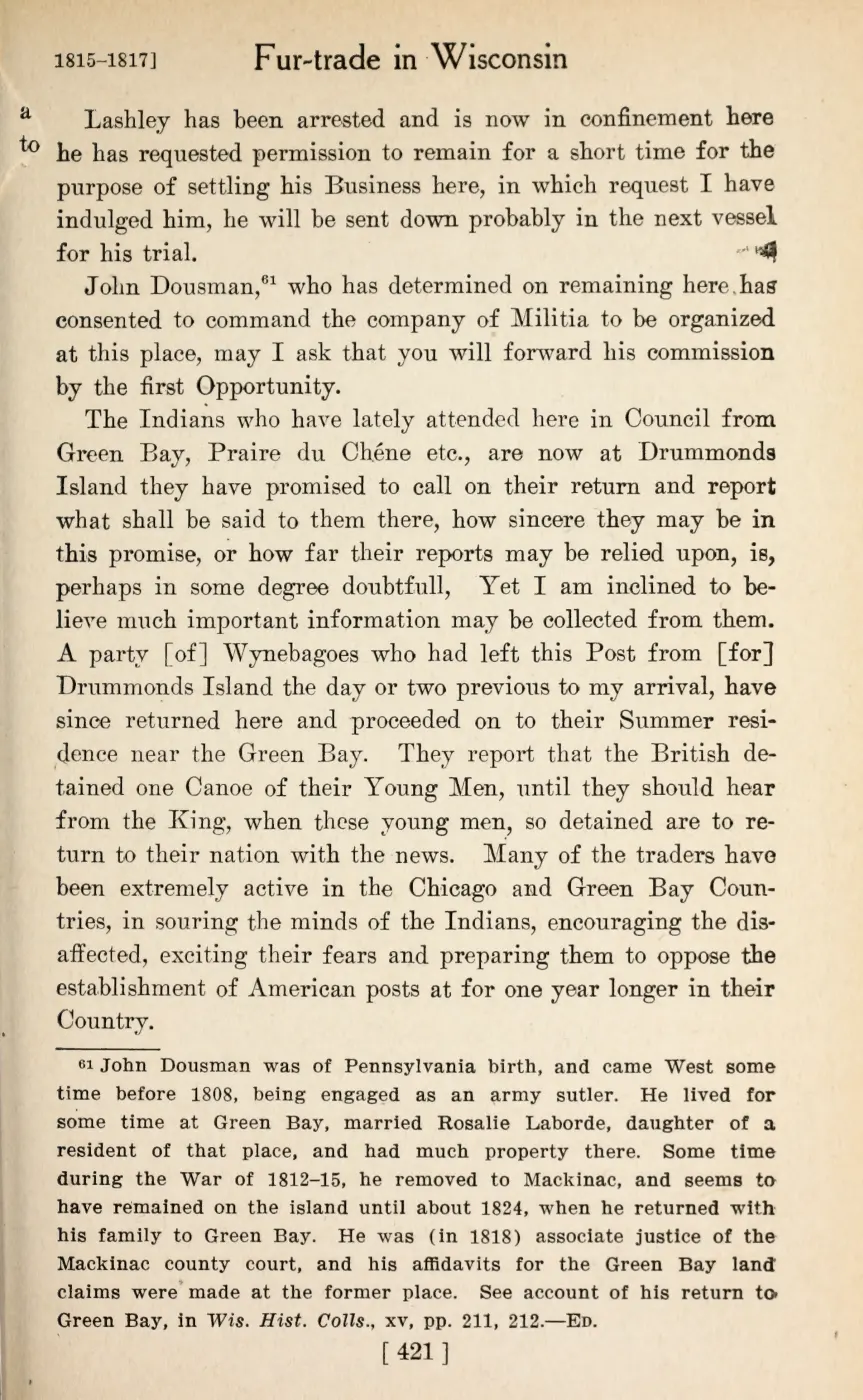
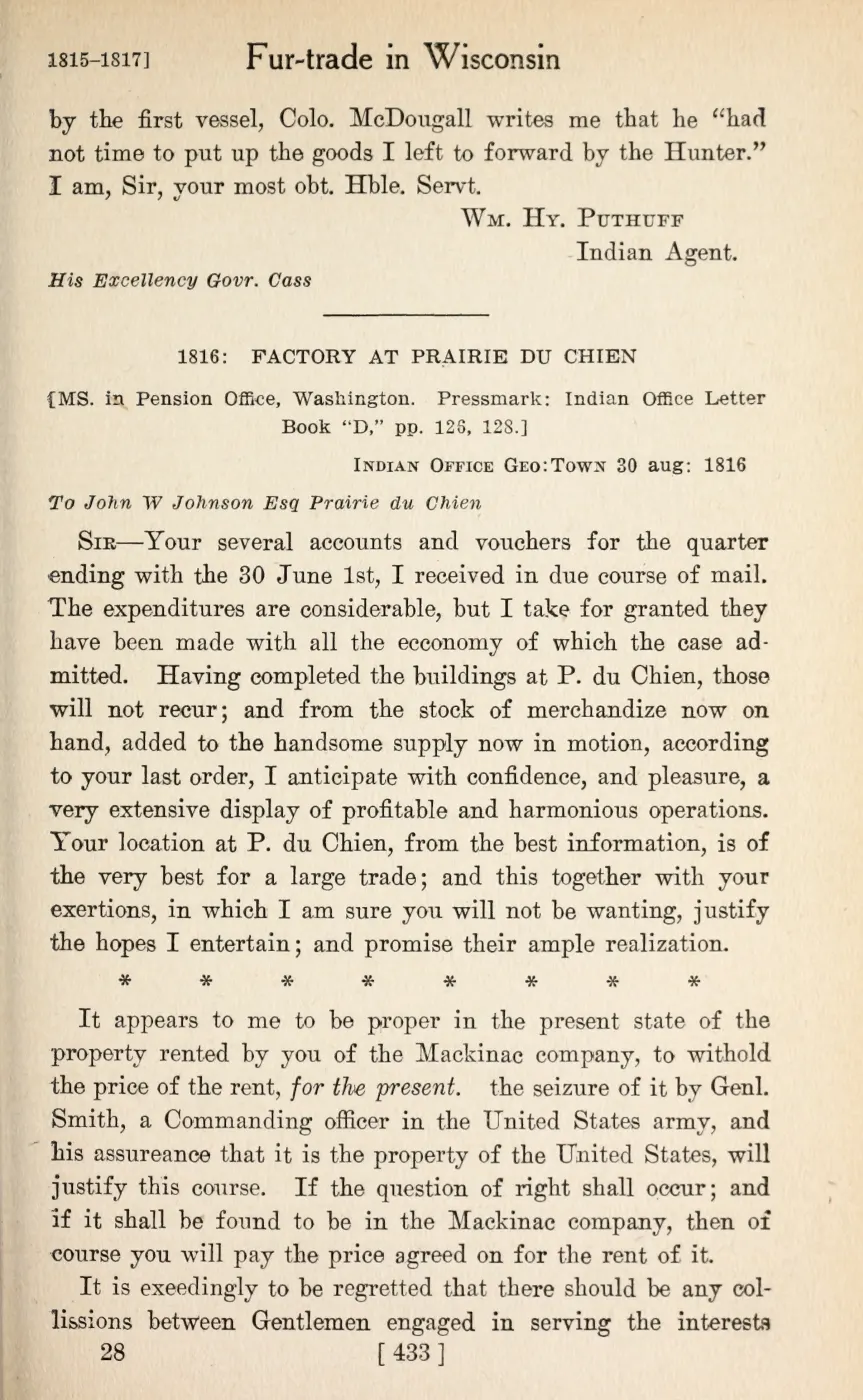
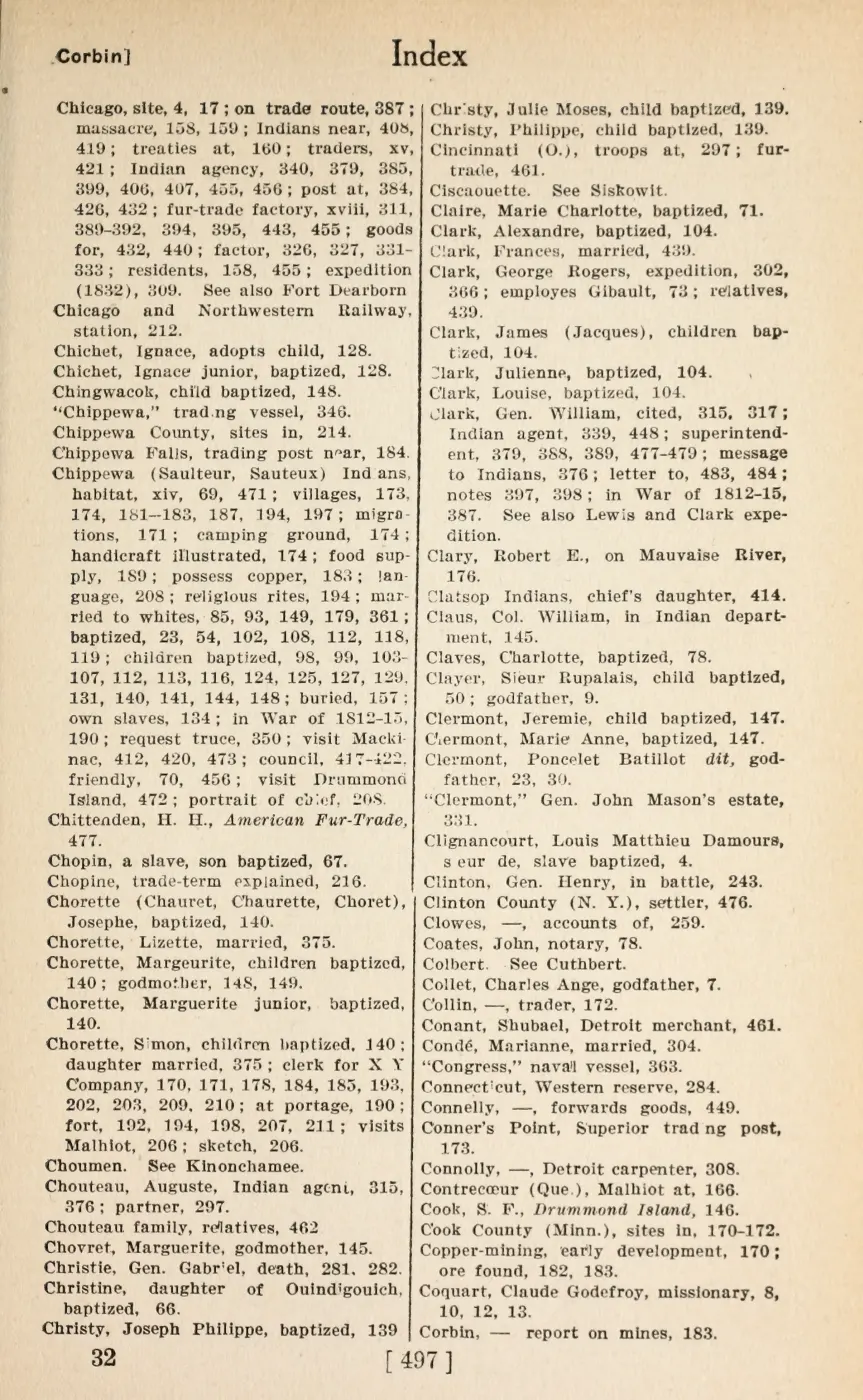
An 1816 regional agricultural attestation. A report by Michillimackinac Indian agent William Henry Puthuff, printed from an Indian Office letter book, groups Odawa communities at Cheboygan, L’Arbre Croche, the Beaver Islands, and Grand Traverse. Puthuff reports that the villages had advanced in agriculture and supplied corn, potatoes, and vegetables into the Mackinac and fur-trade economy. The stated 12,000-bushel figures are his aggregate estimate for the named regional communities, not a count for the Beaver Islands, nor a neutral account of Odawa life. Wisconsin Historical Collections, volume XIX, 1910
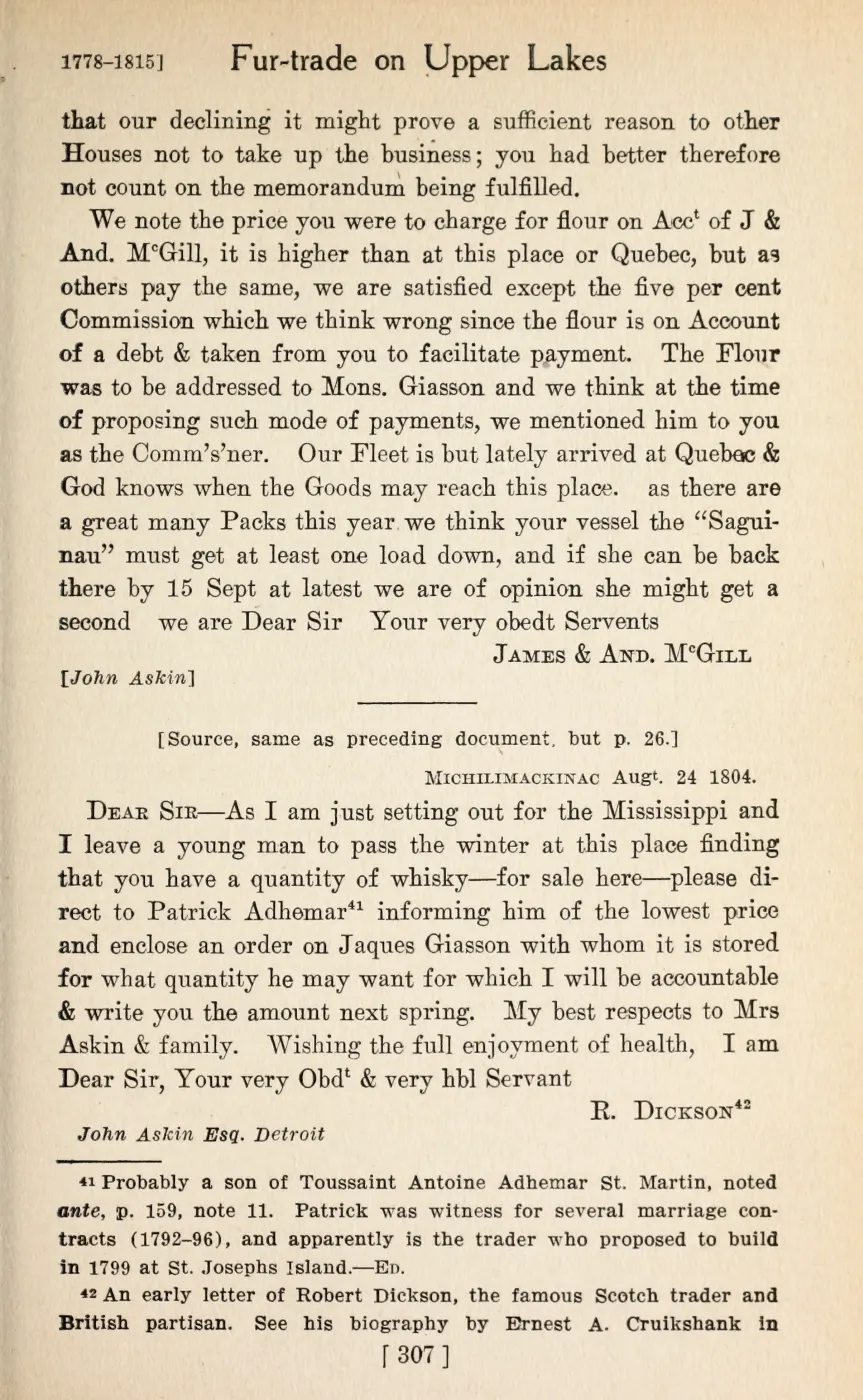
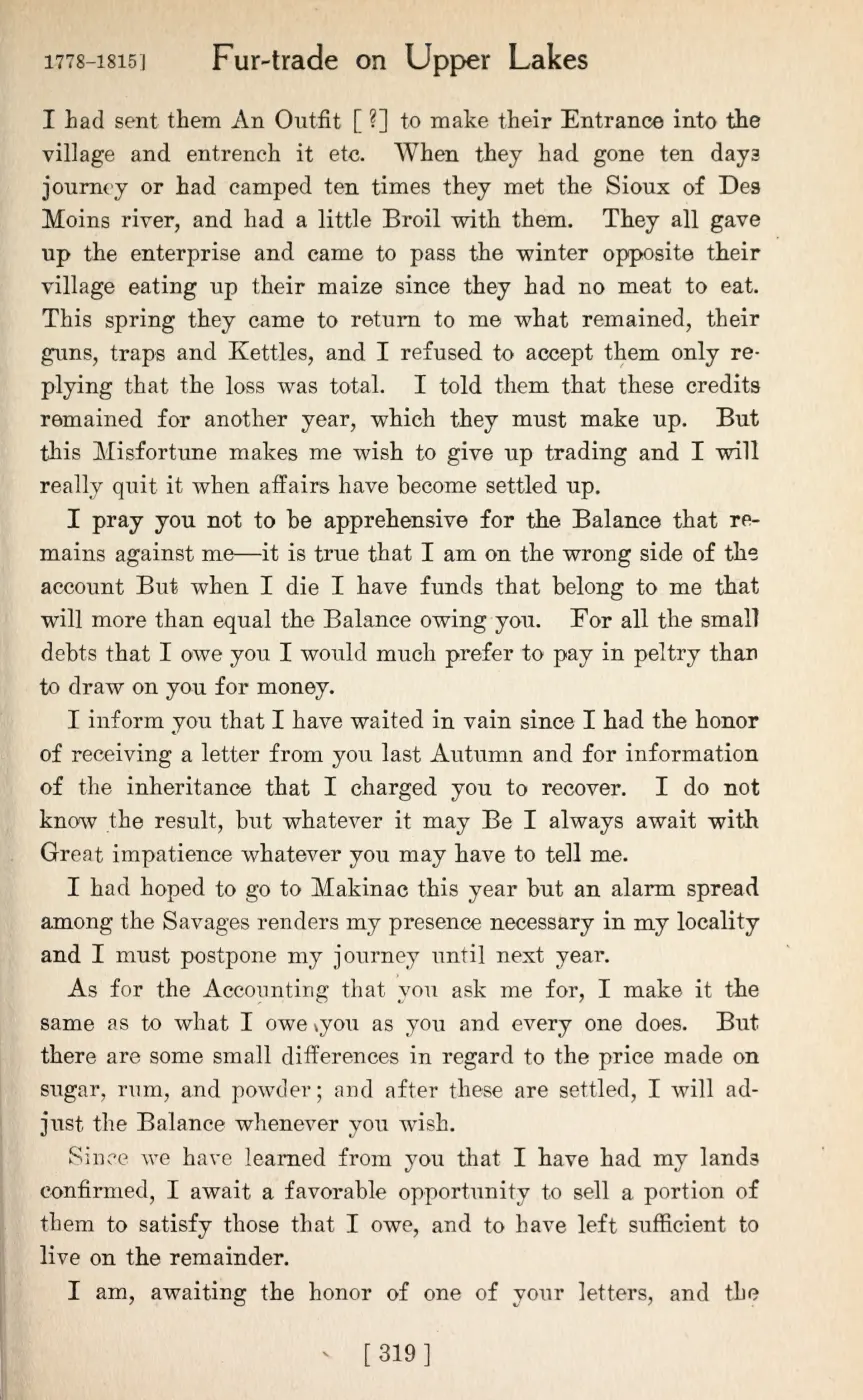
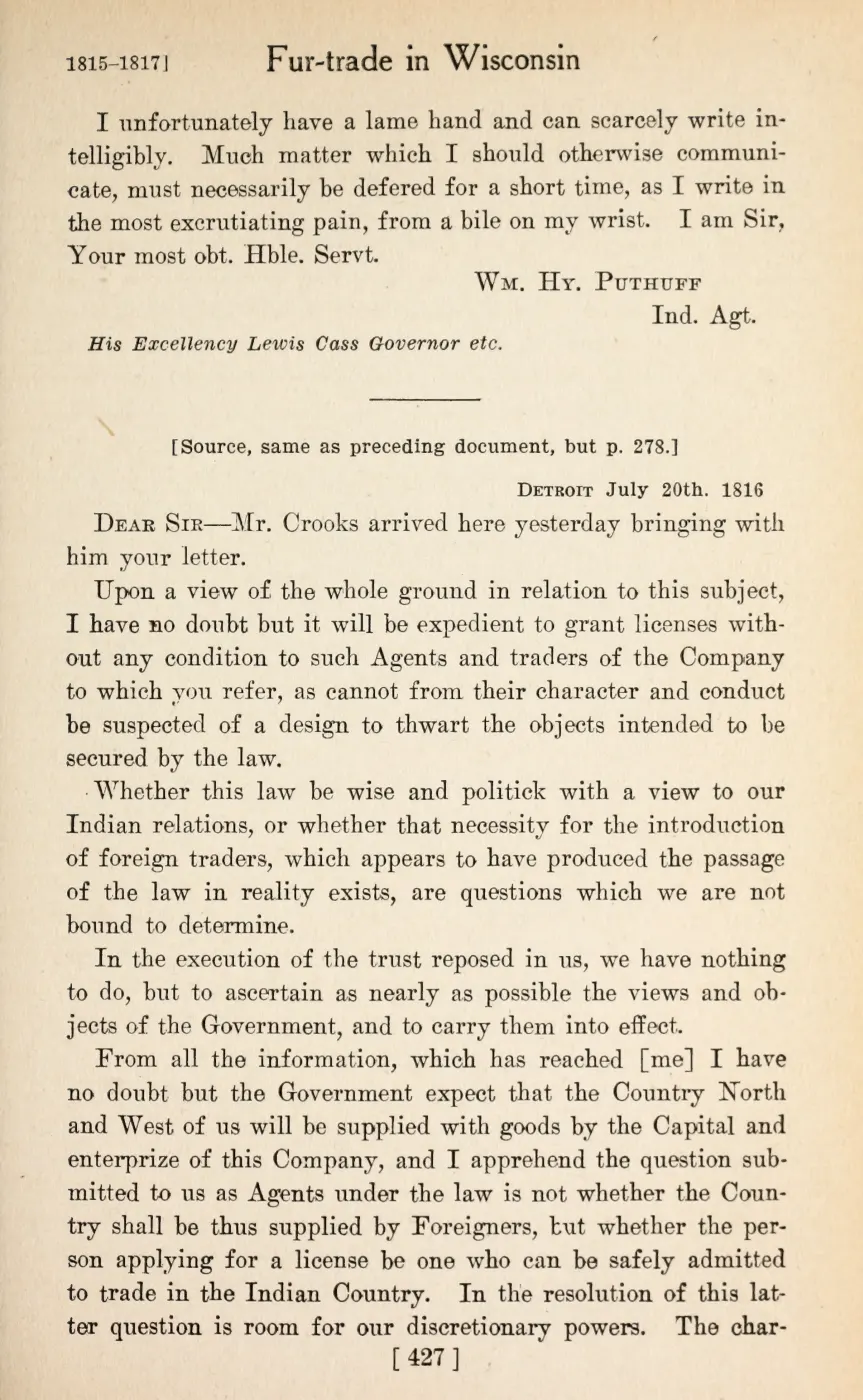
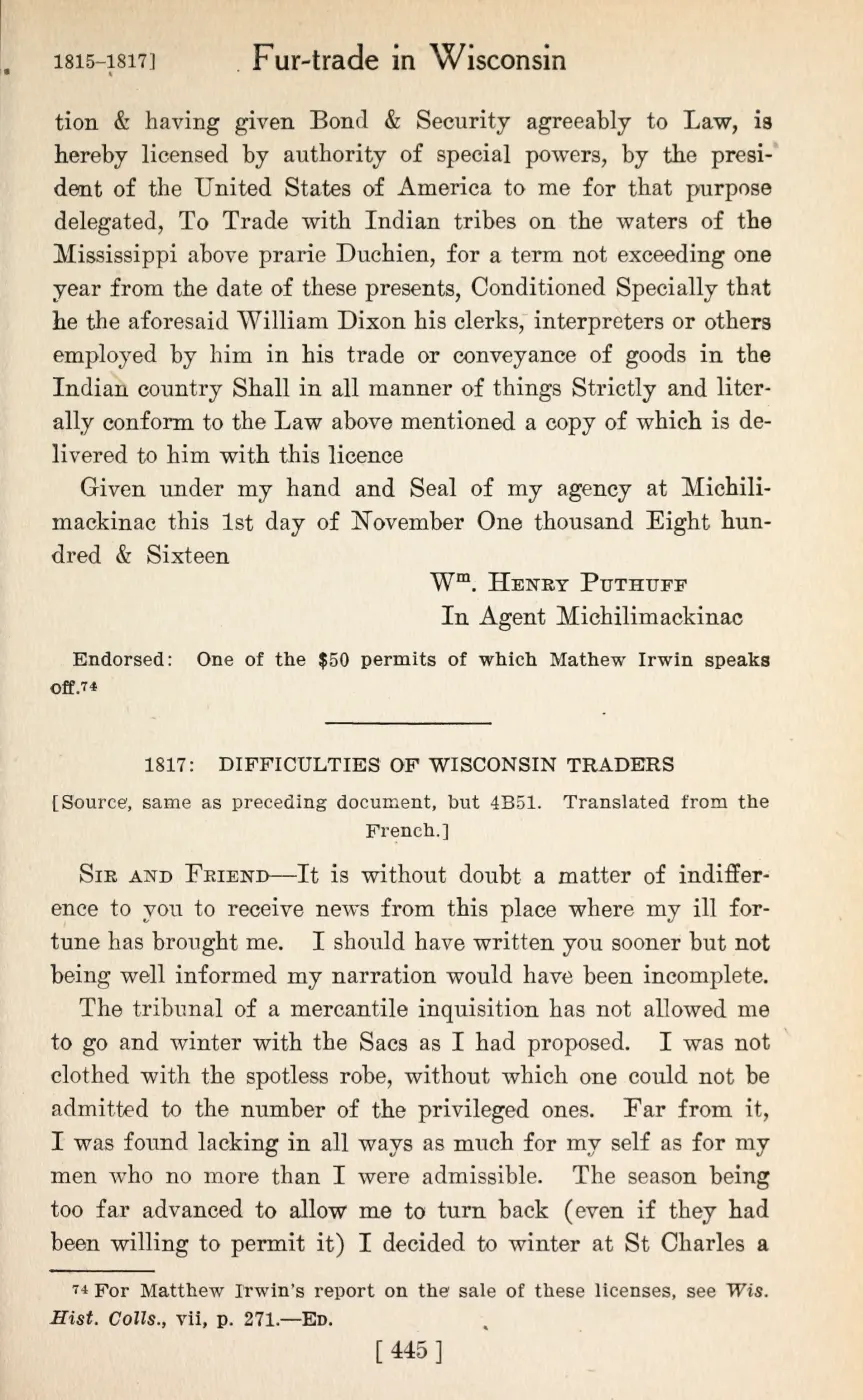
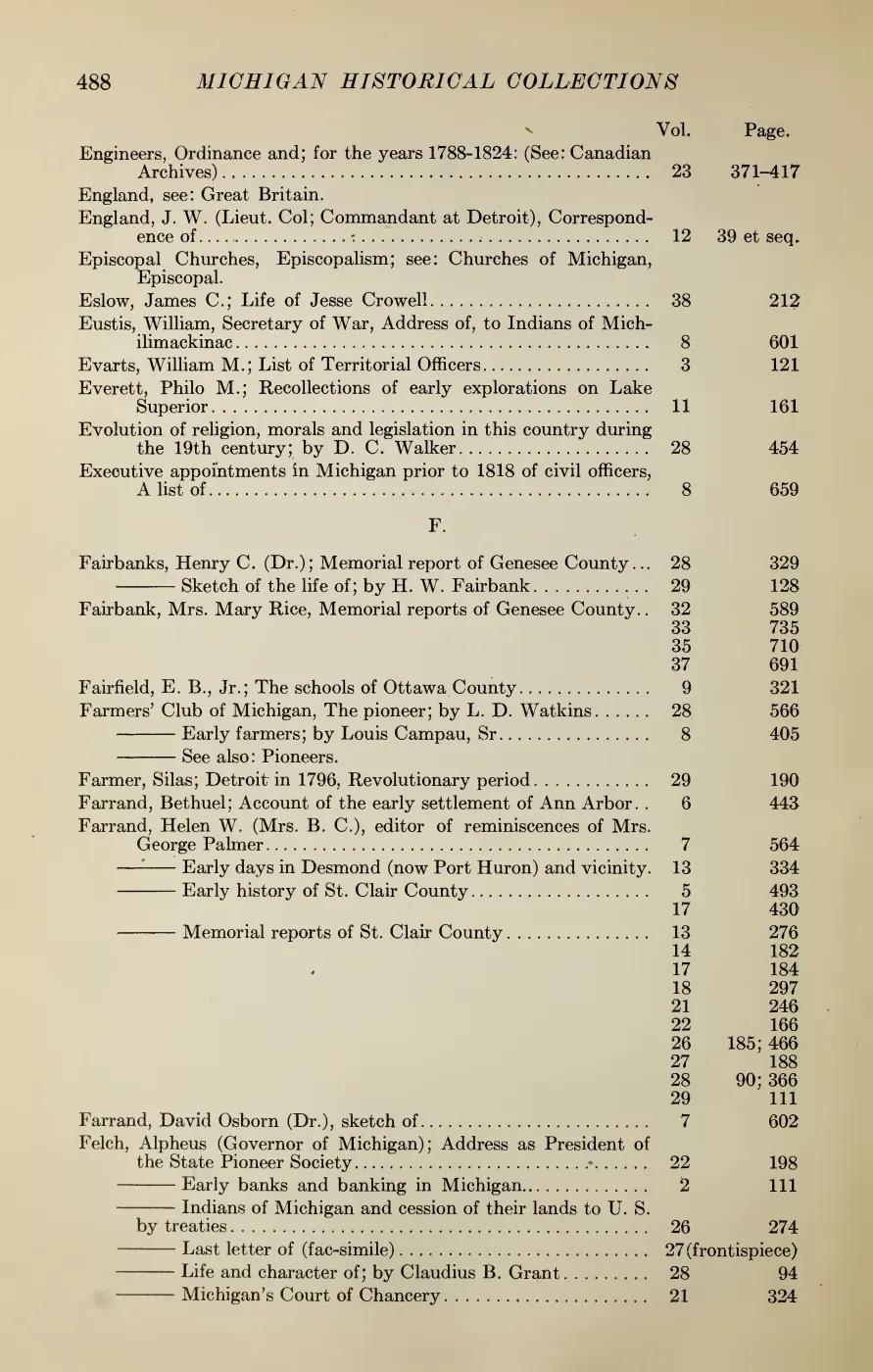
An early-1815 colonial classification. A British officer’s Drummond Island letter, printed with the date “10 Jany. 1815-6,” discusses the people previously supplied through St. Joseph’s in the course of seeking instructions on postwar trade and contact. It groups the Ottawas of L’Arbre Croche with “the Chippawas of the Grand Traverse and of the Beaver Islands.” This makes the Beaver Islands legible in a colonial administrative network spanning Grand Traverse, Mackinac, and the former British post. The wording is McDonall’s, in service of British patronage and geopolitical interests; it is not treated as an Anishinaabe self-description, a population count, a treaty-rights conclusion, or a direct modern nation/band identity. Michigan Historical Collections, volume 23, 1895
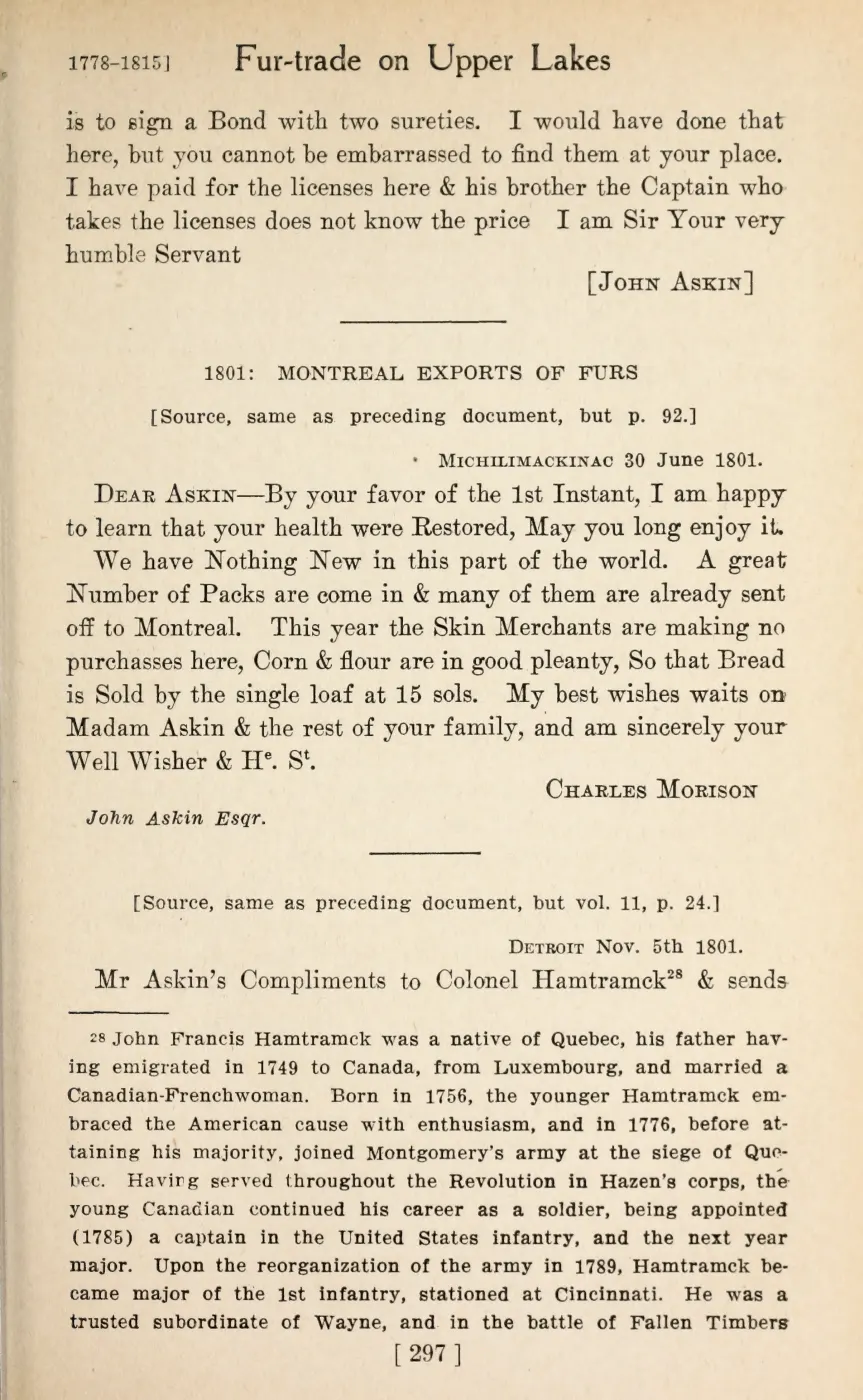
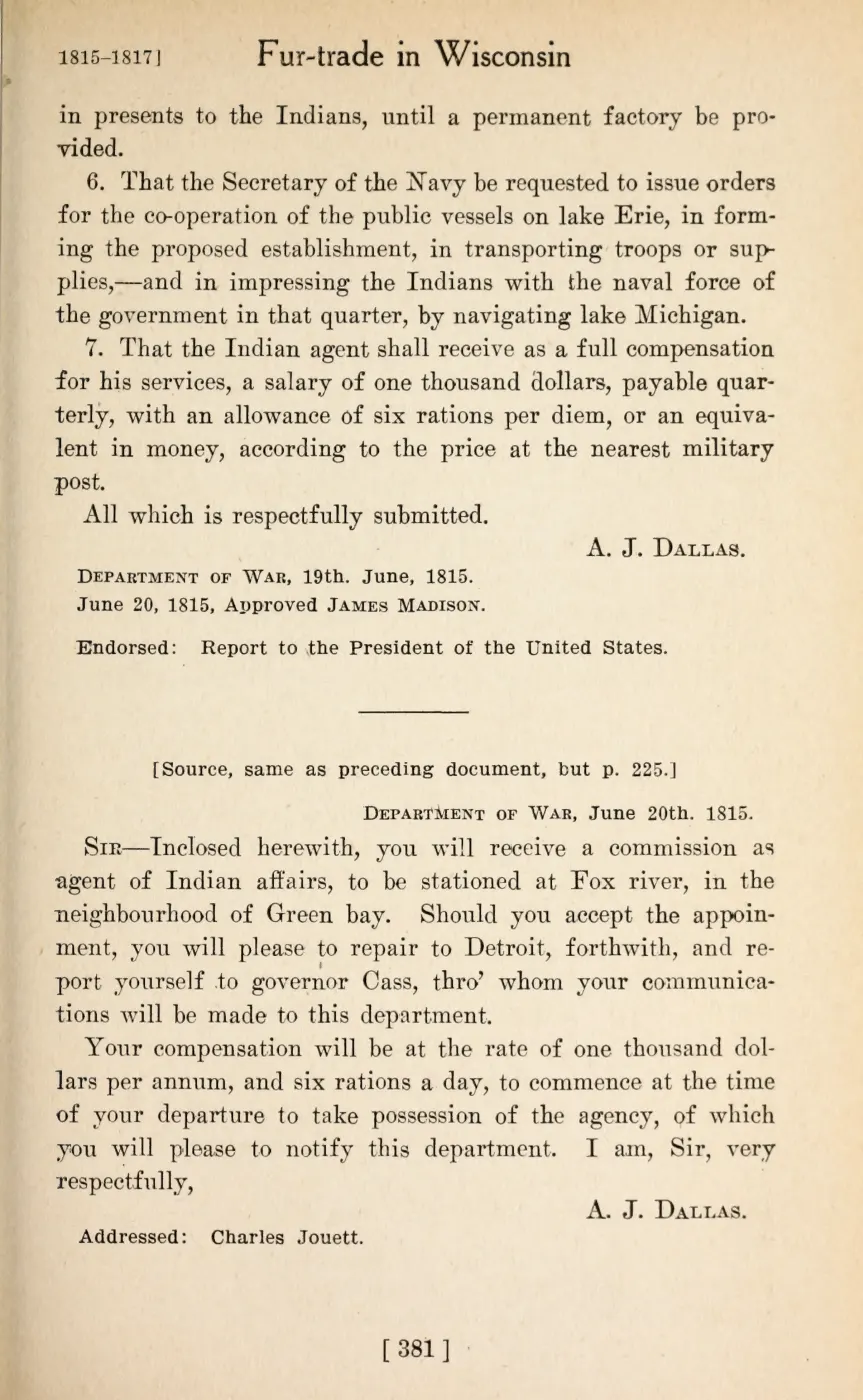
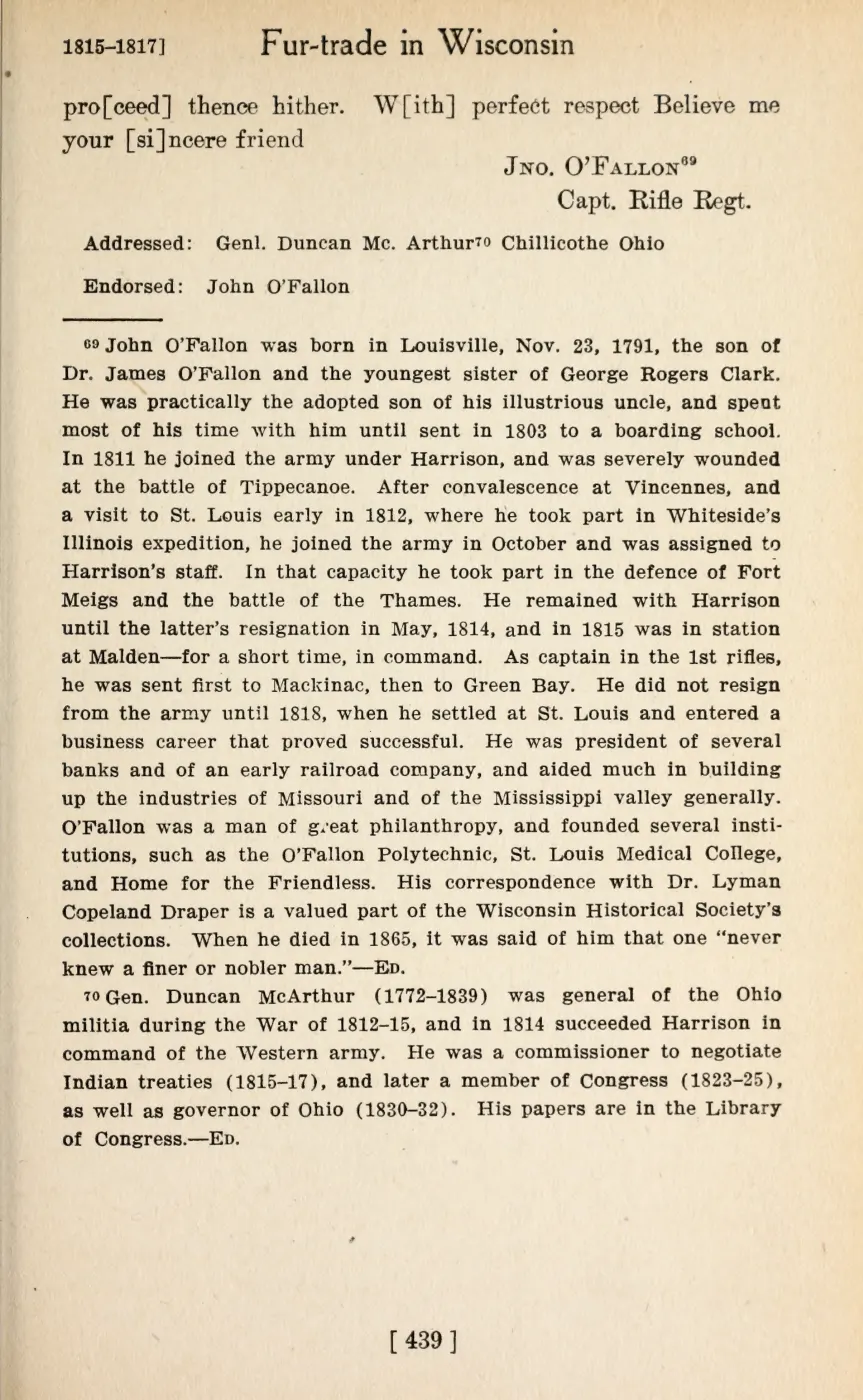
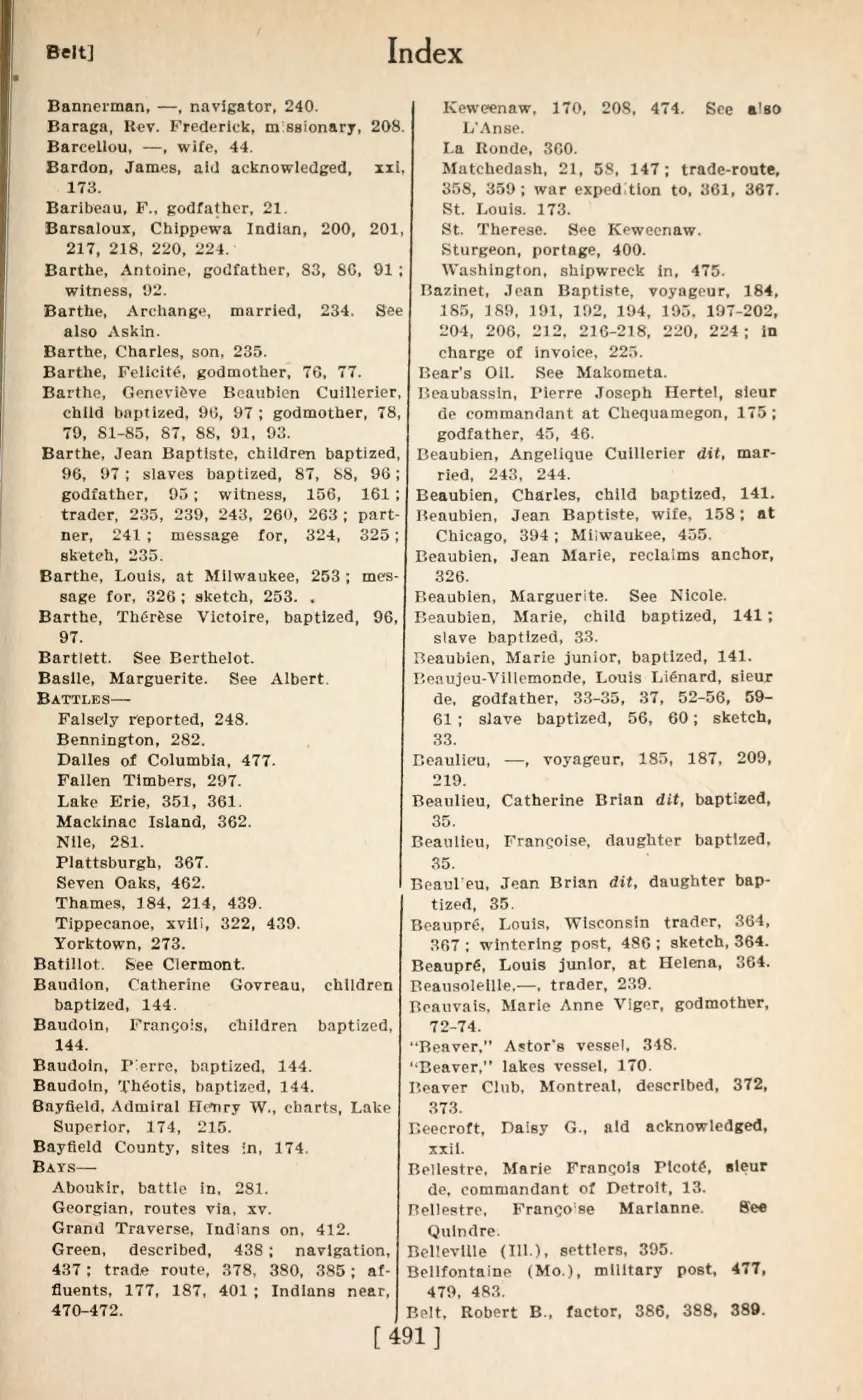
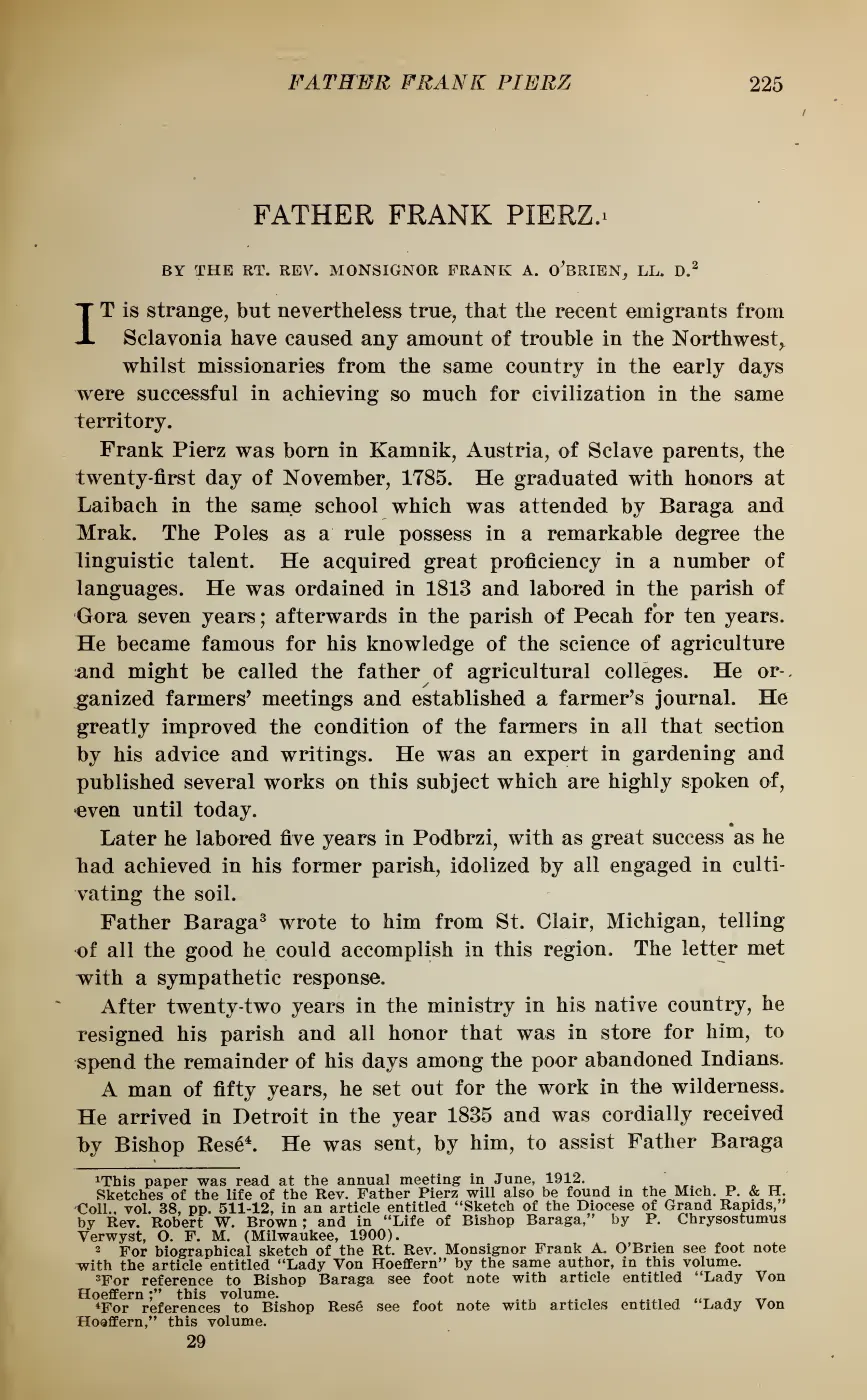
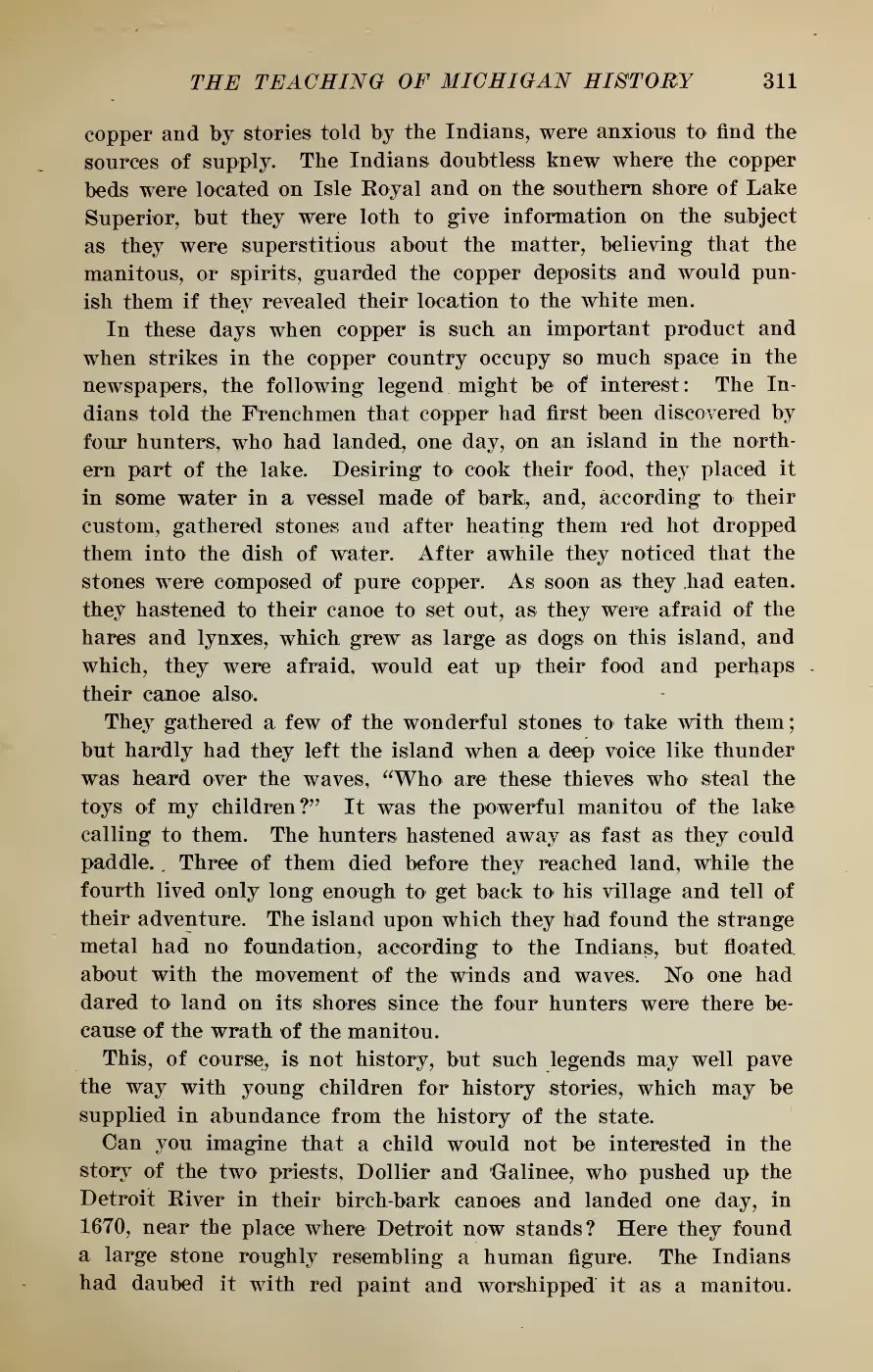
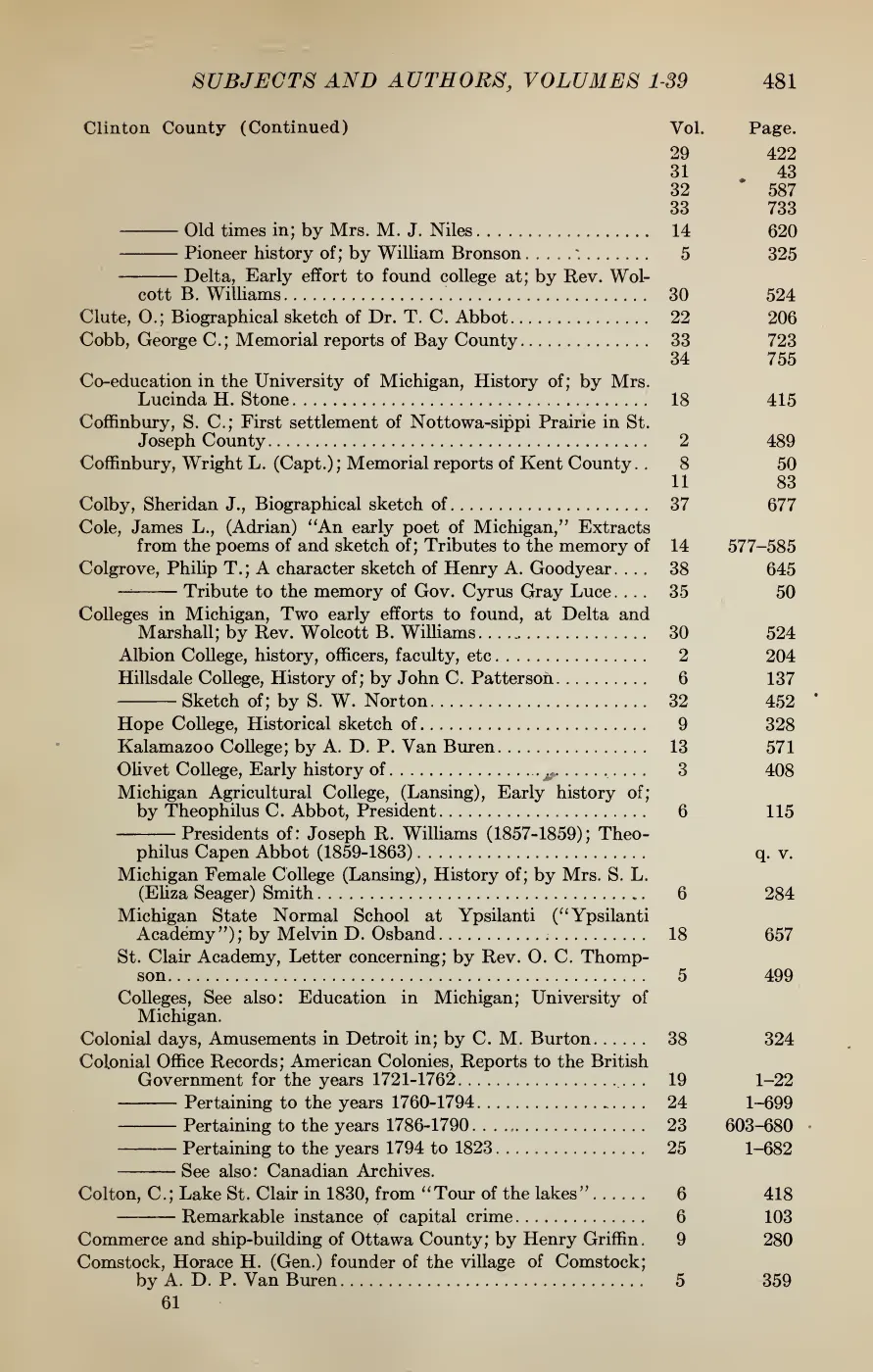
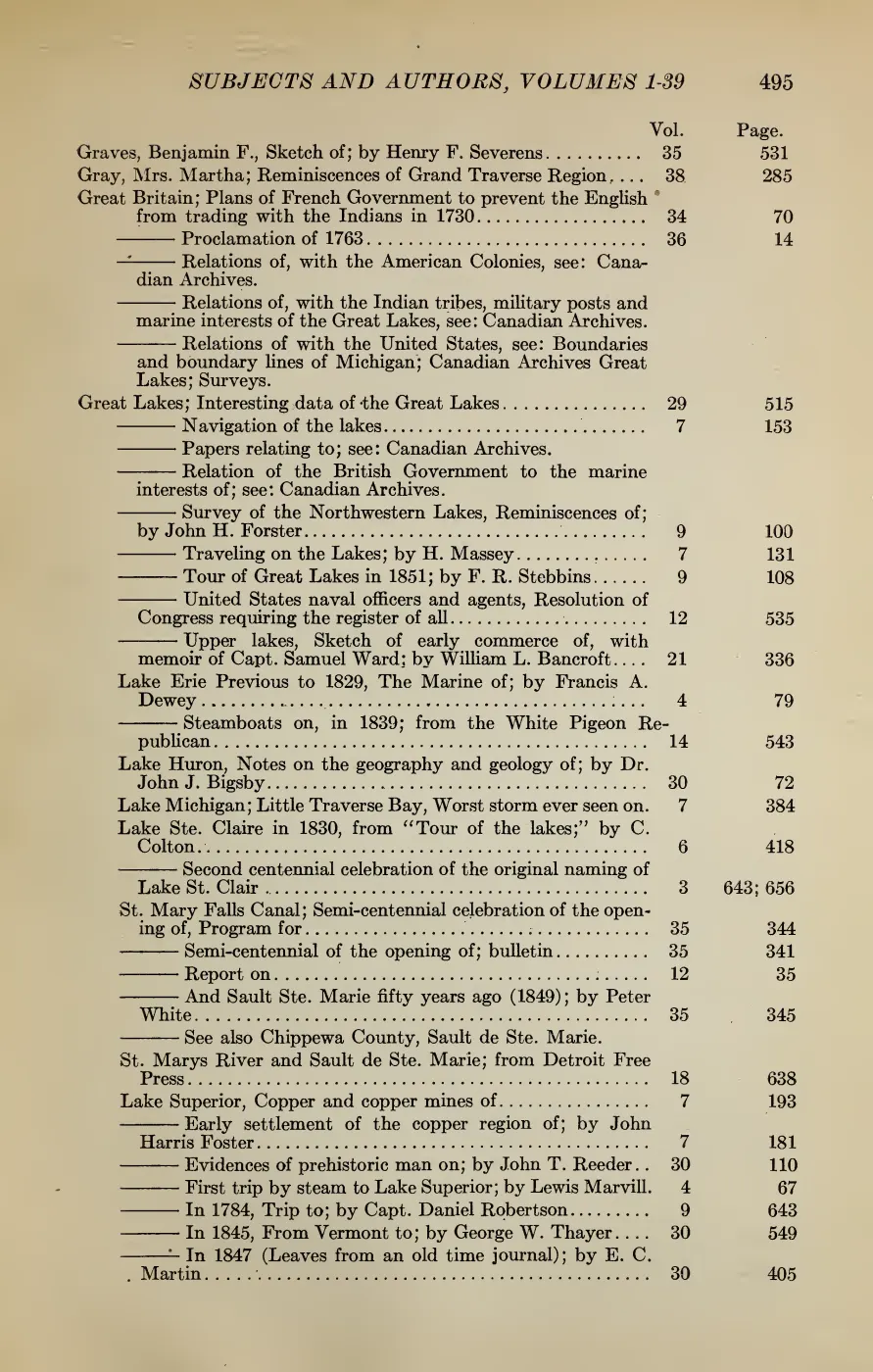
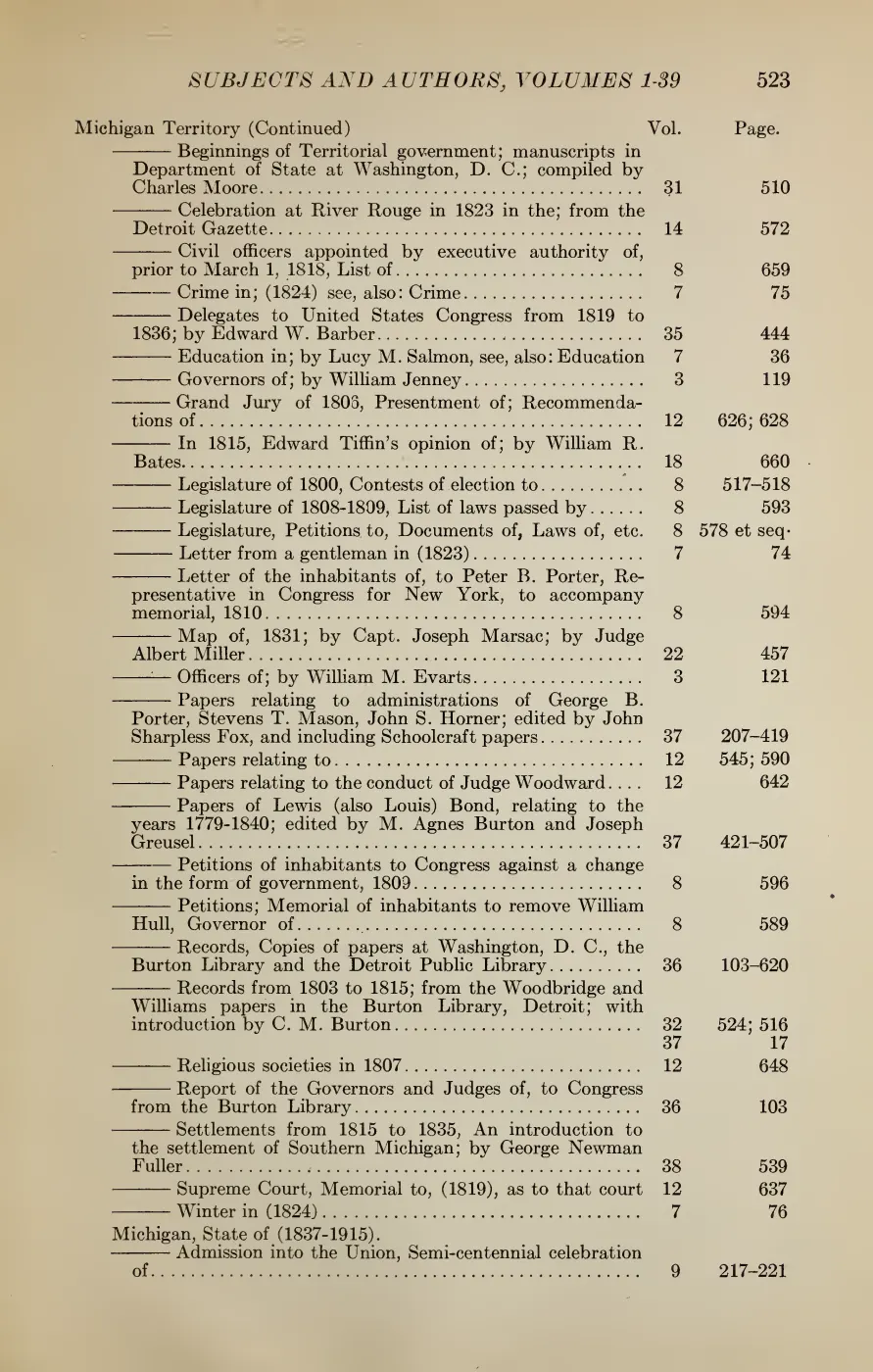
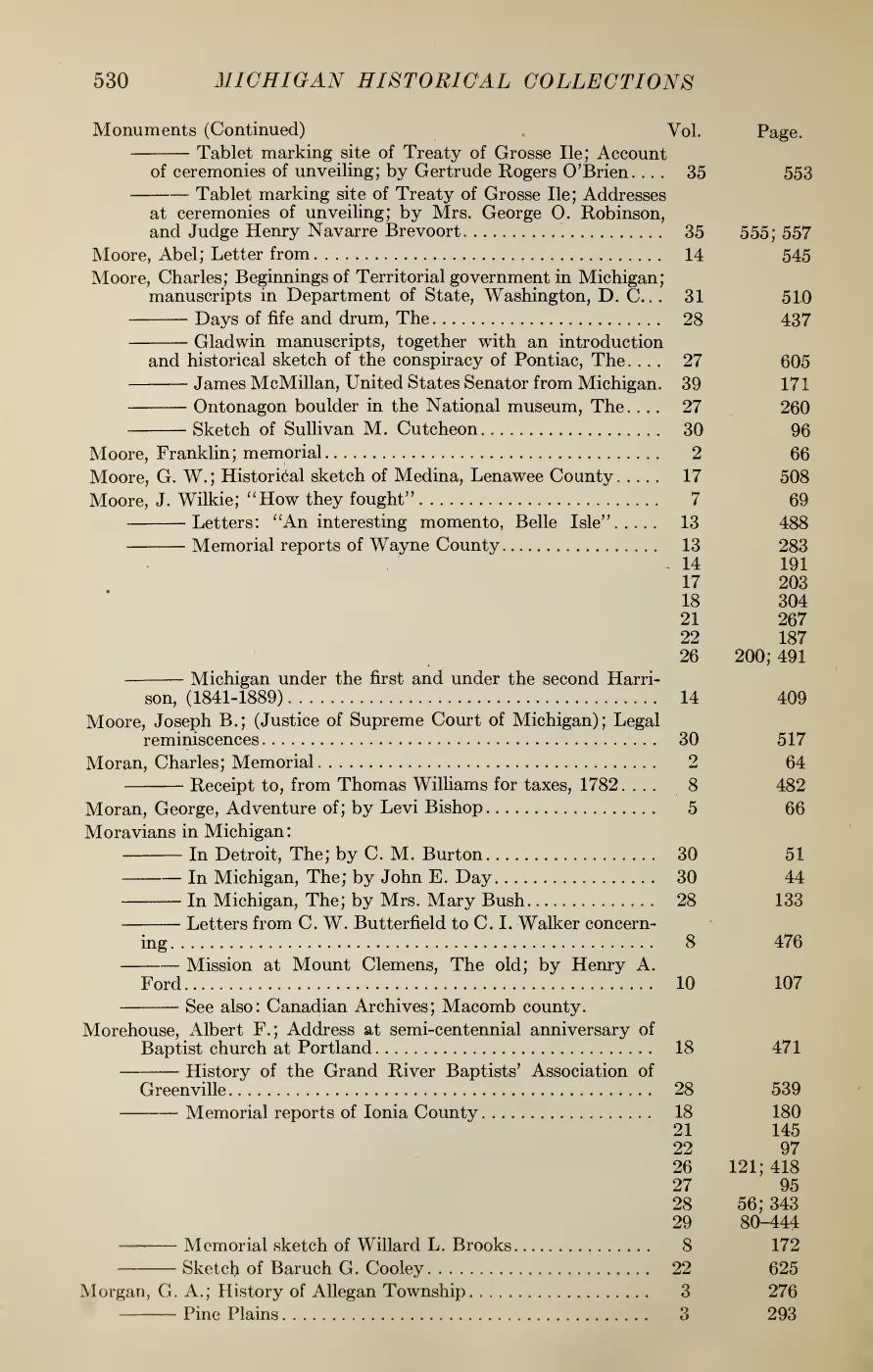
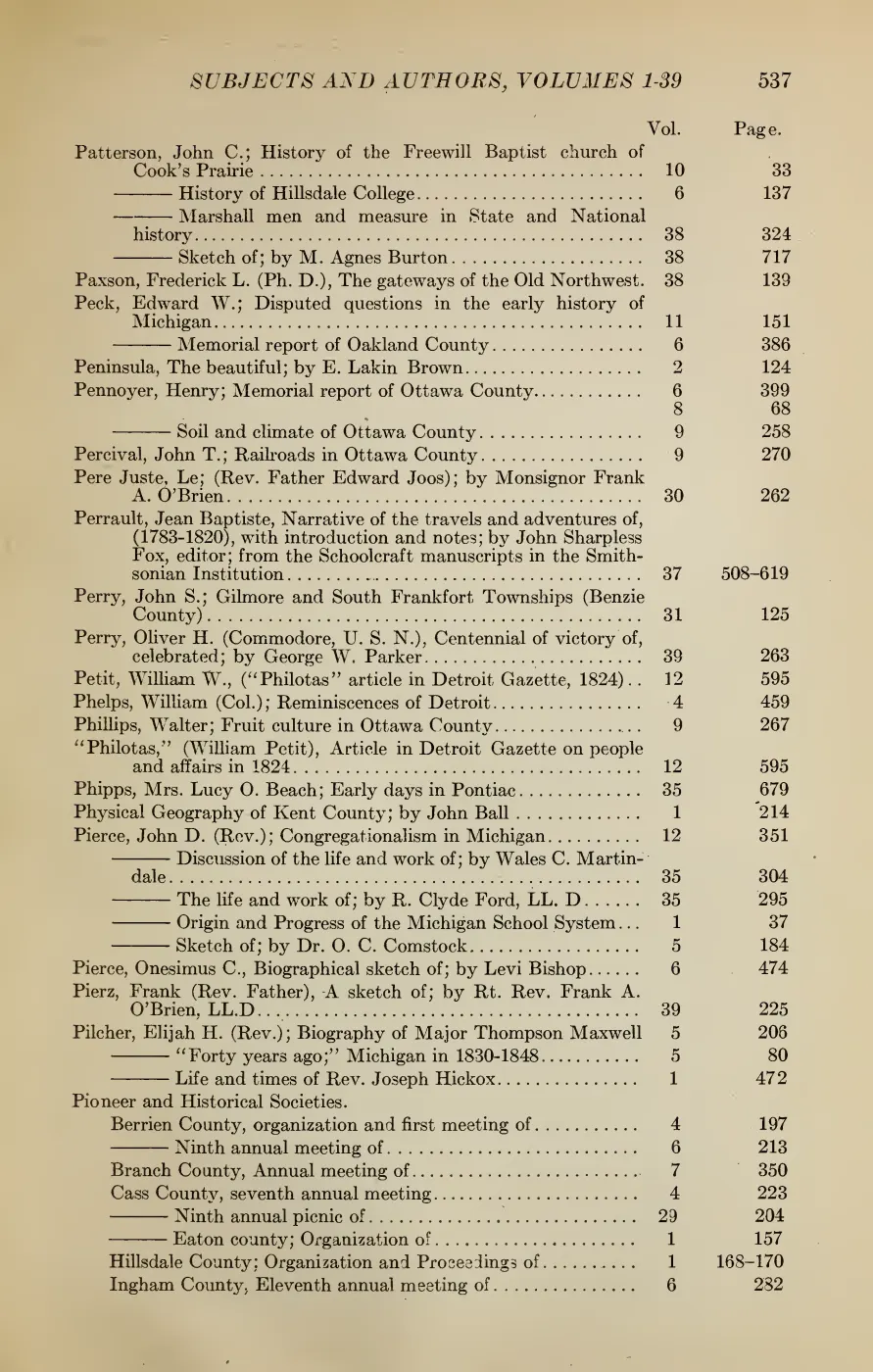
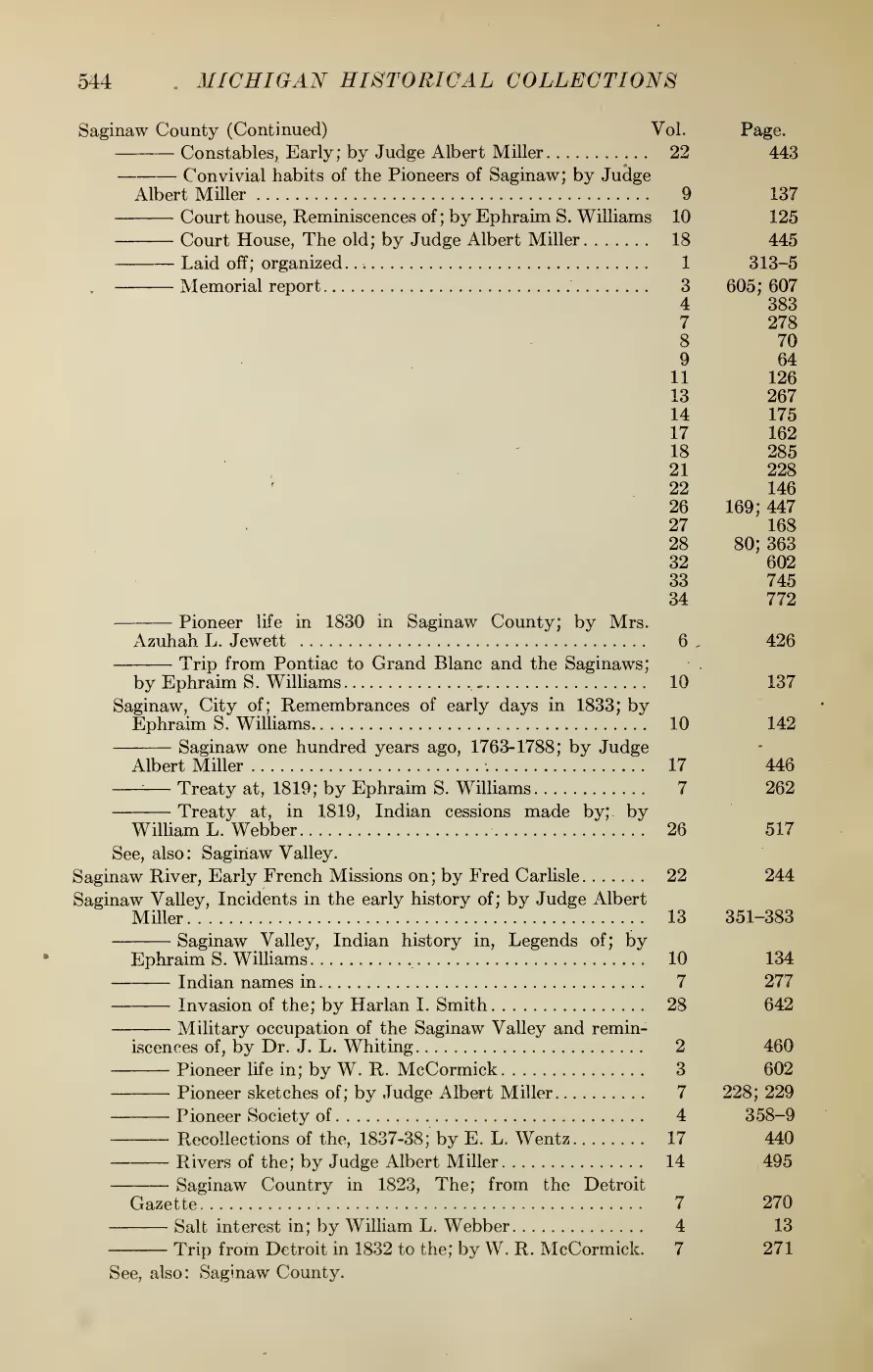
A mediated Catholic-mission attestation. A 1915 Michigan Historical Collections footnote says that Verwyst’s Life of Bishop Baraga quotes a mission list naming “Beaver Island, with fifty-five Christians” and calling it Castor Island in manuscript. This extends the archival trail for a Catholic mission, but its multiple editorial layers and undated list mean it is neither a population total nor a substitute for the underlying Baraga record. Michigan Historical Collections, volume 39, 1915
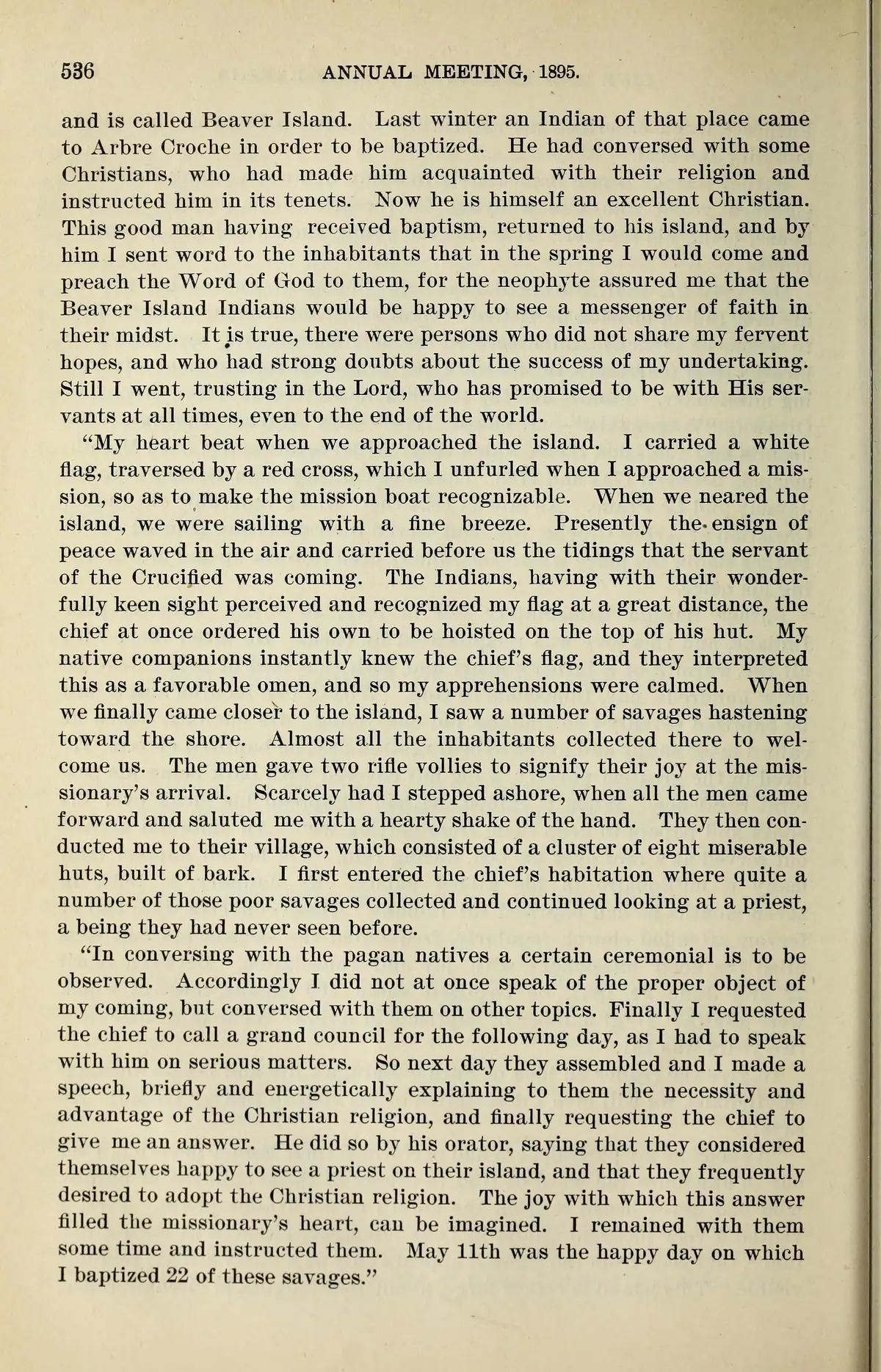
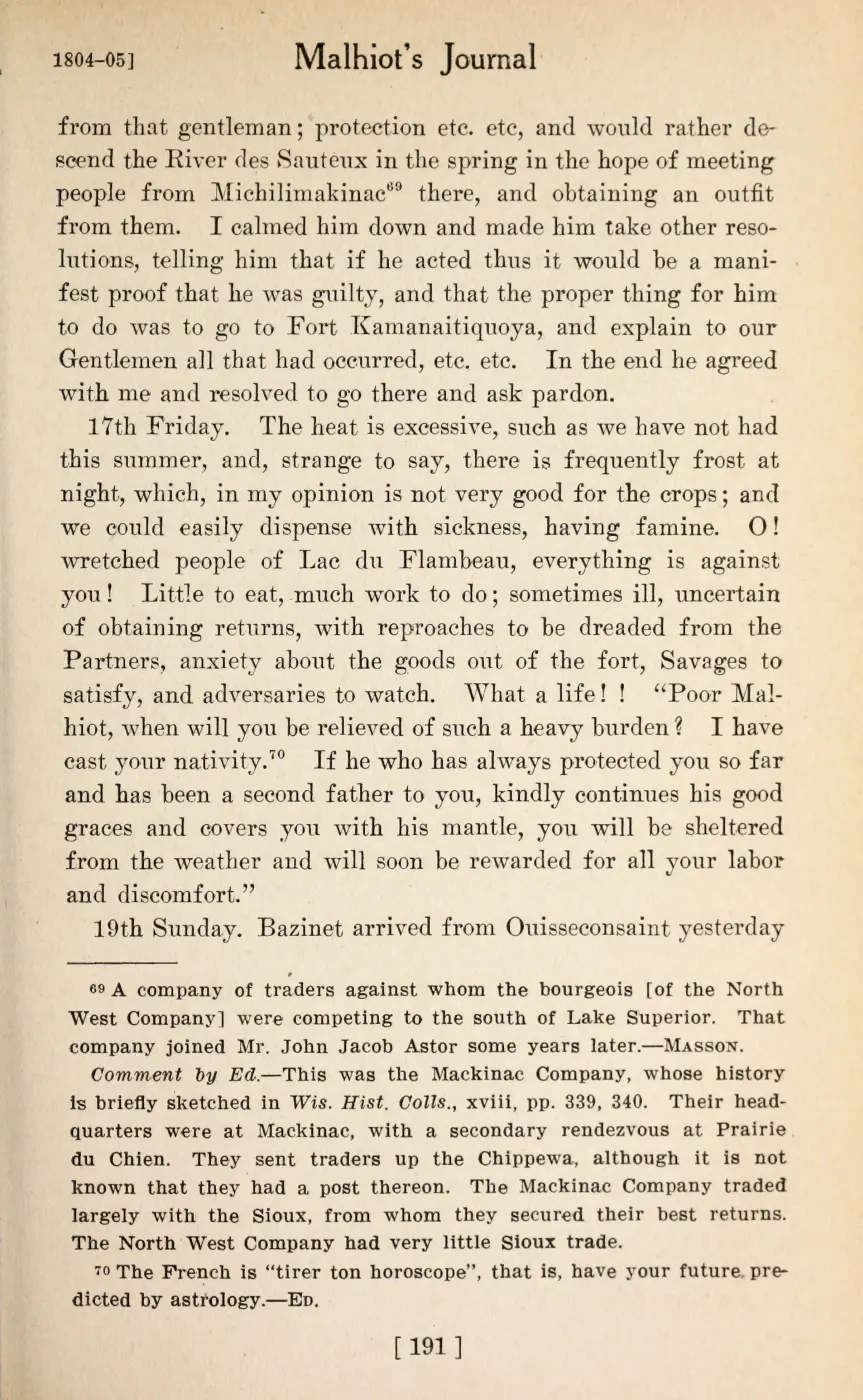
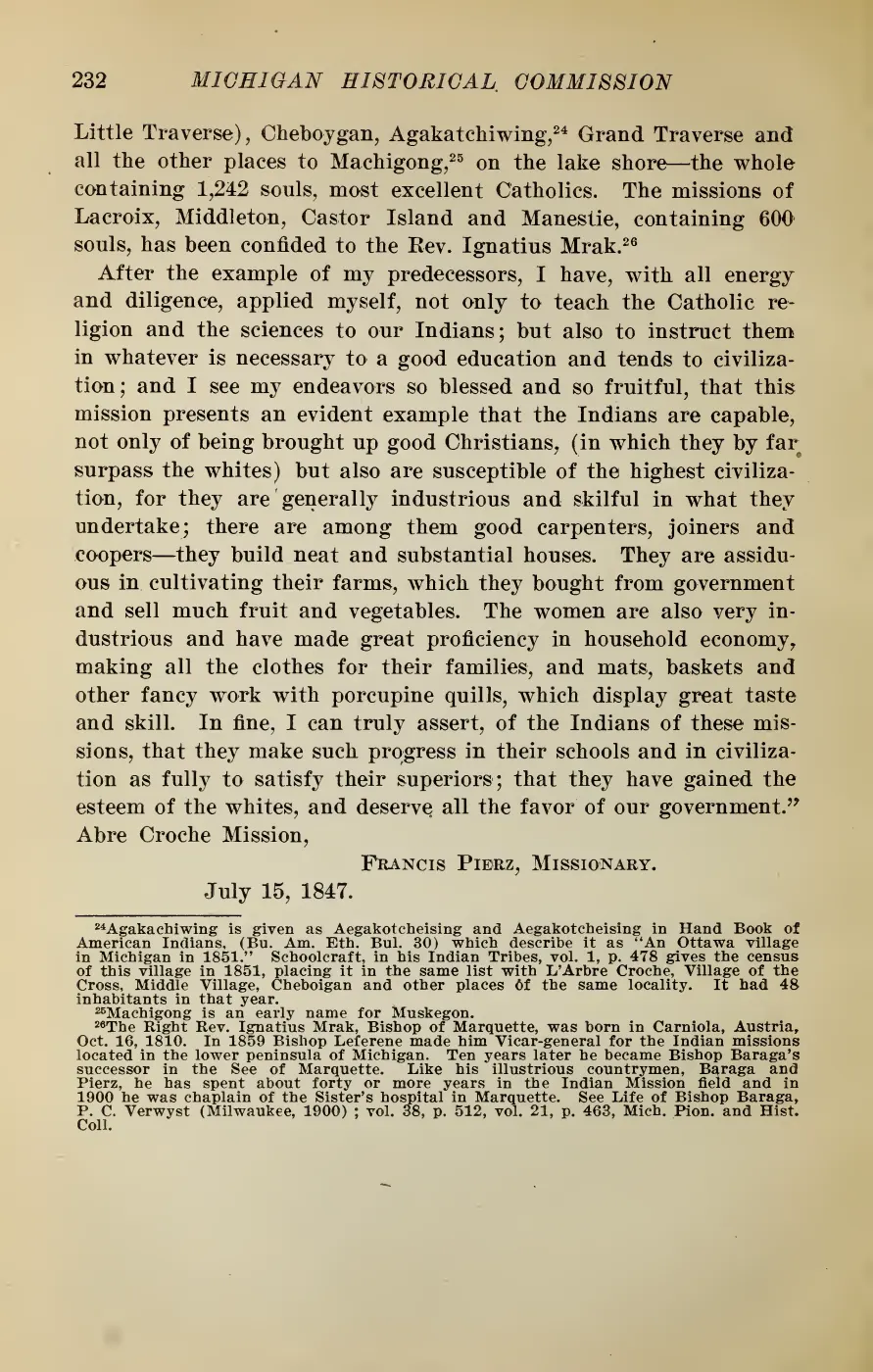
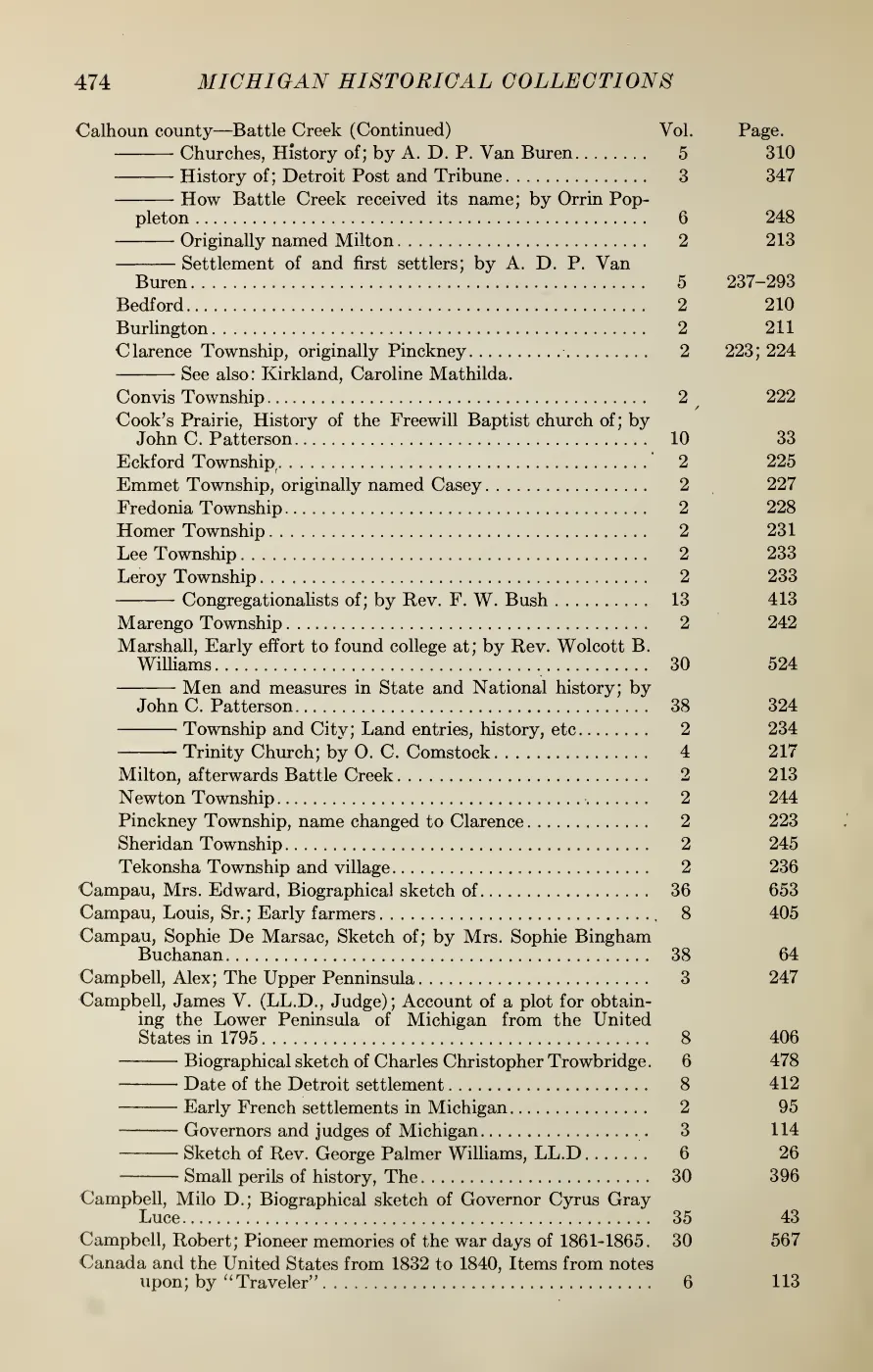
An early published account of the 1832 visit. Verwyst’s 1895 Baraga sketch prints a first-person account of a Beaver Island visit, describing a village of eight bark huts, a council, and 22 baptisms on May 11. Its surrounding chronology places the episode in 1832. It is a later missionary-biography rendition, not a mission register or Anishinaabe testimony, and its terminology and framing belong to that source. Michigan Historical Collections, volume 26, 1895
Catholicism and schooling. Williams records that she and her husband “remained on their island as teachers two years, from ’62 to ’64”, and remembers Chief Peaine;5 a 2025 Northern Islander profile of her adds that the post was a government teaching appointment on Garden Island beginning in July 1862. The modern Northern Islander also reports that Frederic Baraga visited Beaver Island in 1832 and, returning as Bishop in 1859, found a Native Catholic community on Garden Island with a school, a church and a post office.
The 20th century. Community sources report a village called Peshawbestown established on Beaver Island below Angeline’s Bluff in 1905, many of whose residents worked for the Beaver Island Lumber Company. The company’s departure is disputed: sources held here give 1915, 1916 and 1917. The same sources report a Native village on High Island abandoned after the November 1940 storm and a tradition that Pete Manatou was the last resident of Garden Island and died in the 1940s. These are community and planning sources, not a complete civil or tribal record held here.
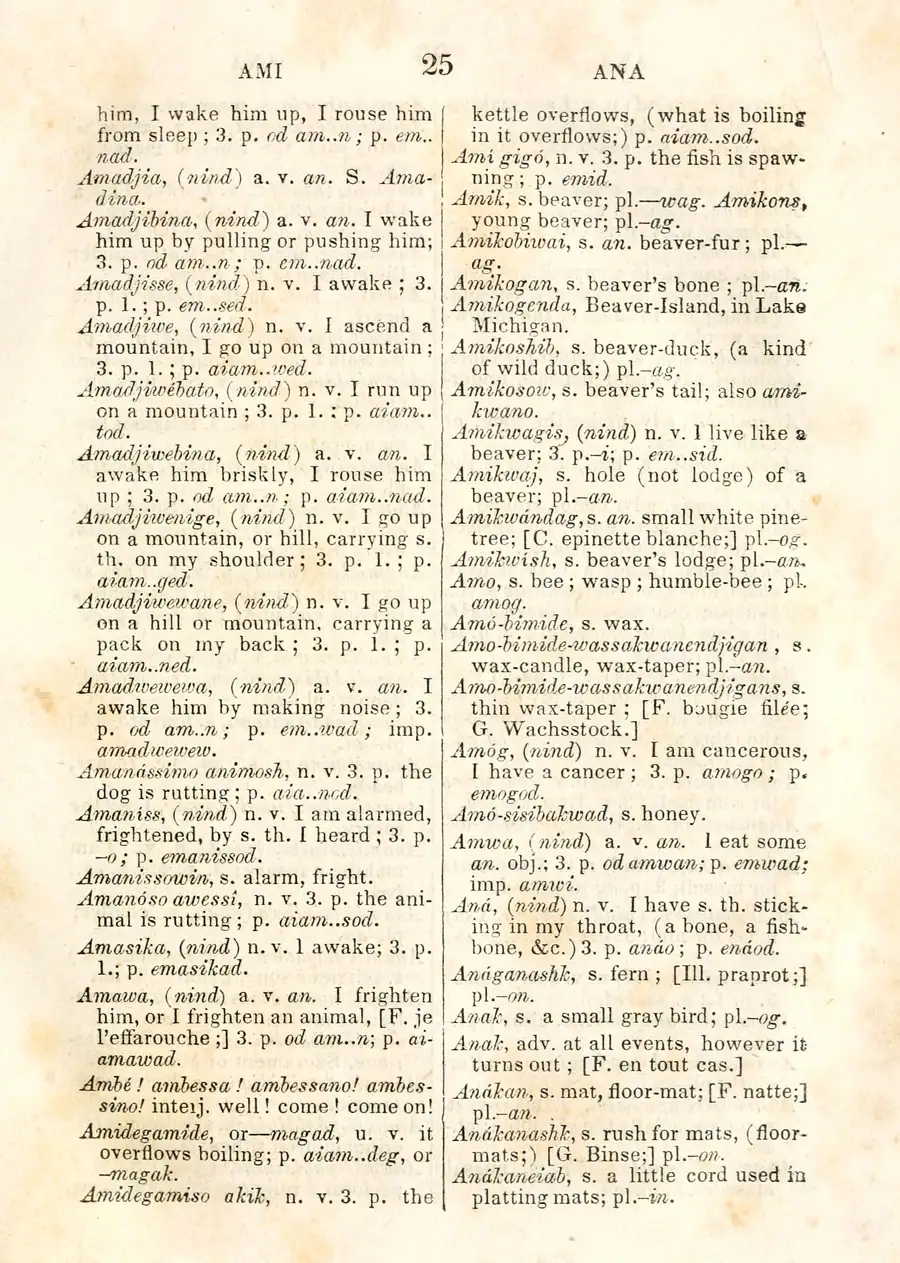
The present. GTB’s federal recognition was restored in 1980 and LTBB was federally recognised in 1994; LTBB’s service area includes the outer islands of the archipelago. Both nations were consulted in the 2023 Master Plan; LTBB’s Tribal Historic Preservation Office is engaged in identifying cultural resources on the island; both hold non-trust property including docks in Paradise Bay; LTBB produced the island’s 2010 land-use mapping and monitors the Lake Geneserath fishery. The Beaver Island Historical Society’s newspaper carries a standing Anishinaabek column, and Ghost Suppers (Jiibay Wiikongewin) are described there as living practice among families on Beaver, Garden and High Islands. The Anishinaabemowin name given there for Beaver Island is Amikwaganda — the modern reflex of the name Frederic Baraga recorded in 1853 as Amikogenda (“Beaver-Island, in Lake Michigan”, Dictionary of the Otchipwe Language, p. 25),8 which Wood’s Historic Mackinac (1918) prints as A-mic-wug-ain-dod, “Where the beavers live, their home”.
The held Ojibwe People’s Dictionary entries for amik (“a beaver”) and minis (“an island”) supply modern lexical context for that name-attestation chain. They do not independently reconstruct or normalize the historical forms, and are not evidence of a historical Beaver Island community or place-name use on their own.
Garden Island burial ground
Garden Island holds a significant Anishinaabe burial ground. Its existence is attested by the island’s role as the centre of Anishinaabe life in the archipelago and by the LTBB Tribal Historic Preservation Office’s stated interest in the archipelago’s cultural resources; the 2023 Master Plan notes that most of Beaver Island carries state-assessed potential for archaeological features.
No location, extent, boundary or inventory is recorded here, and none should be. Burial sites are protected under tribal and federal preservation law, and the LTBB THPO — not this archive — is the appropriate authority on what may be said about them. No GNIS, NRHP, OpenStreetMap, or state cemetery record identifies it, and that absence should be left alone.
Significance
Every other episode in this island’s history is dated: the settlement begins in 1847, the kingdom is proclaimed in 1850 and ends in 1856, the lumber company’s departure is disputed between 1915 and 1917, and the fishery declines in the mid-20th century. This one is not. Anishinaabe presence is the frame those episodes happened inside, and the archipelago’s two most conspicuous civil names — Peaine Township, and Ojibwa Island since 2022 — both point at it.
The practical consequence for research is that absence of evidence here is strongly not evidence of absence. The collection was built out from Strang, and a settler-built collection under-records exactly this subject. Filling the gap means going to sources not held here: LTBB and GTB tribal records, the mission registers, and oral history held by Anishinaabe families. GLO patents and field-note volumes are held, but most are not transcribed or page-reviewed and neither can substitute for tribal records or consent. Work with the tribes requires their own consent and participation, not archival access.
Open questions
- What is the archaeological and documented record of occupation before 1800? The Master Plan refers to ancient and sacred sites throughout the islands and to the archipelago’s use as a way-point on routes to the copper country of the Upper Peninsula. Nothing in the datasets held here bears on it.
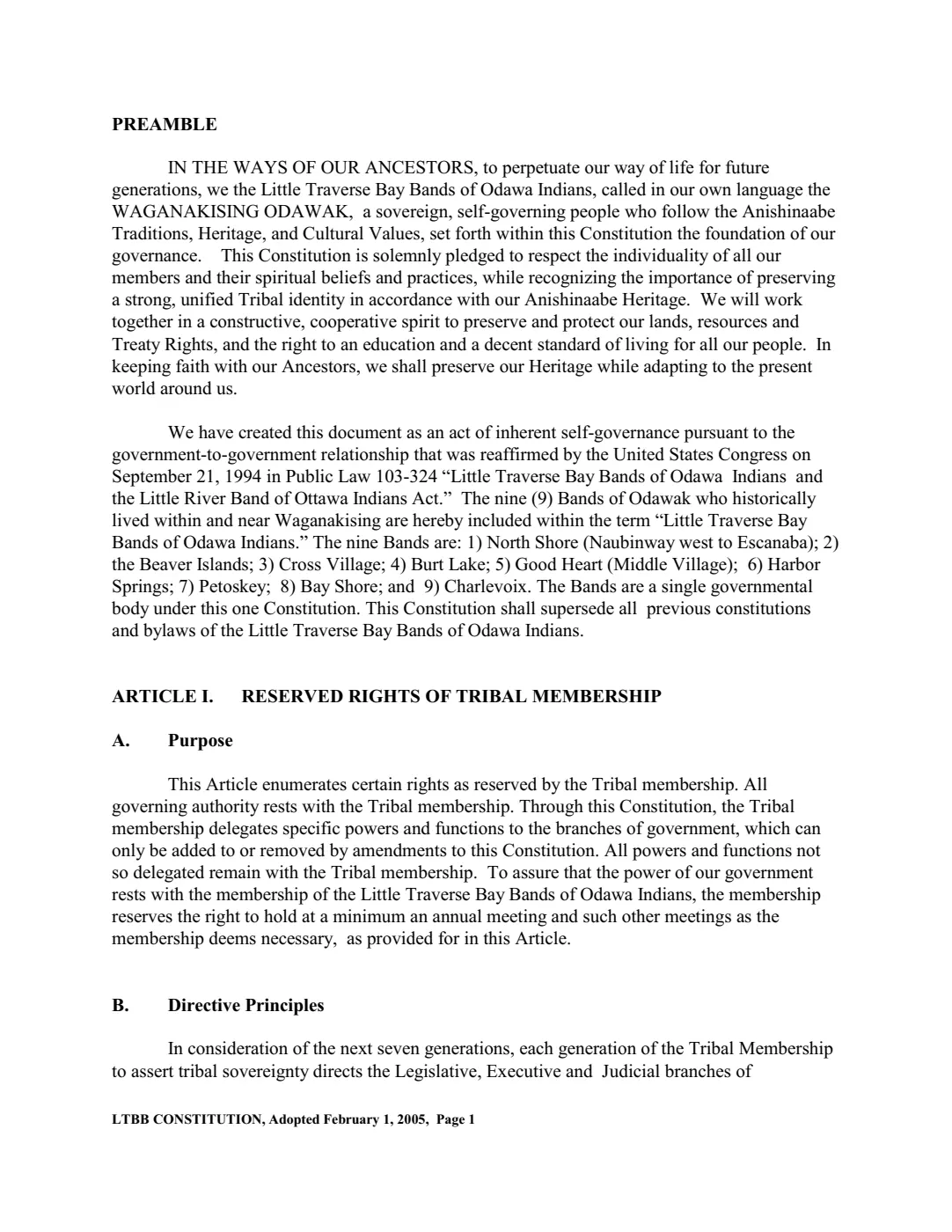
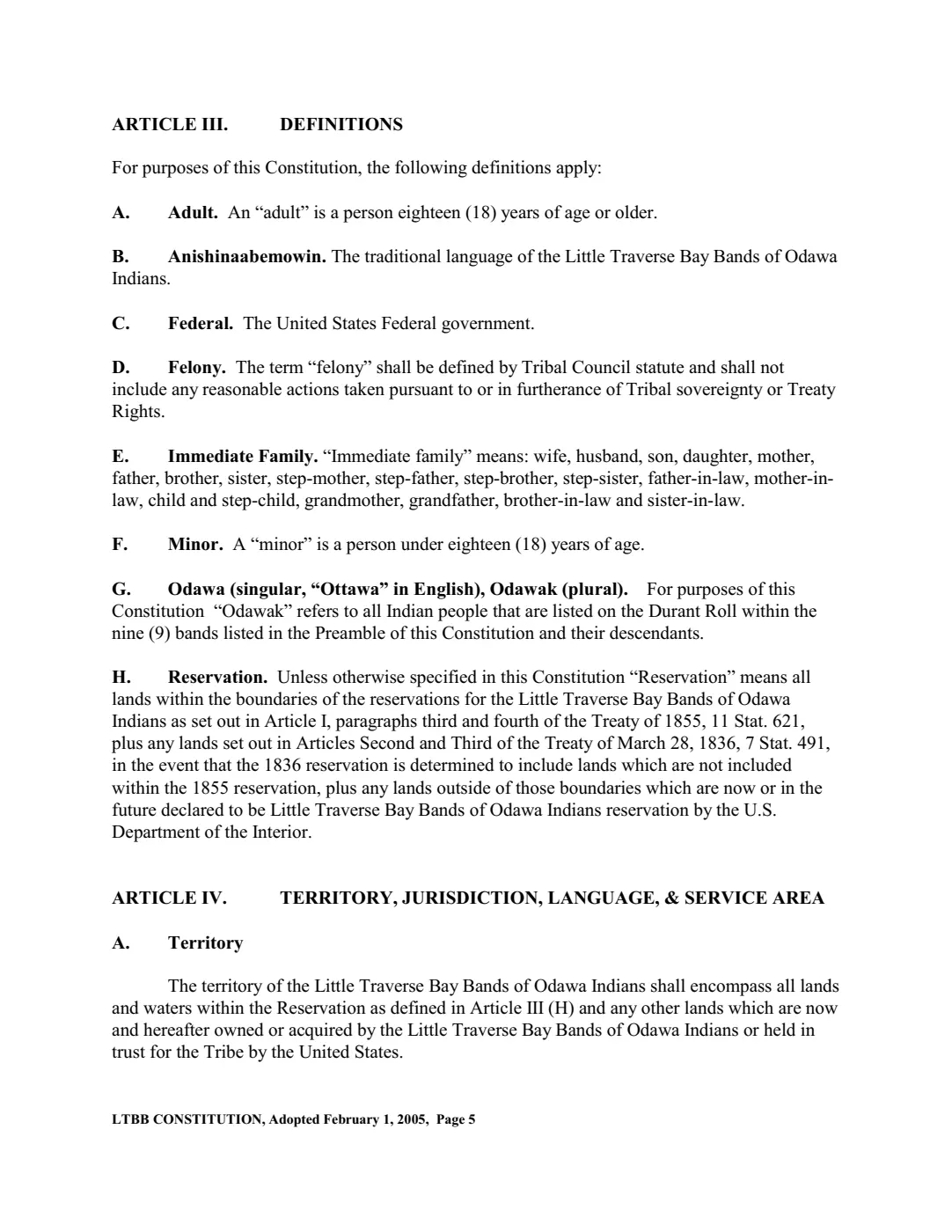
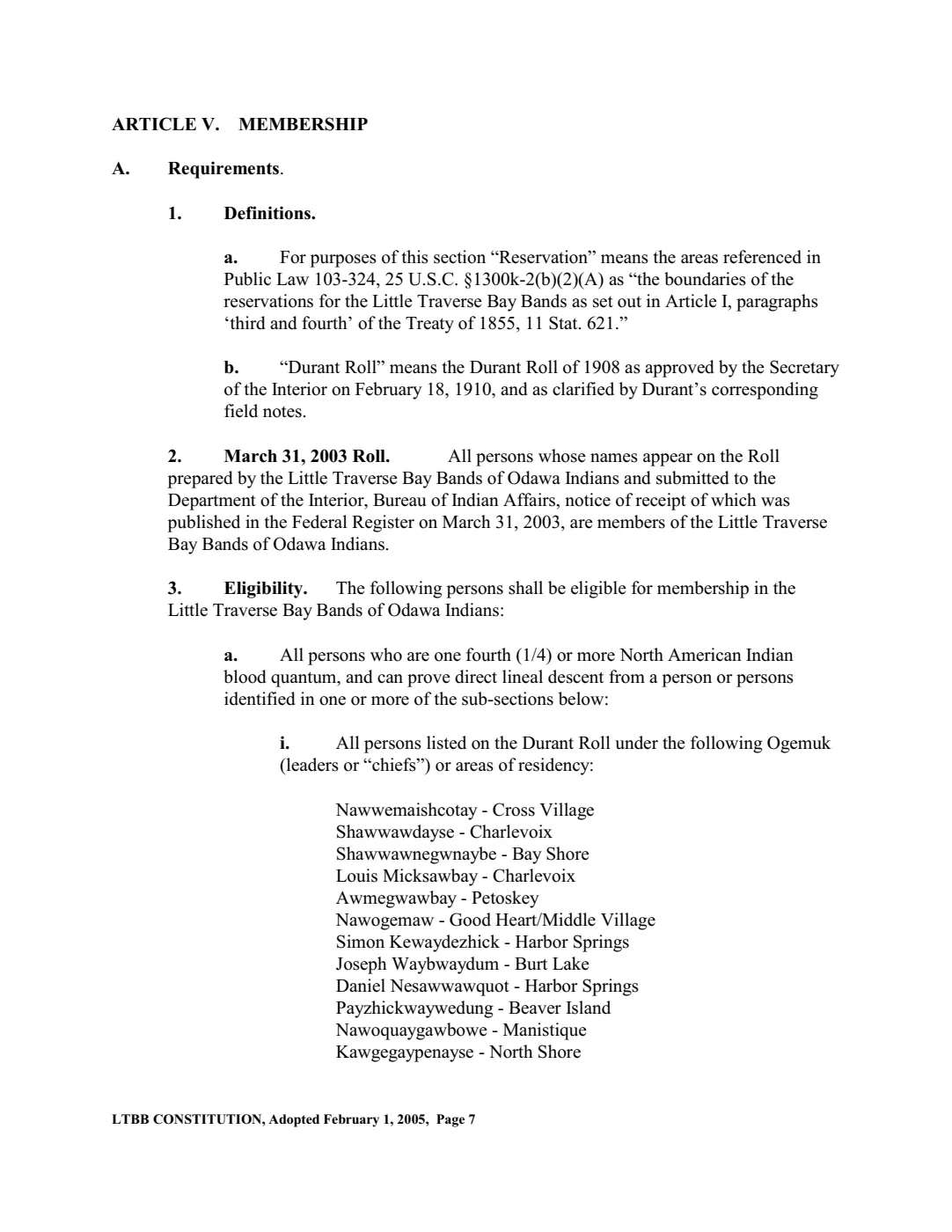
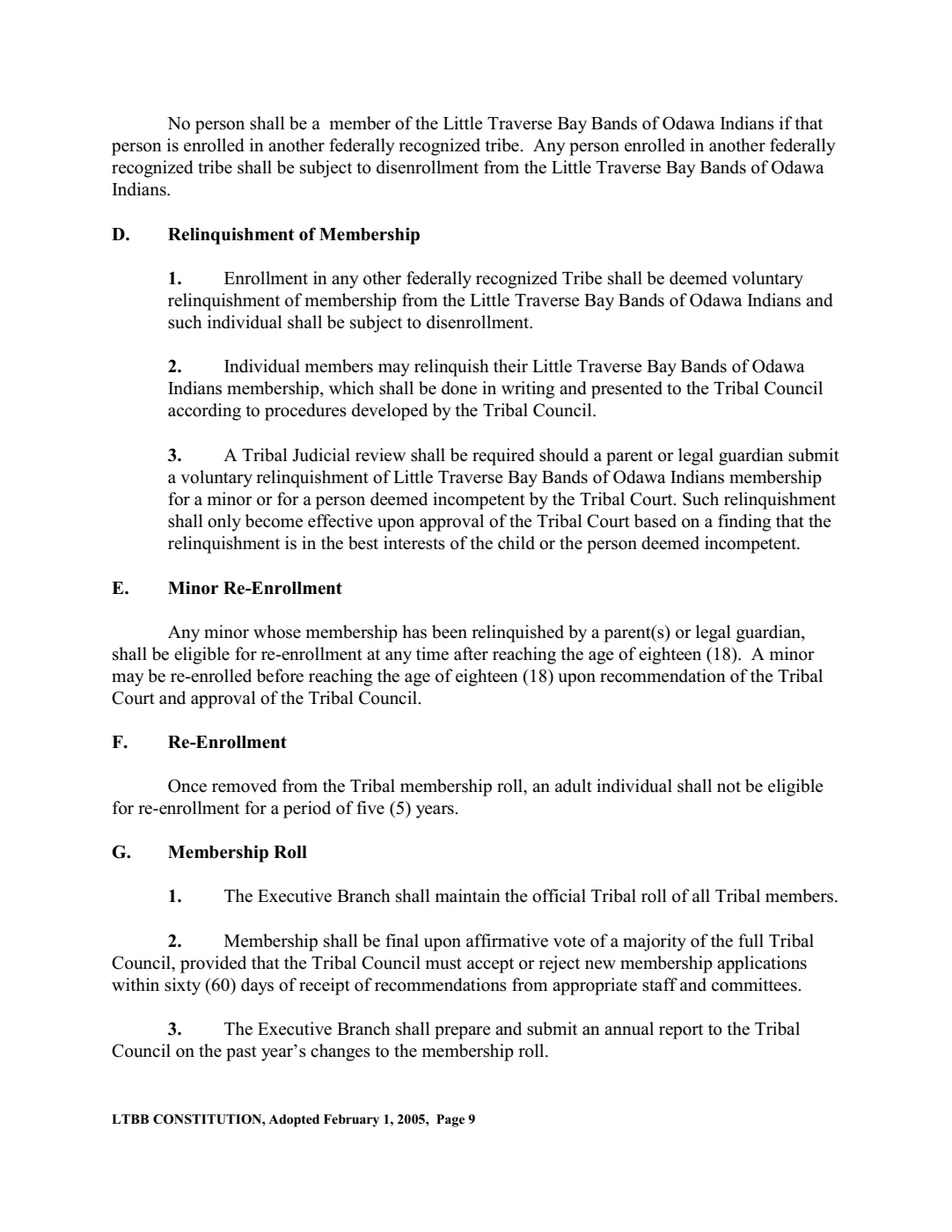
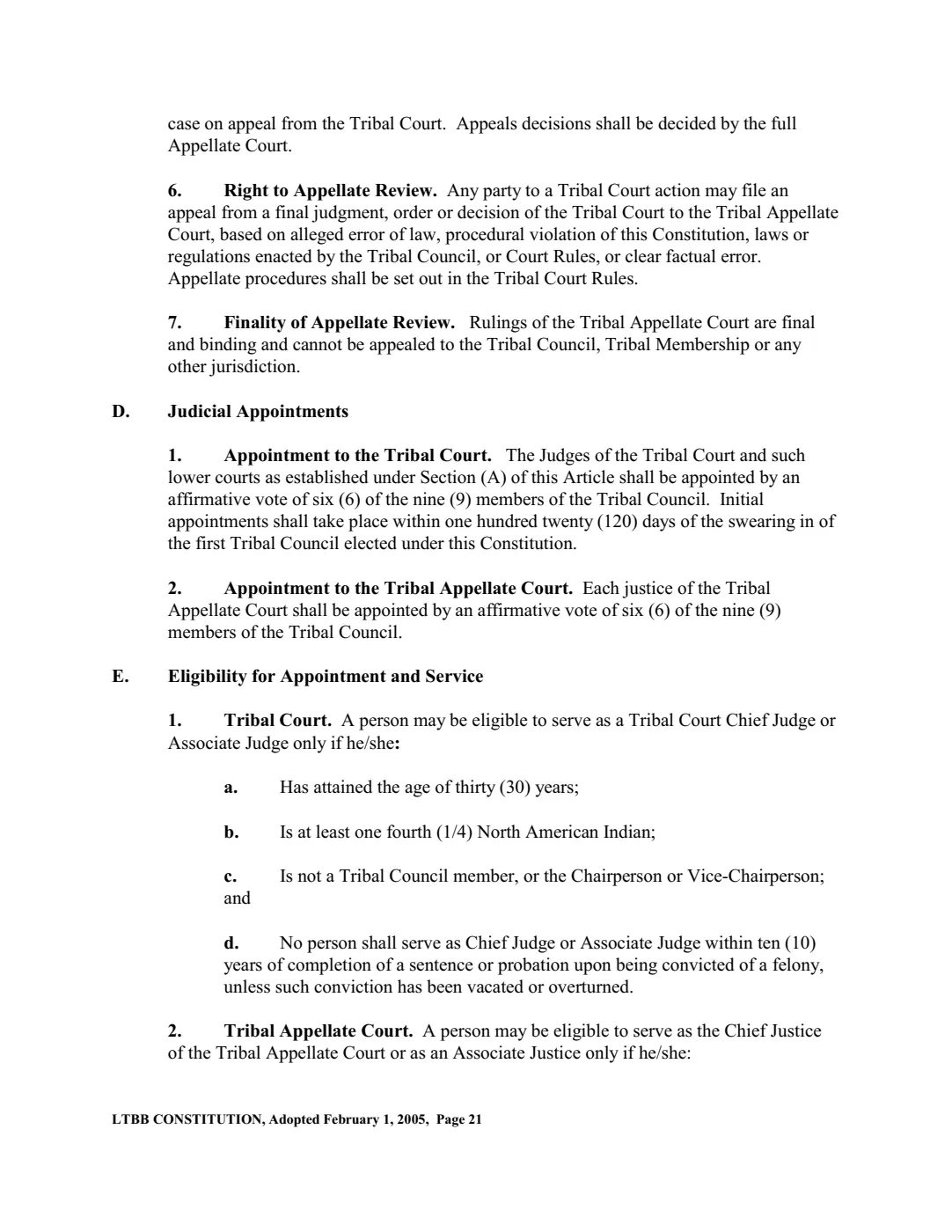
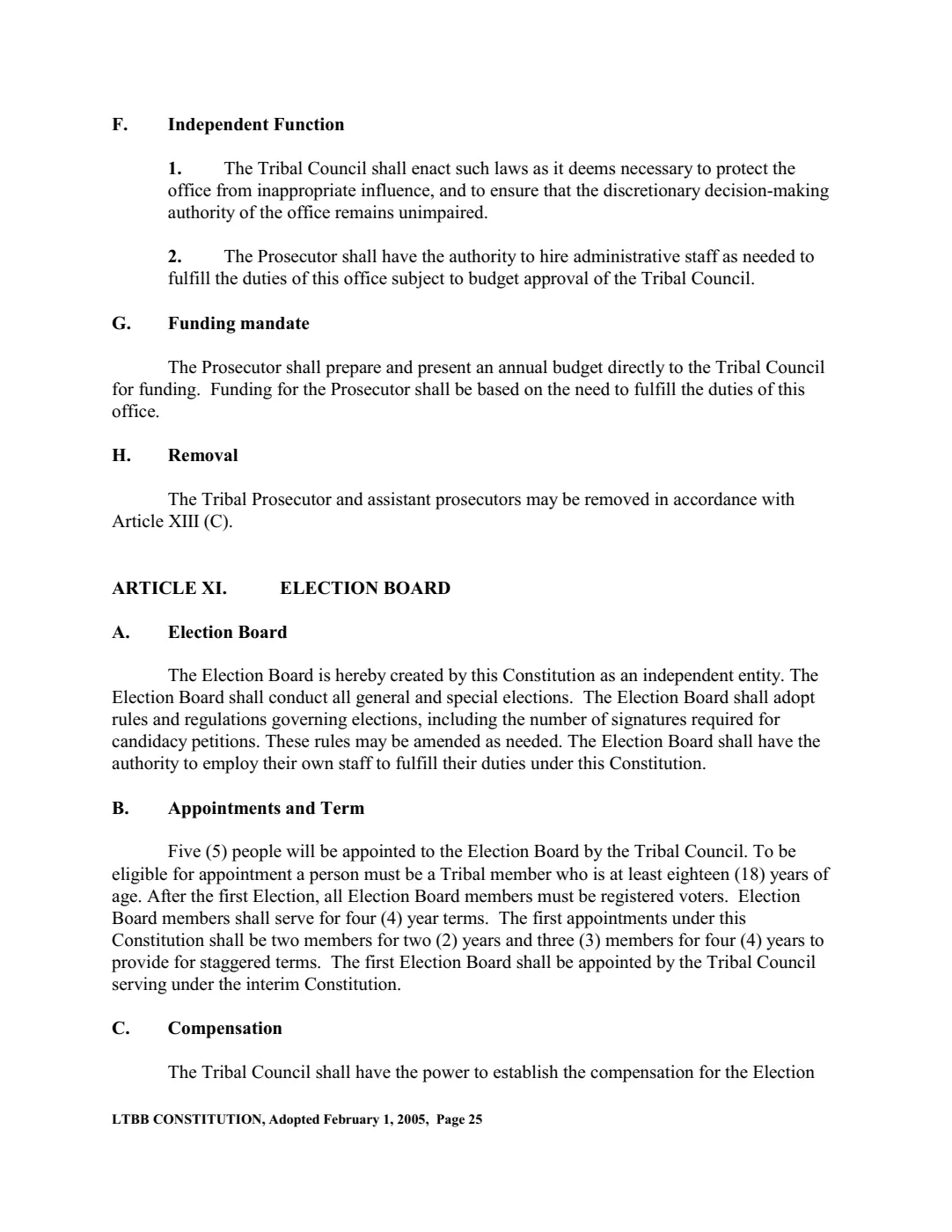
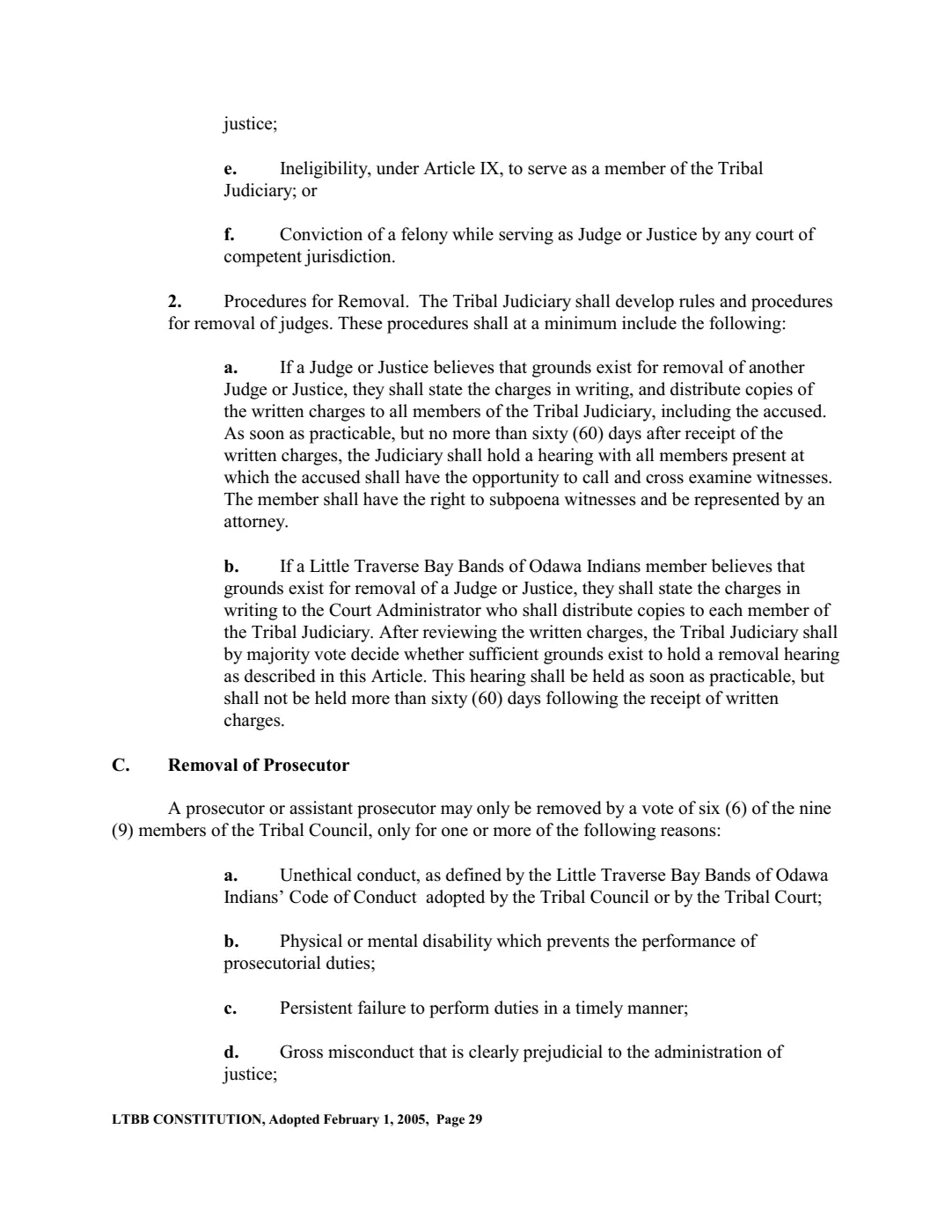
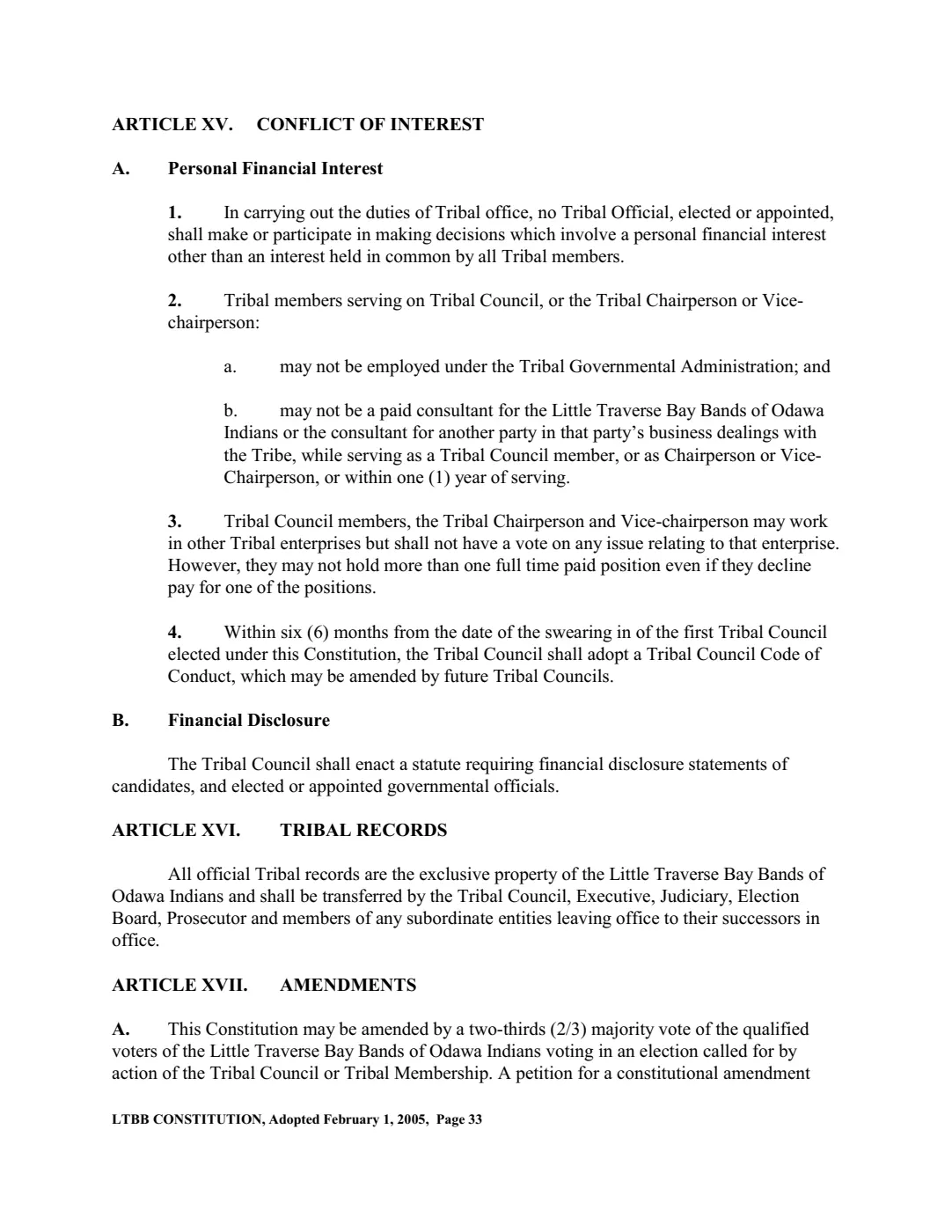
- What did the Treaty of 1836 do to the archipelago specifically? Now examined: the 1836 Treaty of Washington, Article Third, reserved “The Beaver islands of Lake Michigan for the use of the Beaver-island Indians” for a five-year term — filed under the Chippewa reservations article — and the annuity schedule names Kainwaybekis and Pazhikwaywitum “of Beaver islands”. The 1855 Treaty of Detroit (Art. 1) assigned “for the Beaver Island Band — High Island, and Garden Island”. The LTBB Constitution lists “the Beaver Islands” among the nine constituent bands and “Payzhickwaywedung - Beaver Island” among the Ogemuk — evidently the 1836 schedule’s Pazhikwaywitum. What remains open is how the five-year reservation term played out on the ground after 1841.
- Williams says Garden and High Islands were “deeded to them by the government as their own.” The patent layer is now held. It includes 26 island-area patent records whose structured tribe field is populated (20 Chippewa and six Ottawa), with names, allotment numbers when present, dates, and legal descriptions. The next task is to map those legal descriptions specifically to Garden and High Islands and reconstruct later conveyances; the patents do not by themselves explain how land later passed into state or private hands.
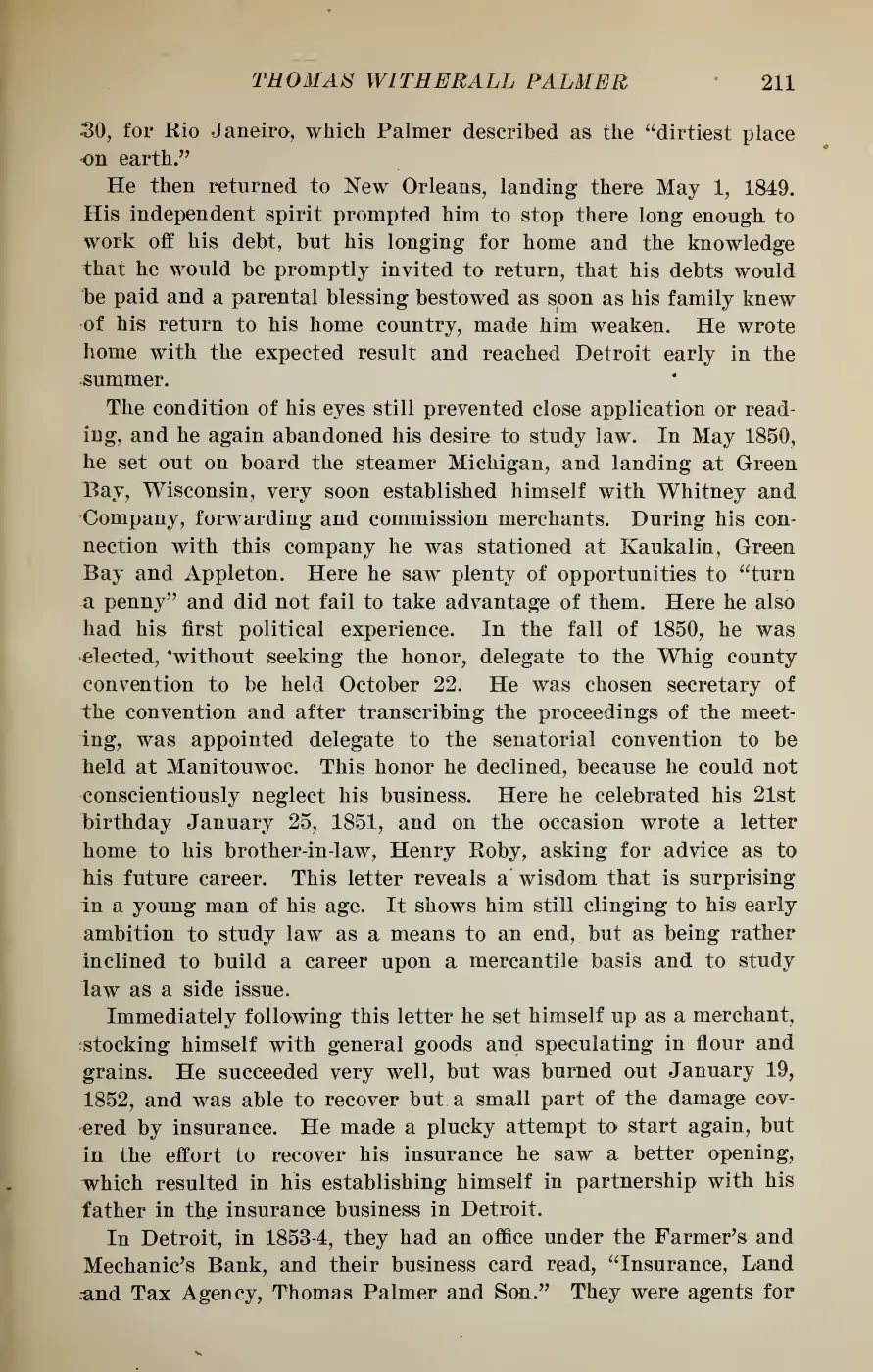
- Who were Kimmeoue, Watanesa and Chenotin? Substantially answered by Charles Garrad, “Some Notes on the Ojibwa (Chippewa) of the Beaver Islands”, JBIH III (1988), pp. 7–11, and Sarah McKinley & Helen Collar, “Chief Peaine and the Mormons”, ibid., pp. 19–30 (both read via IA lending borrow, 2026-08-01): KIMMEOUE is probably the 1836 treaty’s KIMMEWUN, chief “at the Cross” on Little Traverse; Sarah McKinley names Peaine’s brothers An-den-e-my (“Ripe Corn”) and Wa-ton-a-saw (“Walk-on-Water” — evidently Strang’s WATANESA); Peaine = “Cloudy Day”, possibly the POUANAS of the 1781 Mackinac surrender, absent from the 1836 treaty but signing 1855/1856 as PE-ANE/PE-AINE. His descendant John Antwine was still acknowledged chief in St. James (Freesoil Avenue) in the early 1920s. Garrad also cites an 1840 census of the “Beaver-island Indians”: 199 people (39 men, 51 women, 109 children; 120 cleared acres, 35 agriculturalists; Schoolcraft 1851–54), and the McKinley memoir describes the c. 1849 Garden Island community: log houses, the mission priest Father Zorn, and a school taught in Anishinaabemowin. CHENOTIN remains unidentified. (The Antwine-photo caption’s “36-star flag — a gift at the Treaty of 1836” is anachronistic — 36 stars date 1865–67; a family tradition, not a treaty artifact.)
- What is the Anishinaabemowin toponymy of the archipelago? Beaver Island’s name is now attested back to 1853 (Amikogenda, Baraga); Garden Island’s Tagoning (Strang, 1854) remains the only other recorded island name. Blackbird (1887, 1897) and Schoolcraft were checked and give none; the neighboring islands’ names remain unrecorded here, and GNIS records none of them.
- What happened between the 1856 expulsion of the Strangites and 1905? The sources held here jump from Baraga’s 1859 visit to the Peshawbestown village of 1905 with almost nothing in between.
- Where are Anishinaabe voices in the pre-1930 record? Andrew J. Blackbird’s own histories are now held — but neither mentions Beaver Island beyond Strang’s 1856 assassination, so the question stands: no source held here narrates the island itself in an Anishinaabe voice before the modern Northern Islander.
See also
Footnotes
-
Northern Islander (St. James, Beaver Island), 9 January 1851. ↩
-
James J. Strang, Ancient and Modern Michilimackinac, Including an Account of the Controversy between Mackinac and the Mormons (St. James, 1854), “Garden Island”, p. 46. ↩
-
Strang, Ancient and Modern Michilimackinac, “Indian Population of Emmet”, pp. 21–22. ↩ ↩2
-
Strang, Ancient and Modern Michilimackinac, “Indian Hostilities”, p. 29. ↩
-
Elizabeth Whitney Williams, A Child of the Sea; and Life among the Mormons (Harbor Springs, 1905), chapters “The Indians and their Islands” and the Garden Island teaching years. ↩ ↩2
-
Strang, Ancient and Modern Michilimackinac, “The Fisheries”, p. 13. ↩
-
Lieut. Col. Robert McDonall to Sir F. P. Robinson, “Drummond Is[d], 10 Jany. 1815-6”, Michigan Historical Collections, vol. 23, p. 96. ↩
-
Frederic Baraga, A Dictionary of the Otchipwe Language, Explained in English (Cincinnati, 1853), p. 25. ↩
Read the document
600 pages, rendered from the held scan.

Jump to a page — 600 in all
140 of 600 pages linked here — every page to 32, then every 6th, then the last 16. With JavaScript, every page.
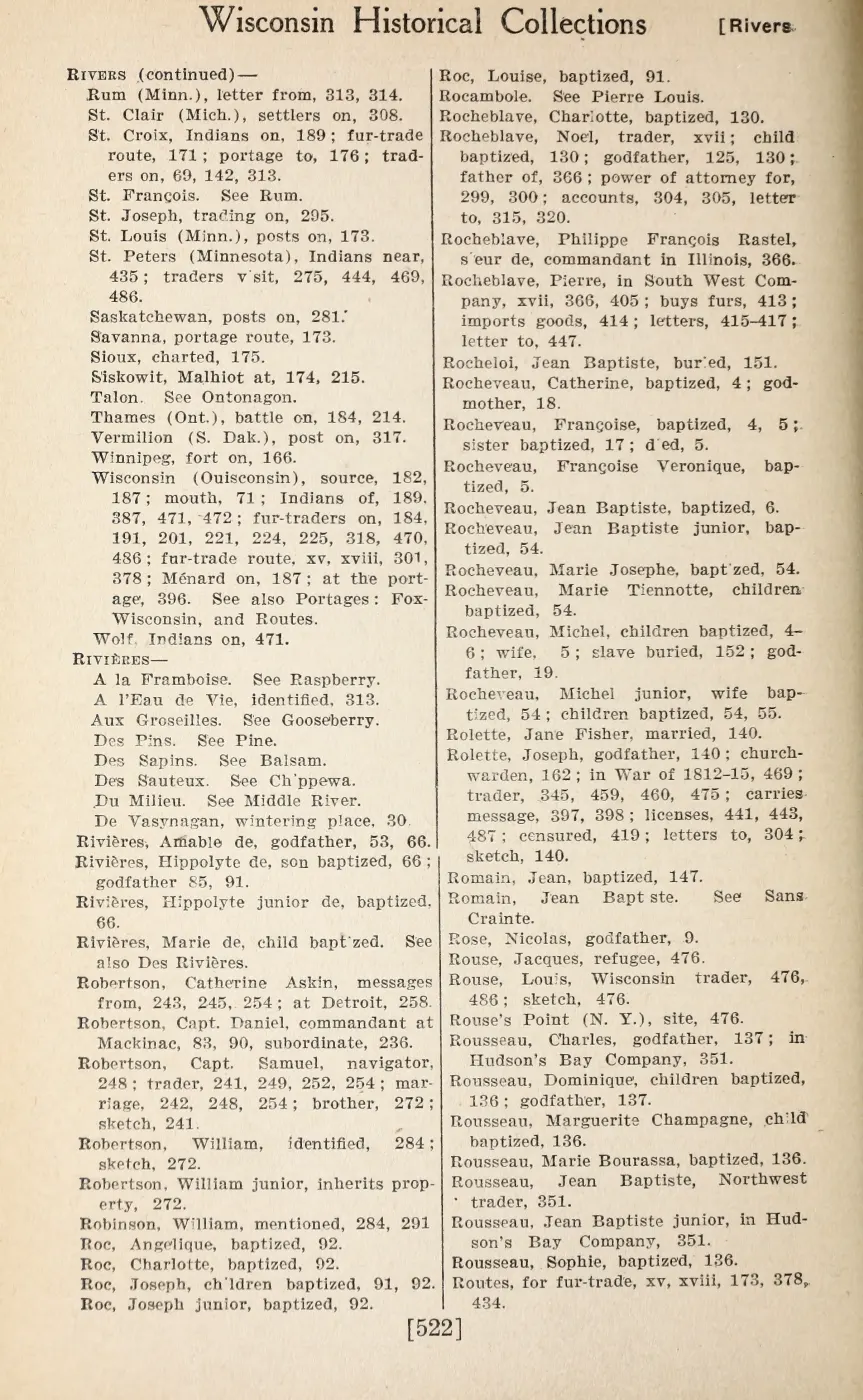
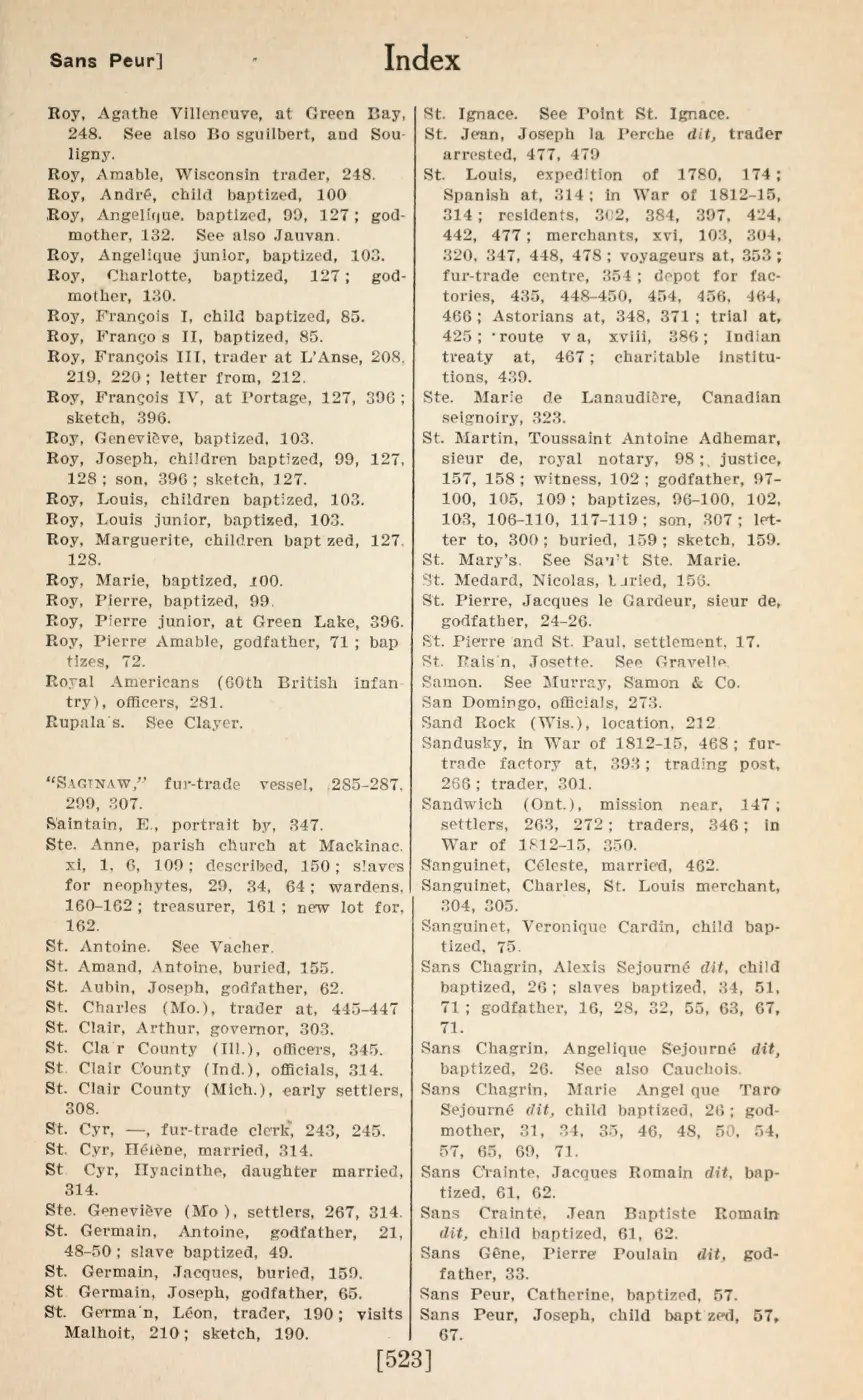
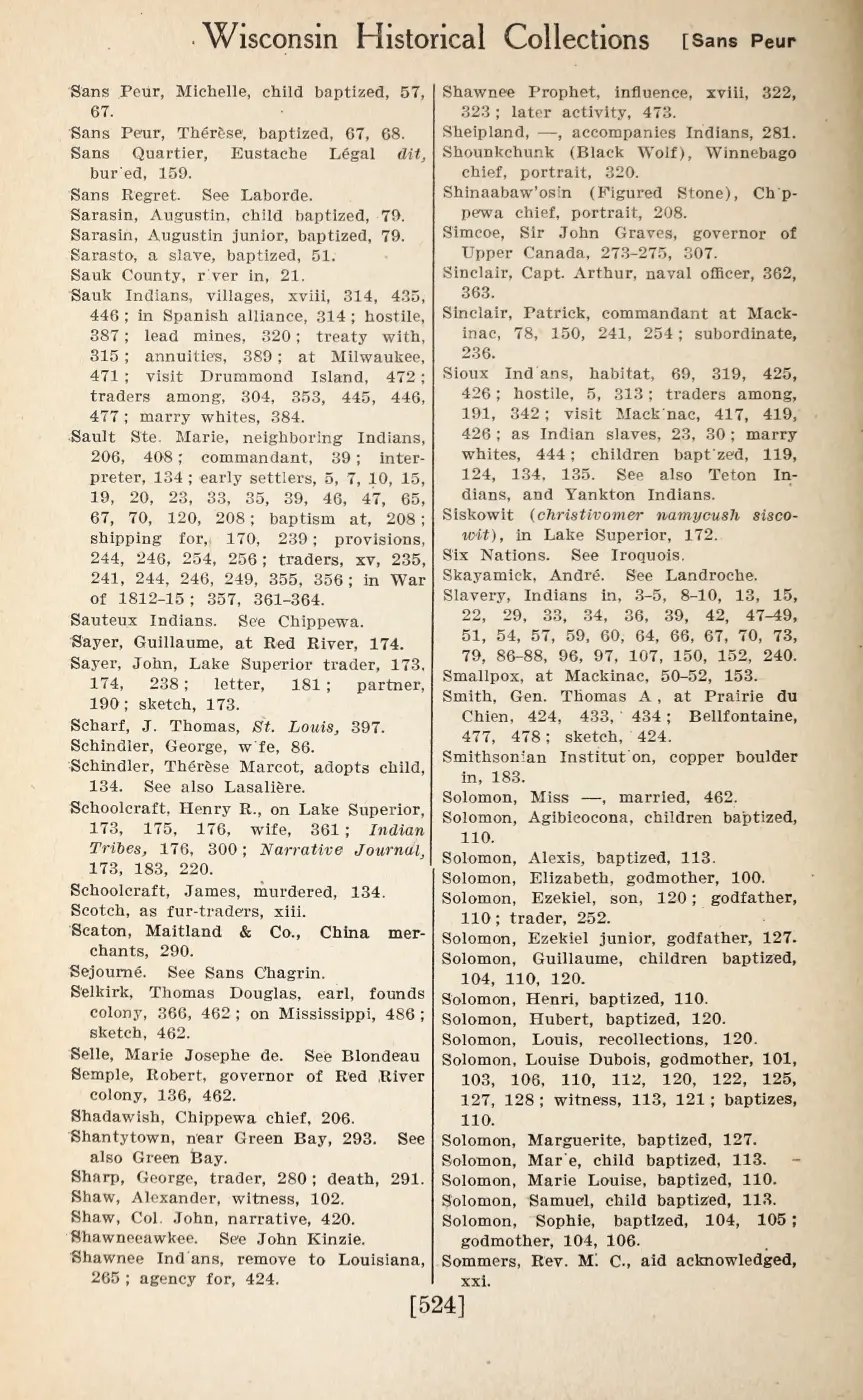
Read the document
678 pages, rendered from the held scan.
Jump to a page — 678 in all
138 of 678 pages linked here — every page to 32, then every 7th, then the last 16. With JavaScript, every page.
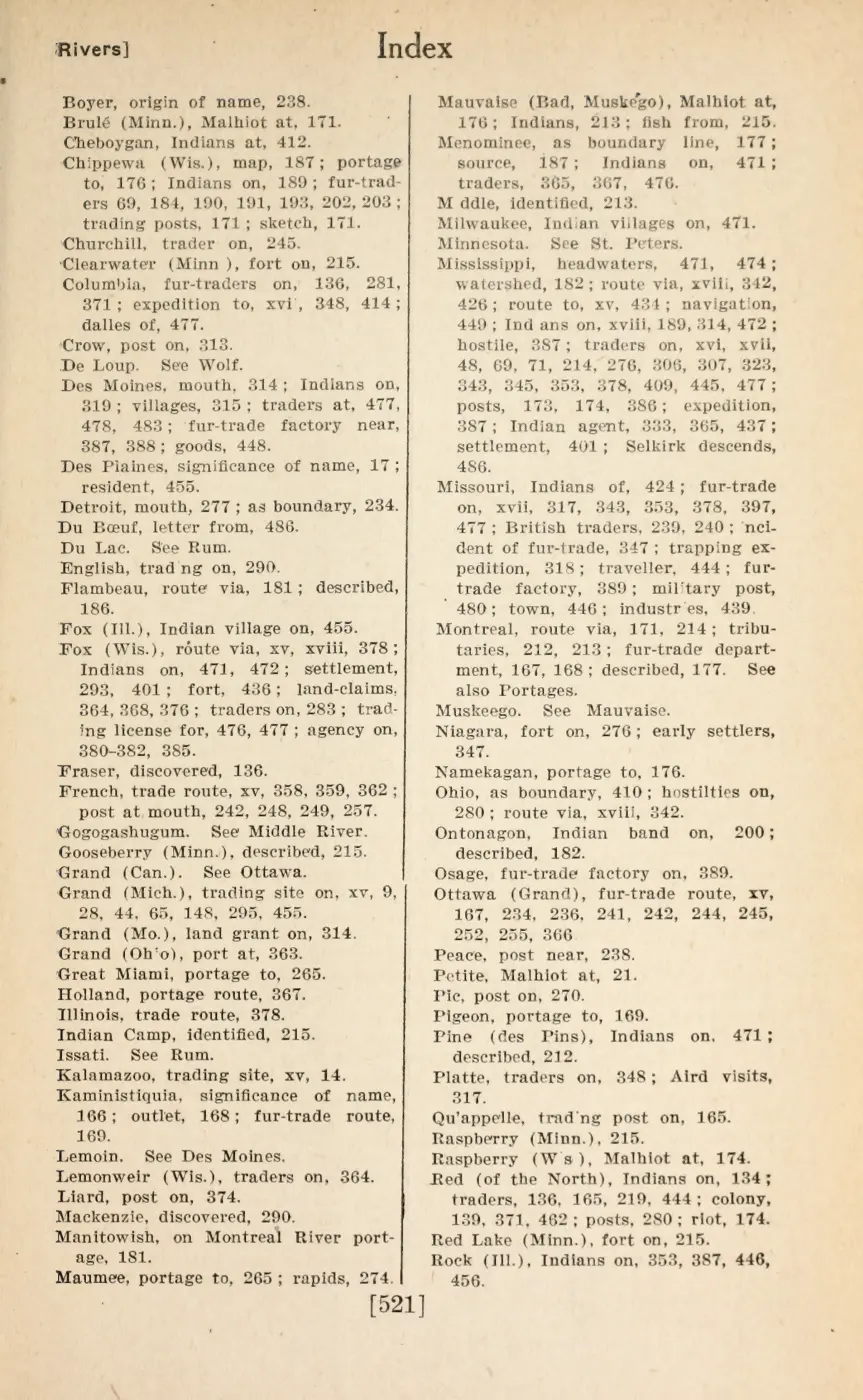
Read the document
39 pages, rendered from the held scan.



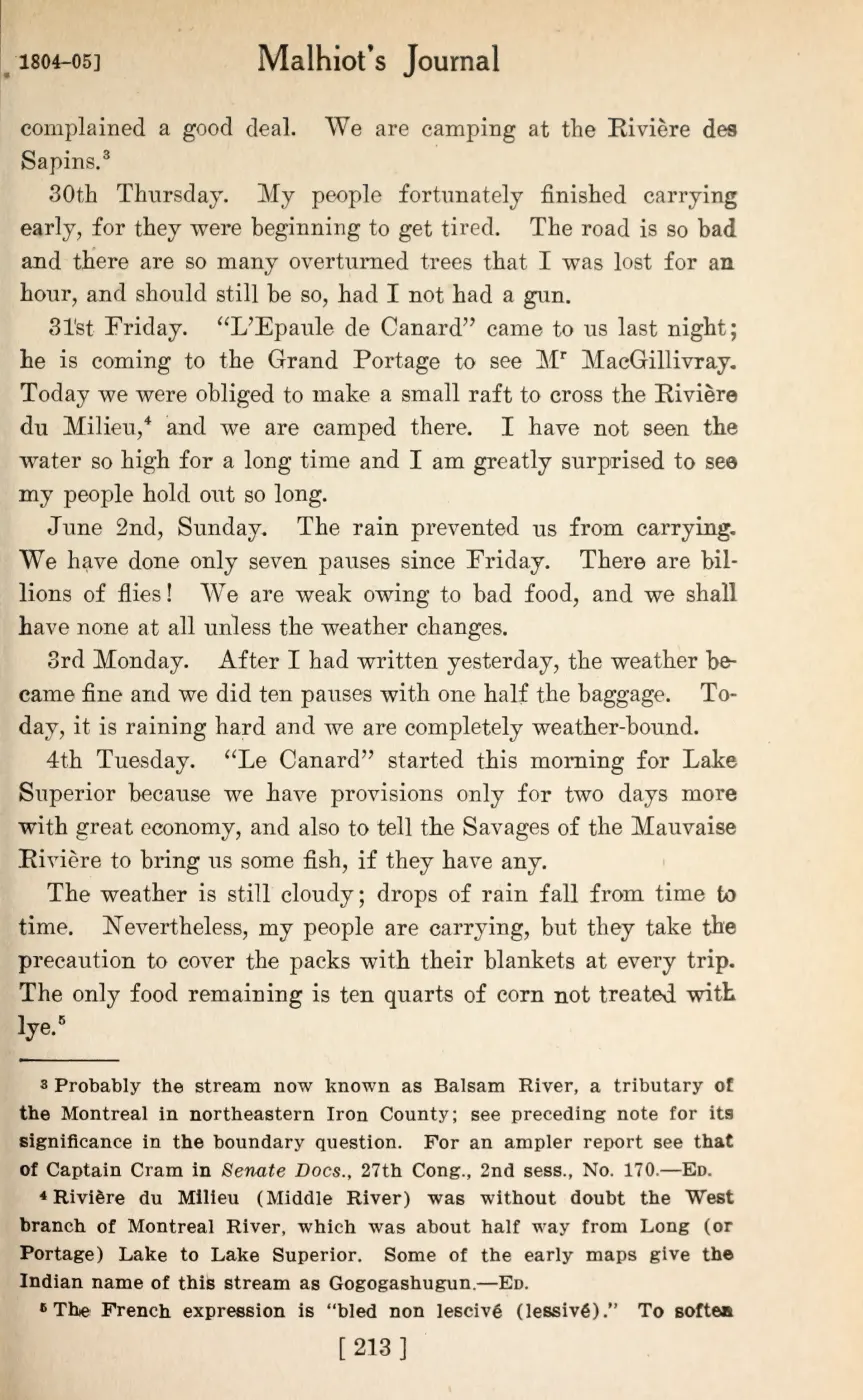
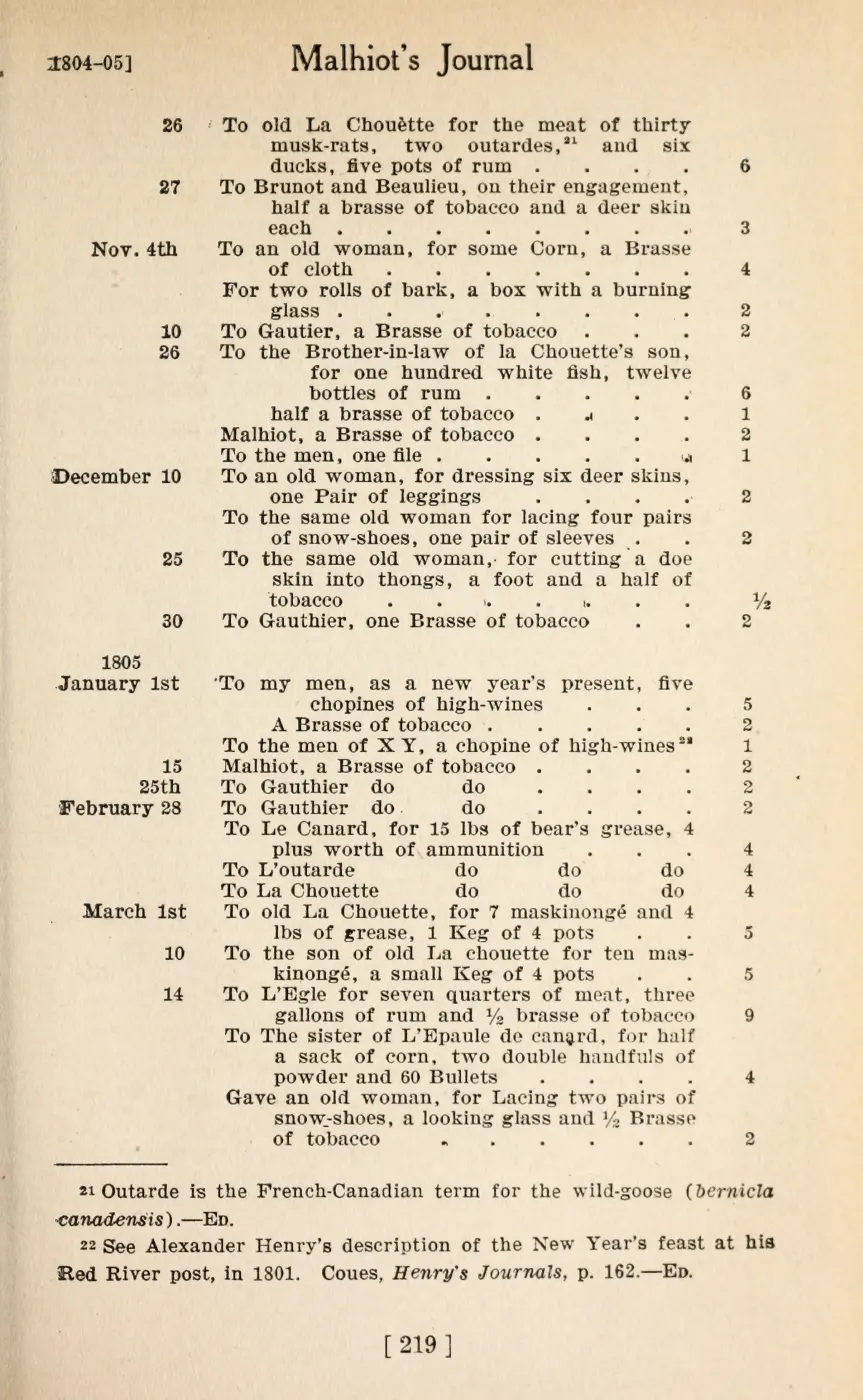
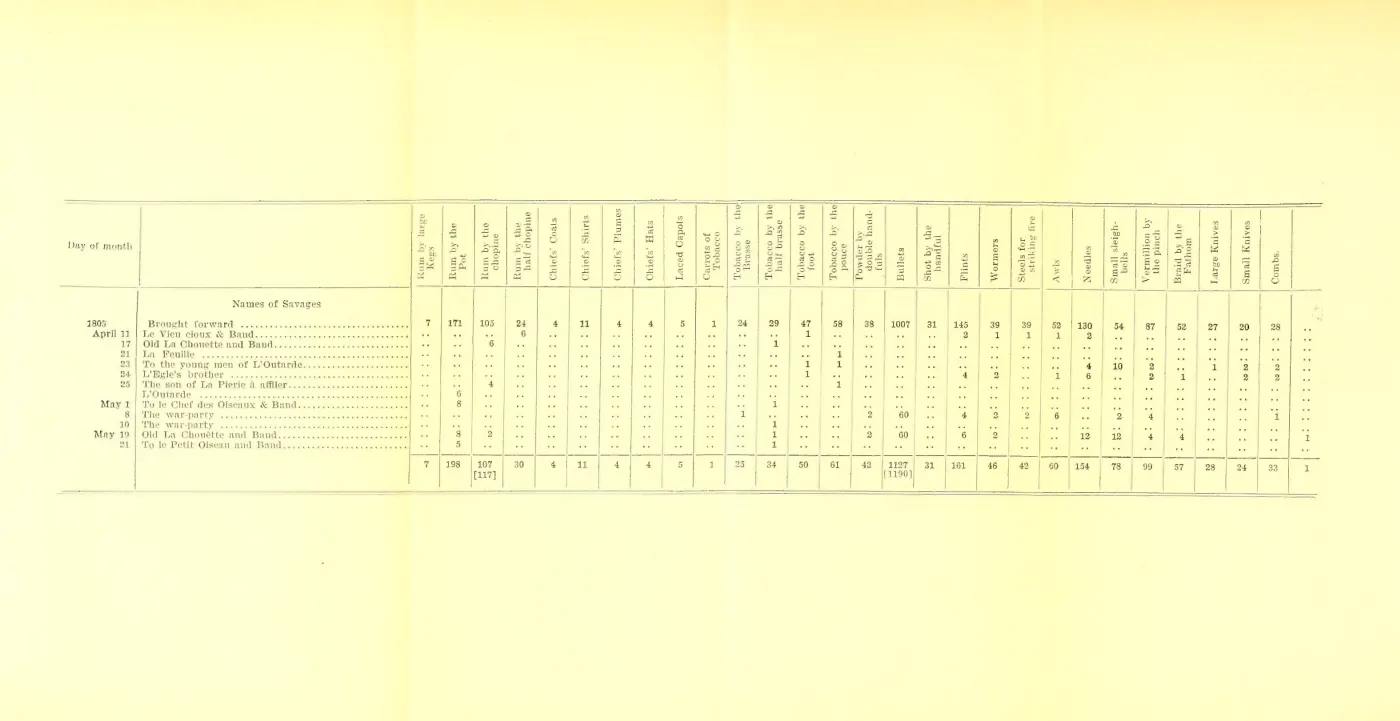

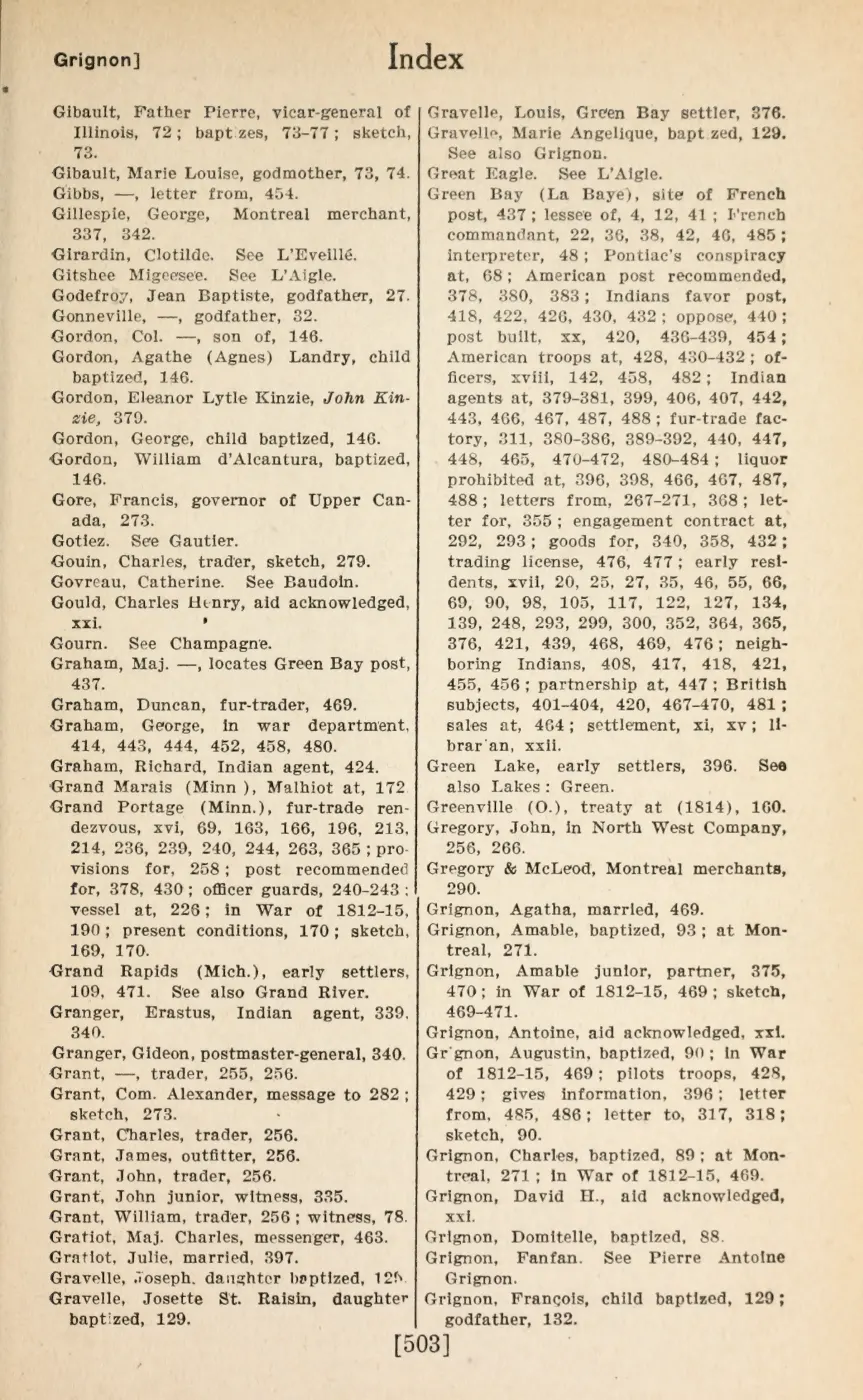
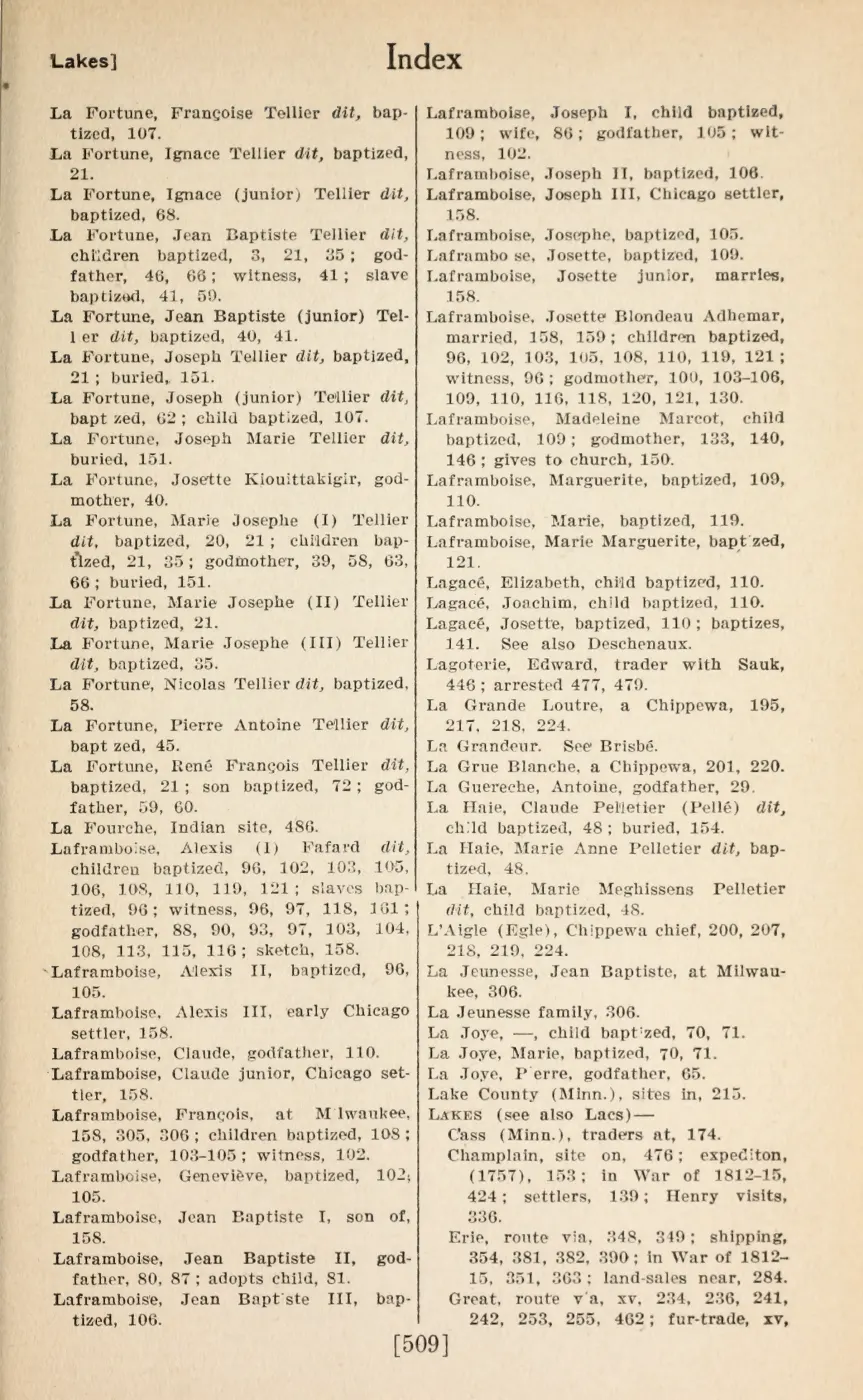
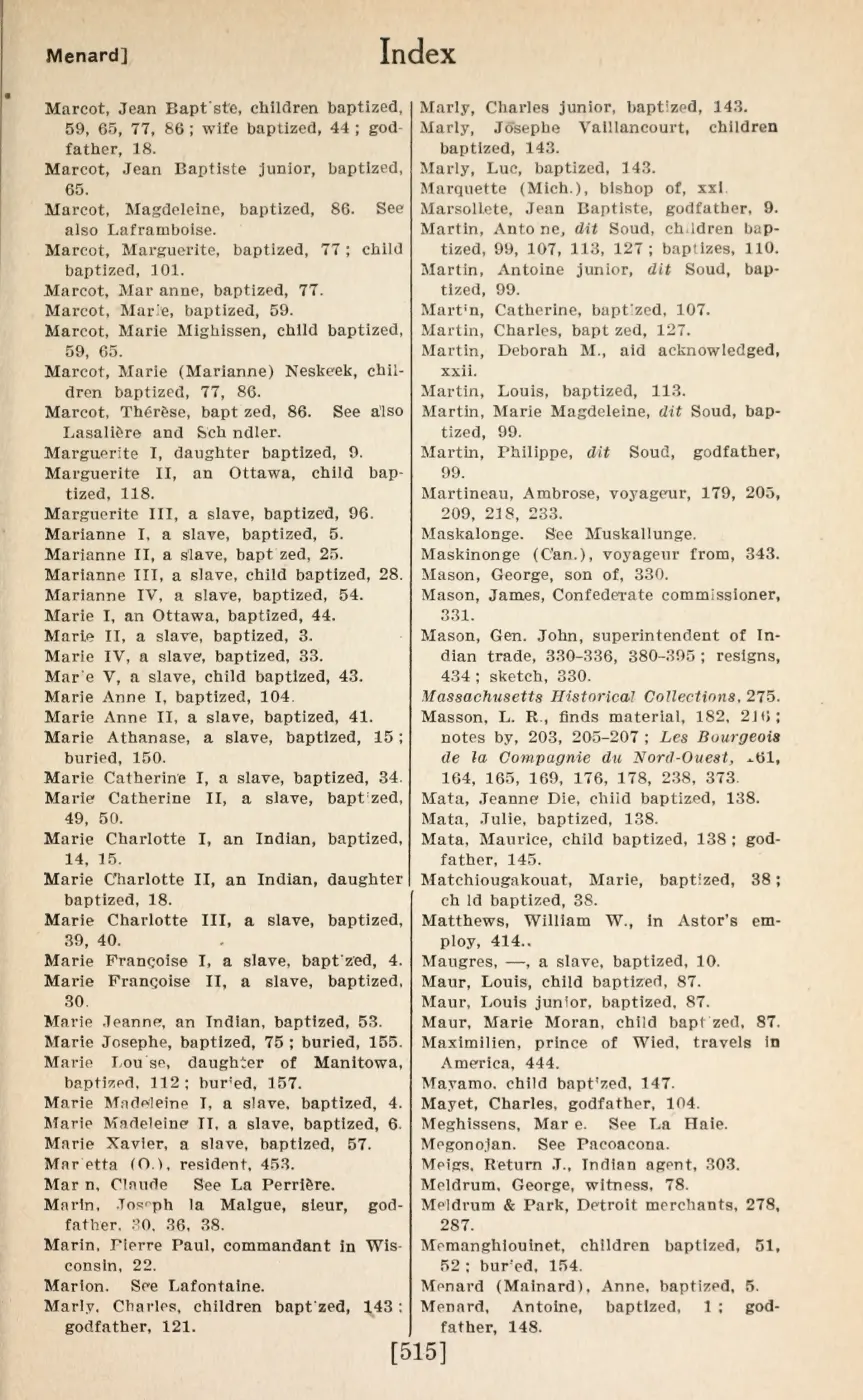
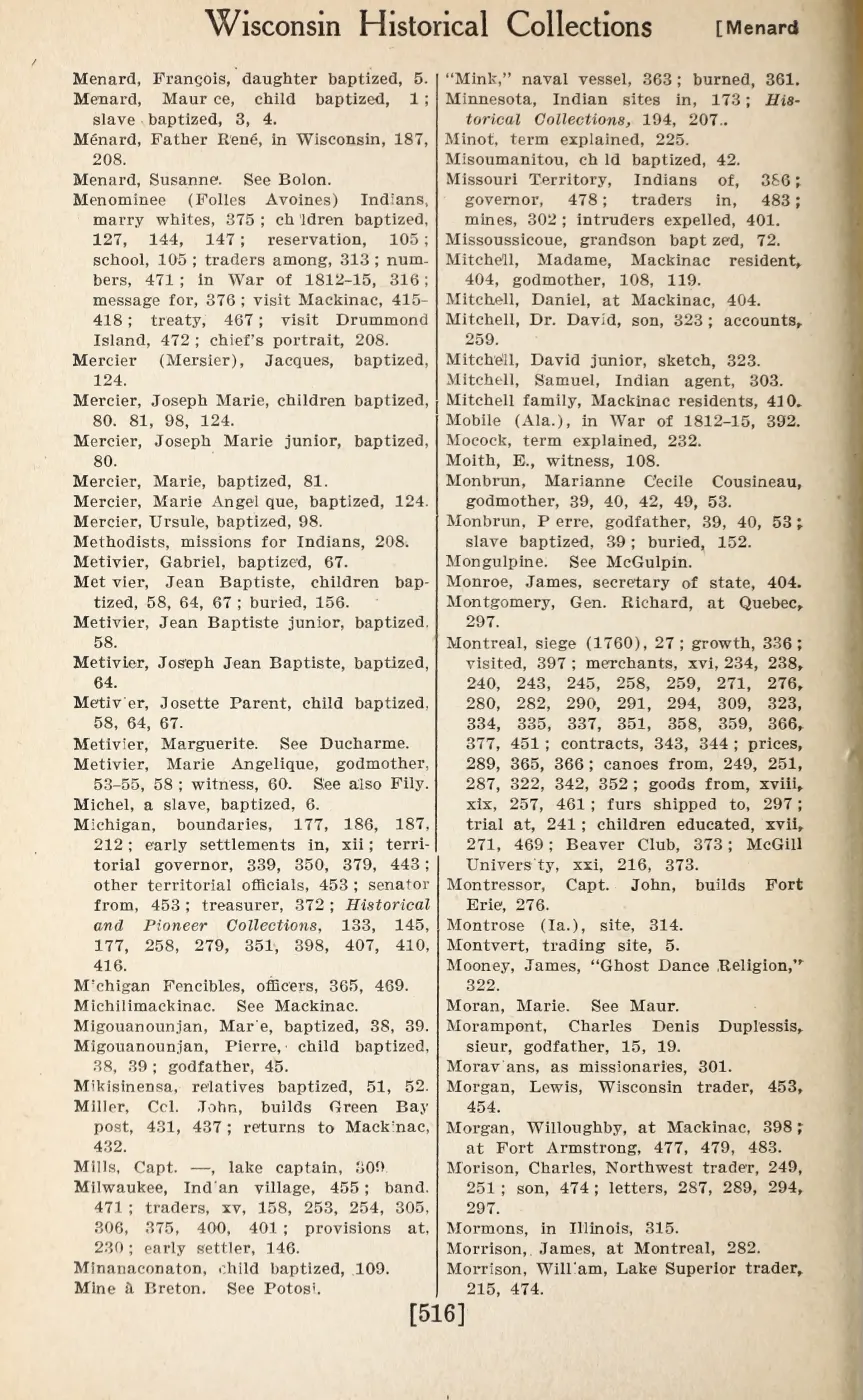
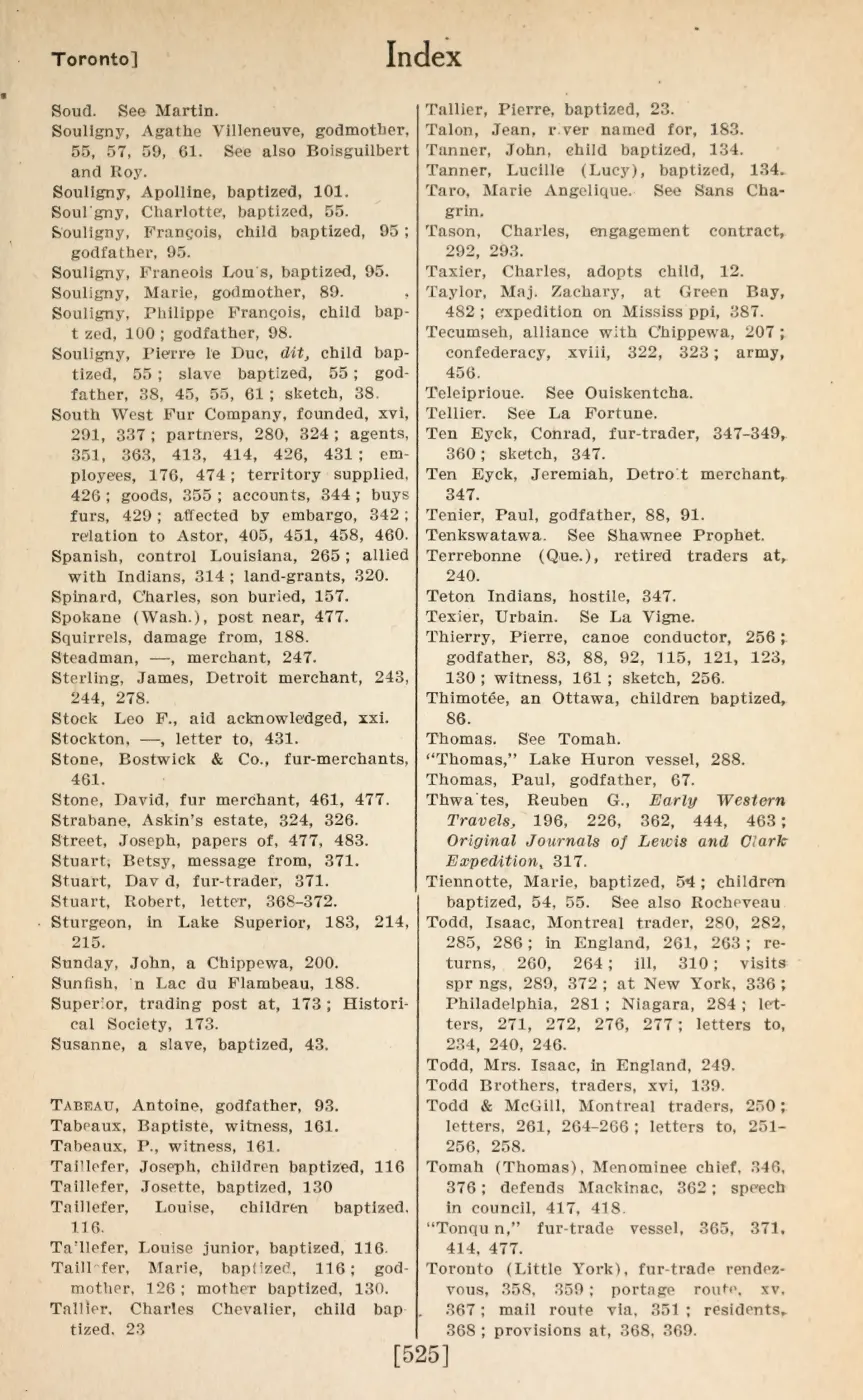
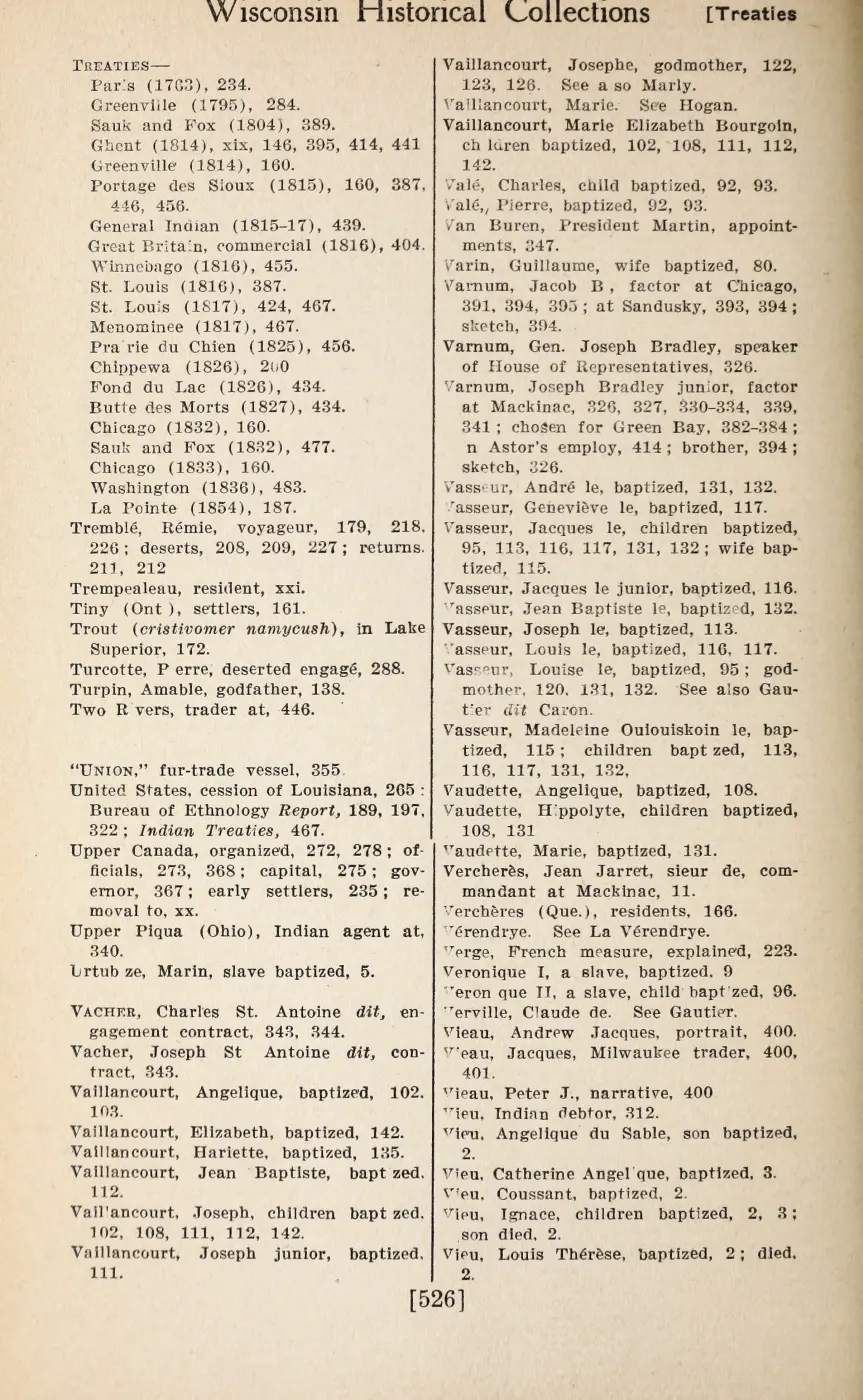
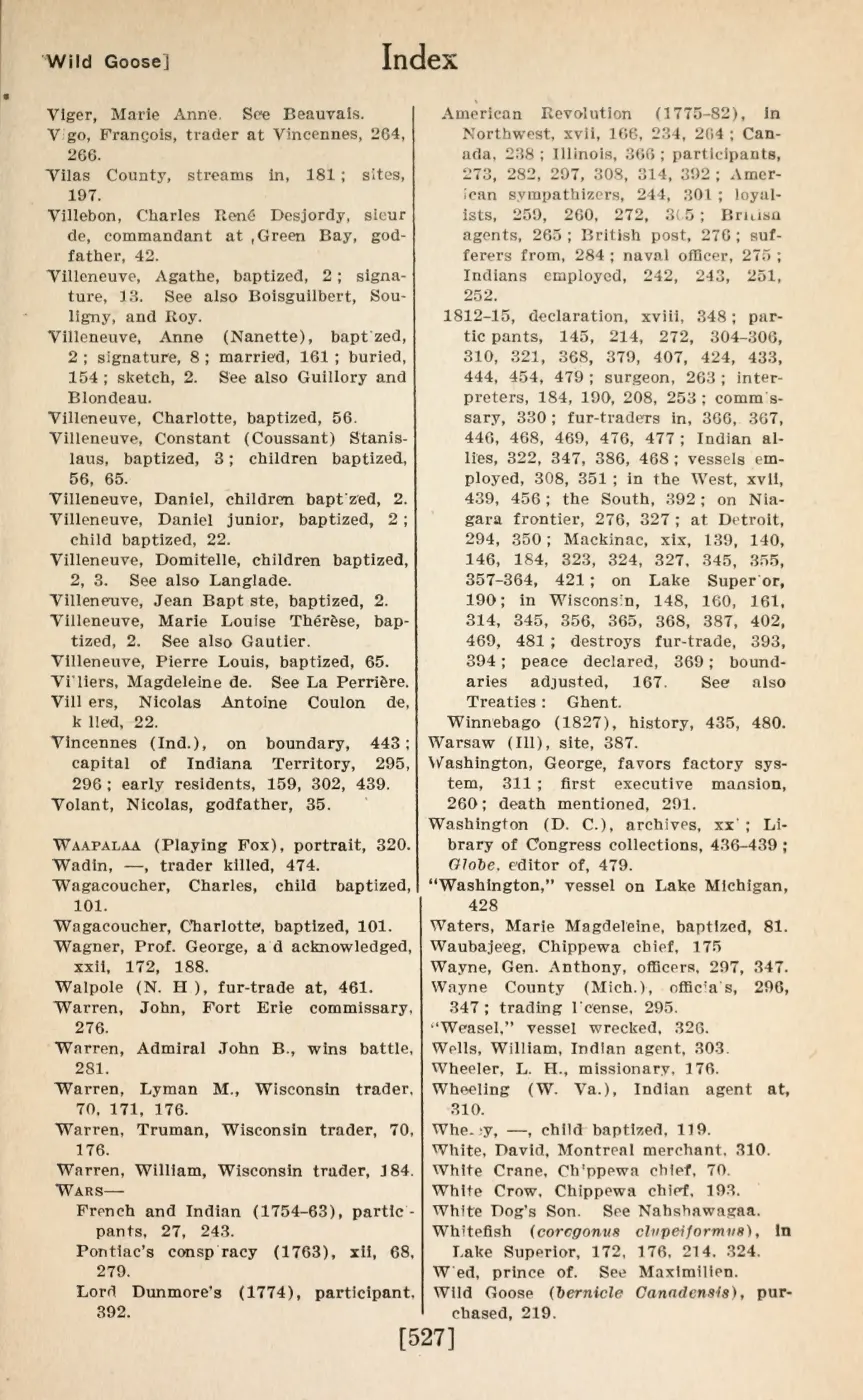
















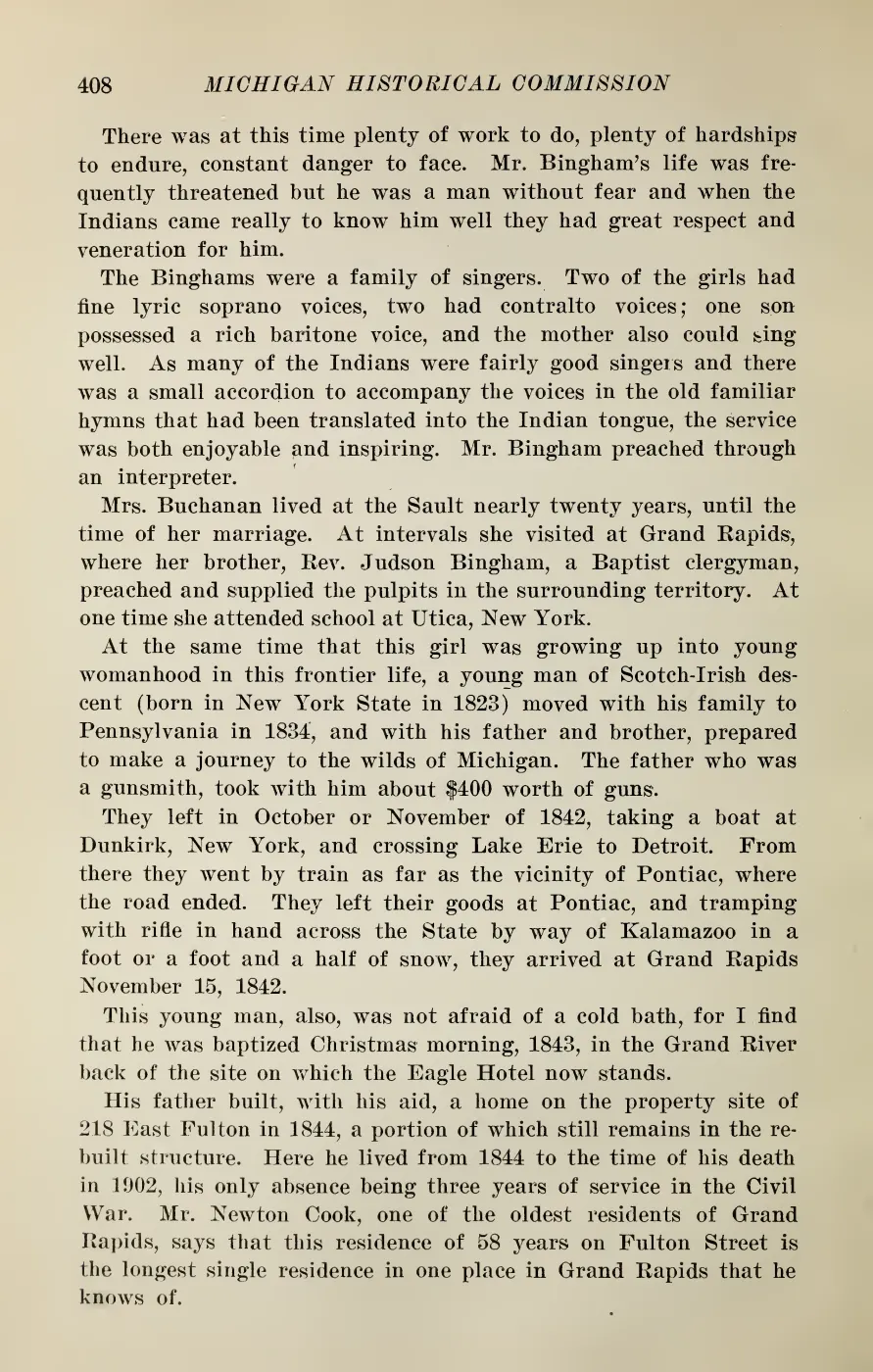
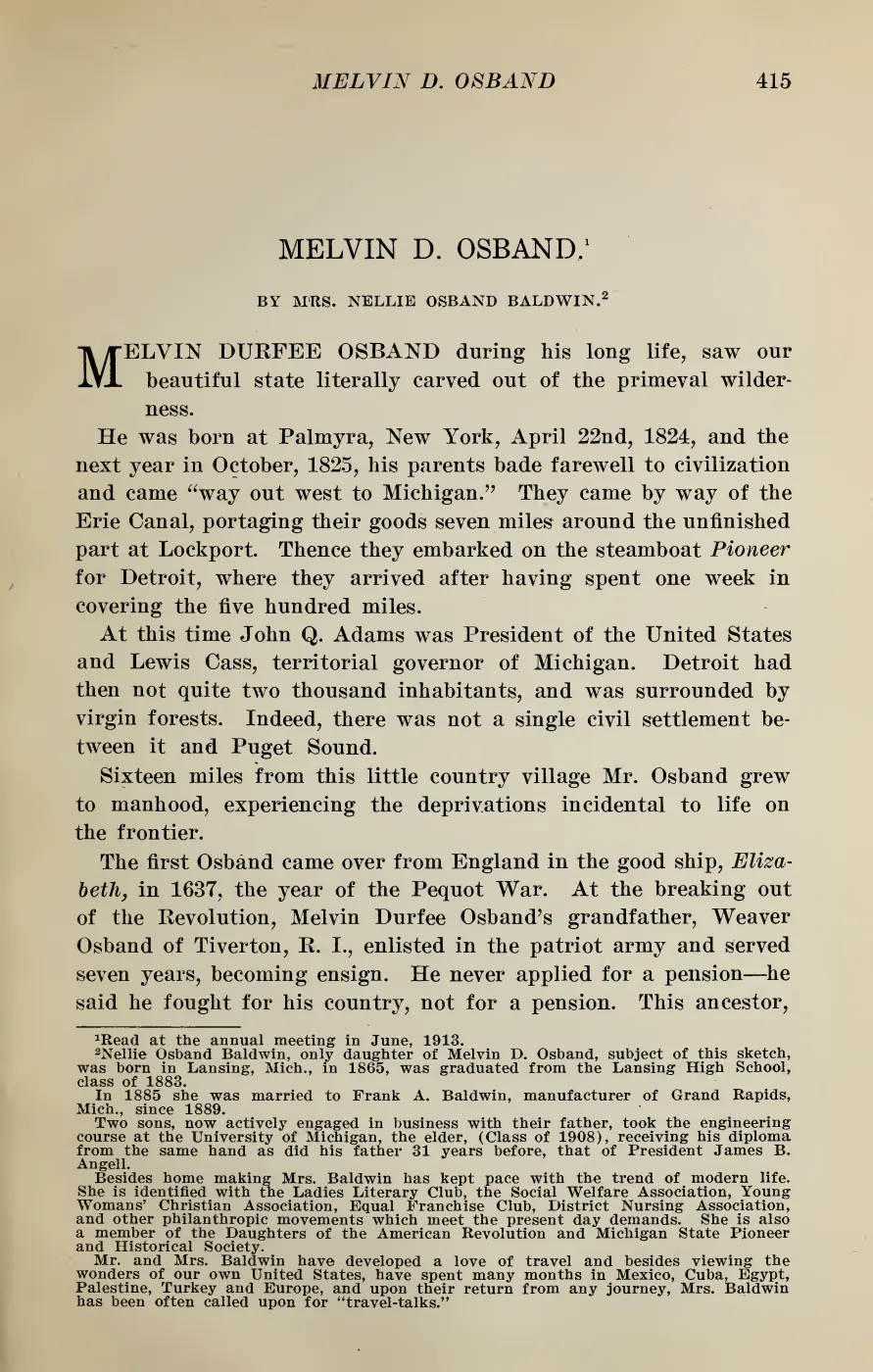

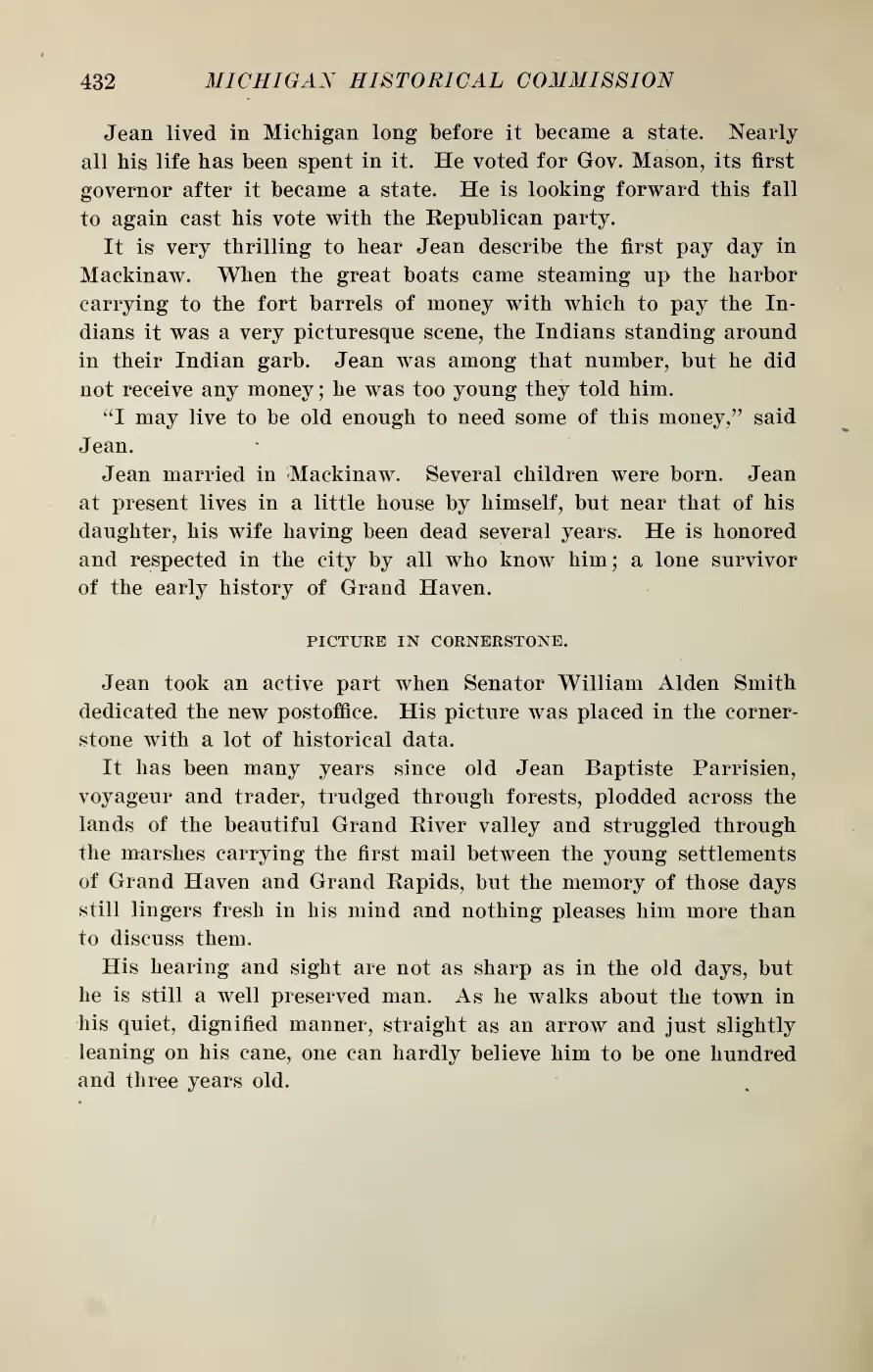
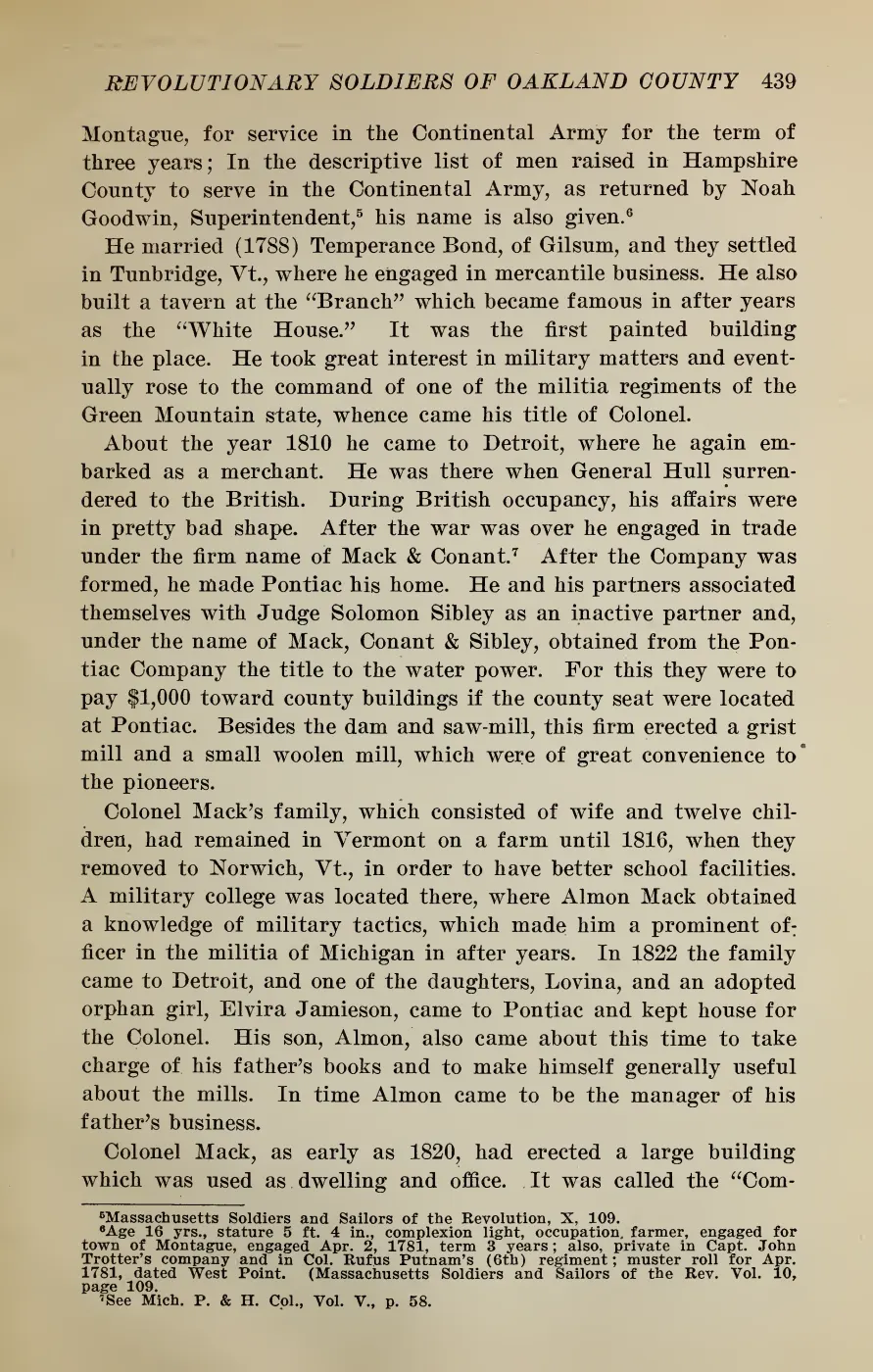
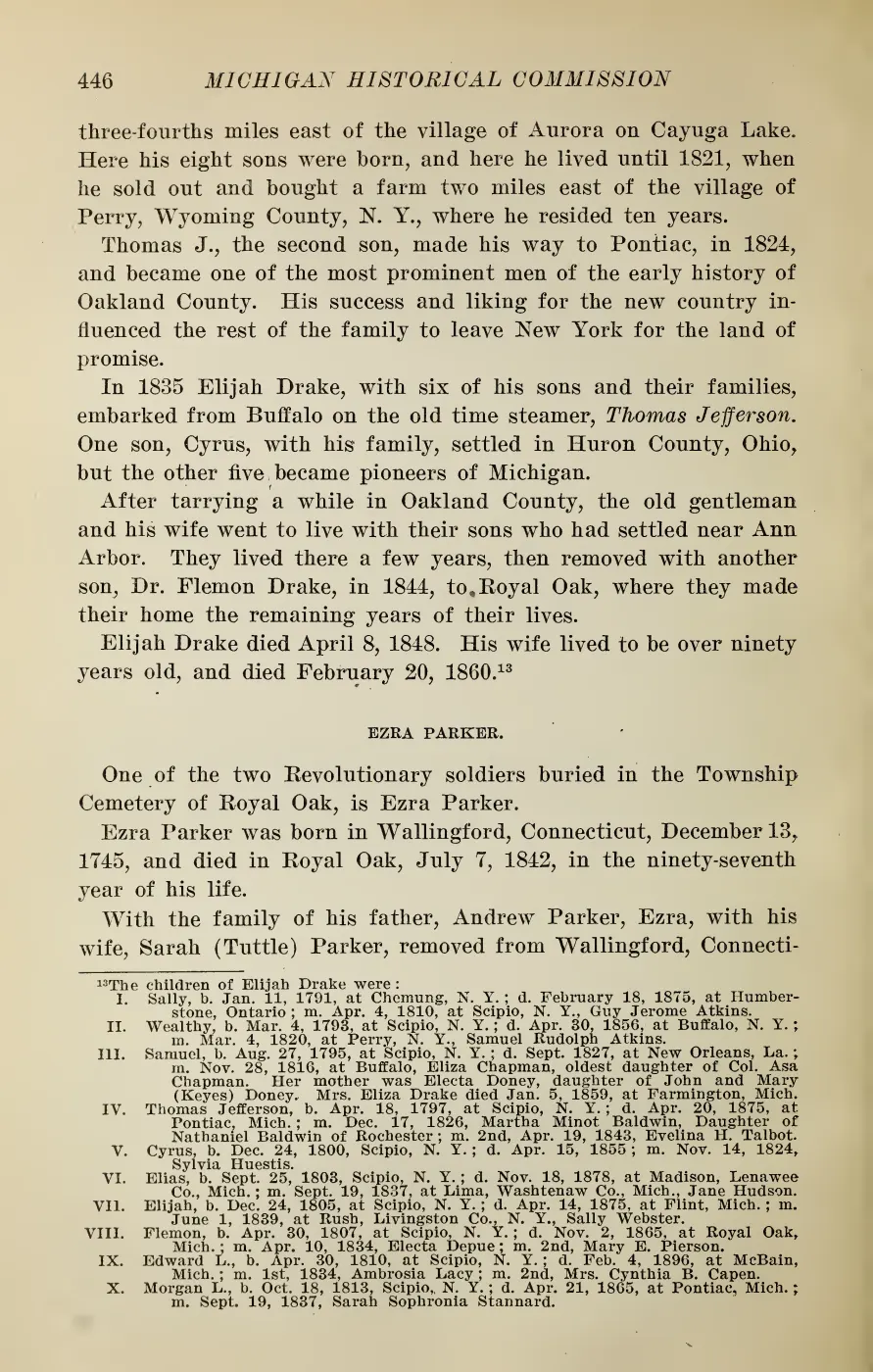
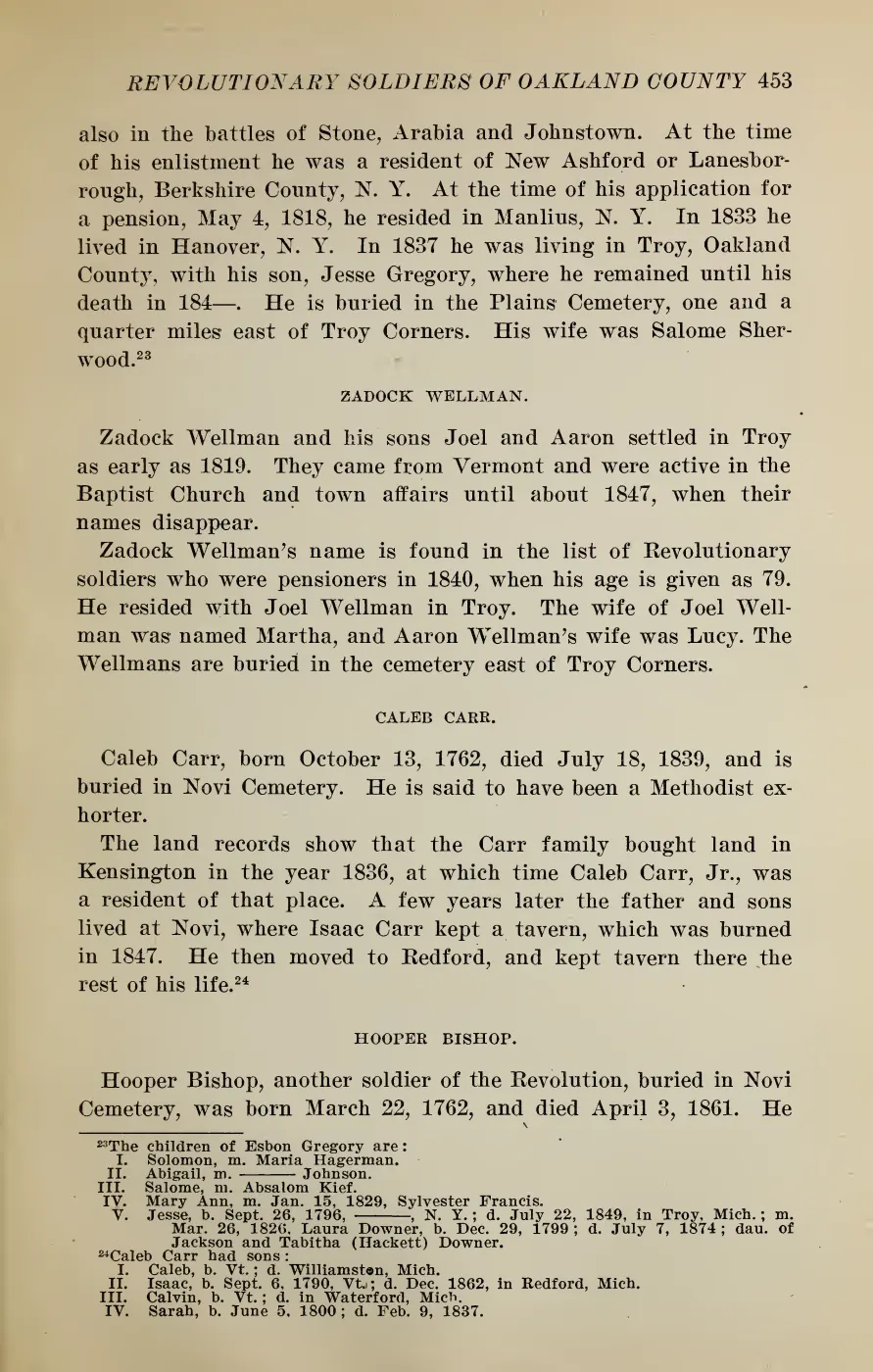
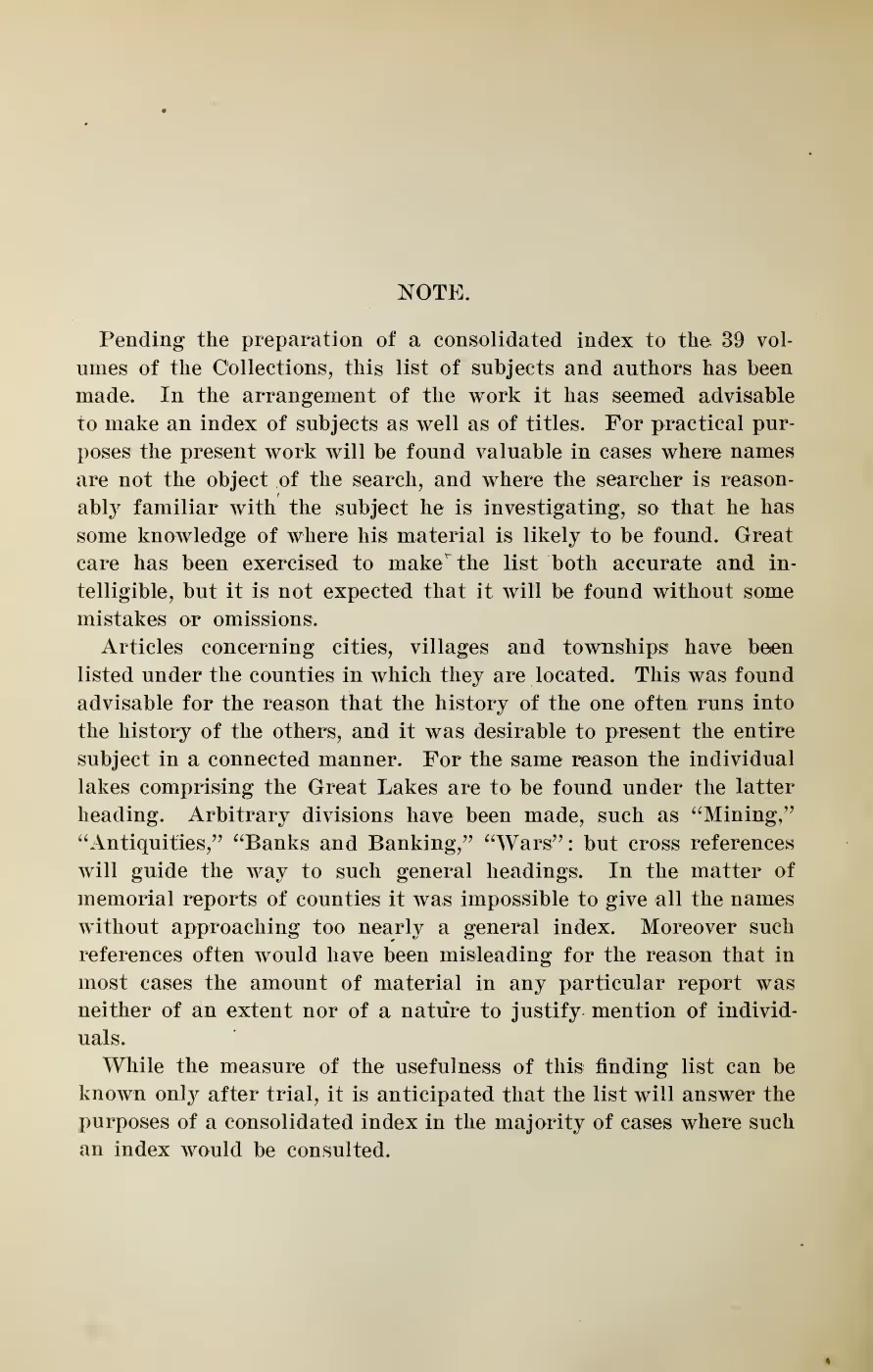
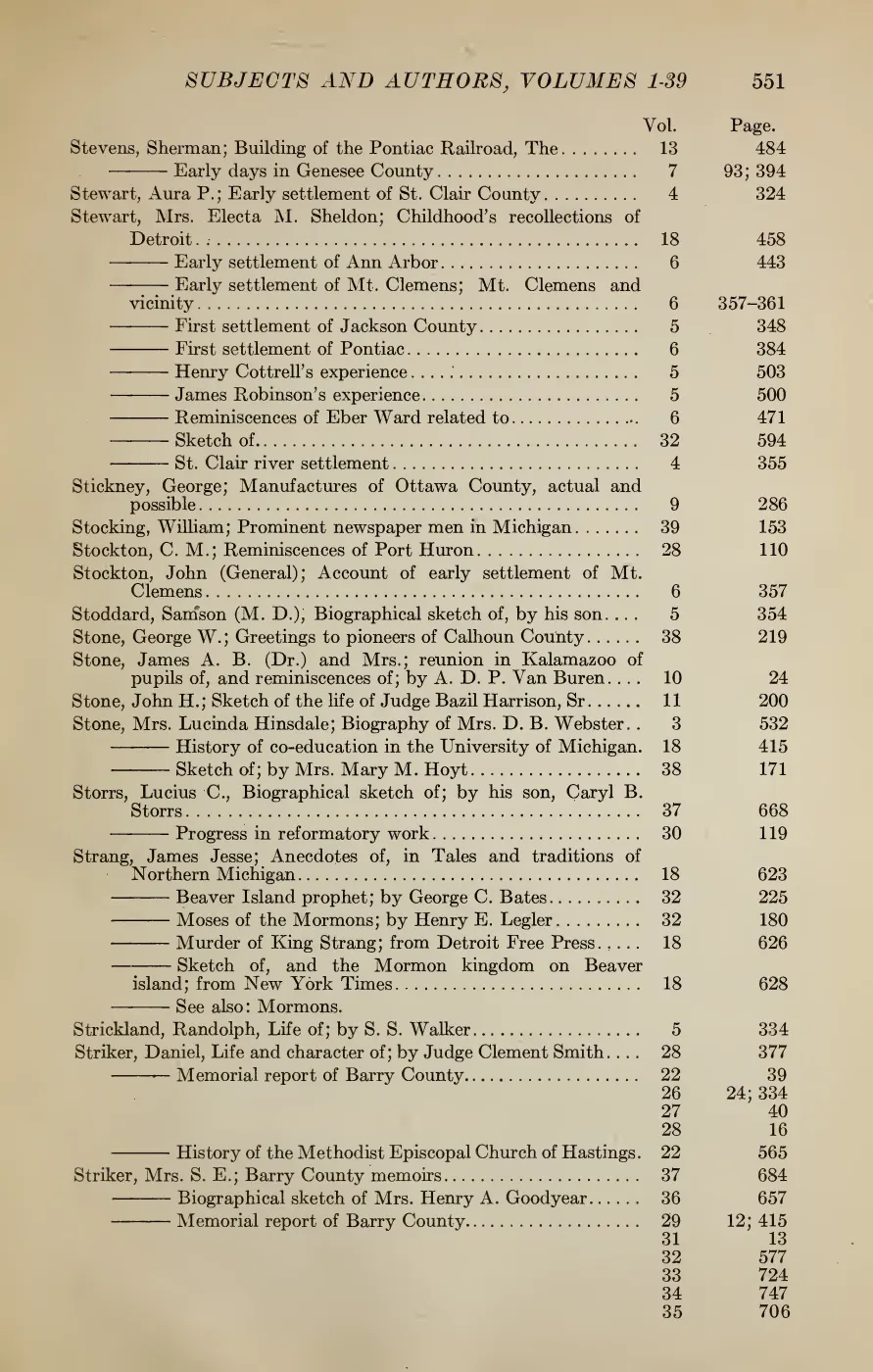
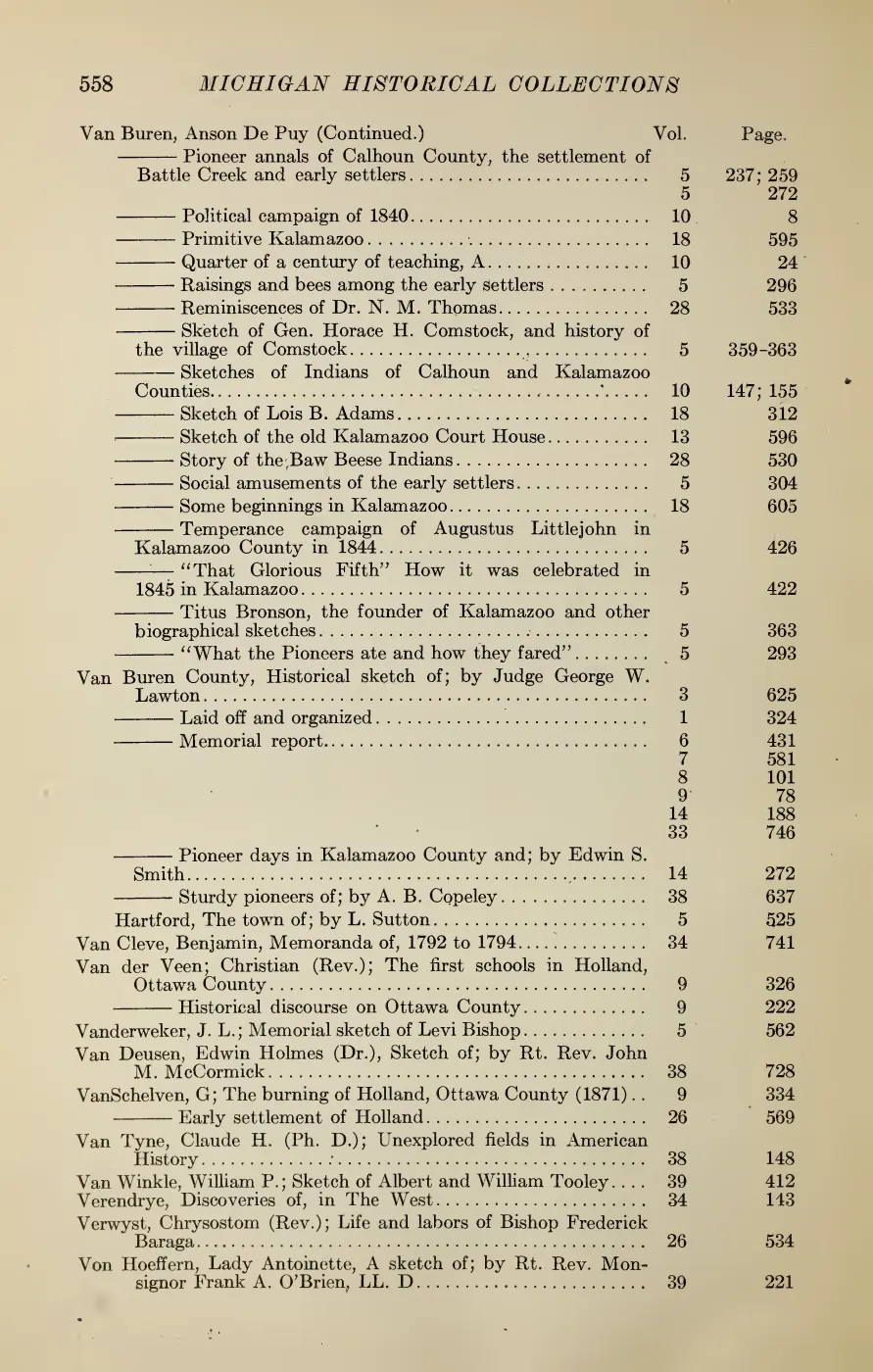
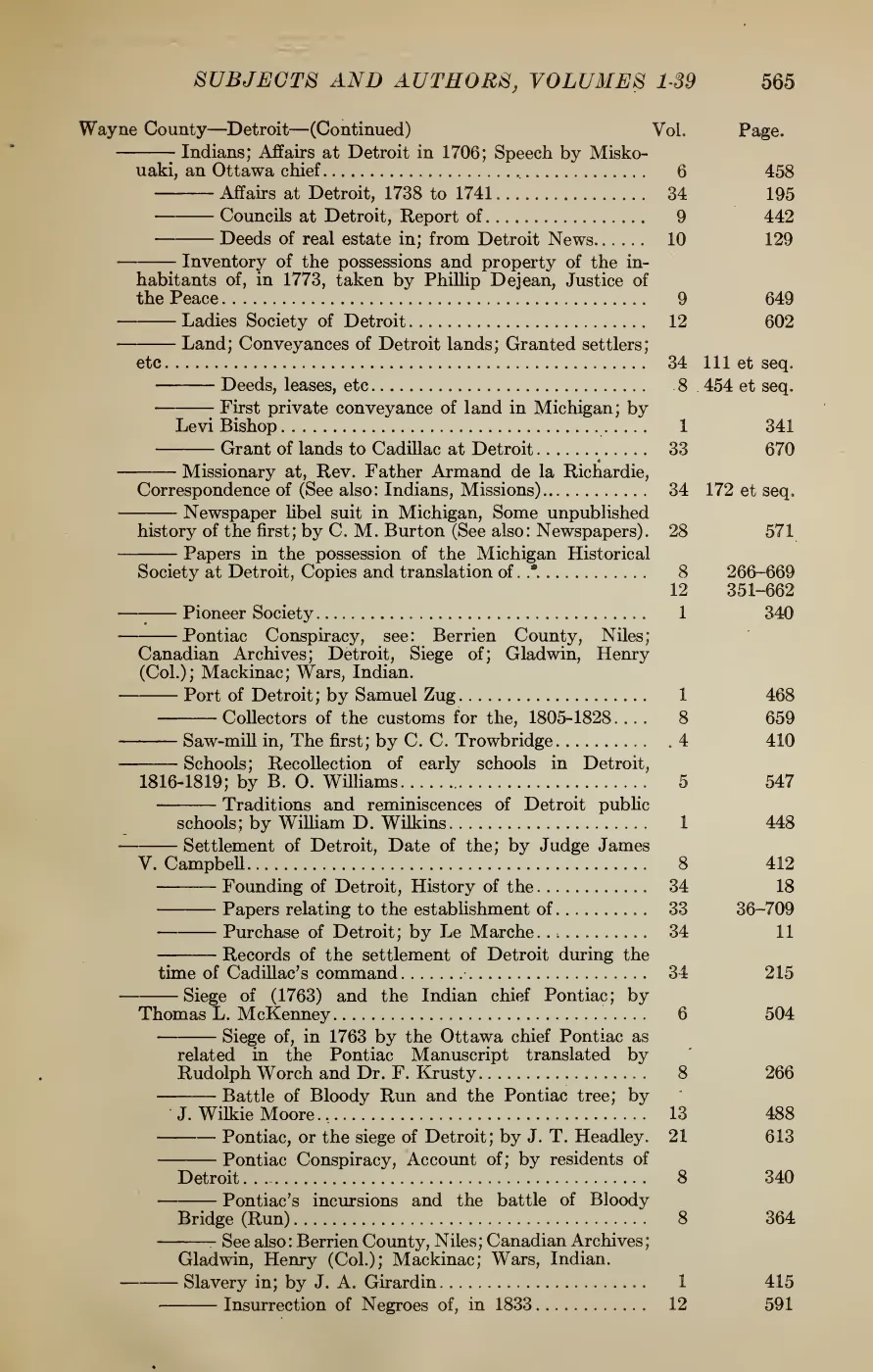
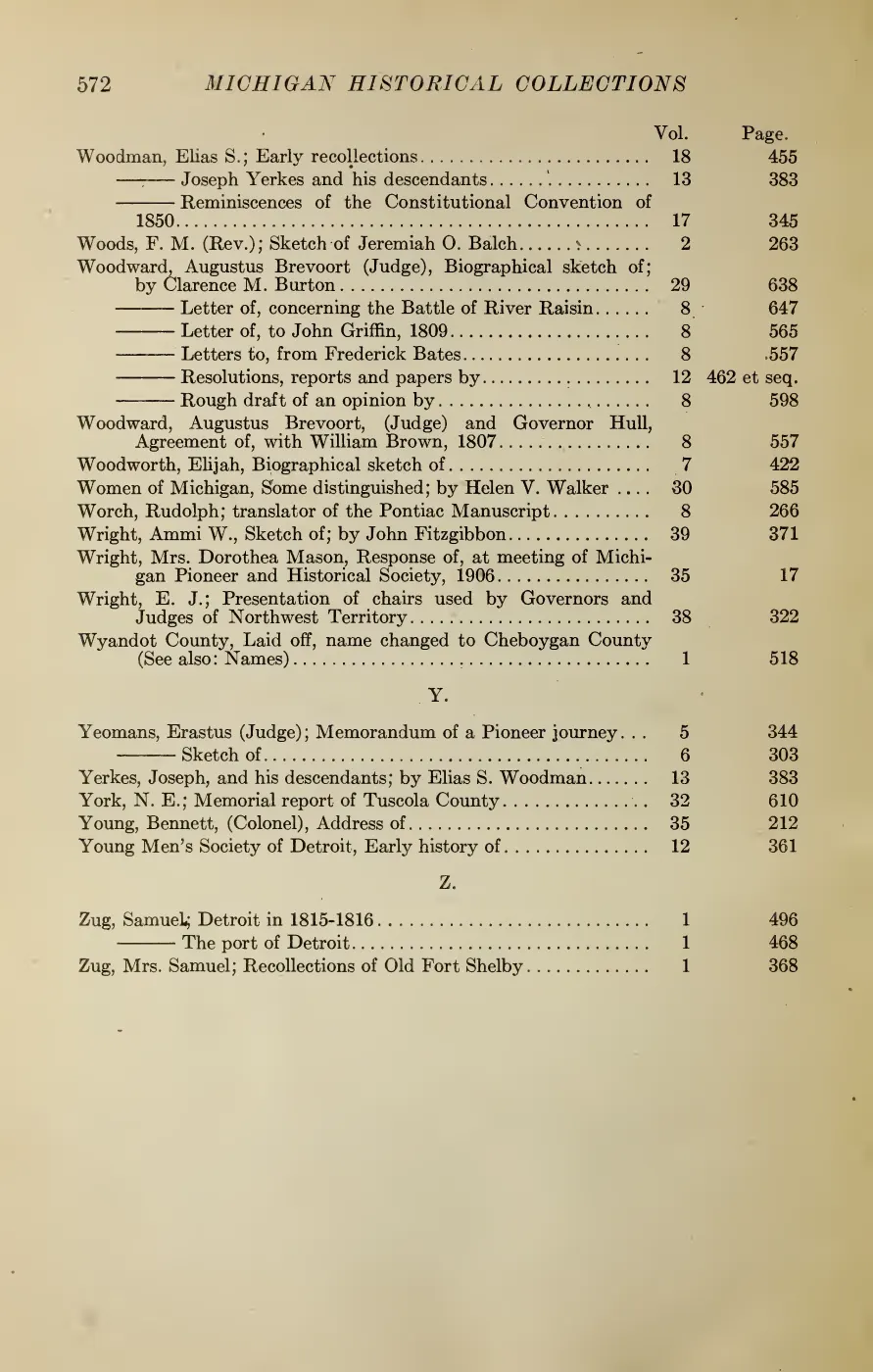







Sources
- A Charlevoix student sought sources for a Native American history essay, and respondents suggested Indigenous/community and historical-society contacts. The thread documents a research referral network, not the history itself; Indigenous voices and primary/archival sources remain necessary for historical claims.forum · www.beaverislandforum.com · 00 · t000146
- Described in this archive: Ancient and Modern Michilimackinac, 1854.Hostile-adjacent primary source, but the most detailed contemporary description held here: Tagoning as the Indian name of Garden Island, about two hundred residents, and the removal from the north end of Beaver Island within the previous six years.
- Described in this archive: A Child of the Sea; and Life among the Mormons, 1905.Resident eyewitness. Records Garden and High Islands as "deeded to them by the government as their own", Anishinaabe fish sales at Beaver Harbor, and Chief Peaine. Uses period-derogatory register throughout.
- Described in this archive: The Kingdom of Saint James, Quaife, 1930.Independent 1930 account of the Garden Island whiskey-selling arrest and the mail-train affray; notes that most residents of Charlevoix Township in the 1854 county census were Indians.
- Bobbi Welke, "A Short History of Settlements on the Beaver Island Archipelago", *Northern Islander* (Beaver Island Historical Society), March 2026, p. 4.Secondary, community-published. Source for the Waganakising Odawak migration summary, Baraga's 1832 and 1859 visits, Garden Island's Catholic community, the 1905 Peshawbestown village below Angeline's Bluff, and the GTB (1980) and LTBB (1994) federal recognition dates. No public copy of this file is known; the archive holds one and can provide it on request.
- Melissa Wiatrolik, "Jiibay Wiikongewin (Ghost Suppers) of Amikwaganda (Beaver Island)", *Northern Islander* (Beaver Island Historical Society), October 2025, p. 25.Written by an Anishinaabe contributor. Gives Amikwaganda as the Anishinaabemowin name for Beaver Island and describes living Ghost Supper practice among families "within Beaver Island, Garden Island, and High Island". No public copy of this file is known; the archive holds one and can provide it on request.
- A descendant asked for memories of Paul Kenwabikise; two respondents recalled being welcomed to the grandparents’ Ghost Dinners and described them as generous hosts. This is attributed community memory about a twentieth-century family practice, not an independent biography or proof of a formal chiefly title.forum · www.beaverislandforum.com · 00 · t000334
- "Elizabeth Whitney Williams", *Northern Islander* (Beaver Island Historical Society), May 2025.Secondary profile. Source for the July 1862 government teaching appointment on Garden Island. No public copy of this file is known; the archive holds one and can provide it on request.
- Land Information Access Association, *Beaver Island Master Plan 2023* (adopted 13 November 2023), chapters 1-4.Current governance record: LTBB and GTB constitutional rights on Beaver Island, LTBB Tribal Historic Preservation Office interest in island cultural resources, tribal-owned non-trust land and docks in Paradise Bay, LTBB land-use mapping, and a community tradition placing Pete Manatou's death in the 1940s as the last-resident account for Garden Island. No public copy of this file is known; the archive holds one and can provide it on request.
- Cited as an example of the problem, not as evidence. A tourist souvenir volume; its Beaver Island section was supplied by Charles J. Strang, one of Strang's sons, and its Indigenous content is Little Traverse-region legend collected for visitors and presented in period-derogatory register.
- Described in this archive: Treaty of Washington with the Ottawa, etc., 1836.Primary treaty text held as a retrieved capture. Article Third reserves the Beaver islands of Lake Michigan for the Beaver-island Indians for five years and names Kainwaybekis and Pazhikwaywitum in its schedule.web · treaty_1836_washington
- Described in this archive: Treaty of Detroit with the Ottawa and Chippewa, 1855.Primary treaty text held as a retrieved capture. Article First lists High Island and Garden Island for the Beaver Island Band; Article Fifth records the treaty's dissolution of tribal organization in most respects. The latter is quoted as the instrument's language, not treated as a description of present-day sovereignty.web · treaty_1855_detroit
- Primary page image: "Amikogenda, Beaver-Island, in Lake Michigan." This is a name attestation, not evidence that the modern English name or any present-day tribal polity is a direct continuation of the 1853 record.
- Described in this archive: Ojibwe People’s Dictionary entries for amik and minis.Modern lexical context for “beaver”; it does not independently establish the morphology, spelling, pronunciation, or community use of historical Beaver Island names.web · opd_amik
- Modern lexical context for “beaver” and “island”; it does not independently establish the morphology, spelling, pronunciation, or community use of historical Beaver Island names.web · opd_minis
- Held OCR contains the entry "Amikiminis" as the Indian name of Beaver Island and an 1840 population/agriculture account; the name tradition is kept distinct from Baraga's Amikogenda and the census is treated as a historical enumeration, not a complete population record.
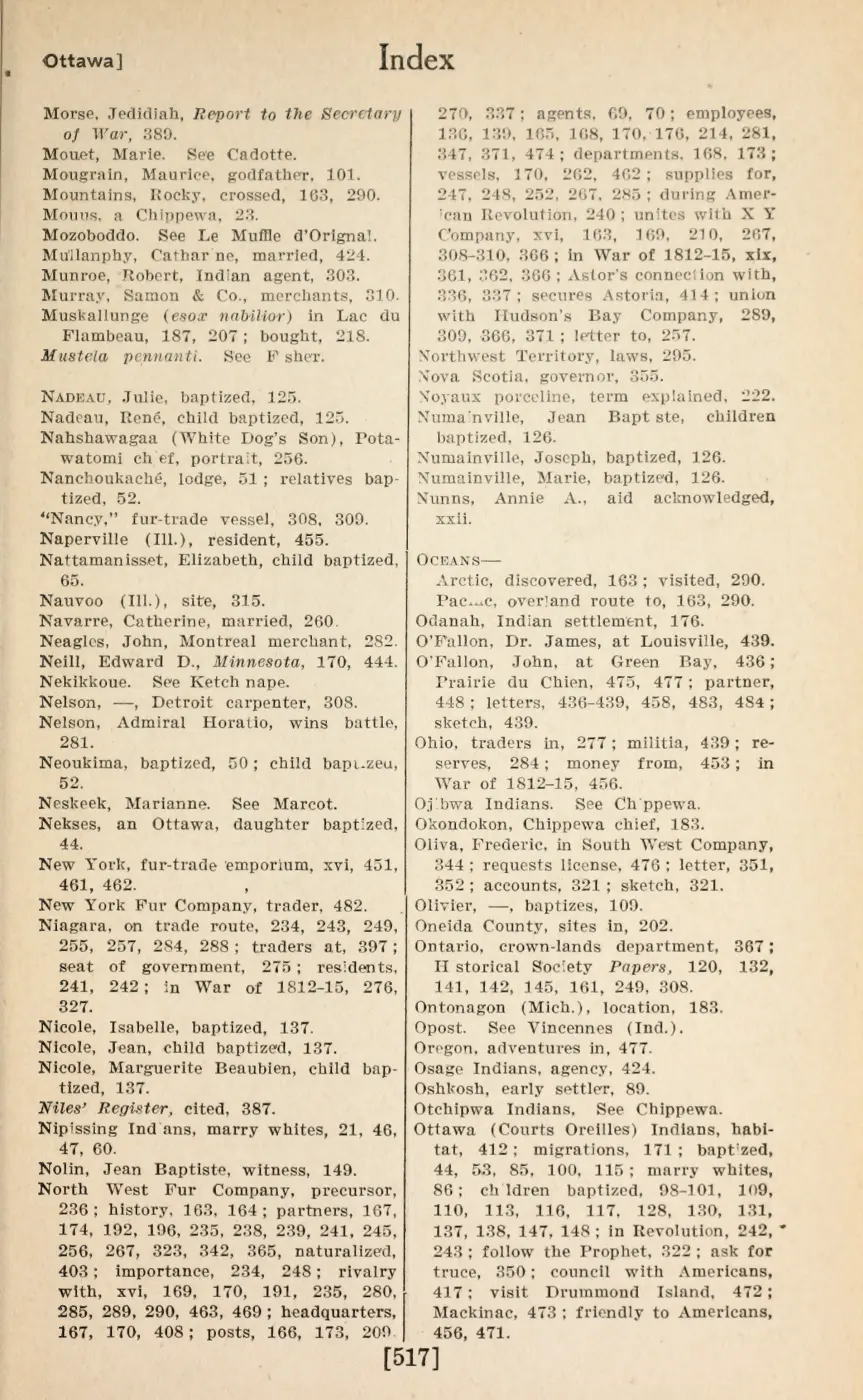
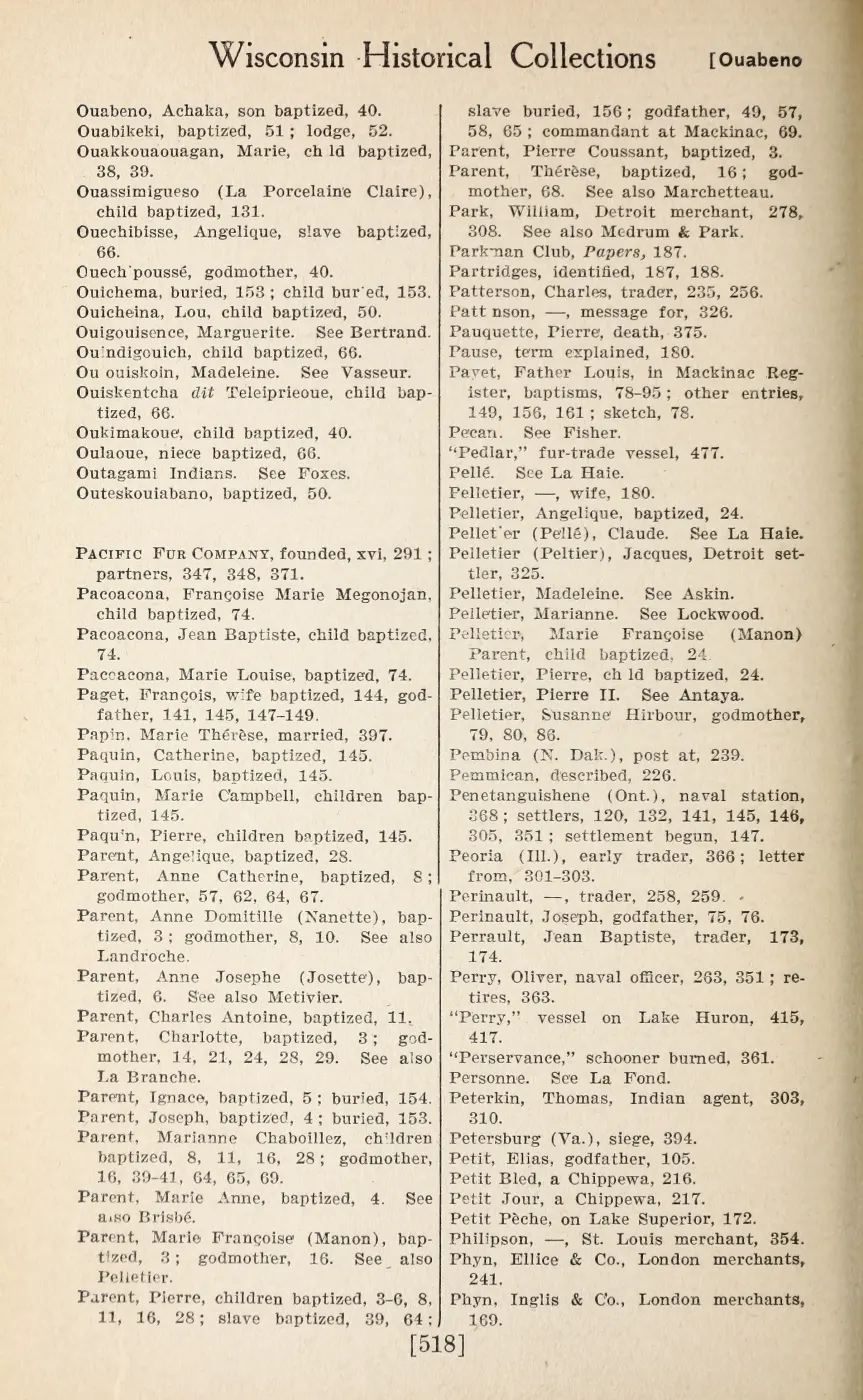
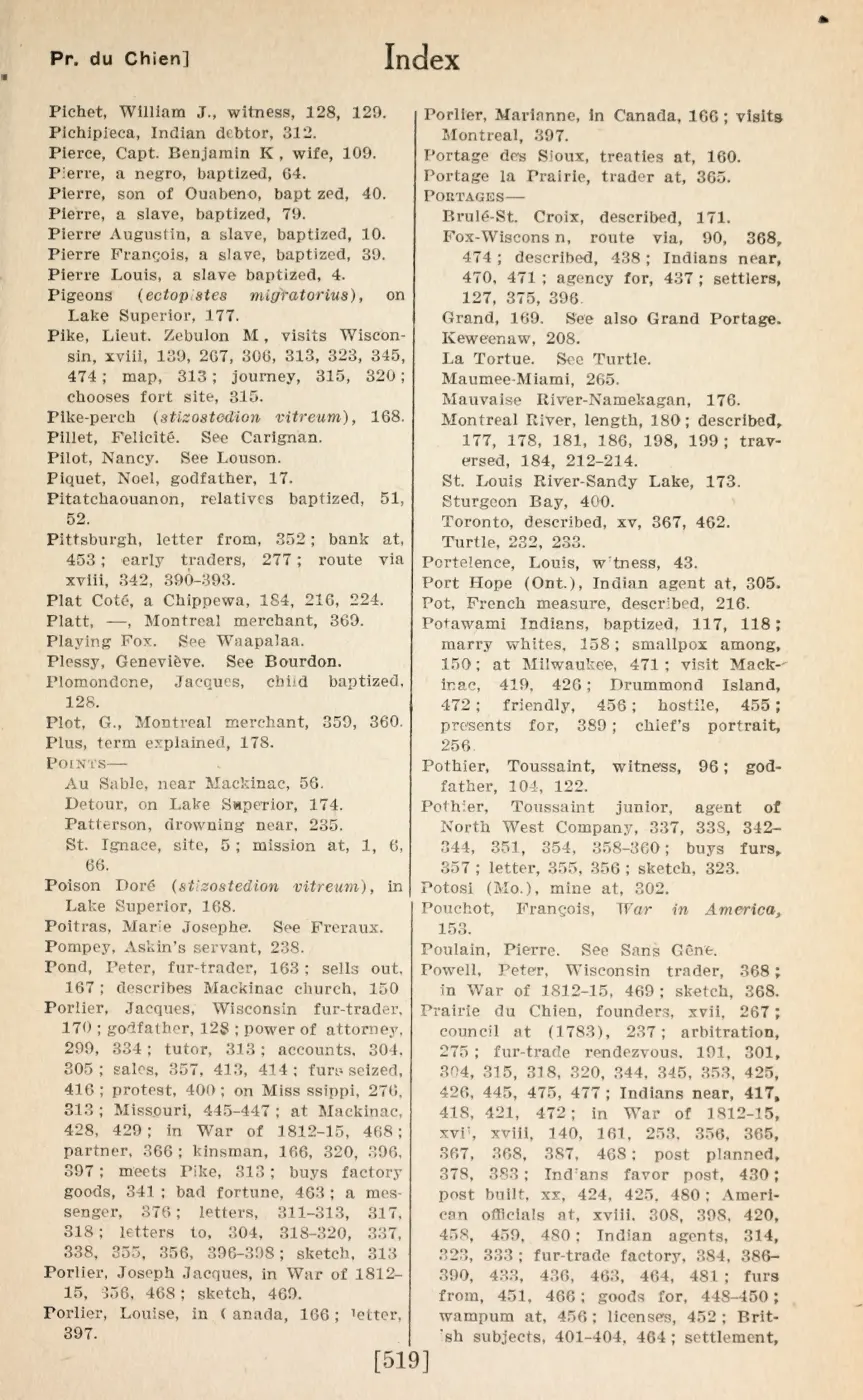
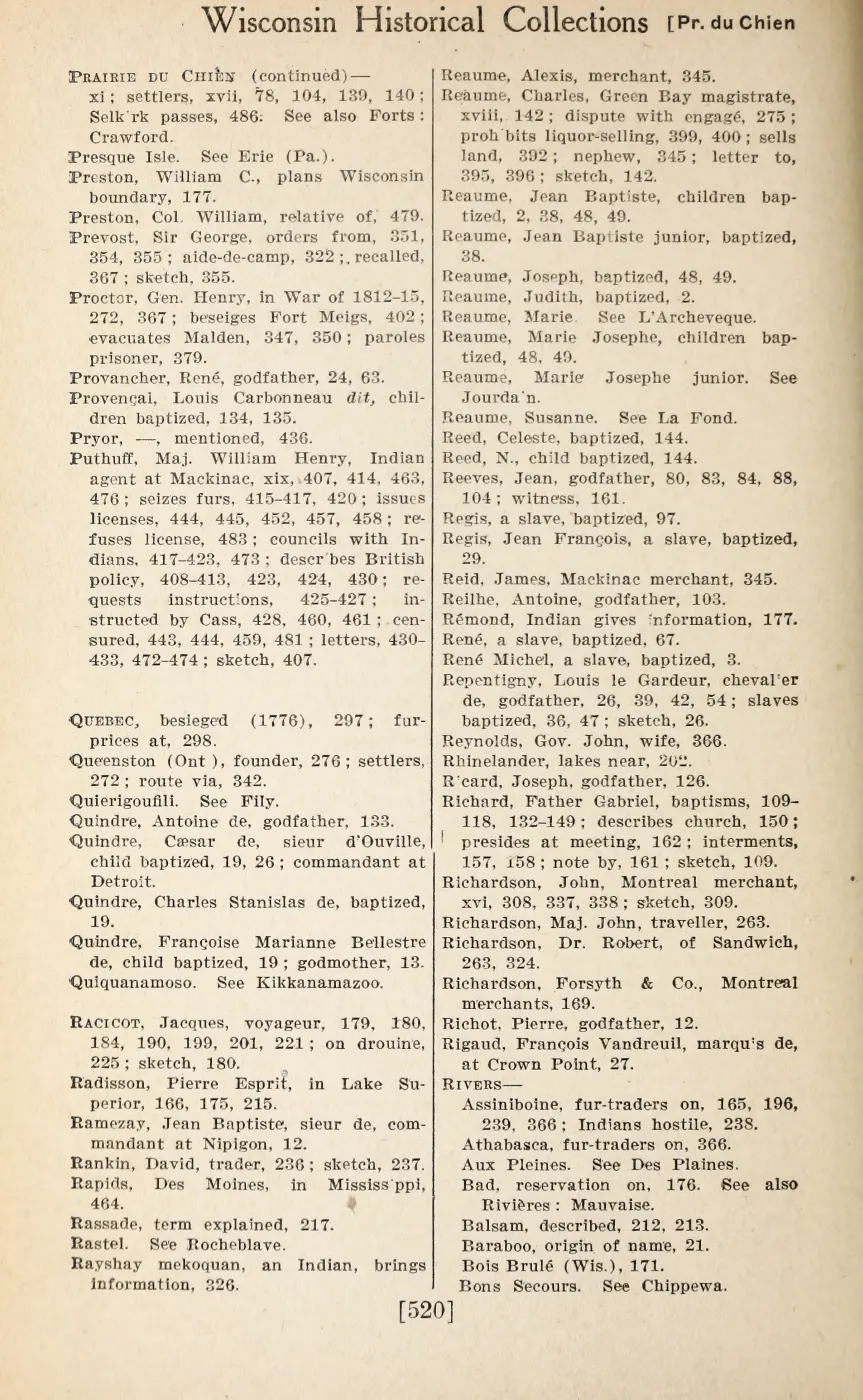
- Described in this archive: Wisconsin Historical Collections, volume XIX, 1910.Page image checked. Puthuff groups the Beaver Islands with Cheboygan, L’Arbre Croche, and Grand Traverse in an aggregate administrative description of Odawa agricultural production and market sales; it is neither an Odawa account nor a Beaver-Island-only census.
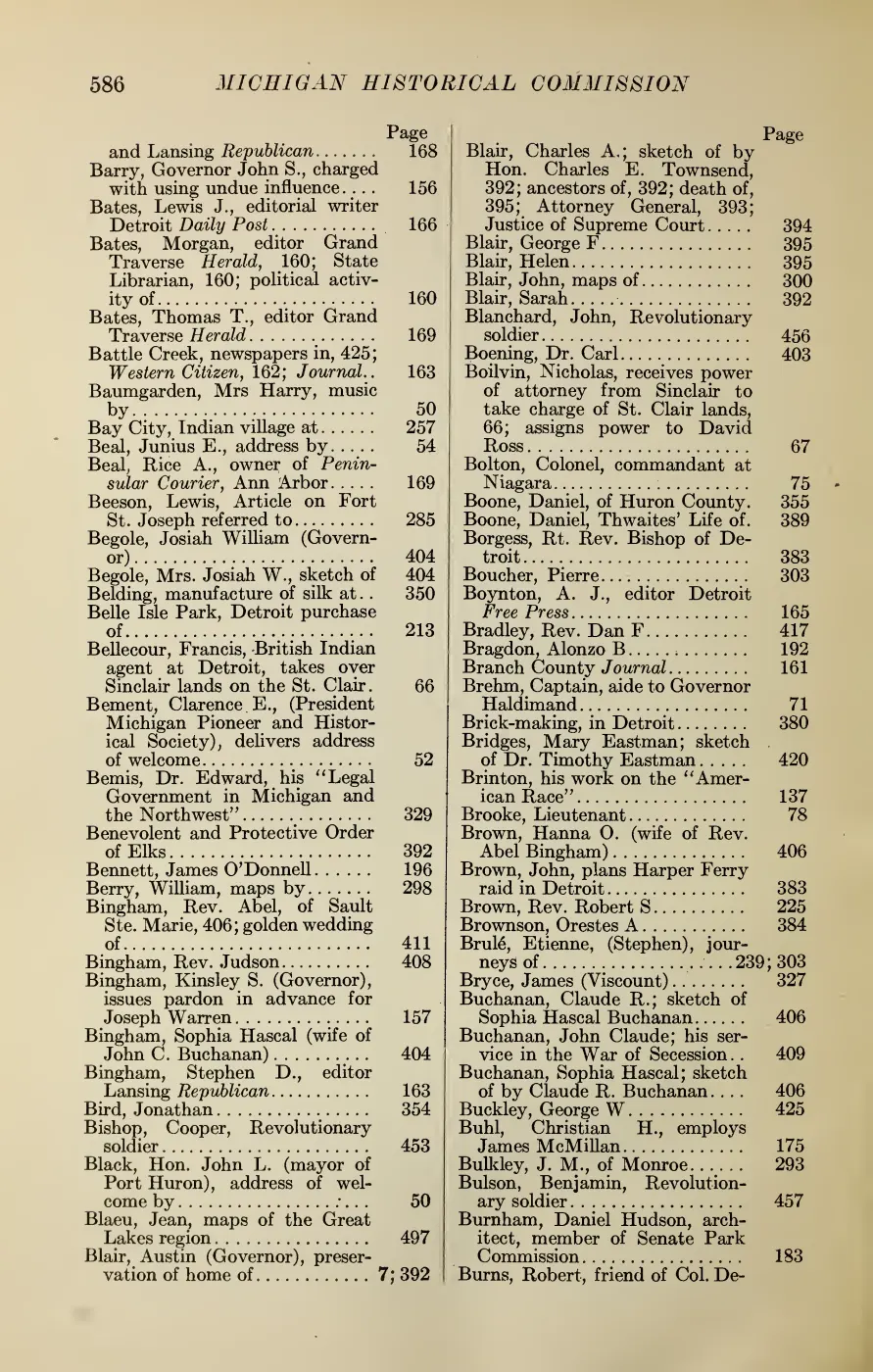
- Described in this archive: Michigan Historical Collections, volume 39, 1915.Page image checked. This mediated source says the quoted mission list gives Beaver Island fifty-five Christians and calls it Castor Island in manuscript; it is not used as a dated population count, a primary manuscript transcription, or a complete account of Anishinaabe Catholic life.
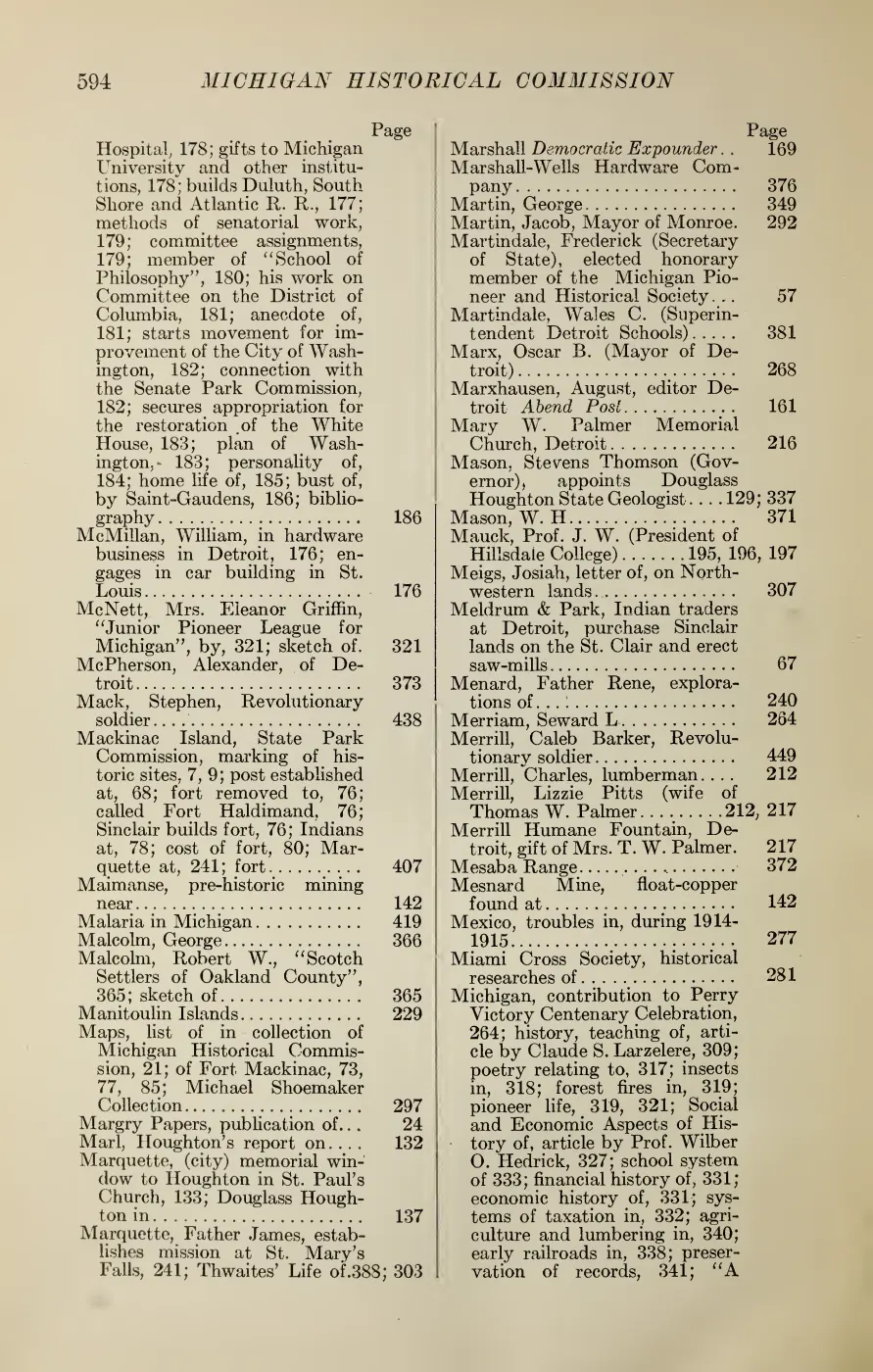
- Described in this archive: Michigan Historical Collections, volume 26, 1895.Page image checked. Verwyst’s later rendition of a Baraga account reports an 1832 visit, an eight-hut village, council, and 22 baptisms on May 11. It is not treated as an original journal, a complete census, a village location, or an Anishinaabe account.
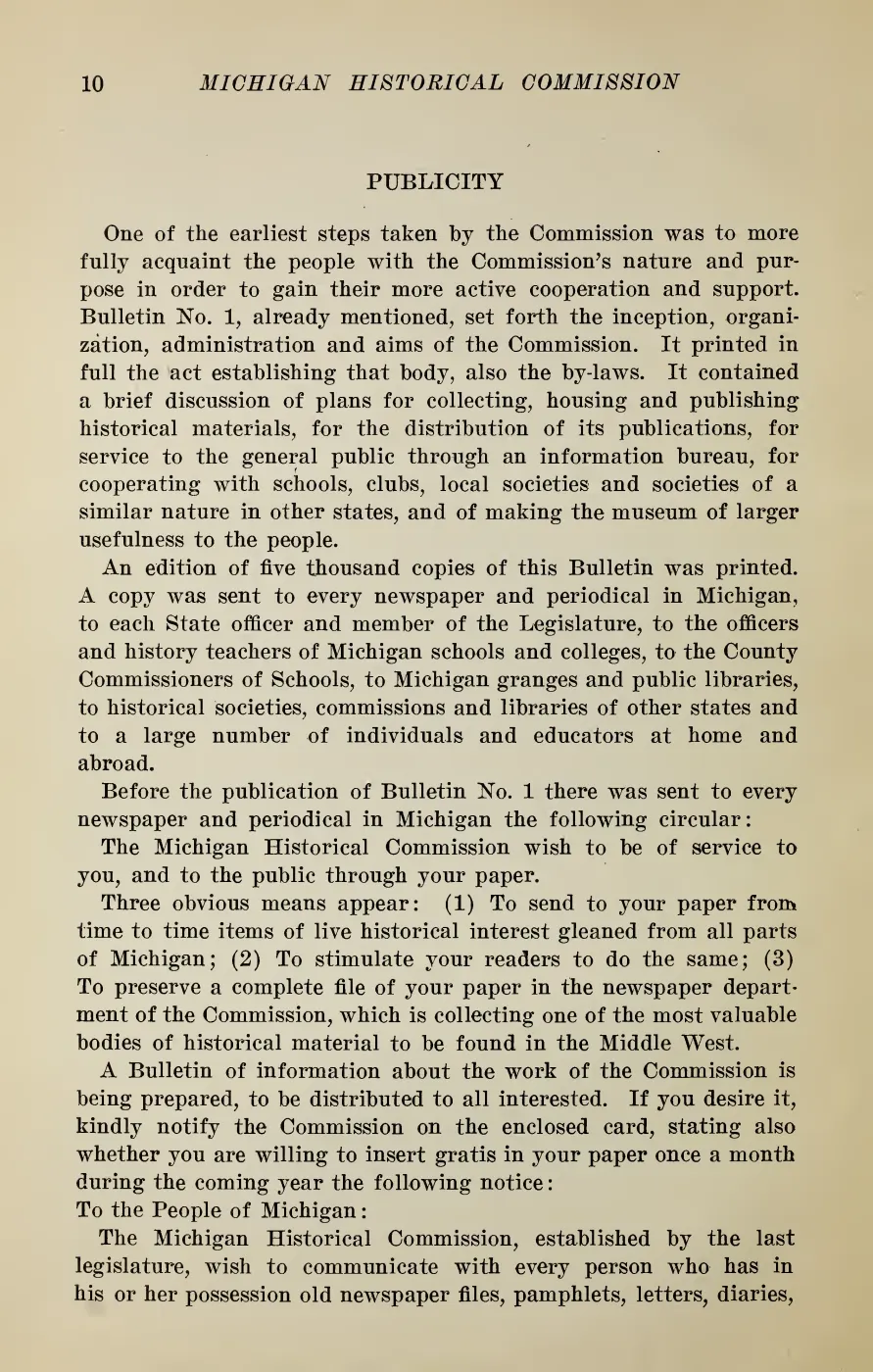
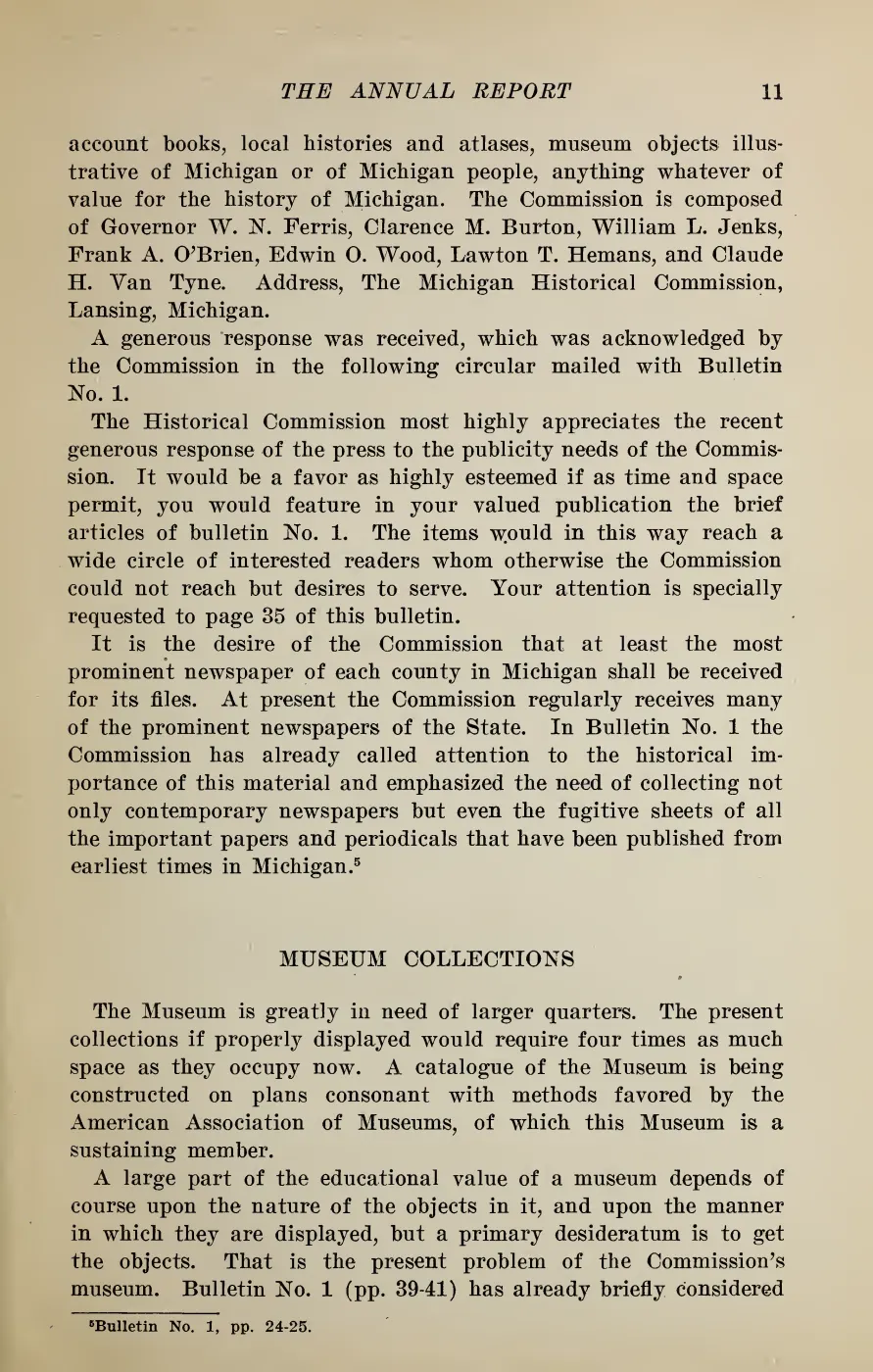
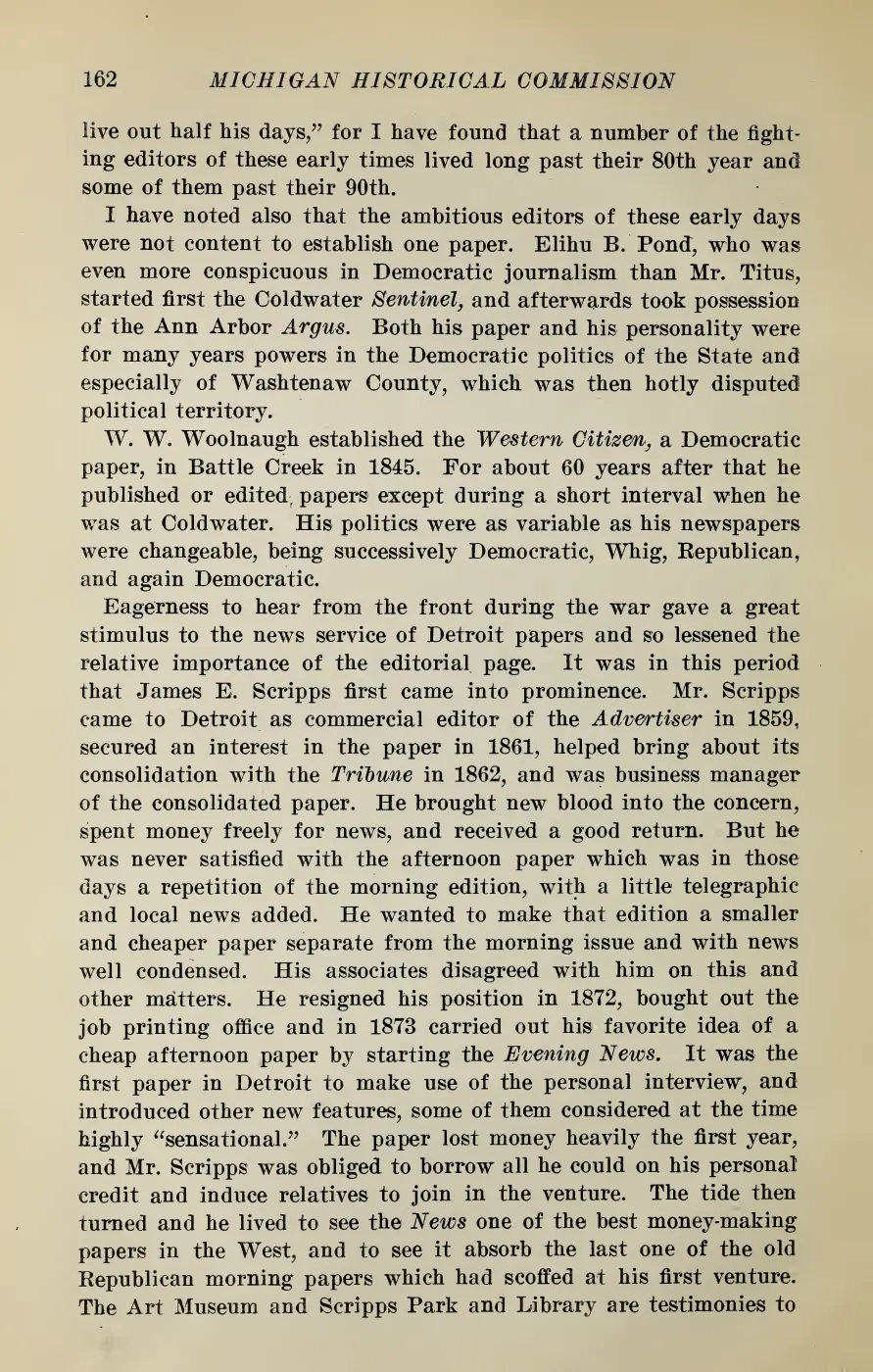
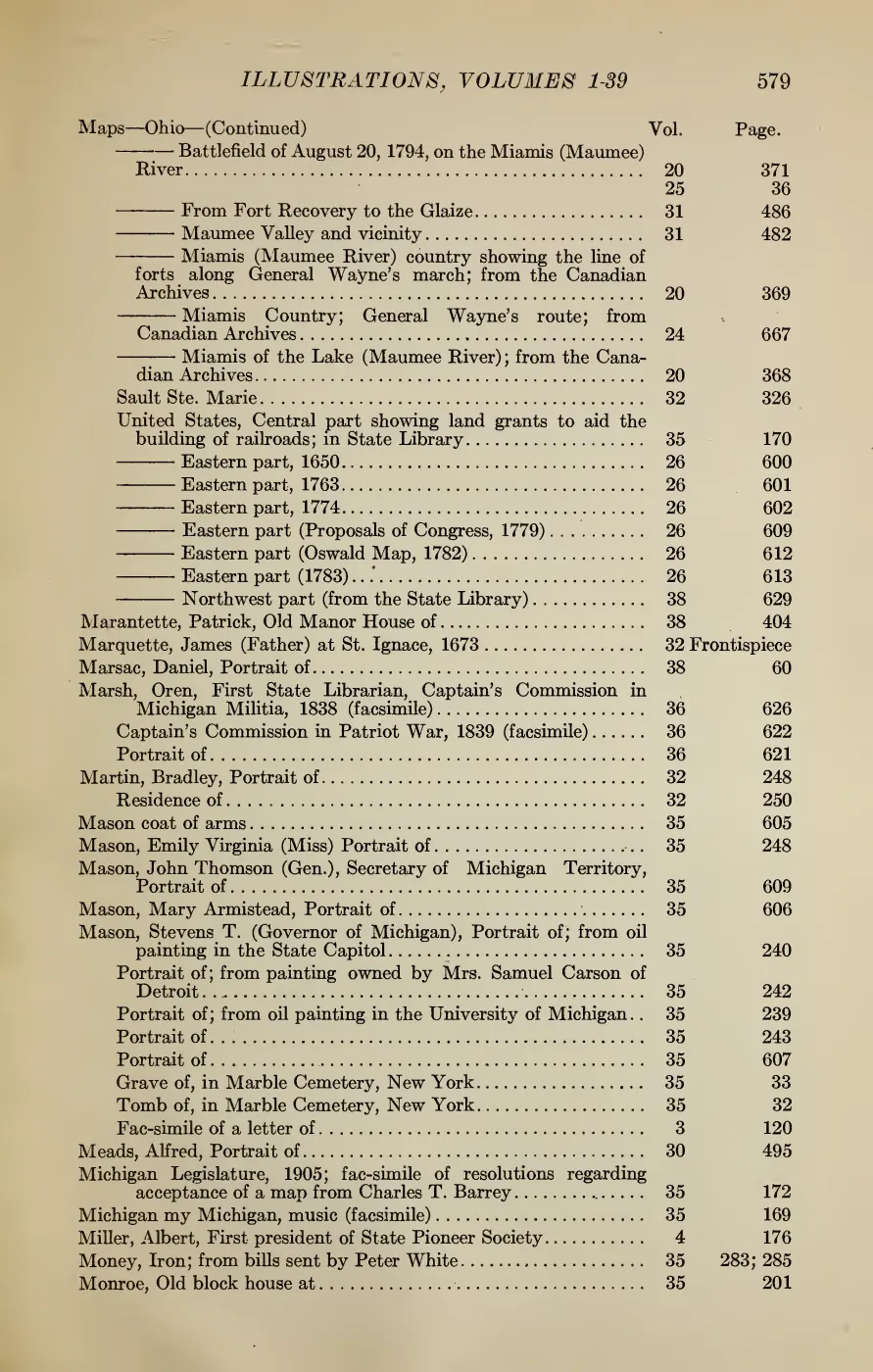
- Described in this archive: Michigan Historical Collections, volume 28, 1898.Page image checked. Parker’s revised local history says people he calls “Indians, hunters, trappers, fishermen” frequently came to Frankfort from Leelanau County and the Manitou, Fox, and Beaver islands to sell baskets, other wares, and seasonal berries. It is regional settler testimony, not an account by the travellers, a dated transaction record, or an island-specific census.
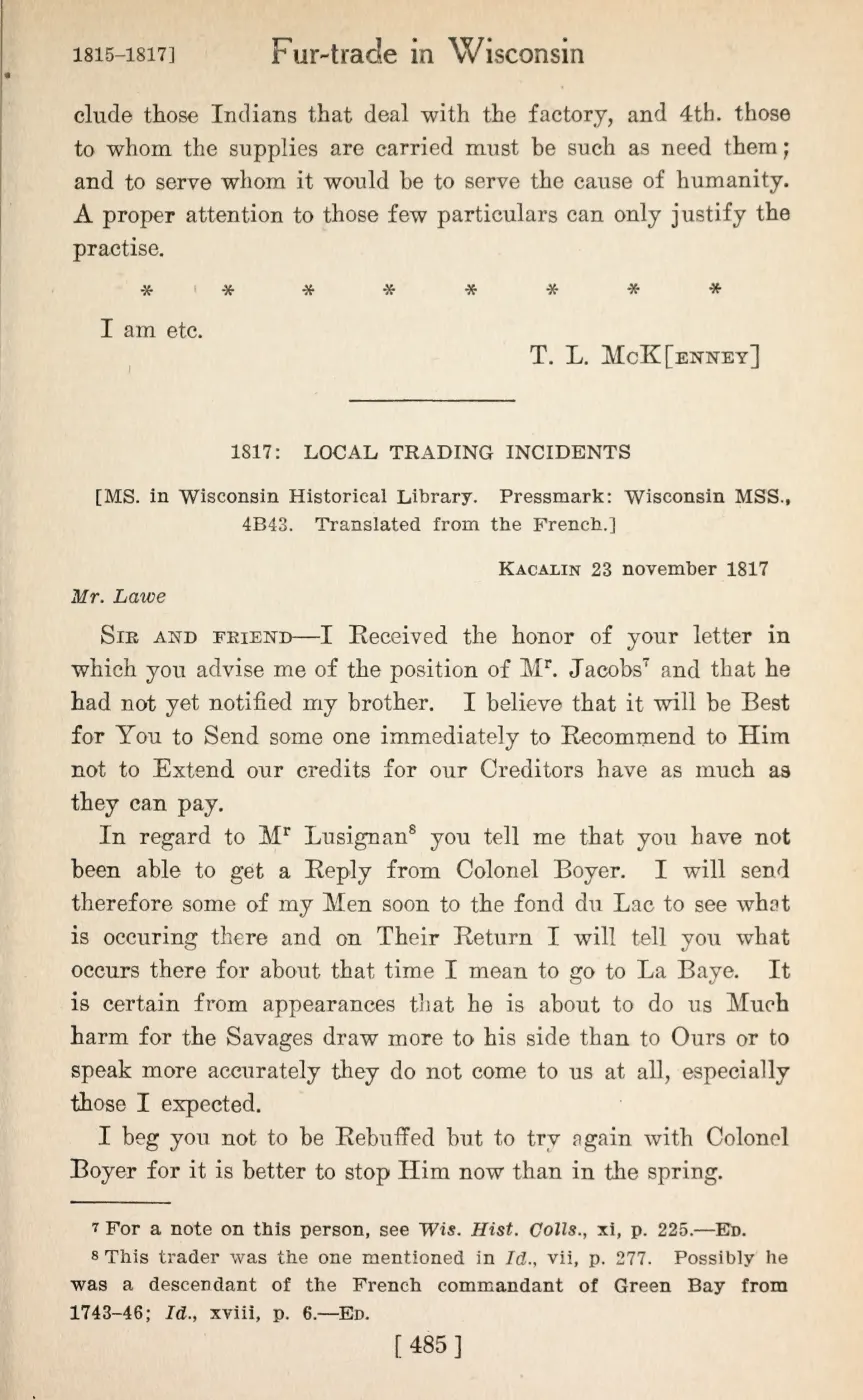
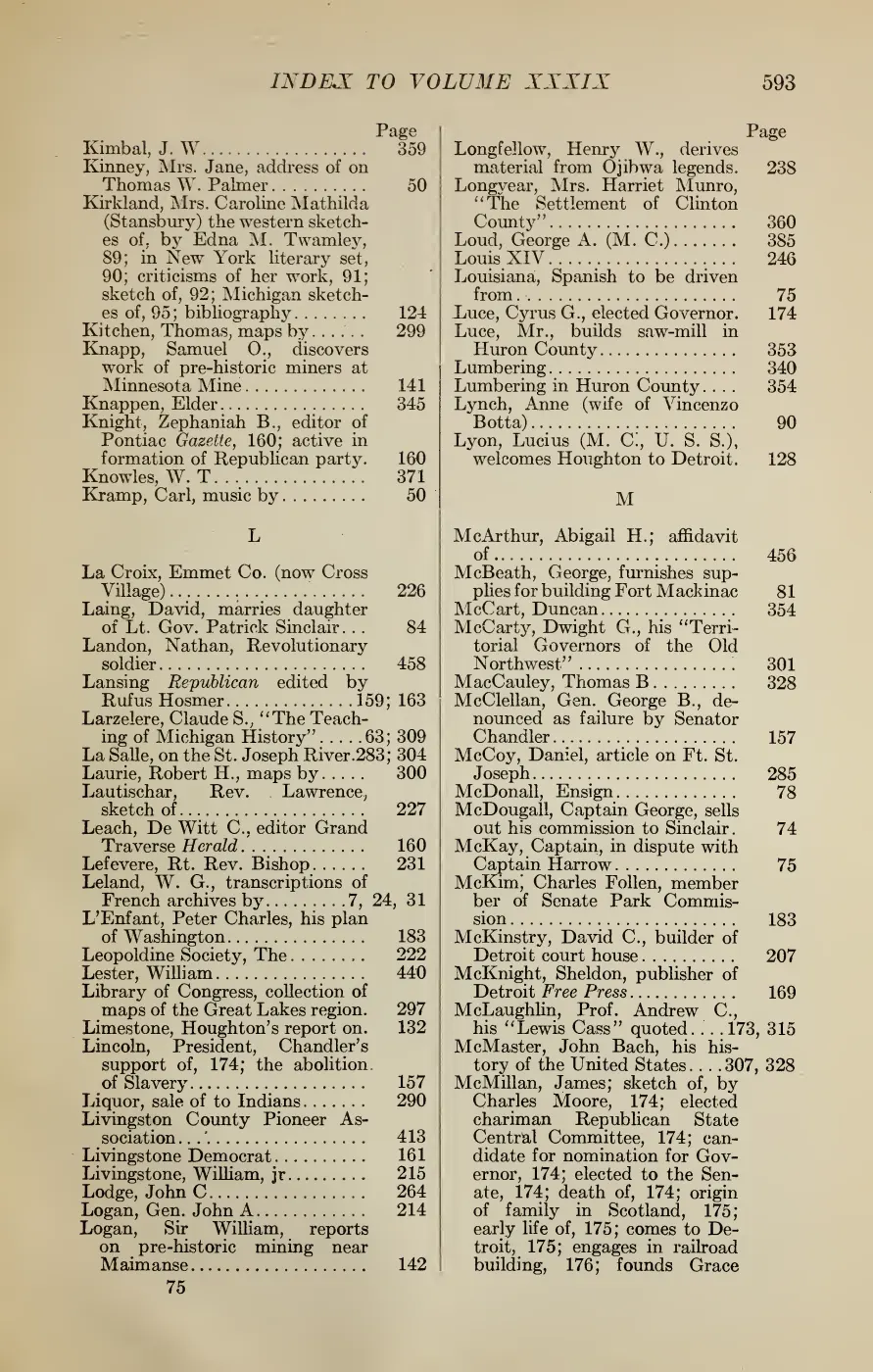
- Described in this archive: Michigan Historical Collections, volume 23, 1895.Page image checked. The 1815 letter places Ottawas of L’Arbre Croche and Chippewas of Grand Traverse and the Beaver Islands among communities receiving British clothing at the former post. It is colonial administrative correspondence reprinted in 1895, not an Indigenous-authored account or population enumeration.
- Described in this archive: Michigan Historical Collections, volume 23, 1895.Page image checked. A British officer, discussing postwar patronage and cross-border contact, calls the people previously supplied at St. Joseph’s the Ottawas of L’Arbre Croche and the Chippawas of Grand Traverse and the Beaver Islands. It is a colonial official’s category and policy frame, not an Anishinaabe self-description, treaty interpretation, or direct present-day identity claim.
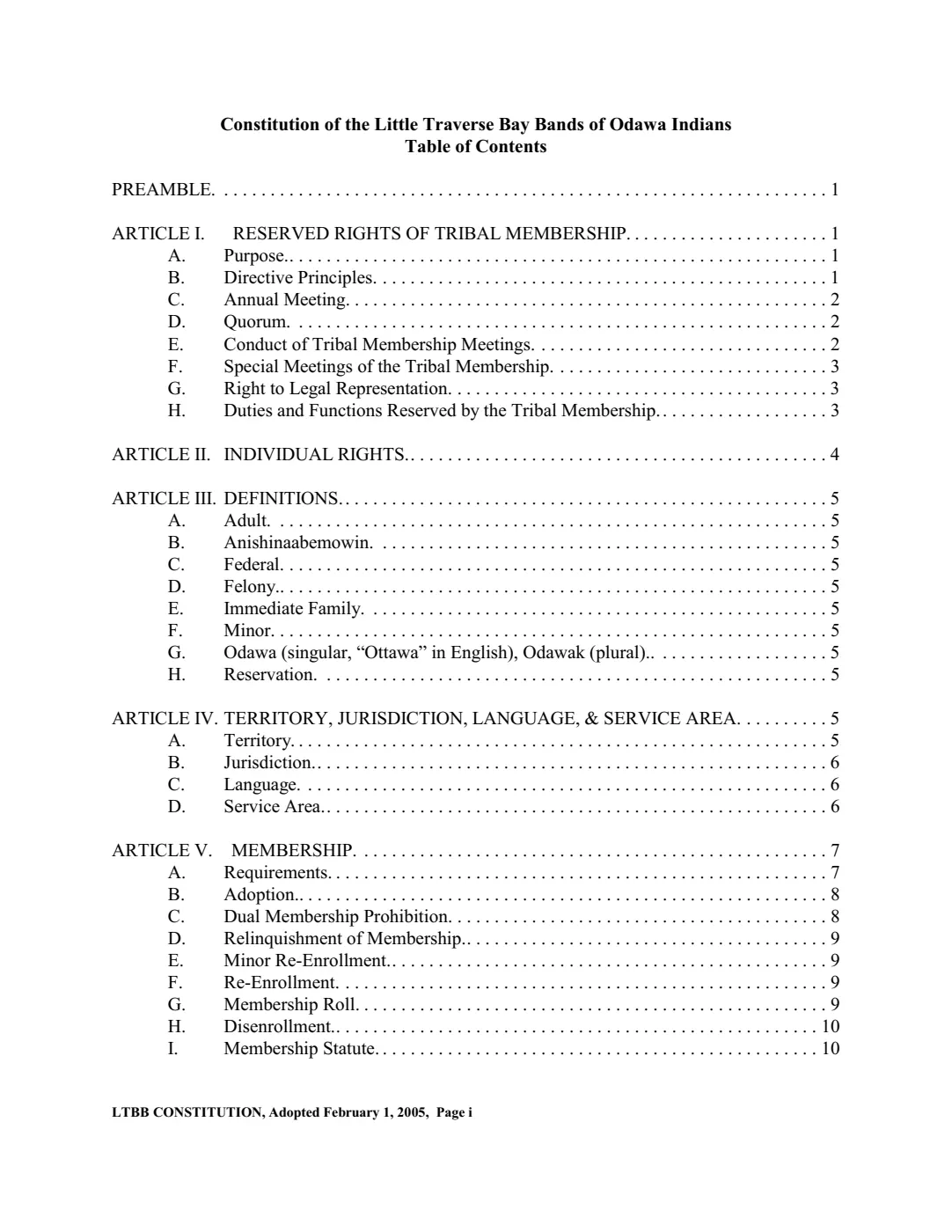
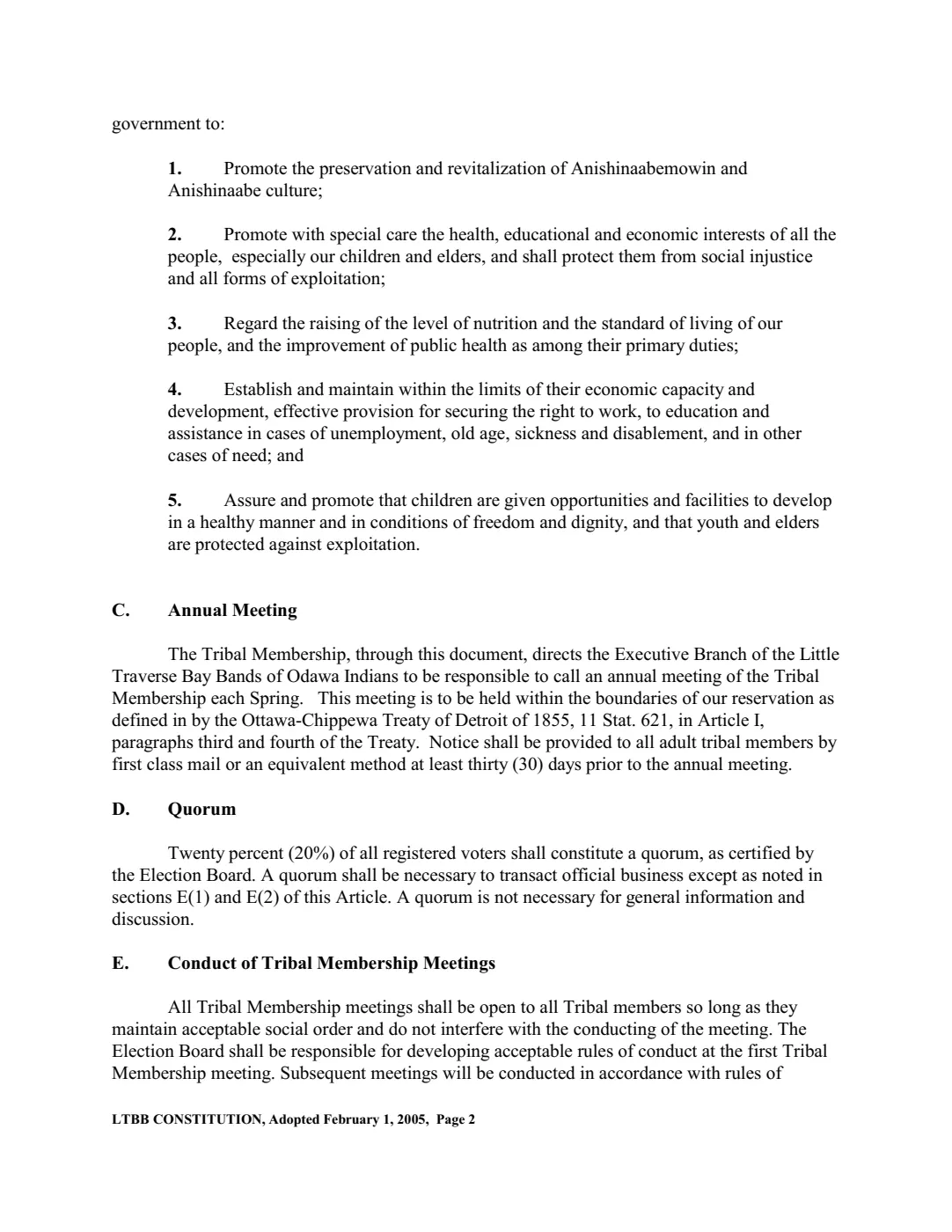
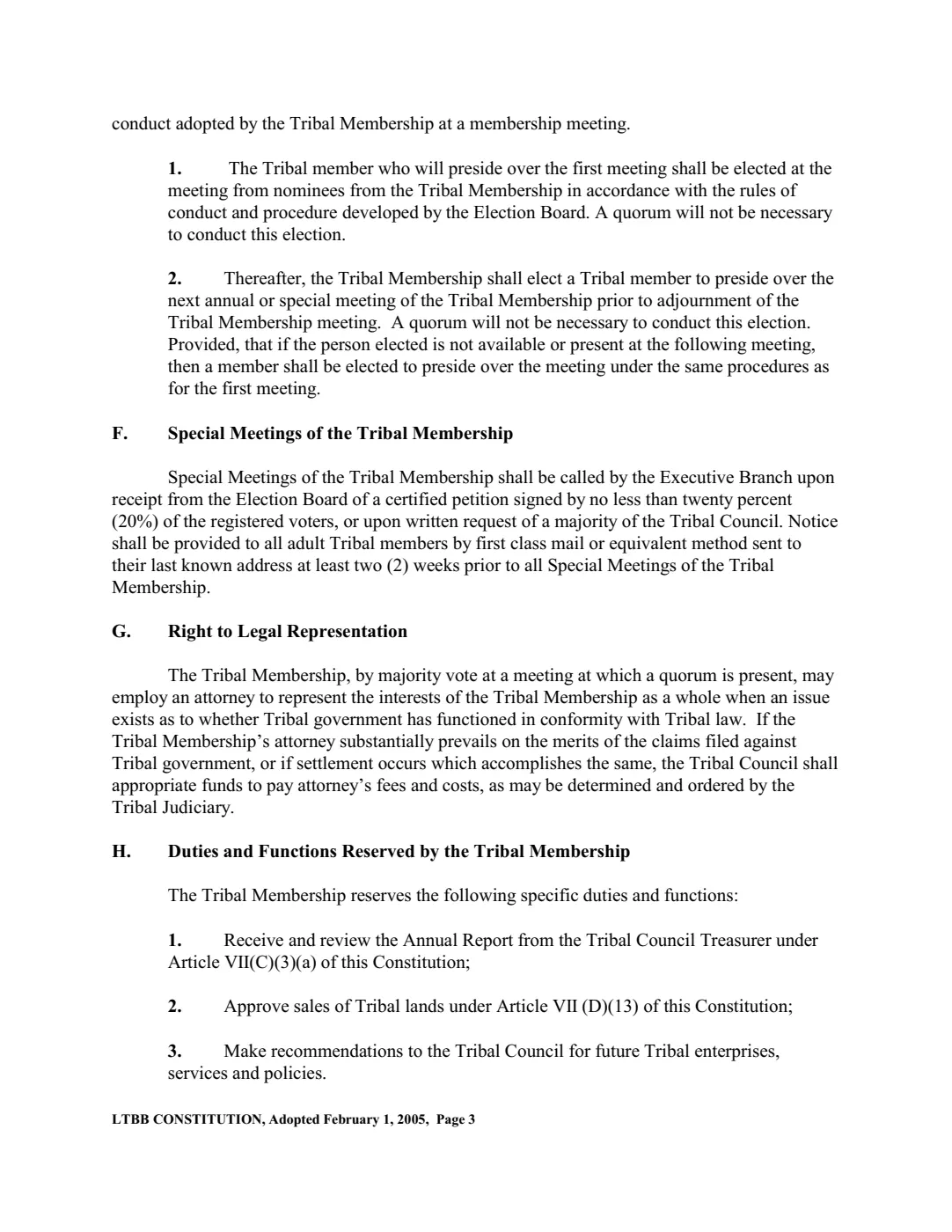
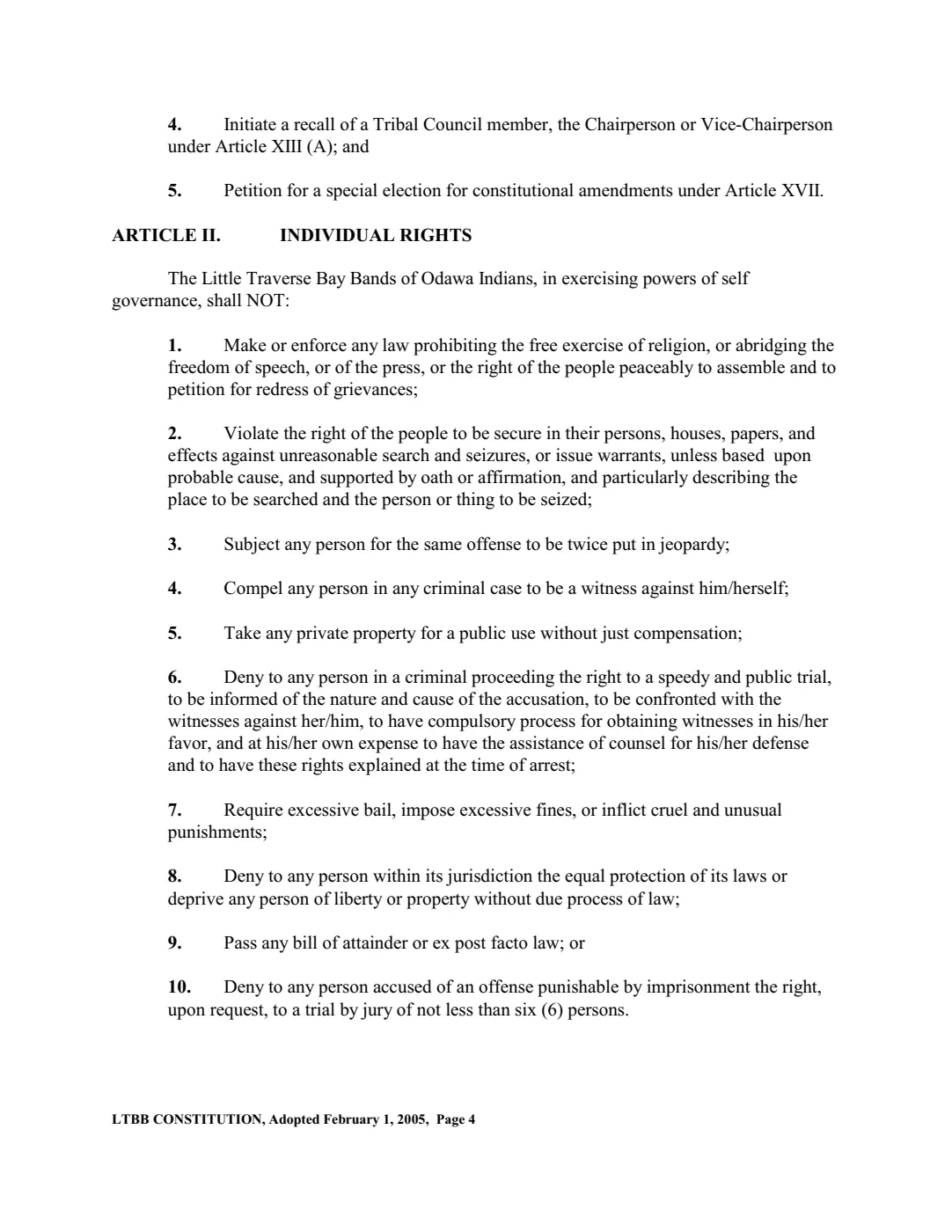
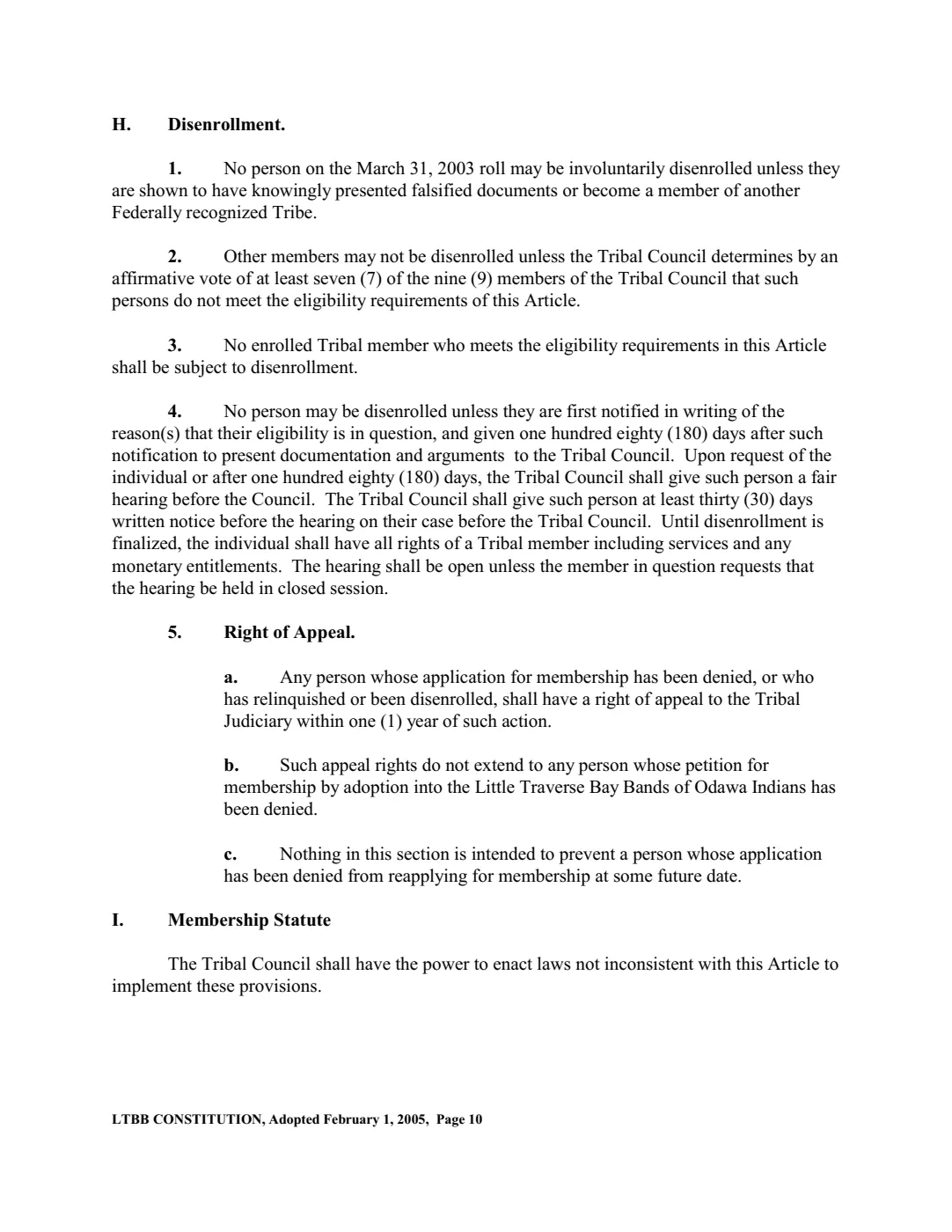
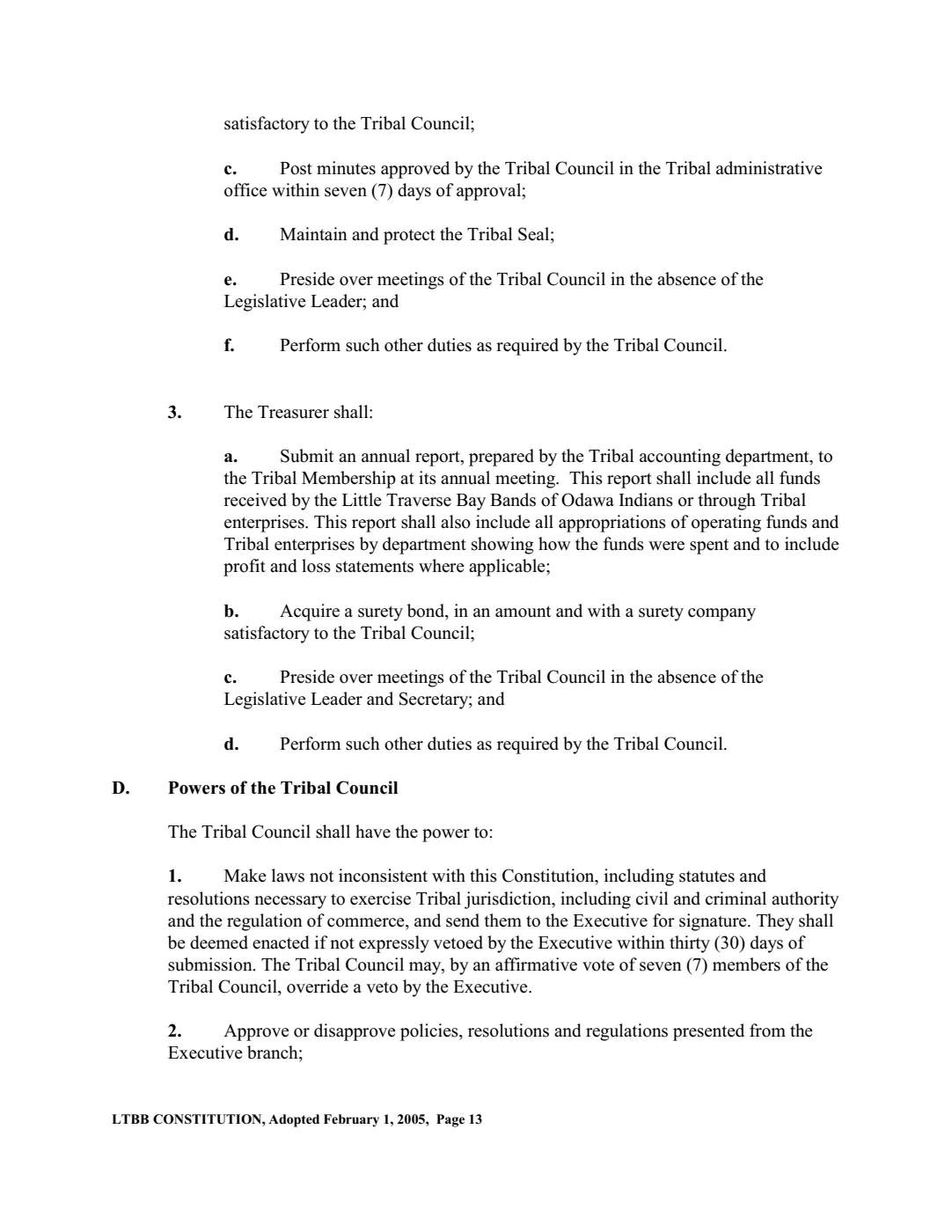
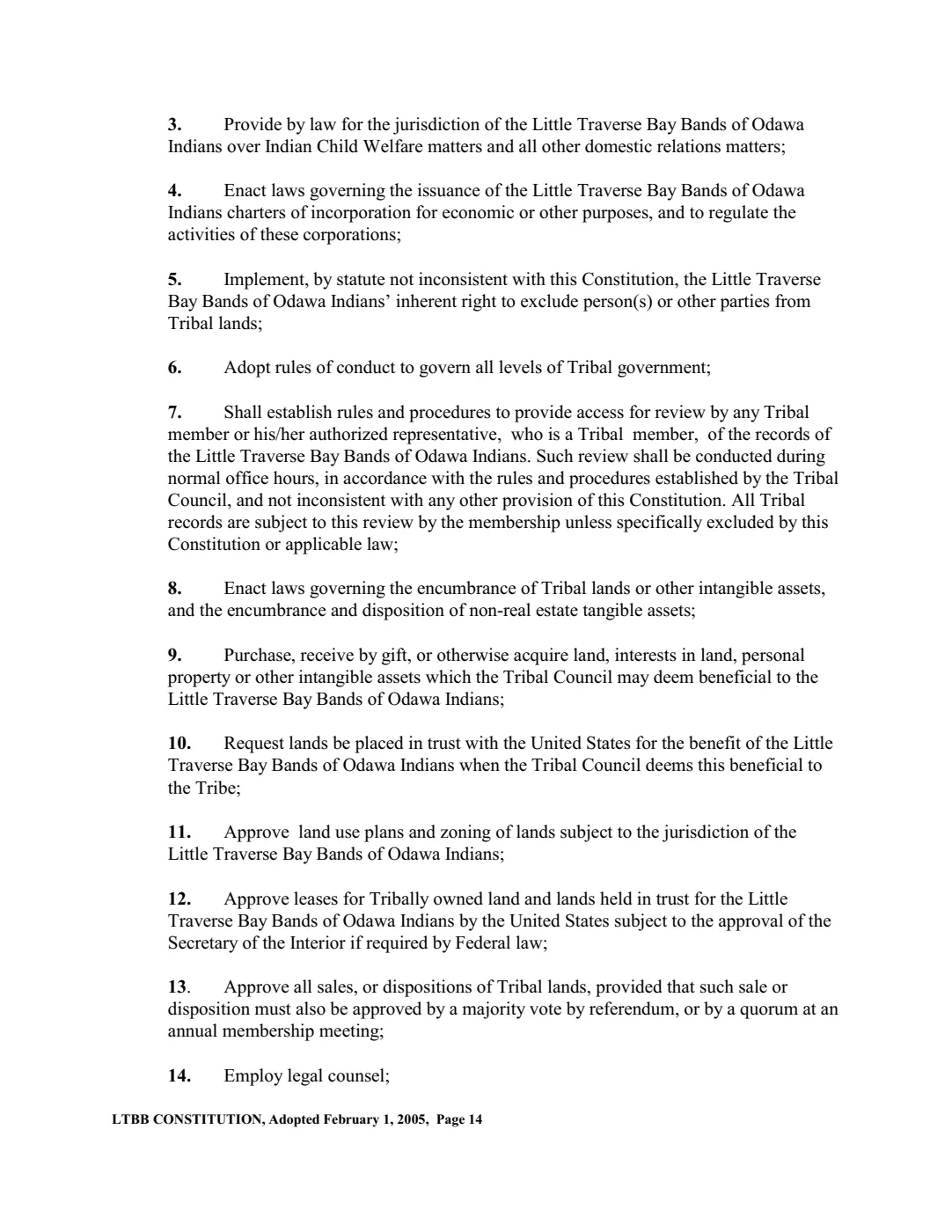
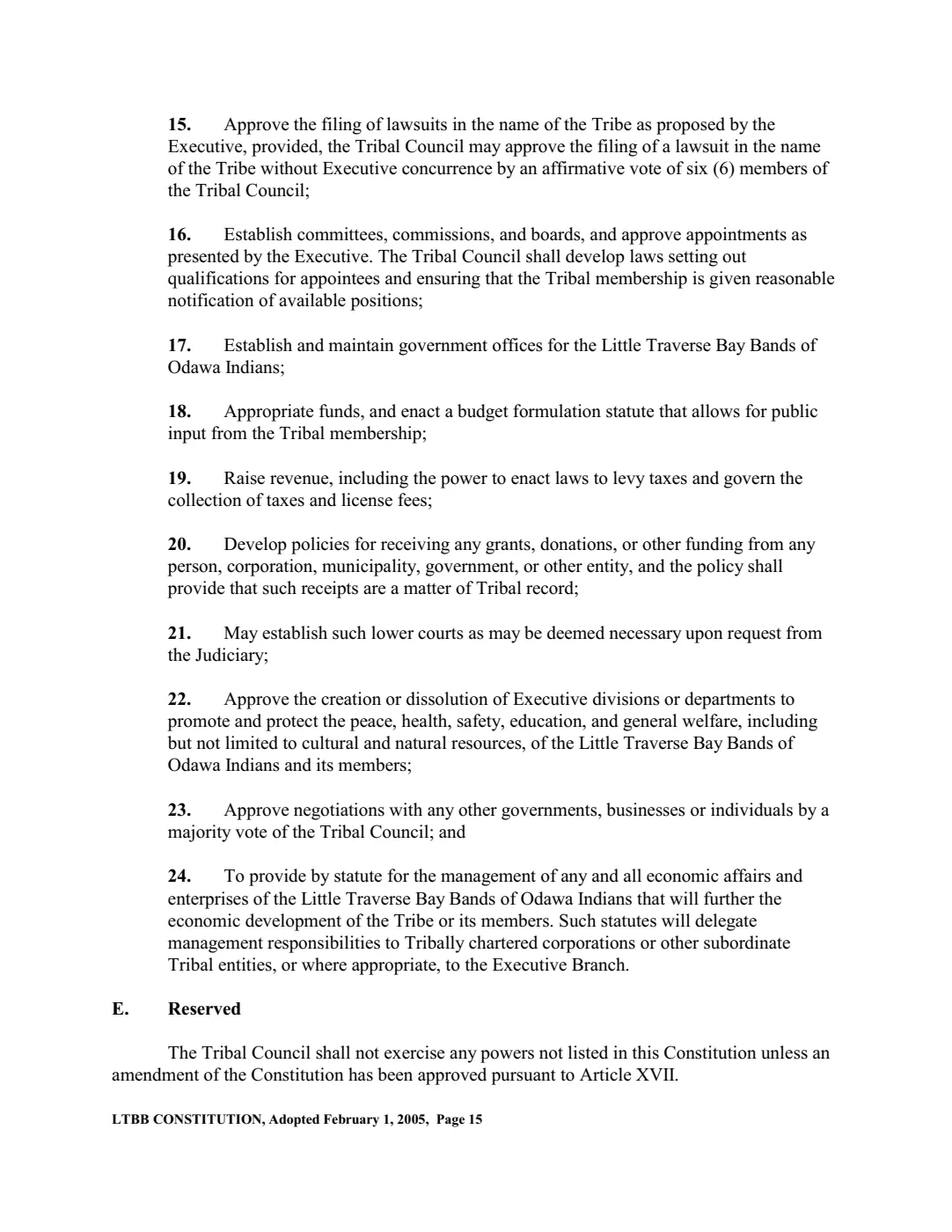
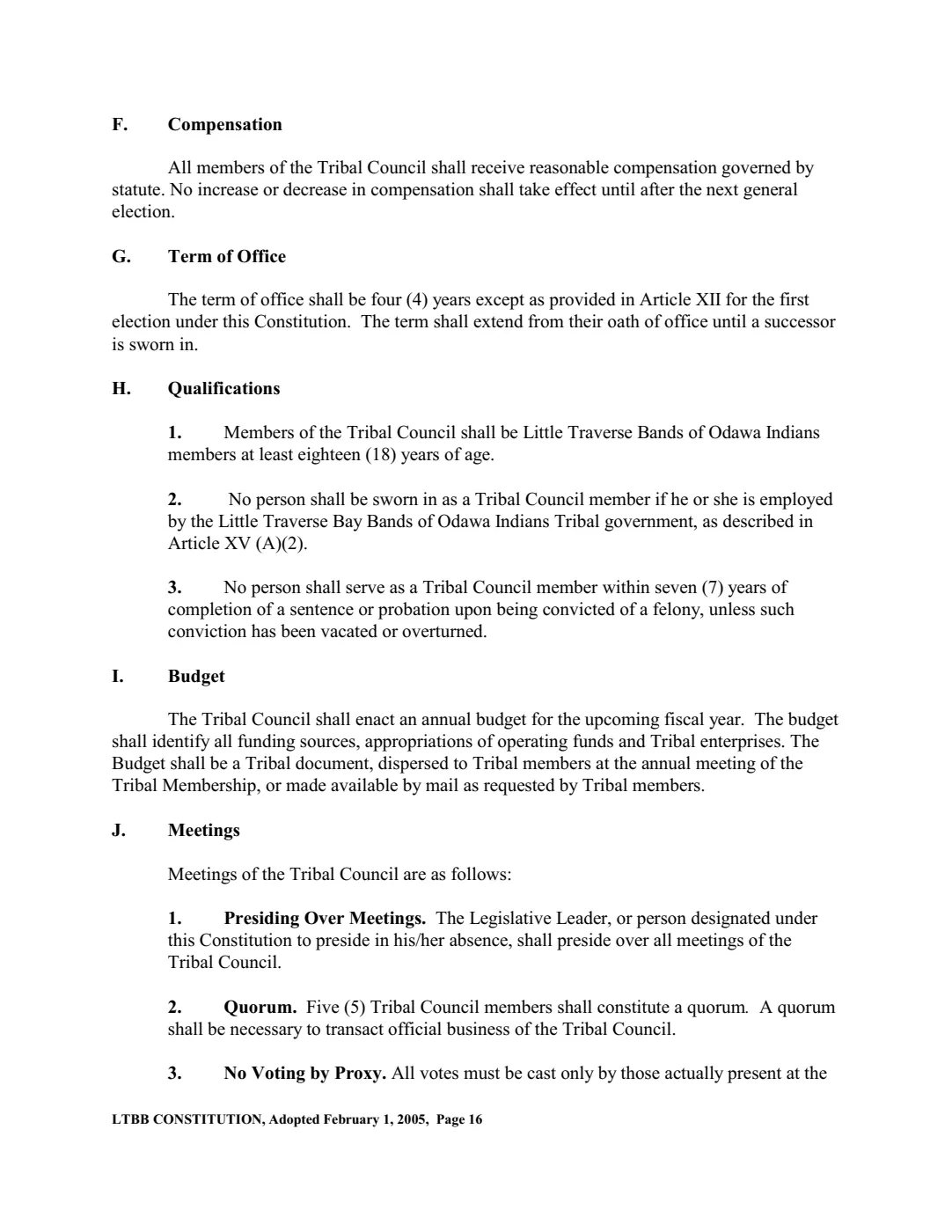
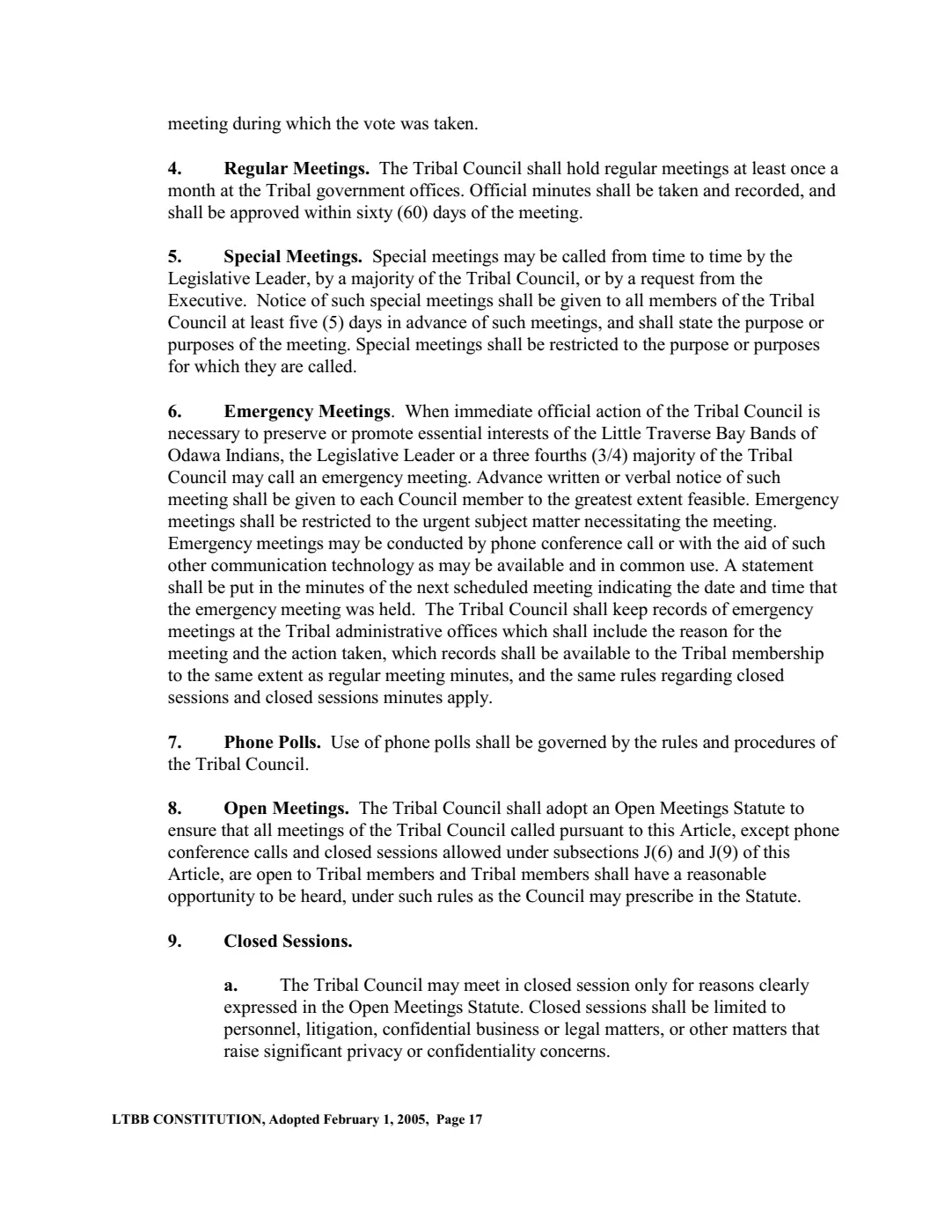
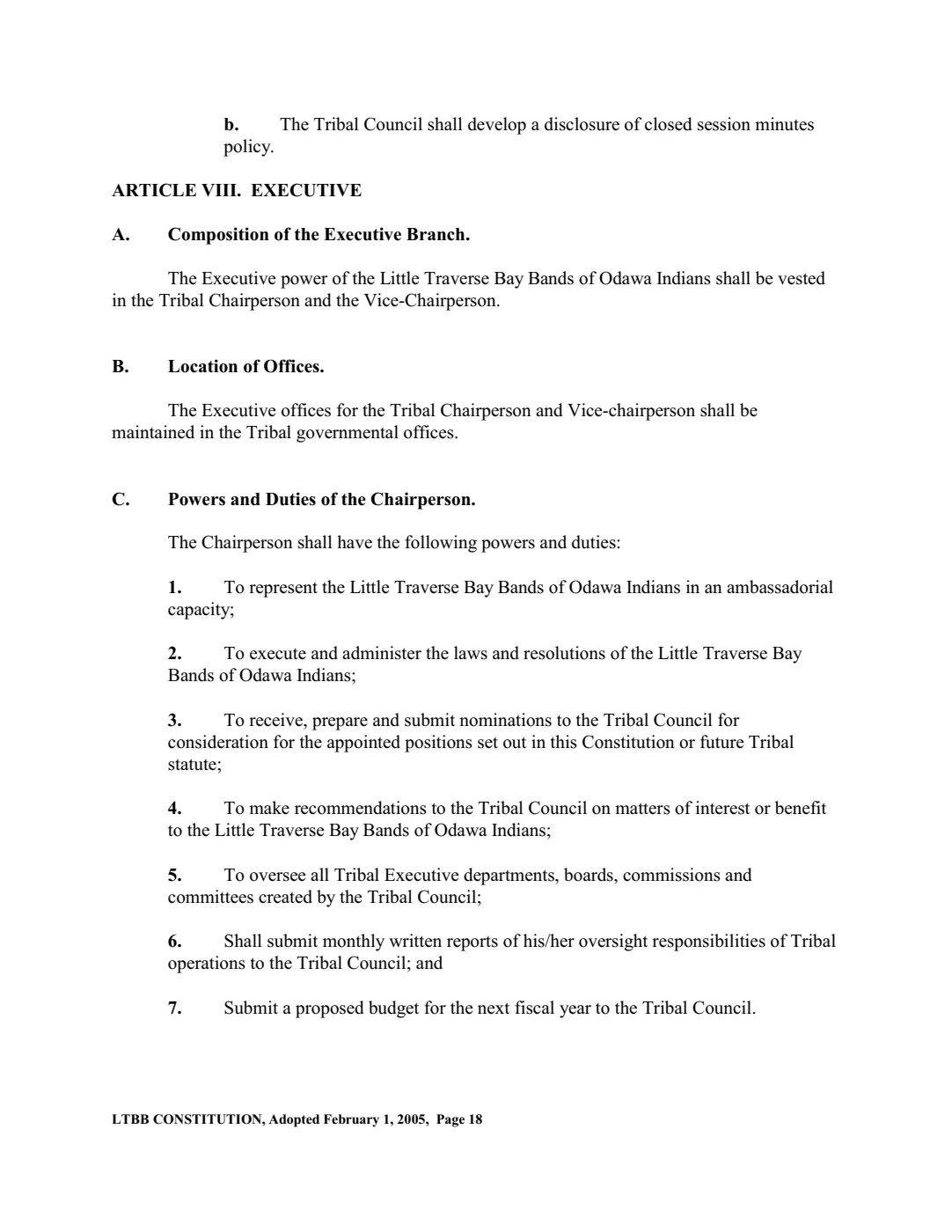
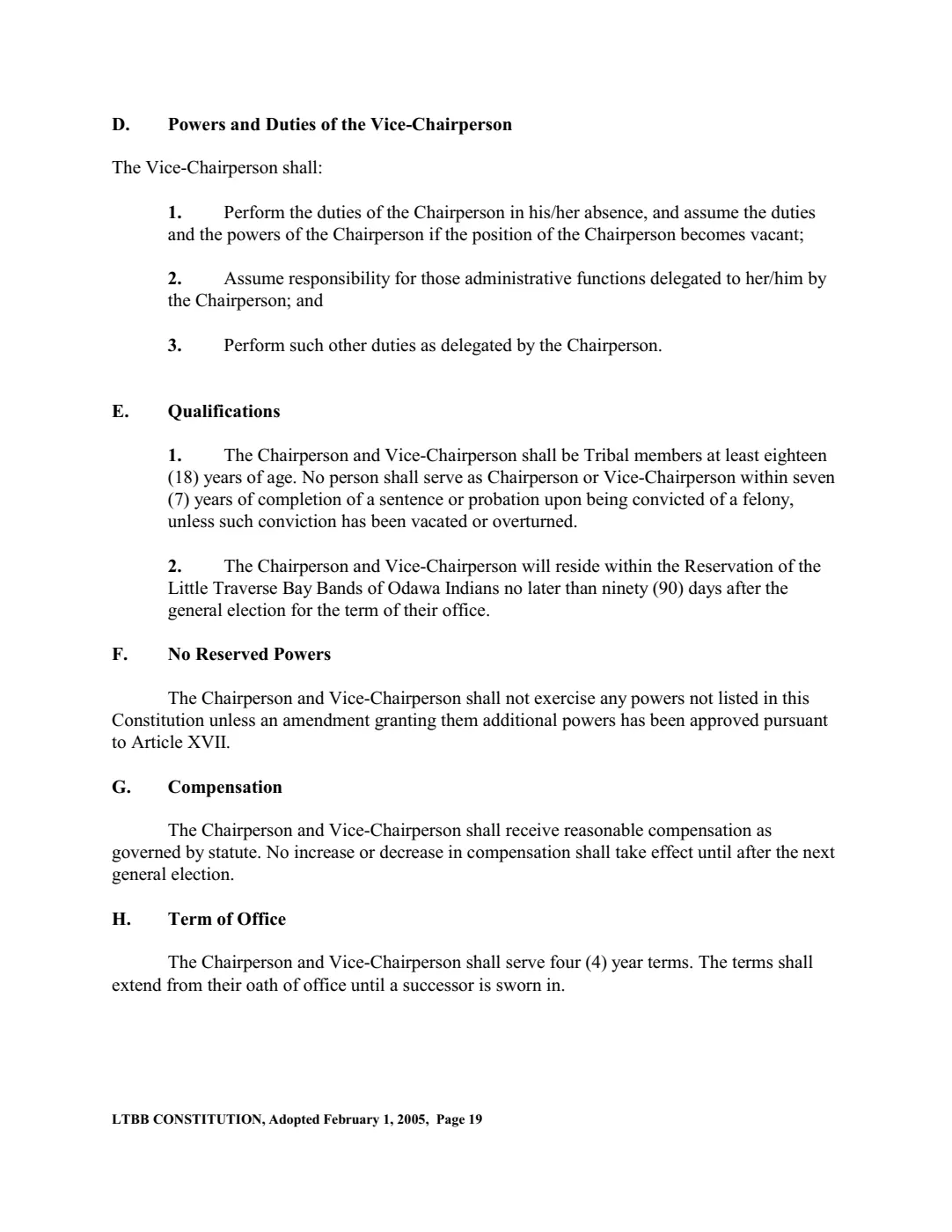
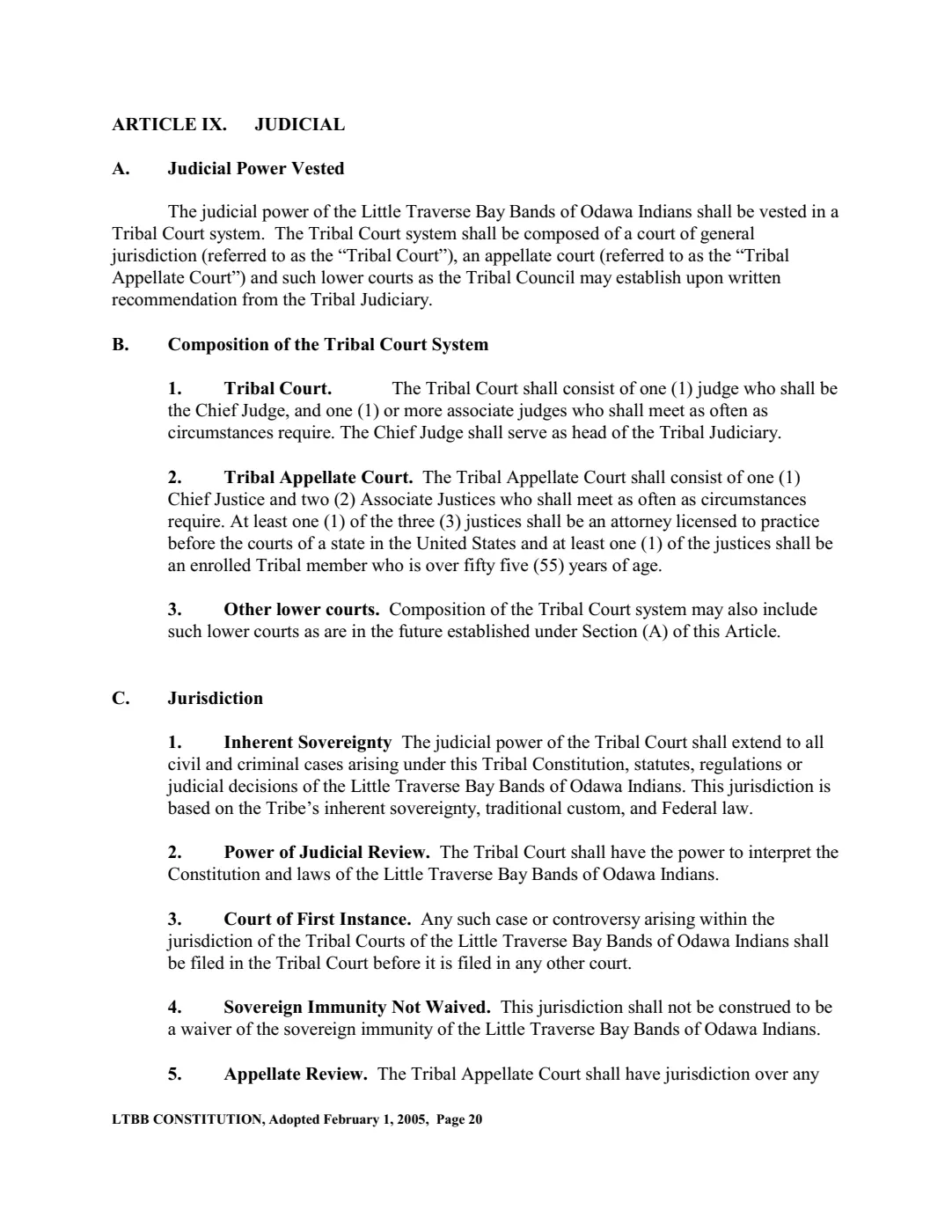
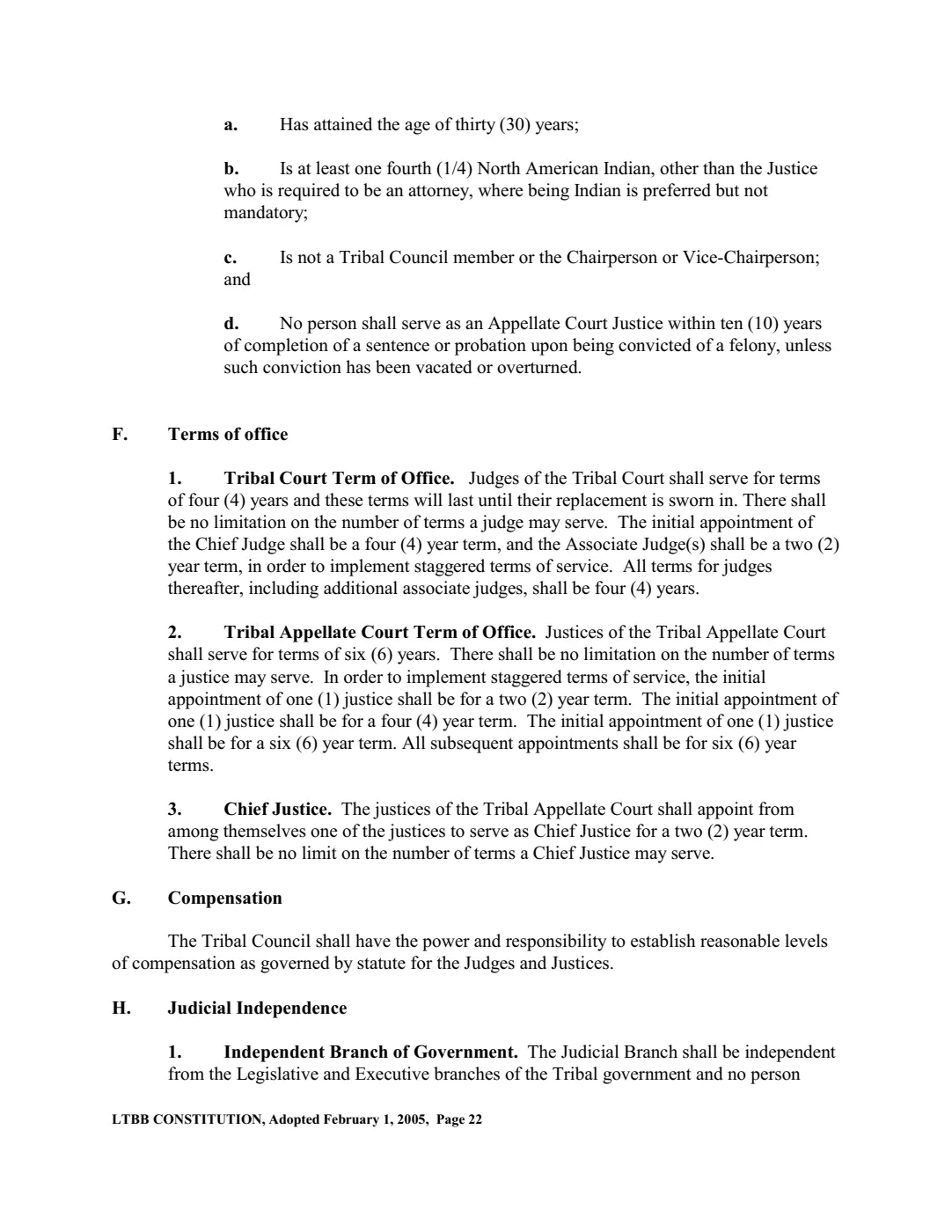
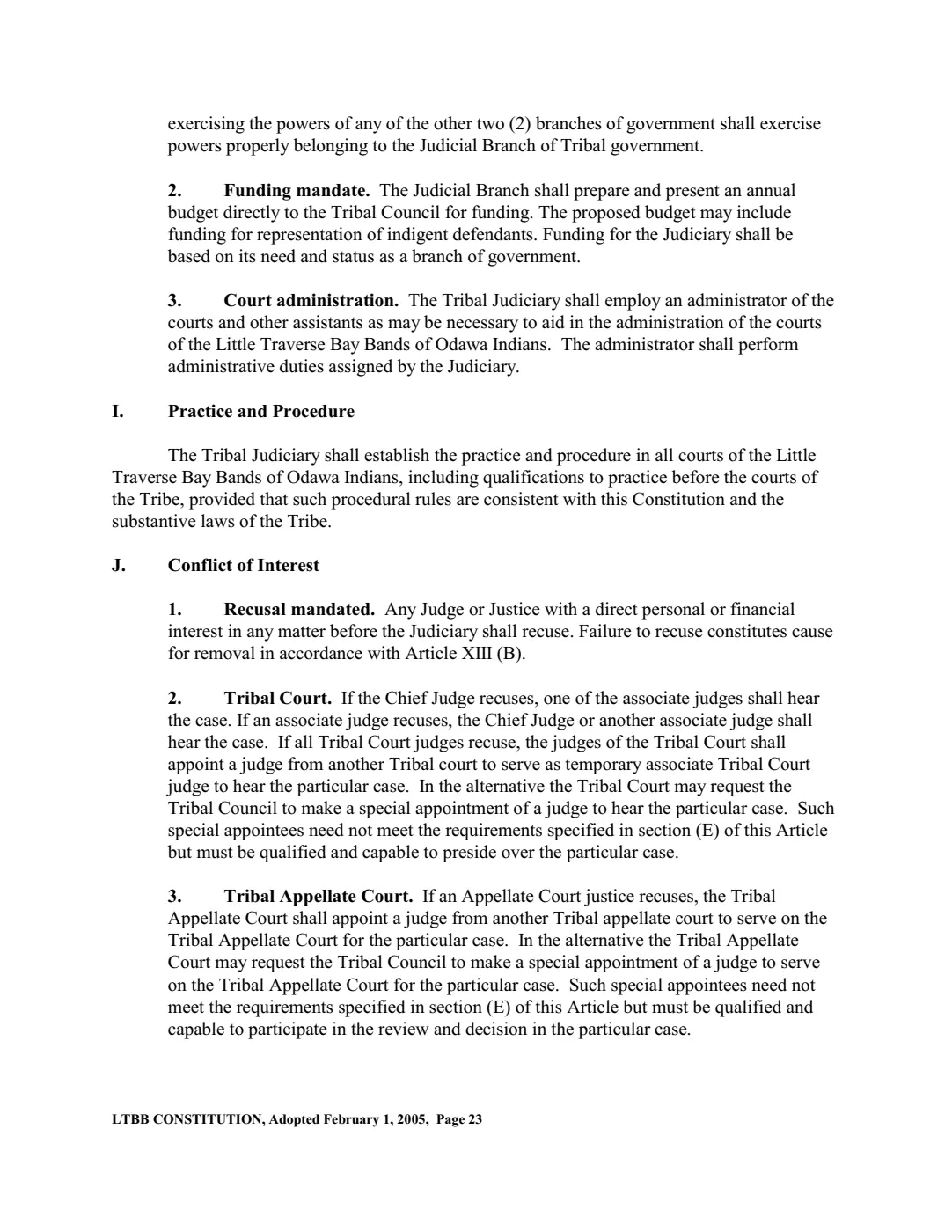
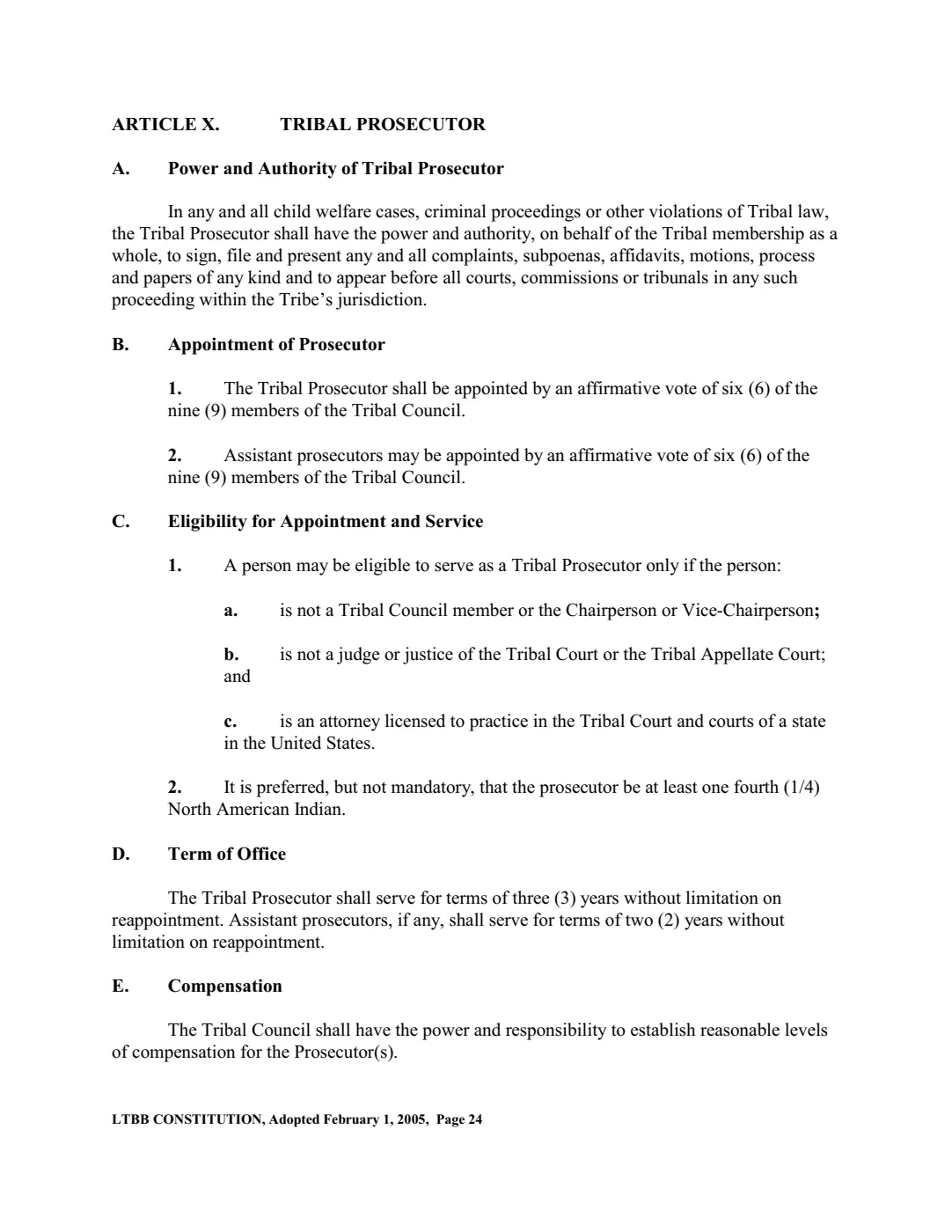
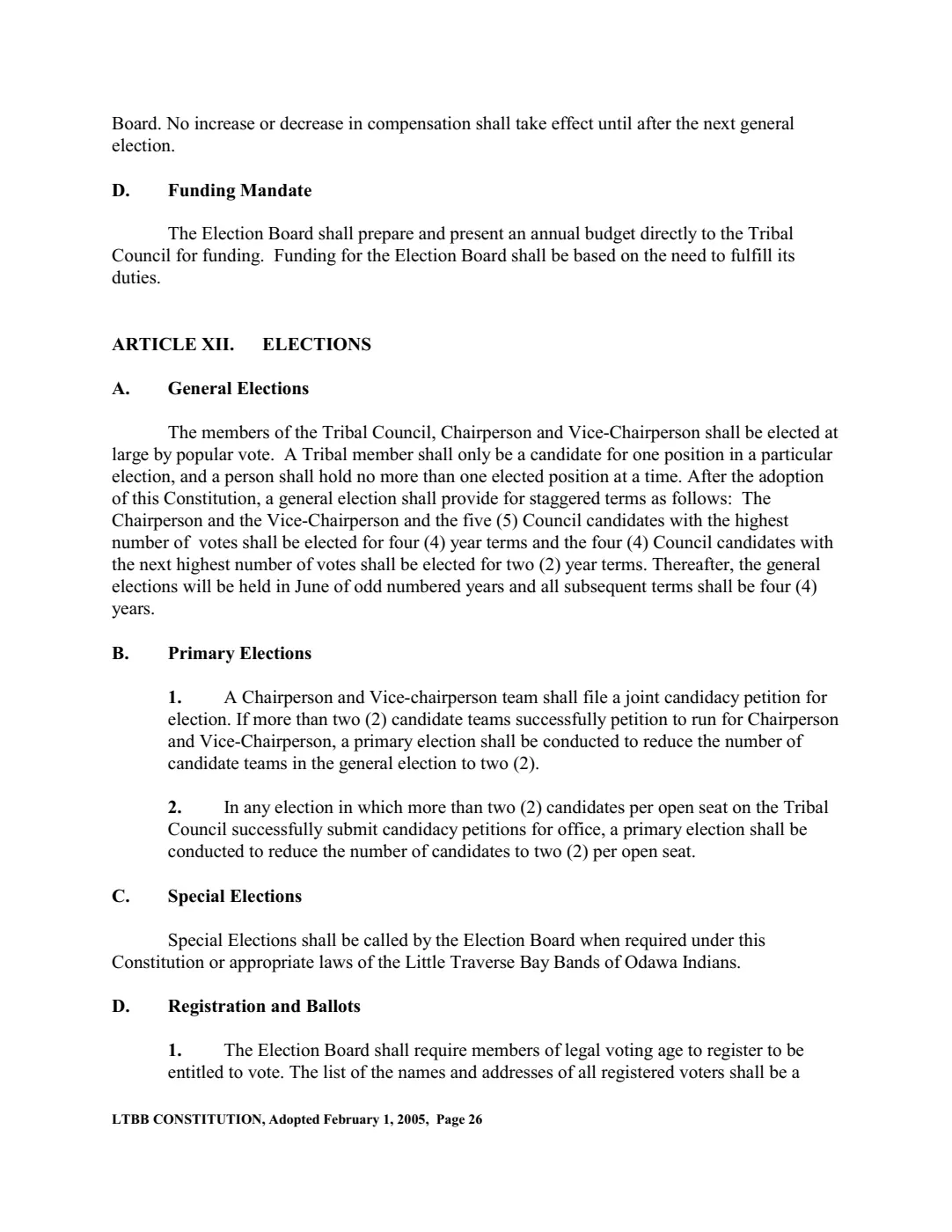
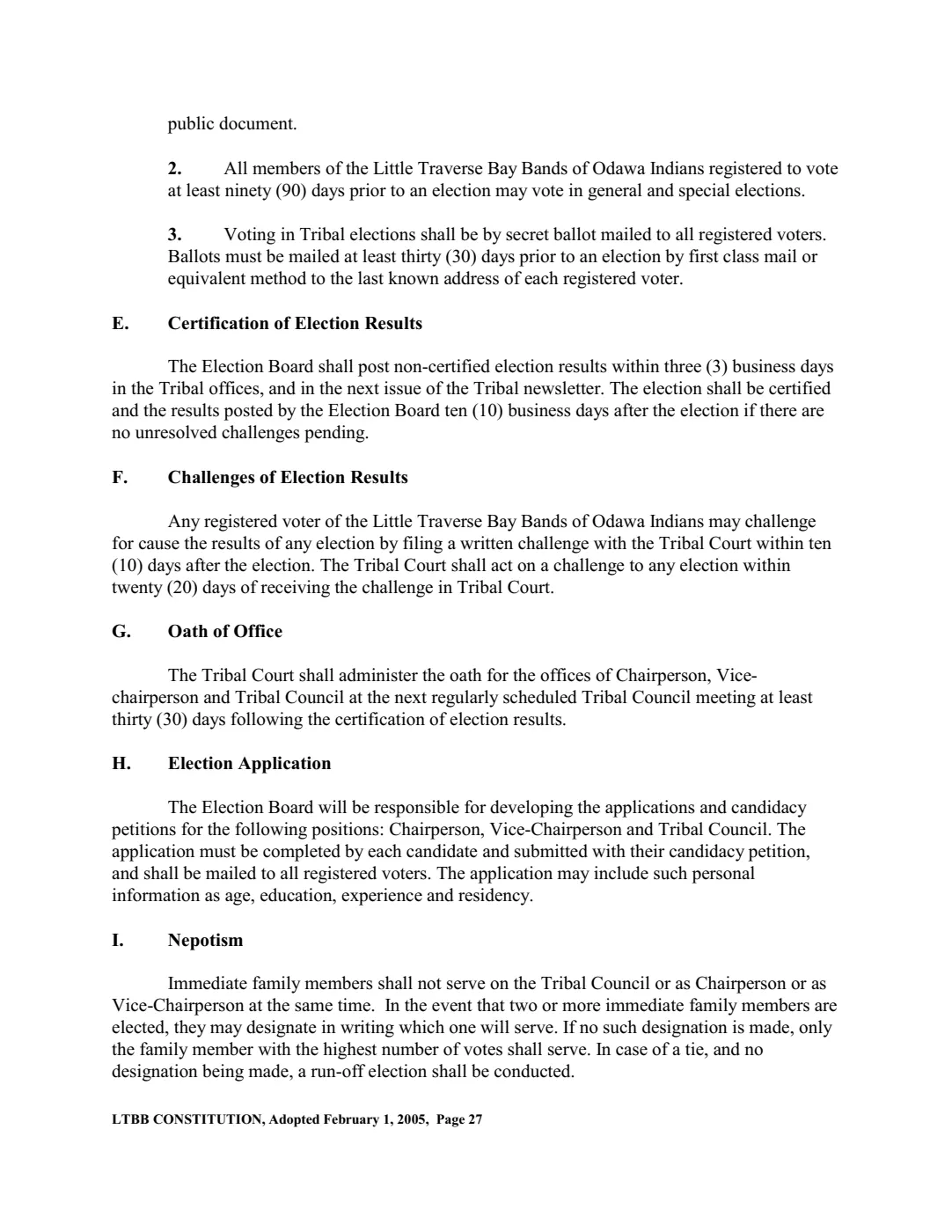
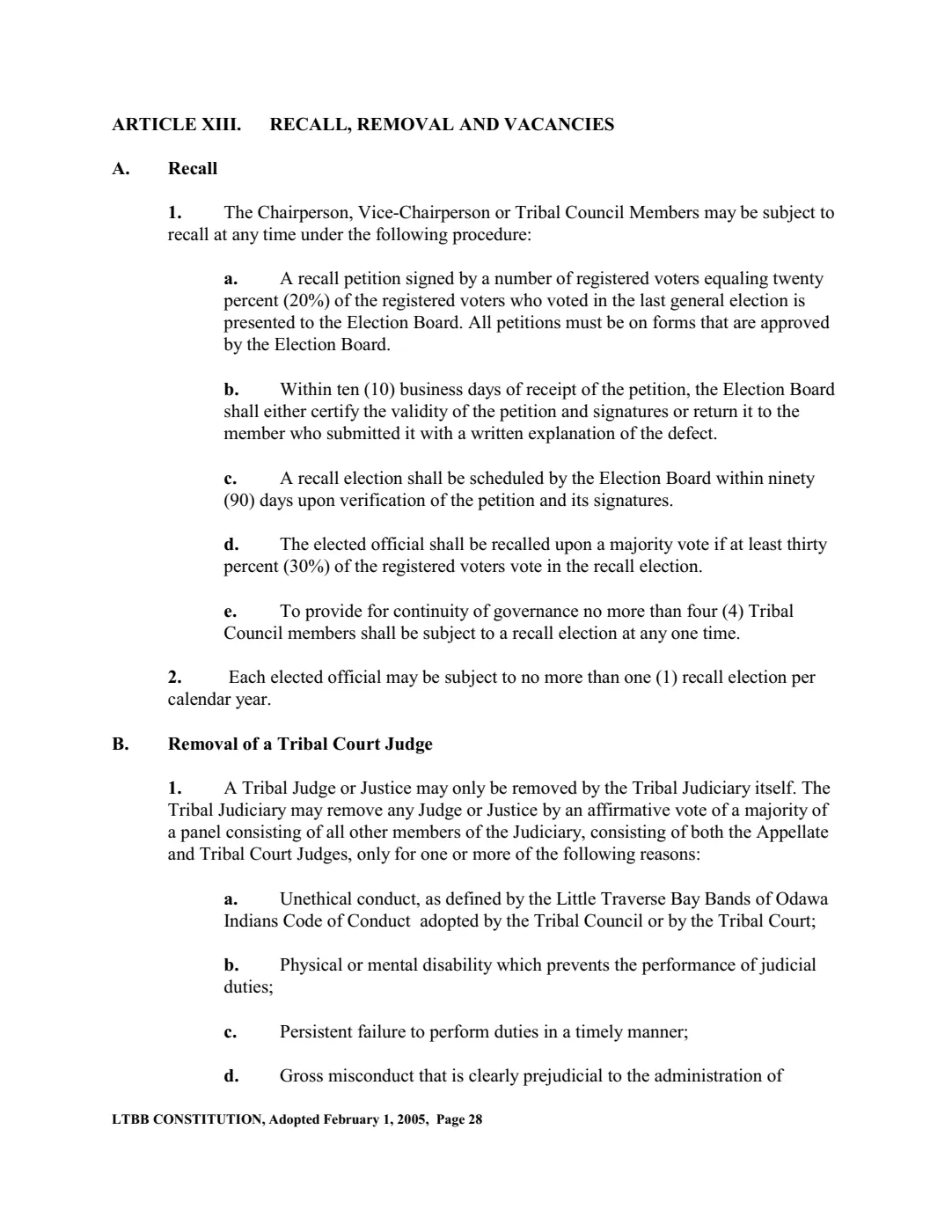
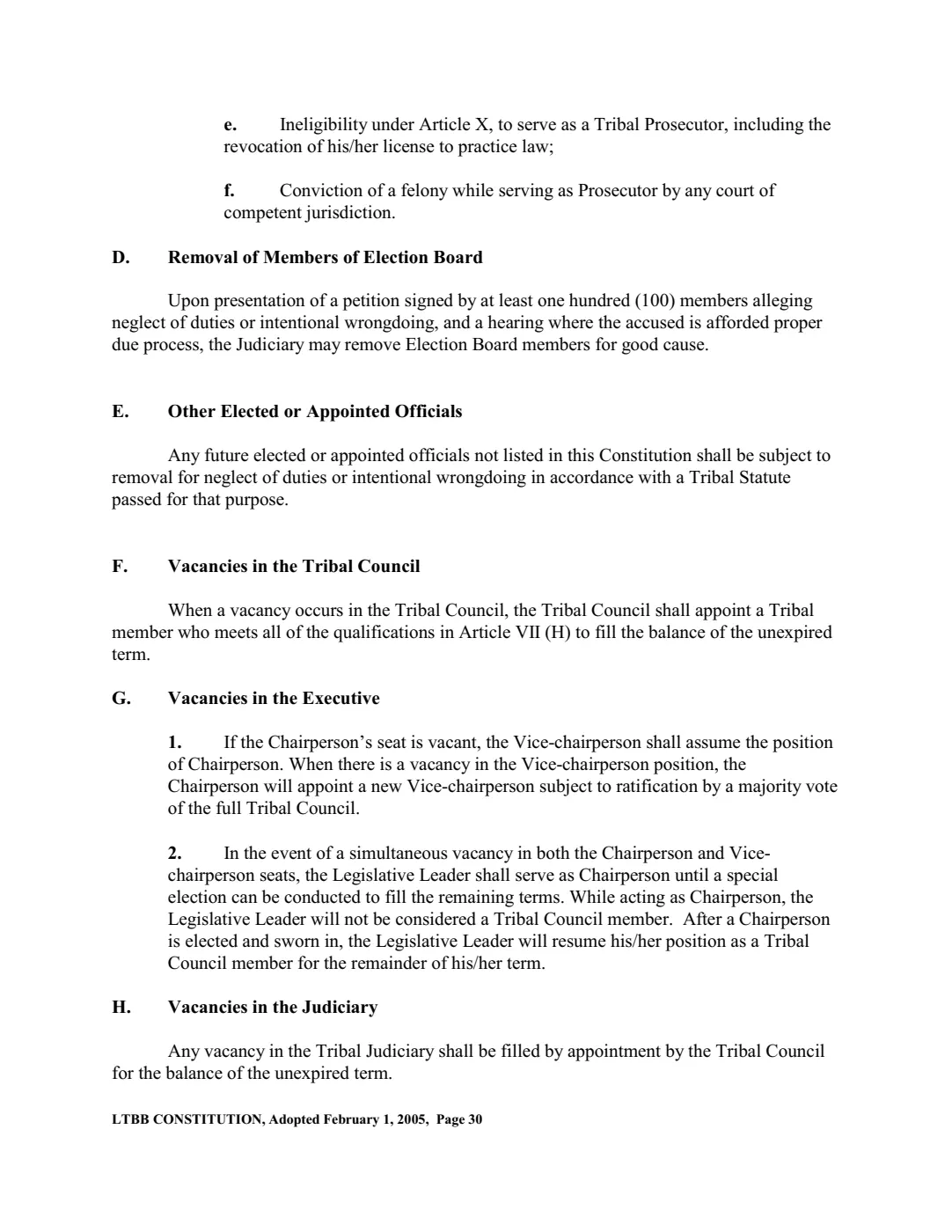
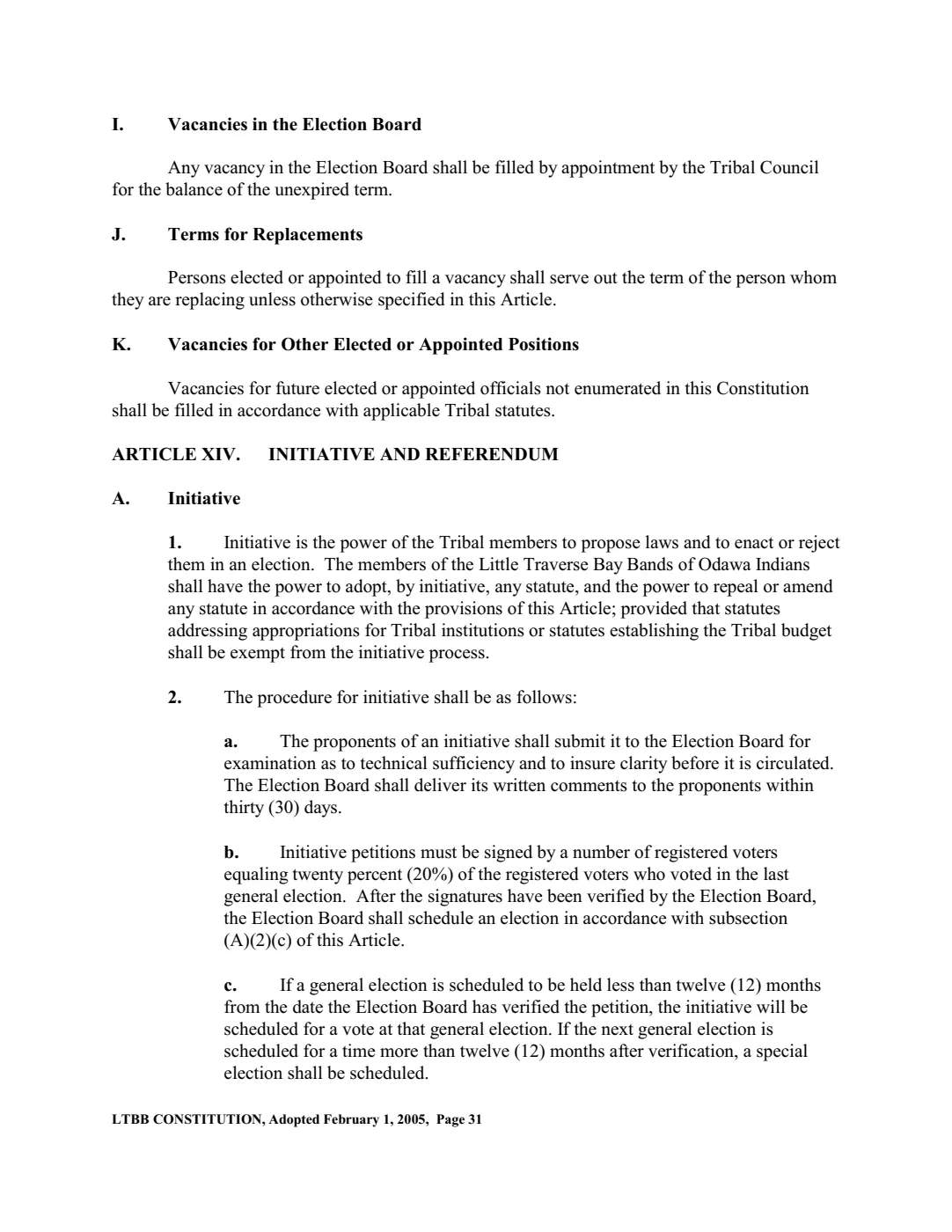
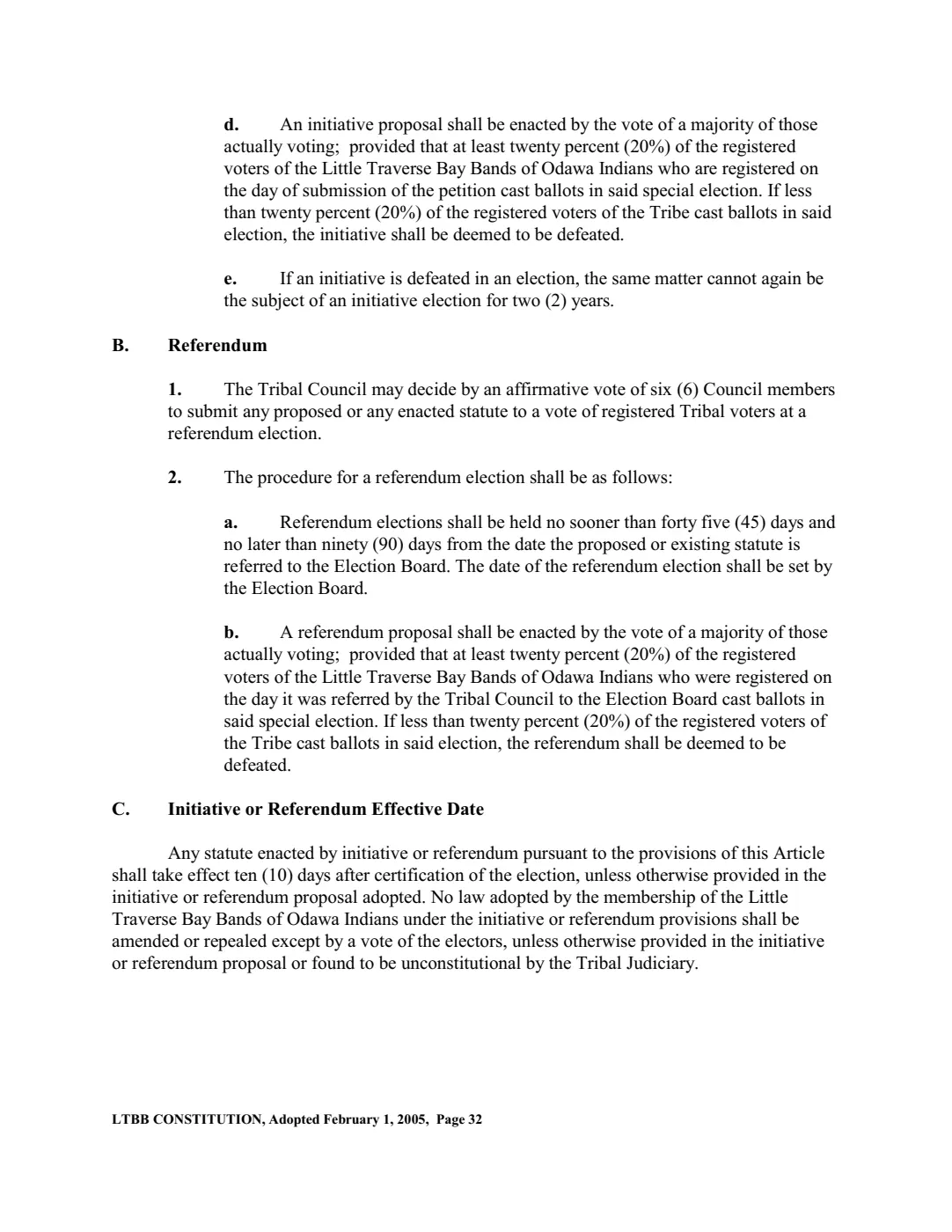
- Present-day tribal constitutional source for the Beaver Islands band statement and Payzhickwaywedung - Beaver Island; it is not treated as a one-to-one legal identity claim about the treaty-era Beaver Island Band.documents · ltbb_constitution
- Described in this archive: Northern Islander, 1850–1856.Strang's own newspaper. The issue of 9 January 1851 gives the population of Mackinac County "by the census of June 1st, (including the unorganized counties attached,) 3,598" and states that this "is exclusive of Indians". Read in the held OCR of the 1850-1856 run.
Added 28 July 2026 · revised 2 August 2026. Recent changes
Cite this article
Beaver Island Archive, “Anishinaabe presence in the archipelago”, https://beaverislandarchive.org/themes/anishinaabe-presence/, accessed [date], citing Beaver Island Forum, "I need some information, please...", March 2004, topic 146. (and 23 further sources listed on the page).
Last revised 2026-08-02. Fill in [date] with the date you read it — this page is static and cannot know that.
BibTeX for “Anishinaabe presence in the archipelago”RIS for “Anishinaabe presence in the archipelago”