- Founded
- 1836
- Eras
- Indigenous eraStrang era
- Concepts
- anishinaabe-odawacommunitygovernancetreaty-rights
- Within
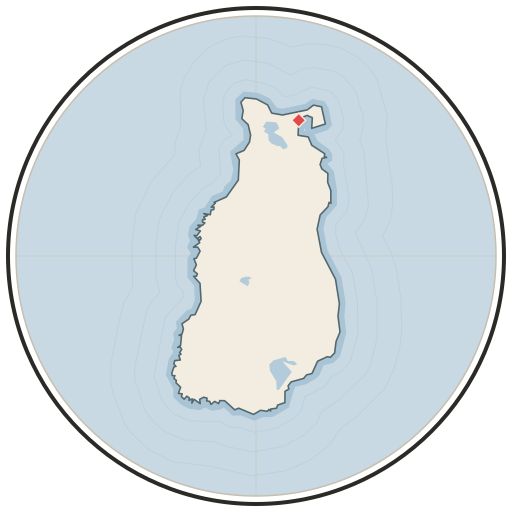
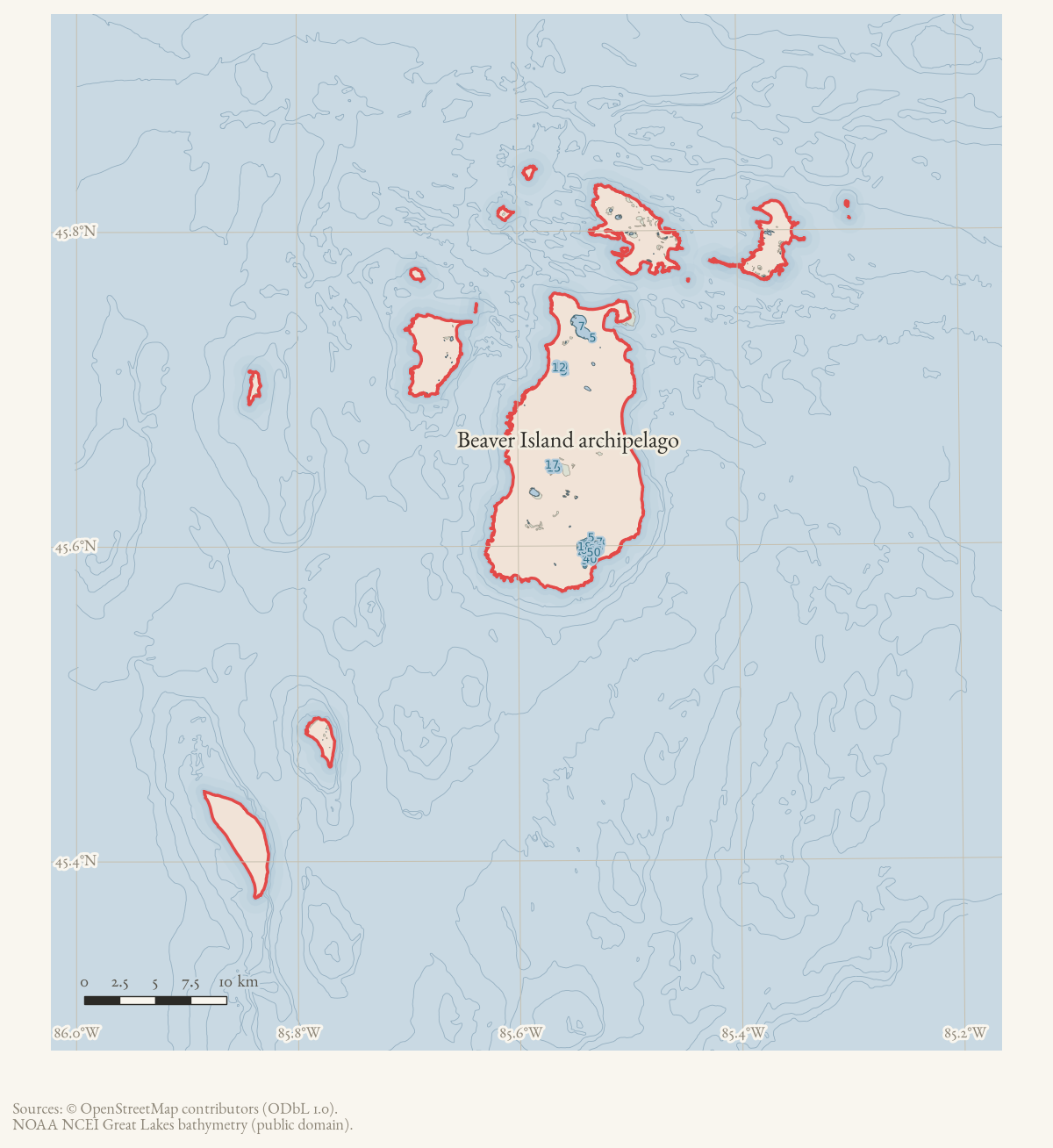
- Beaver Island archipelago
Summary
“Beaver Island Band” is the name used by the 1855 Treaty of Detroit for the Anishinaabe group associated with High Island and Garden Island. The 1836 Treaty of Washington uses the related phrase “Beaver-island Indians” for a five-year reservation of the Beaver islands and names Kainwaybekis and Pazhikwaywitum in its schedule.
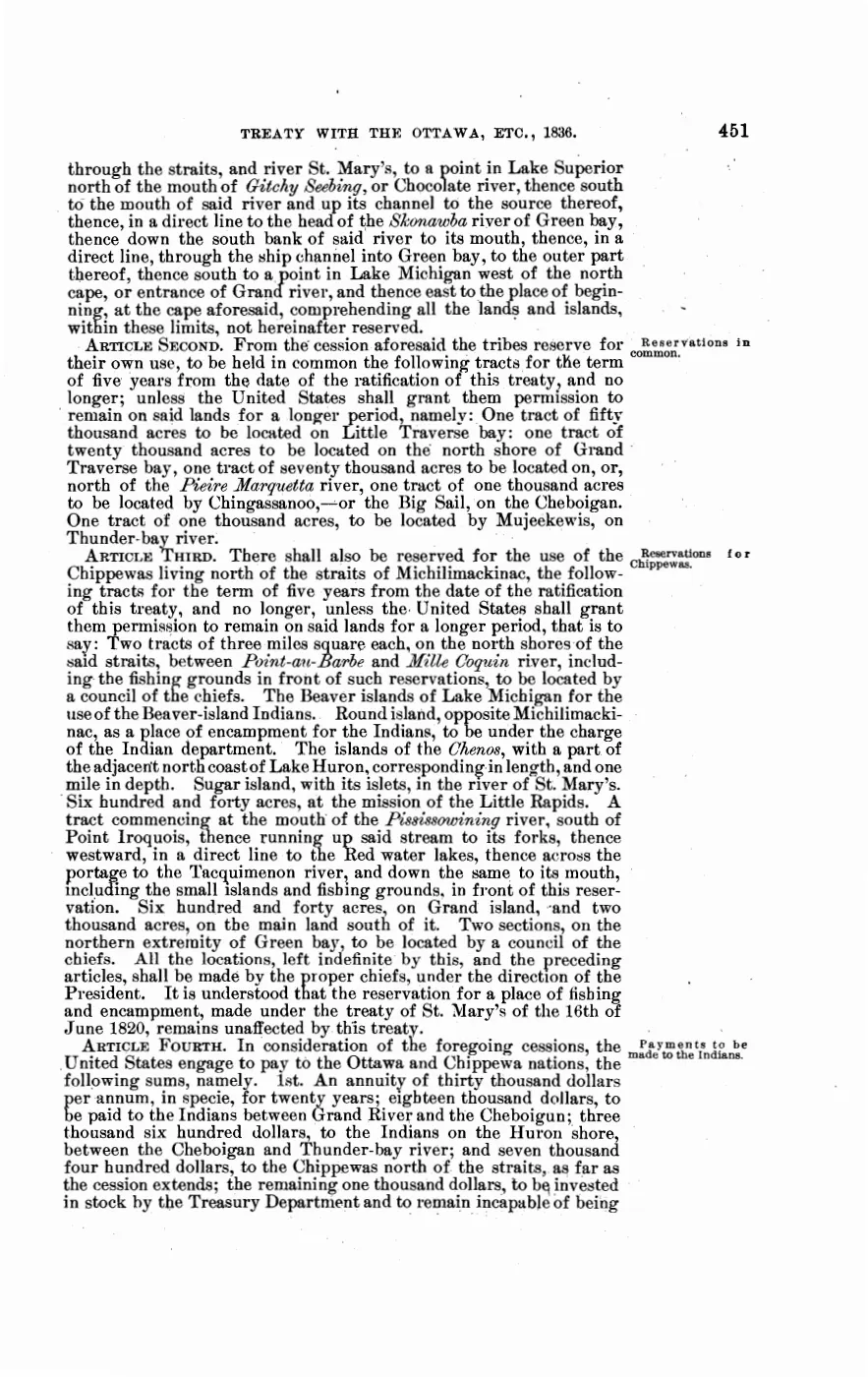
This article models the treaty-era label because it is a real legal actor in the held documents. It does not identify the band’s members, assign a modern ethnonym, or equate it with a present-day tribal government. Those would require Indigenous-authored, tribal, genealogical, and legal sources not yet held here.
History
The 1836 reservation clause is filed under the treaty’s “Reservations for Chippewas” article rather than its Ottawa provisions, even though the instrument as a whole is a joint Ottawa-and-Chippewa treaty.1 An 1840 population count for the “Beaver-island Indians,” reported by researcher Charles Garrad drawing on statistics later published by Henry Schoolcraft, gives 199 people — 39 men, 51 women and 109 children — with about 120 acres cleared and 35 people described as agriculturalists. This figure is drawn from the project’s Anishinaabe-presence synthesis rather than from an independent reading of Garrad’s article, and it is a single count, not a population series.2
Names
The Little Traverse Bay Bands of Odawa Indians’ governing constitution lists “the Beaver Islands” among its nine constituent bands and includes “Payzhickwaywedung – Beaver Island” among the names of its Ogemuk, or leaders — a form the project’s synthesis identifies as an apparent later rendering of the 1836 schedule’s “Pazhikwaywitum.”3 This is a naming correspondence between the treaty record and a present-day tribal government’s own constitutional text; it is not treated here as a legal finding that the treaty-era band and the present-day LTBB band are the same body in law.
Open questions
- What Indigenous names and political identities did the people called the Beaver Island Band use for themselves?
- How should the treaty-era band be related, if at all, to the present-day Little Traverse Bay Bands of Odawa Indians and Grand Traverse Band of Ottawa and Chippewa Indians?
- What sources document continuity, reorganization, or changes in island residence after the treaties?
Footnotes
-
Treaty with the Ottawa, etc., 28 March 1836, 7 Stat. 491, Article Third. ↩
-
Beaver Island knowledge-base theme, Anishinaabe presence in the archipelago, citing Charles Garrad, “Some Notes on the Ojibwa (Chippewa) of the Beaver Islands,” JBIH III (1988), pp. 7-11, and Henry Schoolcraft’s published statistics. ↩
-
Little Traverse Bay Bands of Odawa Indians, Constitution (2005), via the same theme synthesis. ↩
Sources
- The treaty reserves the Beaver islands of Lake Michigan for the “Beaver-island Indians” for five years and names Kainwaybekis and Pazhikwaywitum in its schedule. The treaty wording is retained as a historical label, not silently converted into a modern ethnonym.web · treaty_1836_washington
- Article First schedules “For the Beaver Island Band—High Island, and Garden Island.” This is the clearest held legal attestation of the phrase “Beaver Island Band.”web · treaty_1855_detroit
- Beaver Island knowledge-base theme, *Anishinaabe presence in the archipelago*.Project synthesis preserves the distinction between treaty language, settler descriptions, and present-day tribal governments; it does not infer that the treaty-era label is identical to LTBB or GTB. Also the source for the 1840 population figure (citing Garrad/Schoolcraft) and the LTBB Constitution naming correspondence used in this article. No public copy of this file is known; the archive holds one and can provide it on request.kb · articles · themes · anishinaabe-presence
Added 31 July 2026 · revised 9 August 2026. Recent changes
Cite this article
Beaver Island Archive, “Beaver Island Band”, https://beaverislandarchive.org/organizations/beaver-island-band/, accessed [date], citing Treaty with the Ottawa, etc., 28 March 1836, 7 Stat. 491, Article Third and schedule. (and 2 further sources listed on the page).
Last revised 2026-08-09. Fill in [date] with the date you read it — this page is static and cannot know that.