- Dates
- 1932-08-26 – 1932-08-27
- Kind
- Announcement
- Where
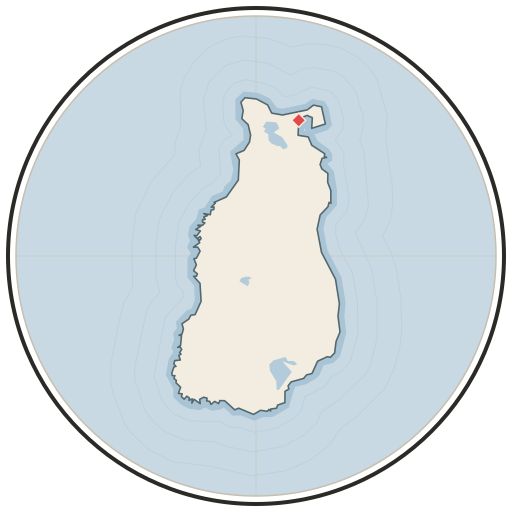
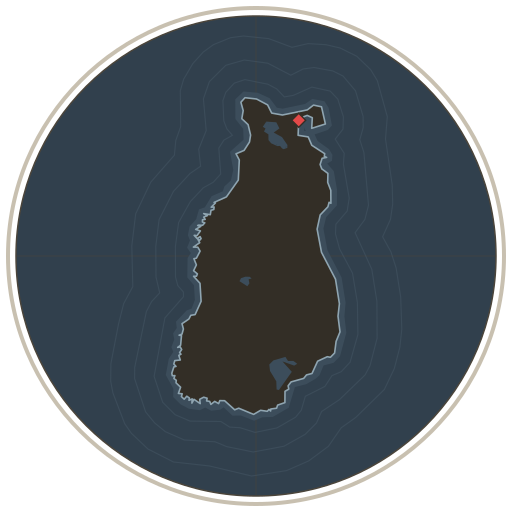
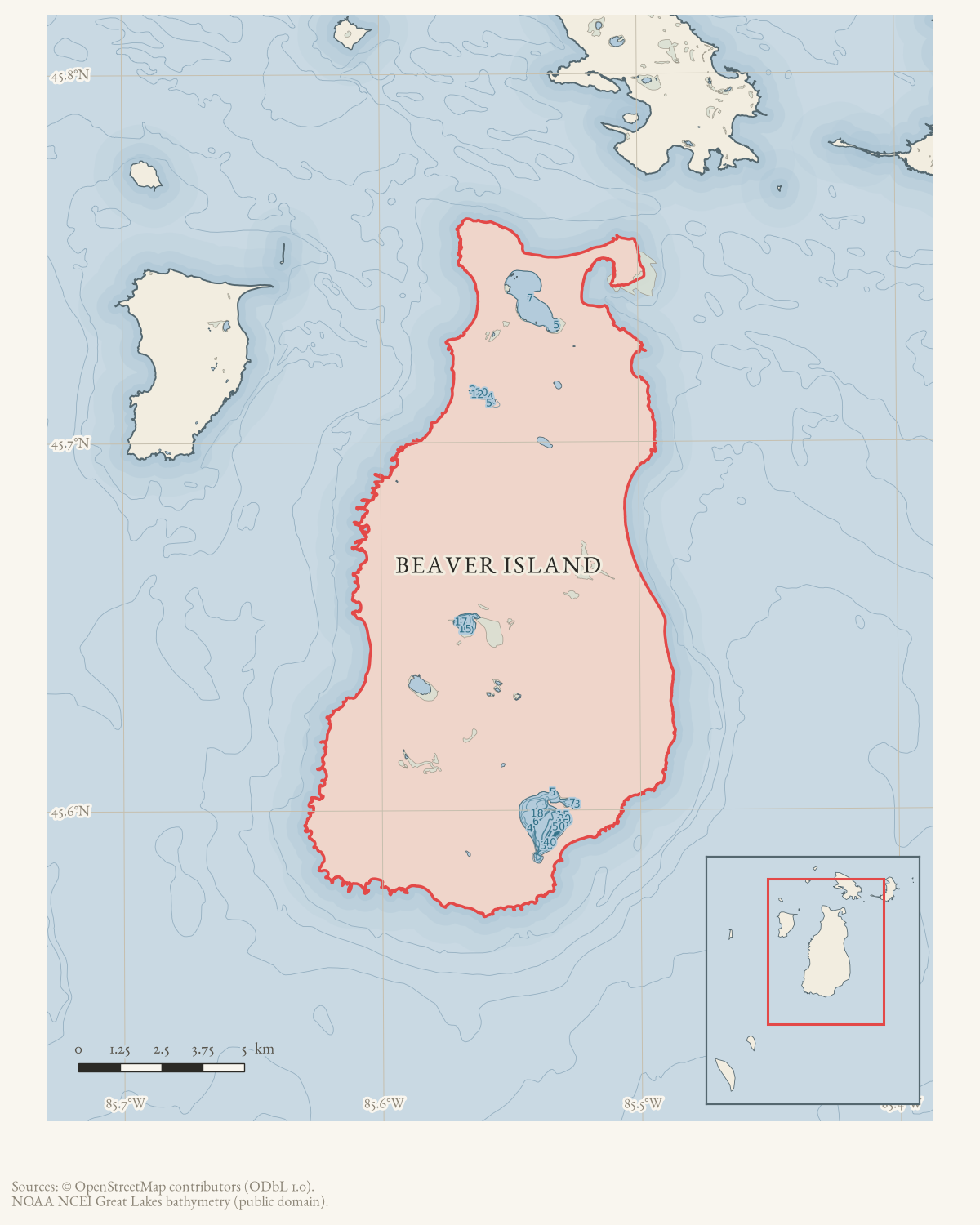
- Beaver Island
- Participants
- P. J. Rood (collector) · Burton C. Mellencamp (witness)
- Eras
- Modern era
- Concepts
- agriculturesoilsvegetationenvironmenteconomycommunityheritage
- Within
- Beaver Island
Summary
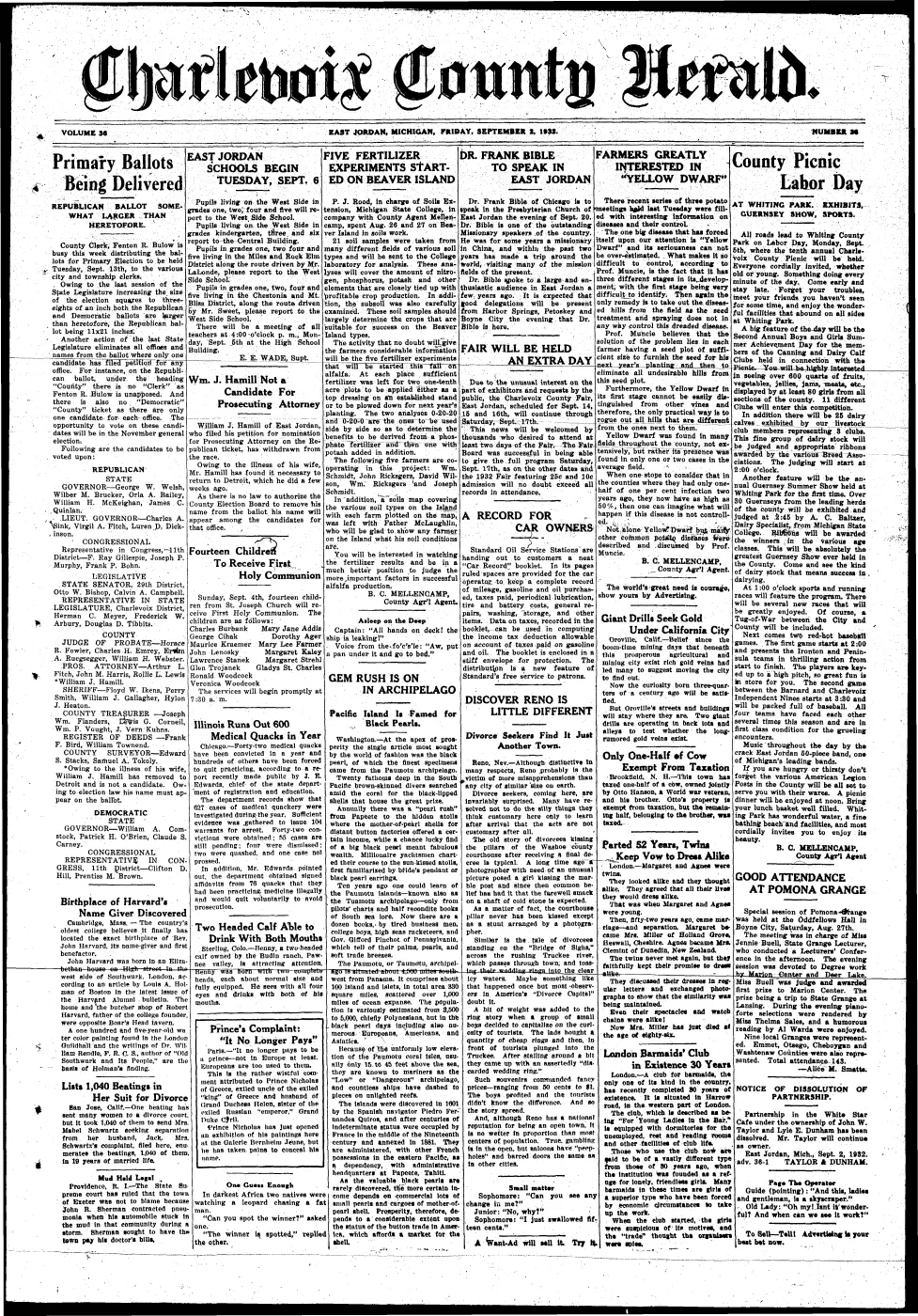
P. J. Rood of Michigan State College’s Soils Extension, accompanied by county agent B. C. Mellencamp, spent August 26 and 27, 1932, doing soils work on Beaver Island. They took 21 samples from fields representing different soil types, examined the subsoil, and planned laboratory analyses of nitrogen, phosphorus, potash, and other elements connected to crop production.1
The report says five alfalfa fertilizer experiments would begin that fall. At each of five farms, the plan called for two one-tenth-acre plots: one could receive top dressing on an established stand and the other fertilizer could be plowed down for the next year’s planting. The named analyses were 0-20-20 and 0-20-0, intended to compare phosphate alone with phosphate plus potash.1
The five cooperating farmers were Wm. Schmidt, John Rickseger, David Wilson, Wm. Rickseger, and Joseph Schmidt. A soils map plotting island farms against soil types was left with Father McLaughlin for local farmers to consult.1
The report is signed “B. C. MELLENCAMP, County Agr’l Agent” rather than run as an anonymous news item, so it reads as the agent’s own extension notice to farmers rather than a reporter’s account of a visit. It frames the 21 samples as work that “should largely determine the crops that are suitable for success on the Beaver Island types,” and it closes by inviting readers to watch the fertilizer results so as to “be in a much better position to judge the more important factors in successful alfalfa production.”1 That framing places the episode inside county agricultural extension work generally, not a one-off visit: Mellencamp is recorded elsewhere in the same year organizing county-wide 4-H and Extension programs from his Boyne City office, of which the August 1932 Beaver Island soils work was one item.2
The record keeps the episode at the stage the source reaches: 21 samples and five planned trials, with no laboratory values, farm locations, yields, or later results. It is a dated instance of extension soil science on island farmland—not a modern soil map or proof that alfalfa became established across the island.
Evidence and limits
The event date covers the reported August field visit. The article says the fertilizer experiments would start in the fall; it does not report that the trials were completed, identify the farms’ locations, provide crop yields, or preserve the later laboratory analyses. The named people are all episode-qualified, and no family or civil identity is inferred from the surnames.
Open questions
- Did the five fertilizer trials occur, and what were their alfalfa results?
- Where are the 21 sample analyses, soil map, and Michigan State Extension field records?
- Which farms correspond to the five cooperating names, and can land or census records identify them?
- Which priest or parish record identifies Father McLaughlin and preserves the map?
See also
Footnotes
Read the document
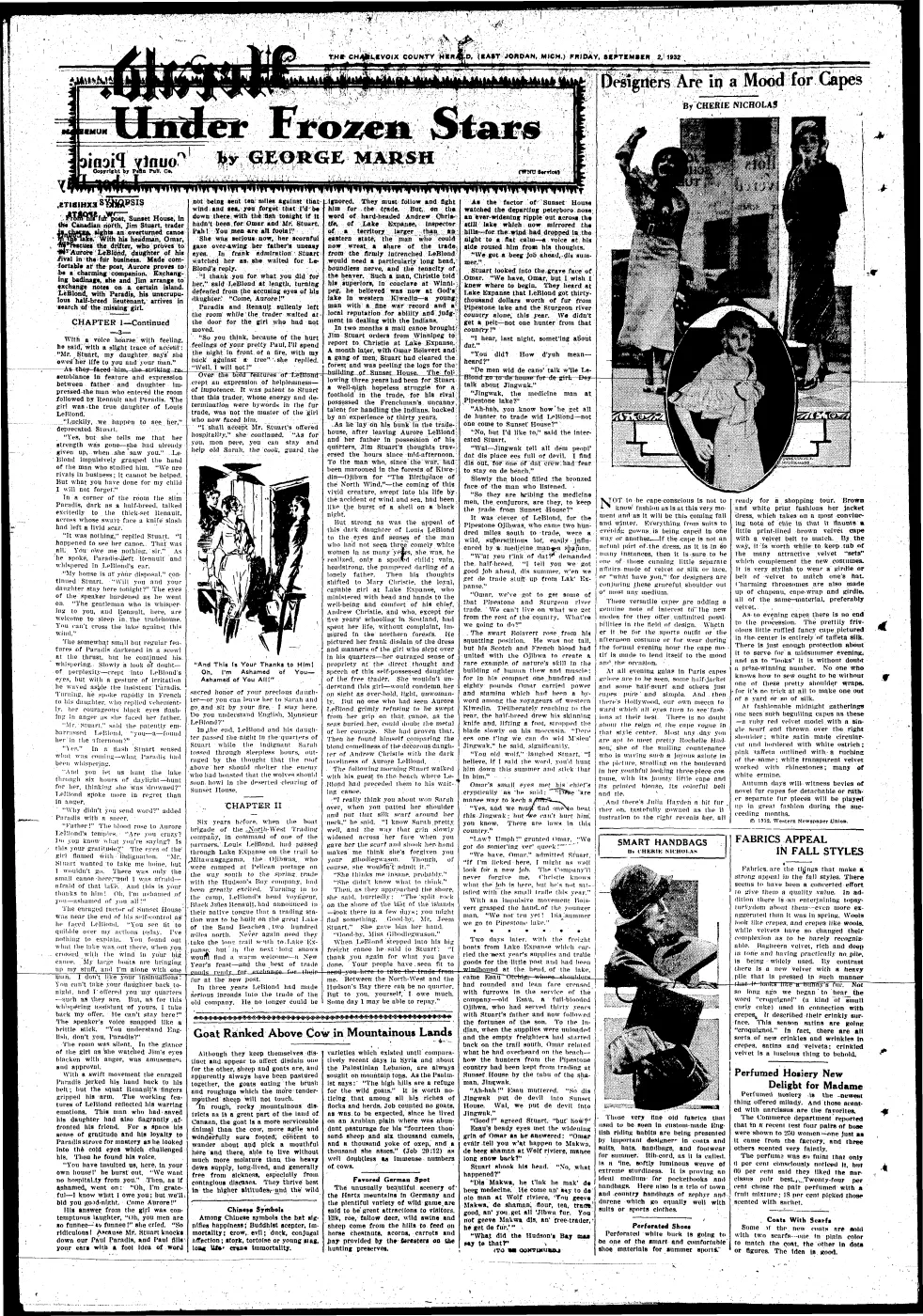
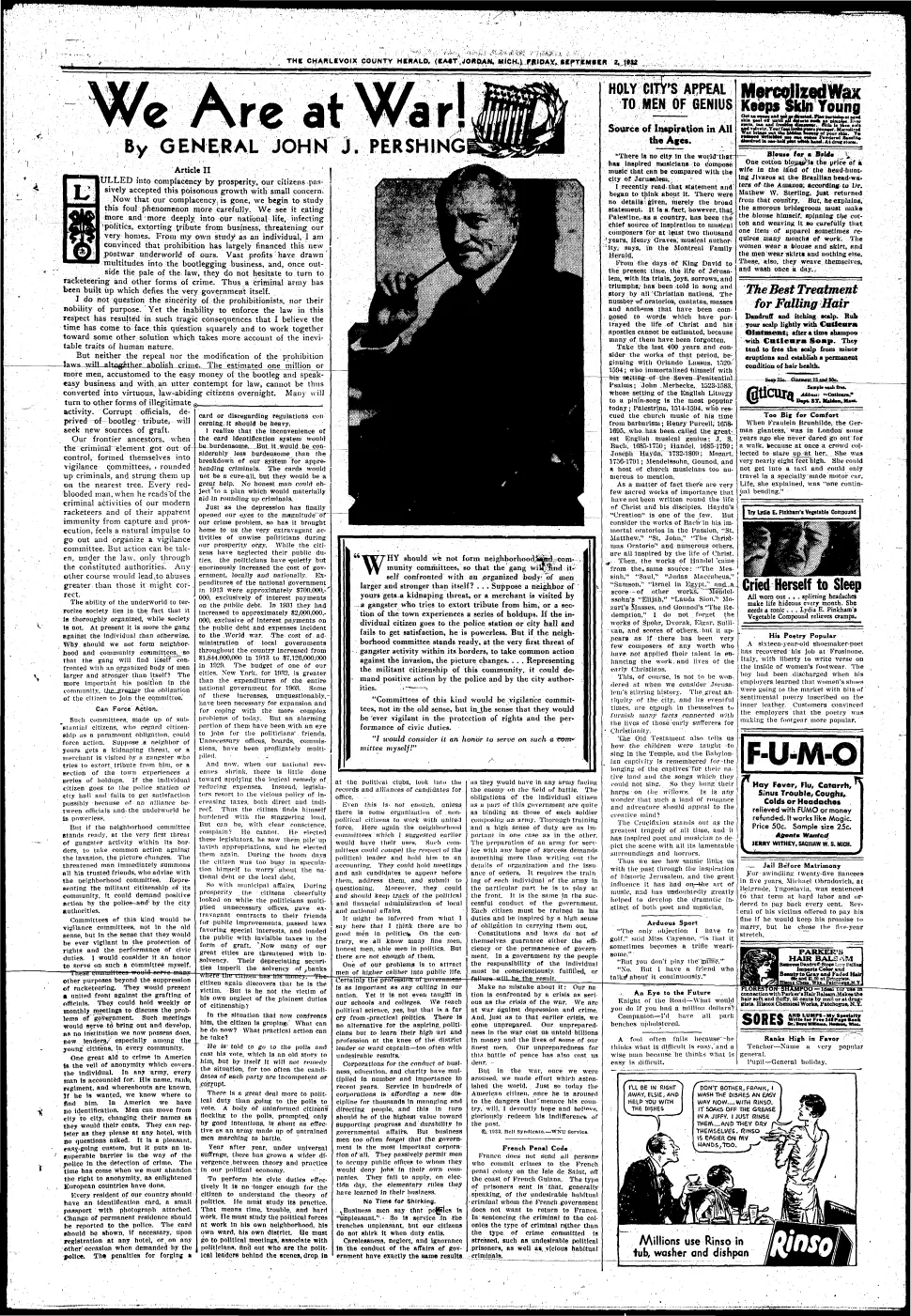
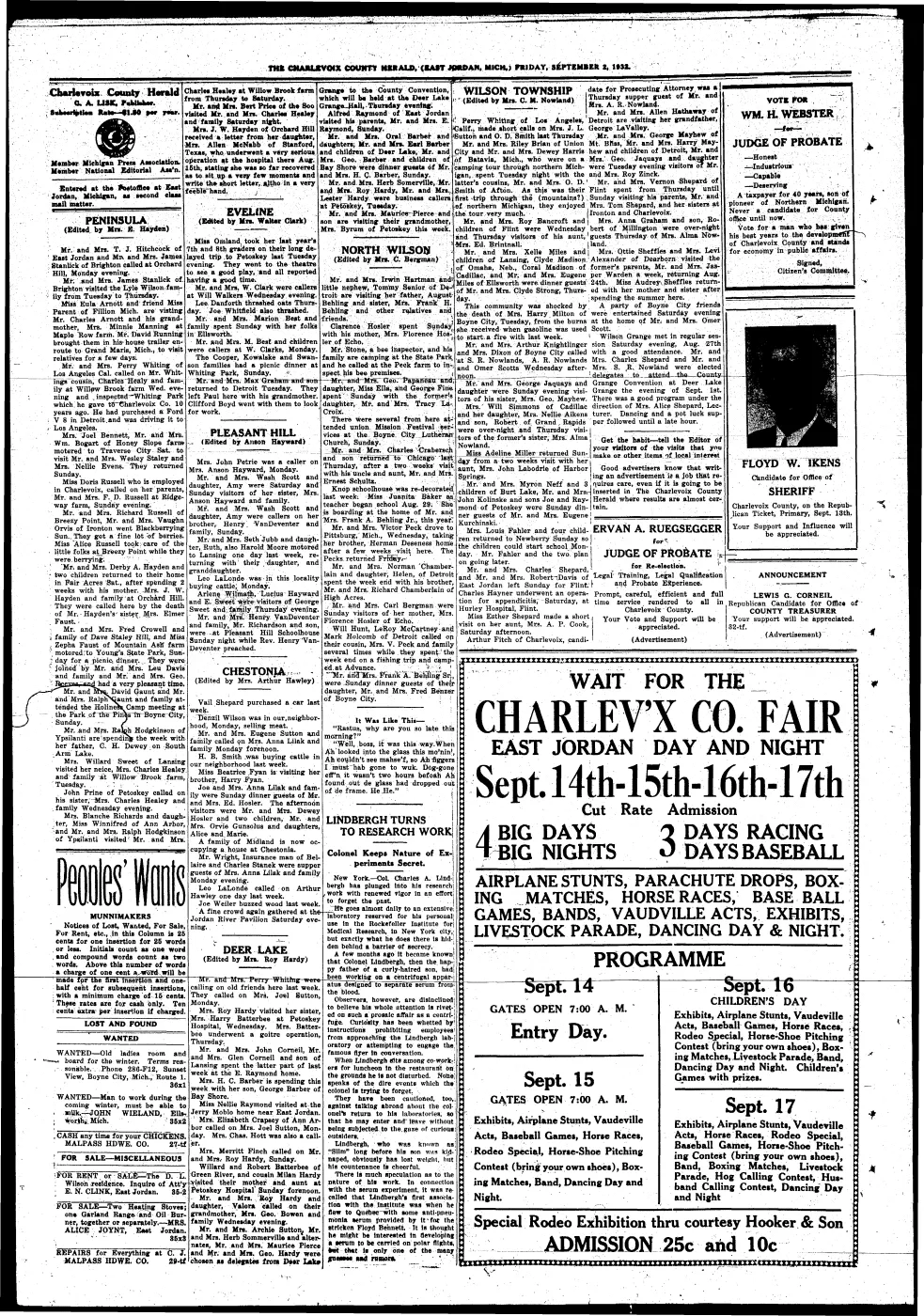
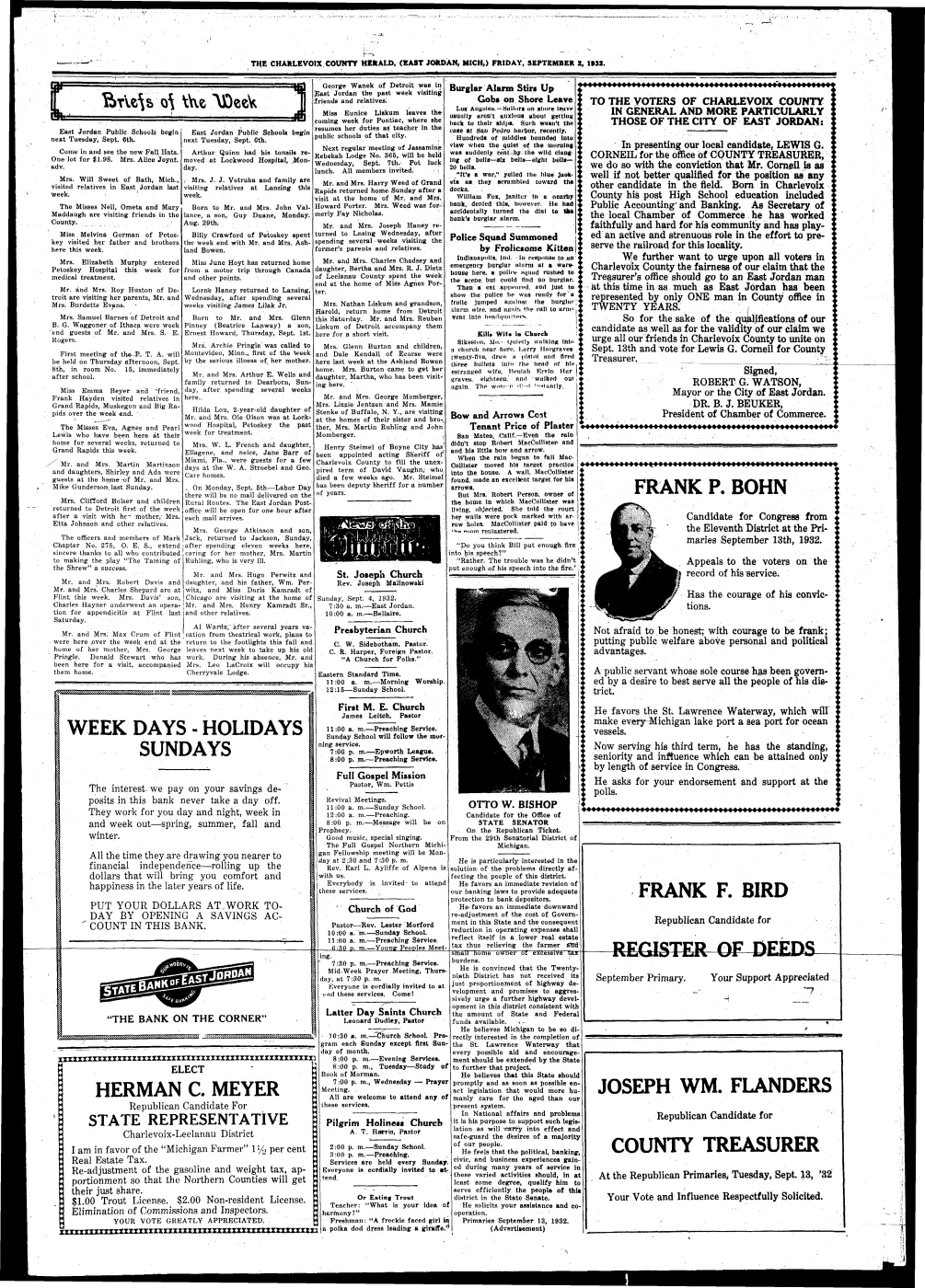
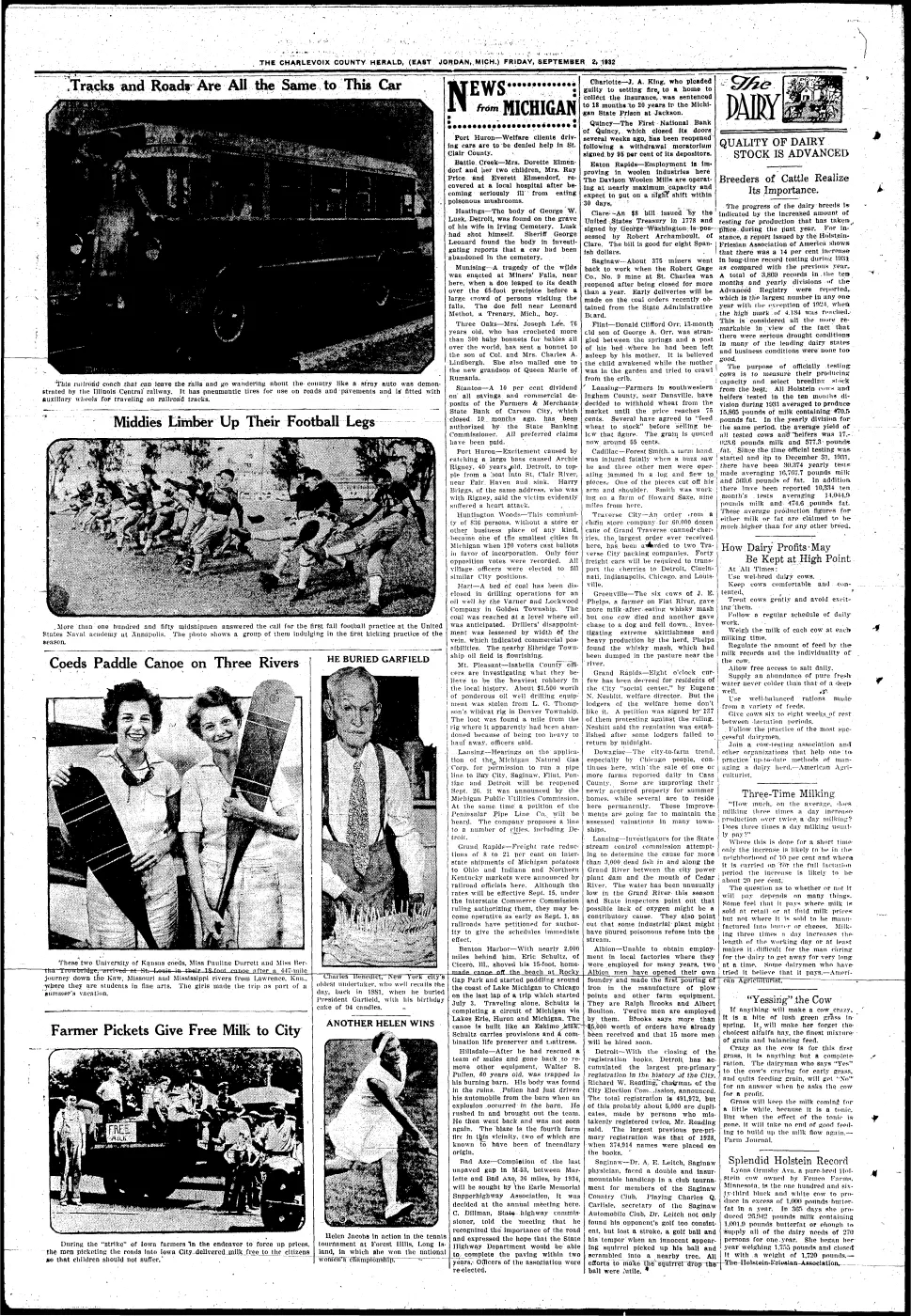
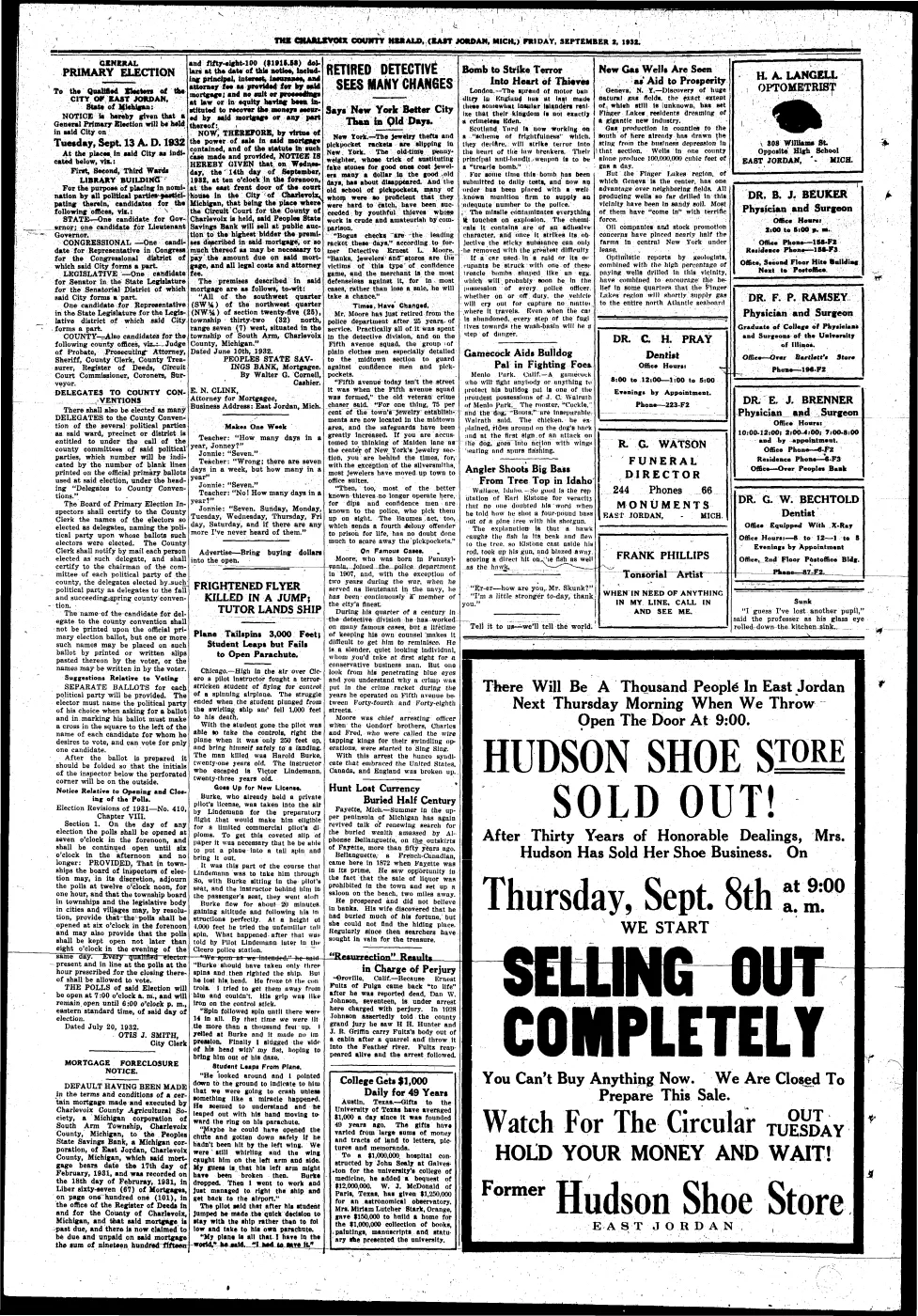
8 pages, rendered from the held scan.
Sources
- Charlevoix County Herald, September 2, 1932, “FIVE FERTILIZER EXPERIMENTS STARTED ON BEAVER ISLAND.”Reports P. J. Rood of Michigan State College Soils Extension and County Agent B. C. Mellencamp’s August 26–27 soils work, 21 samples, subsoil examination, five planned alfalfa fertilizer experiments, named 0-20-20 and 0-20-0 analyses, five cooperating farmers, and a soils map left with Father McLaughlin. No public copy of this file is known; the archive holds one and can provide it on request.
- Held raw OCR preserves the agricultural report independently of the normalized Markdown rendering.
- Project research record for the Beaver Island soil and alfalfa experiment cluster.Preserves the 21-sample count, five planned experiments, two 0.1-acre plots per farm, named fertilizer analyses, five cooperating farmers, soil-map custody statement, and explicit non-inferences. No public copy of this file is known; the archive holds one and can provide it on request.kb_research · beaver_island_soil_alfalfa_1932
- Charlevoix County Herald, September 9, 1932, county fair and Home Economics Extension course notices.Shows B. C. Mellencamp organizing county-wide 4-H/Extension fair activities and a Home Economics Extension course from his Boyne City office the same year, placing the August Beaver Island soils visit inside his ordinary county-agent duties rather than as an isolated trip. No public copy of this file is known; the archive holds one and can provide it on request.
Added 1 August 2026 · revised 3 August 2026. Recent changes
Cite this article
Beaver Island Archive, “Beaver Island Soil Survey and Planned Alfalfa Fertilizer Experiments in 1932”, https://beaverislandarchive.org/events/beaver-island-soil-and-fertilizer-experiments-1932/, accessed [date], citing Charlevoix County Herald, September 2, 1932, “FIVE FERTILIZER EXPERIMENTS STARTED ON BEAVER ISLAND.” (and 3 further sources listed on the page).
Last revised 2026-08-03. Fill in [date] with the date you read it — this page is static and cannot know that.
BibTeX for “Beaver Island Soil Survey and Planned Alfalfa Fertilizer Experiments in 1932”RIS for “Beaver Island Soil Survey and Planned Alfalfa Fertilizer Experiments in 1932”